
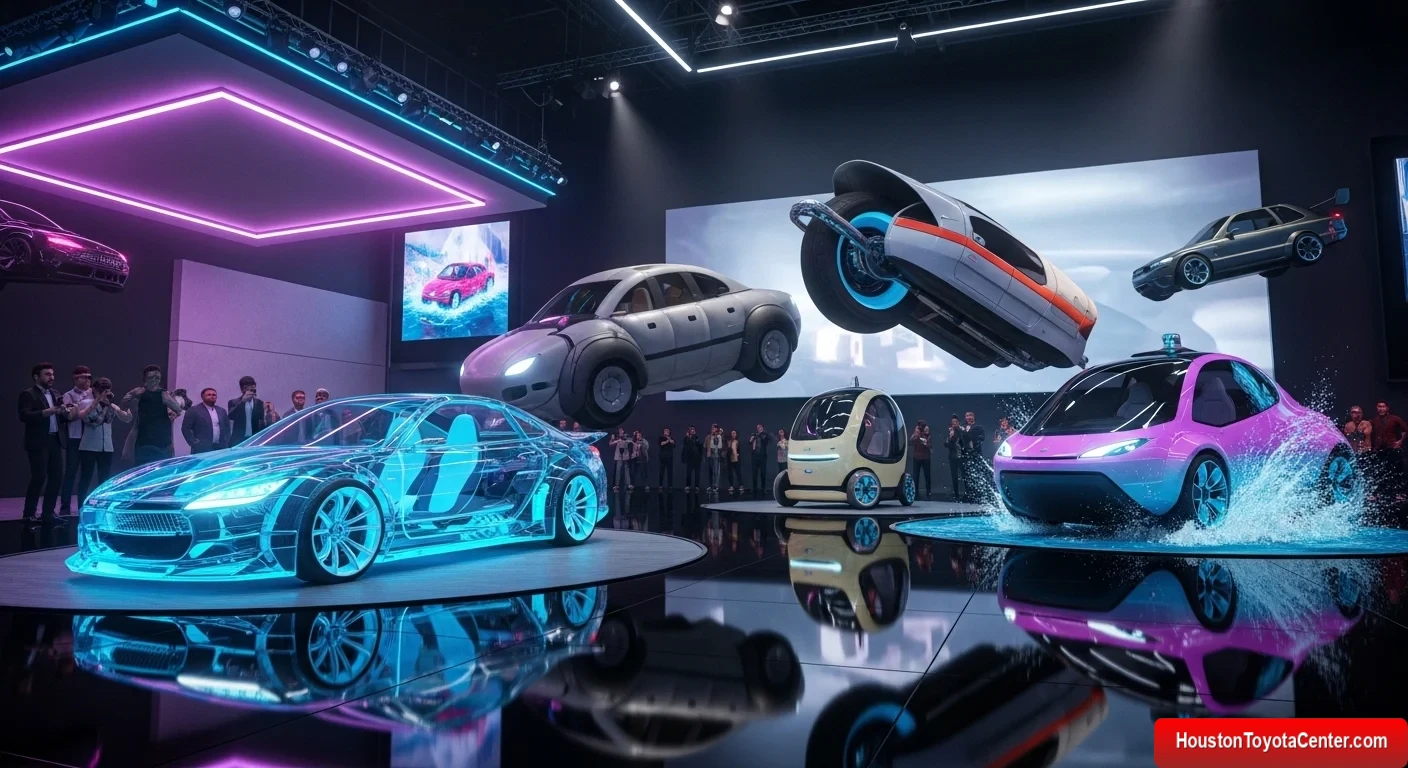
The automotive world has always been a fascinating blend of engineering, artistry, and imagination. While production cars tend to follow practical constraints—safety regulations, cost efficiency, consumer demand—concept cars exist in a completely different universe. They are bold, experimental, and often outrageous visions of what mobility could become. Freed from the limitations of mass production, designers and engineers use concept cars as a playground to test unconventional ideas, futuristic aesthetics, and radical technologies.
Some concept cars eventually influence mainstream vehicles, shaping design trends and introducing innovations that become industry standards. Others, however, remain as curious footnotes in automotive history—vehicles so strange, impractical, or ahead of their time that they never stood a chance of reaching production. These are the weirdest concept cars: machines that challenge our understanding of what a car even is.
This article explores some of the most bizarre, imaginative, and unforgettable concept cars ever created, analyzing what made them unique, why they never made it to production, and what they reveal about the evolution of automotive design.
What Makes a Concept Car “Weird”?
Before diving into specific examples, it’s worth defining what makes a concept car truly unusual. In general, a “weird” concept car tends to exhibit one or more of the following characteristics:
FREE: Quickly identify and understand problems with your vehicle 🚘
CLICK HERE- Unconventional Design: Shapes that defy traditional automotive proportions.
- Experimental Technology: Features that are impractical, untested, or too expensive.
- Radical Functionality: Vehicles that blur the line between car, pod, and living space.
- Absurd or Playful Ideas: Concepts that prioritize fun or spectacle over usability.
Concept cars are often revealed at major auto shows, where manufacturers compete for attention. The weirder the idea, the more buzz it generates. But attention doesn’t always translate into viability.
The Role of Concept Cars in Automotive Innovation
Concept cars are not merely publicity stunts—they serve important purposes:
| Purpose | Description |
|---|---|
| Design Exploration | Allows designers to experiment with bold shapes and aesthetics |
| Technology Testing | Introduces new propulsion systems, materials, and interfaces |
| Brand Identity | Reinforces a company’s vision and future direction |
| Market Research | Gauges public reaction to new ideas |
However, when a concept becomes too radical, it often crosses the line from “visionary” to “impractical.”
The Most Bizarre Concept Cars Ever Created
1. The Transparent Dream: Glass-Dominated Vehicles
Some concept cars pushed the idea of transparency to extremes, featuring bodies made largely of glass or transparent materials. These vehicles aimed to create a seamless connection between passengers and their surroundings.
While visually stunning, these designs faced obvious issues:
- Lack of privacy
- Heat management problems
- Structural weakness
- Safety concerns in collisions
Despite their futuristic appeal, such cars remained firmly in the concept realm.
2. The Rolling Living Room
Several concept cars envisioned the vehicle as an extension of the home—a mobile living space rather than a means of transportation. These designs often included:
- Swiveling lounge chairs
- Fold-out beds
- Entertainment systems
- Minimal or hidden driving controls
The idea anticipated a future of autonomous driving, where passengers no longer need to focus on the road. However, at the time these concepts were introduced, the technology required to make them practical simply didn’t exist.
3. The One-Wheel Wonders
Among the strangest automotive experiments are single-wheel vehicles. These monowheel concepts attempted to redefine balance and mobility.
While they looked like something out of science fiction, they posed serious challenges:
- Stability issues
- Limited maneuverability
- Safety risks during sudden stops
As a result, they remained curiosities rather than viable transportation solutions.
4. Amphibious Oddities
Some concept cars were designed to operate both on land and in water. These amphibious vehicles often featured:
- Boat-like hulls
- Retractable wheels
- Propulsion systems for water navigation
While the idea is undeniably cool, the execution proved difficult. Combining the requirements of both cars and boats often led to compromises in performance and safety.
5. Bubble Cars Gone Wild
Bubble cars have existed in production form, but some concept versions took the idea to an extreme. These vehicles featured:
- Spherical or dome-shaped cabins
- Minimalistic interiors
- Tiny footprints
They were often designed for dense urban environments, emphasizing efficiency and maneuverability. However, their unconventional appearance and limited practicality kept them from becoming mainstream.
6. Modular and Transforming Vehicles
One of the most ambitious ideas in automotive design is the modular car—a vehicle that can change shape or function depending on the situation.
Examples include:
- Cars that split into multiple smaller units
- Vehicles that transform into trucks or bikes
- Interchangeable body panels
While conceptually fascinating, these designs are incredibly complex and expensive to engineer, making them impractical for mass production.
7. Futuristic Pods
Some concept cars abandoned traditional automotive design altogether, opting for pod-like structures. These vehicles often looked more like spacecraft than cars.
Key features included:
- Fully enclosed cabins
- Minimal controls
- Autonomous driving systems
These concepts were often previews of a future dominated by self-driving technology. While many of their ideas are now becoming reality, the designs themselves were often too extreme for production.
8. Animal-Inspired Designs
Nature has long been a source of inspiration for designers, but some concept cars took this to unusual extremes. Vehicles were modeled after:
- Insects
- Fish
- Reptiles
These designs often featured organic shapes, unusual textures, and unconventional proportions. While visually striking, they were often impractical and polarizing.
9. Inflatable Cars
Yes, inflatable cars actually existed as concept designs. These vehicles used air-filled structures instead of traditional rigid bodies.
Potential advantages included:
- Lightweight construction
- Easy storage
- Reduced material costs
However, the downsides were significant:
- Durability concerns
- Safety issues
- Limited lifespan
Unsurprisingly, these ideas never made it past the concept stage.
10. Solar-Powered Experiments
Solar-powered cars are not inherently weird, but some concept versions pushed the idea to extremes. These vehicles often featured:
- Entire surfaces covered in solar panels
- Ultra-lightweight designs
- Minimalist interiors
While environmentally friendly, they faced limitations in power output and practicality. Nevertheless, they played an important role in advancing sustainable automotive technology.
Why These Cars Never Made Production
Despite their creativity, most of these concept cars never became reality. Several factors contributed to their demise:
1. Technical Limitations
Many concepts relied on technologies that were not yet mature. For example:
- Autonomous driving systems were not advanced enough
- Materials were too expensive or unreliable
- Power sources were insufficient
2. Safety Regulations
Modern vehicles must meet strict safety standards. Many concept cars simply could not comply due to:
- Fragile structures
- Unconventional designs
- Lack of essential safety features
3. Cost Constraints
Even if a concept car was technically feasible, it might have been too expensive to produce. Mass production requires:
- Economies of scale
- Affordable materials
- Efficient manufacturing processes
4. Consumer Acceptance
Not all bold ideas resonate with consumers. Many concept cars were:
- Too strange in appearance
- Impractical for everyday use
- Misaligned with market demand
5. Branding and Strategy
Sometimes, concept cars are never intended for production. Instead, they serve as:
- Design exercises
- Marketing tools
- Statements of intent
The Legacy of Weird Concept Cars
Even though these vehicles never reached production, their influence can still be felt today. Many ideas that once seemed bizarre have become mainstream:
- Touchscreen interfaces
- Electric propulsion
- Autonomous features
- Advanced aerodynamics
Concept cars act as stepping stones, allowing manufacturers to explore possibilities without commitment.
A Closer Look at Concept Car Evolution
| Era | Characteristics | Examples of Trends |
|---|---|---|
| 1950s–60s | Space-age designs | Tailfins, jet-inspired shapes |
| 1970s–80s | Experimentation | Wedge shapes, digital dashboards |
| 1990s–2000s | Technology focus | Hybrid systems, early autonomy |
| 2010s–Present | Sustainability & AI | Electric vehicles, self-driving pods |
Each era reflects the cultural and technological context of its time.
Are Today’s Weird Concepts the Future?
What seems strange today may become normal tomorrow. Consider how ideas once considered radical—like electric cars—are now becoming standard.
Current “weird” concepts often focus on:
- Fully autonomous driving
- Shared mobility
- Sustainable materials
- AI-driven interfaces
As technology advances, some of these ideas may eventually become part of everyday life.
The Fine Line Between Genius and Absurdity
The weirdest concept cars occupy a unique space between innovation and imagination. They challenge conventions, provoke thought, and push the boundaries of what is possible.
While many of these vehicles never made it to production, they serve an important purpose:
- Inspiring designers
- Advancing technology
- Shaping the future of mobility
In the end, the automotive industry thrives on experimentation. Without bold, unconventional ideas—even the strange and impractical ones—progress would stagnate.
Conclusion
The weirdest concept cars that never made production are more than just oddities; they are glimpses into alternate realities of transportation. They remind us that innovation often requires taking risks and embracing the unconventional.
Some concepts fail because they are too ambitious. Others fail because the world simply isn’t ready for them. But all of them contribute to the ongoing evolution of the automobile.
As we move toward a future defined by electric power, autonomy, and sustainability, it’s worth remembering that today’s strange ideas might be tomorrow’s standard features.
And somewhere, in a design studio or engineering lab, the next bizarre concept car is already taking shape—waiting to challenge everything we think we know about cars.
Leave a Reply