
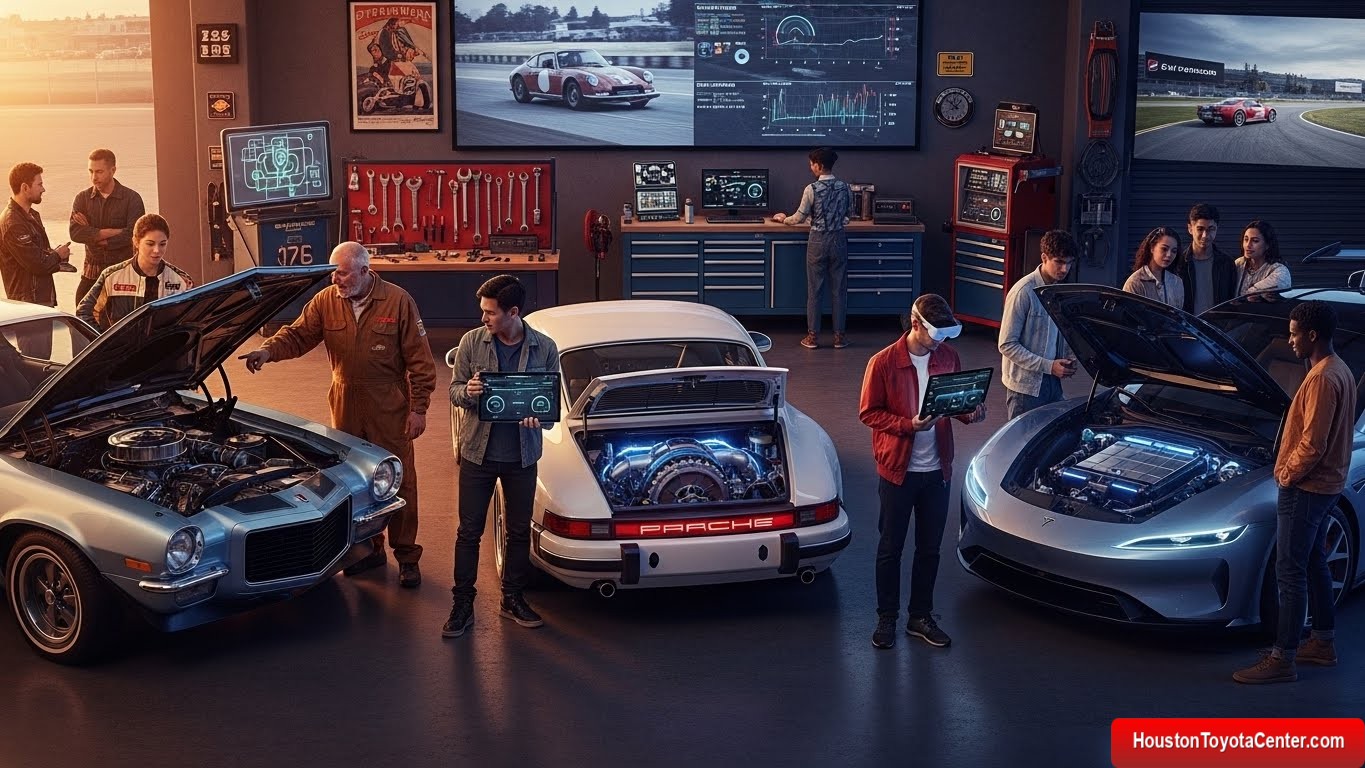
The year is 2025, and the automotive landscape has undergone a transformation unlike any other in its century-long history. Electric vehicles (EVs), once relegated to the fringes of the industry as niche curiosities or eco-conscious compromises, now dominate roads across the globe. With major markets like the European Union, California, and China accelerating their transition toward electrification—many setting hard deadlines for the sale of new internal combustion engine (ICE) vehicles by 2030—the reality of an electrified world is no longer a distant possibility. It is here, reshaping not only how we drive but also the very essence of car enthusiast culture itself. For decades, car culture has been built on the visceral thrill of roaring engines, the tactile satisfaction of mechanical tinkering, and the communal bonds forged at drag strips, dyno days, and local car meets. Now, as EVs become increasingly prevalent, the question looms large: What becomes of this rich, deeply emotional subculture in a world where the engine’s growl is replaced by near-silent operation, and where software updates can alter performance as easily as a weekend wrenching session?
This shift is neither simple nor linear. While some enthusiasts mourn the decline of the internal combustion engine as the end of an era, others see electrification as an opportunity to redefine what it means to be a car enthusiast. The rise of EVs has sparked heated debates within the community, with purists clinging to the traditions of the past and progressives embracing the technological frontier of the future. Yet, beneath these surface tensions lies a deeper truth: car culture has always been about more than just the machinery. It is about identity, community, and the shared passion for mobility as an art form. As the industry pivots toward electrification, the challenge—and the opportunity—is to preserve the soul of car culture while adapting to the realities of a new technological paradigm.
For automotive enthusiasts, the transition to an electrified world represents both a reckoning and a renaissance. On one hand, the loss of iconic elements like the rumble of a V8 or the ritual of a manual transmission threatens to sever ties with the cultural touchstones that have defined generations of gearheads. On the other hand, EVs introduce unprecedented possibilities for performance, customization, and connectivity that could attract a new wave of enthusiasts. The instant torque delivery of electric motors, for instance, has redefined acceleration benchmarks, while advancements in battery technology and software integration have opened the door to entirely new forms of modification and personalization. Moreover, the global push for sustainability has imbued car culture with a renewed sense of purpose, as enthusiasts grapple with how to reconcile their love of performance with the imperative of environmental responsibility.
This article explores the evolving landscape of car enthusiast culture in an electrified world, examining the historical roots of this vibrant subculture, the challenges posed by the rise of EVs, and the innovative ways in which enthusiasts are adapting to this new reality. We will delve into the emotional and practical dimensions of this transition, from the loss of traditional driving experiences to the emergence of new communities and events centered around electric vehicles. Along the way, we will highlight the role of automakers—particularly those like Toyota, which has long been a bridge between tradition and innovation—in shaping the future of car culture. By the end of this exploration, it will become clear that while the face of car enthusiast culture may be changing, its heart remains steadfast. The future of car culture is not one of extinction but of evolution, a dynamic fusion of old and new that promises to carry the spirit of the automobile into the next century.
FREE: Quickly identify and understand problems with your vehicle 🚘
CLICK HEREThe Historical Roots of Car Enthusiast Culture
To understand the profound impact of electrification on car enthusiast culture, it is essential to first examine the historical roots that have shaped this vibrant subculture. Car enthusiasm as we know it today did not emerge overnight; it is the product of decades of cultural, technological, and social evolution, deeply intertwined with the rise of the automobile itself. The story begins in the early 20th century, when cars transitioned from luxury novelties for the wealthy to accessible tools of personal mobility for the masses. As automobiles became more commonplace, they ceased to be mere transportation devices and began to embody personal identity, freedom, and aspiration. This shift laid the foundation for a culture centered around the automobile as both a mechanical marvel and a canvas for self-expression.
The post-World War II era marked a pivotal moment in the development of car enthusiast culture, particularly in the United States. The economic boom of the 1950s and 1960s fueled a surge in car ownership, while advances in manufacturing made powerful, stylish vehicles more affordable. It was during this period that the concept of the “muscle car” emerged, epitomized by models like the Chevrolet Camaro, Ford Mustang, and Dodge Charger. These cars were not just functional—they were symbols of rebellion, individuality, and raw power. Enthusiasts flocked to drag strips and street races, where the roar of V8 engines became the soundtrack of a generation. The culture was deeply participatory: car owners took pride in modifying their vehicles, whether through engine swaps, custom paint jobs, or suspension upgrades. This hands-on approach fostered a sense of ownership and mastery, as enthusiasts transformed their cars into unique expressions of their personalities.
Parallel to the muscle car phenomenon, the import scene began to take shape in the 1970s and 1980s, driven by the rise of Japanese and European manufacturers. Cars like the Toyota Supra, Nissan Skyline, and Porsche 911 introduced enthusiasts to new dimensions of performance and engineering. The import scene was characterized by a focus on precision, handling, and technological innovation, often appealing to a younger, more tech-savvy demographic. This era also saw the birth of grassroots motorsports, such as drifting and time attack events, which emphasized skill and creativity over sheer horsepower. The influence of Japanese pop culture, particularly through films like The Fast and the Furious franchise, further cemented the import scene’s place in global car culture, creating a shared language and set of values among enthusiasts worldwide.
At the heart of car enthusiast culture has always been the sense of community. From the informal gatherings of hot rodders in Southern California to the meticulously organized car shows of modern times, enthusiasts have sought out spaces to connect, share knowledge, and celebrate their shared passion. These communities were often built around physical spaces—local garages, auto parts stores, and race tracks—that served as hubs for collaboration and camaraderie. The rise of the internet in the late 20th century transformed these localized networks into global phenomena, with forums, social media groups, and online marketplaces enabling enthusiasts to connect across borders. Yet, even in the digital age, the physical act of gathering remains central to the culture. Car meets, where enthusiasts showcase their vehicles and exchange stories, continue to be a cornerstone of the community, embodying the spirit of inclusivity and mutual respect that defines car culture.
Another defining feature of car enthusiast culture has been its emphasis on mechanical literacy and DIY ethos. For many enthusiasts, the joy of owning a car extends far beyond driving—it lies in understanding how it works and taking an active role in its maintenance and modification. This hands-on approach has fostered a deep appreciation for the intricacies of internal combustion engines, from the rhythmic pulse of a well-tuned exhaust to the tactile feedback of a manual transmission. The process of wrenching—whether rebuilding an engine, tuning a carburetor, or fabricating custom parts—has long been a rite of passage for aspiring enthusiasts, symbolizing both technical skill and personal investment. This culture of tinkering has also given rise to a thriving aftermarket industry, with companies specializing in performance parts, tools, and accessories that cater to the needs of DIY enthusiasts.
The emotional dimension of car enthusiast culture cannot be overstated. Cars have always been more than machines; they are vessels for memory, identity, and aspiration. For many, a car represents a milestone—a first vehicle, a dream purchase, or a family heirloom passed down through generations. The sensory experience of driving an ICE vehicle, with its symphony of mechanical sounds and vibrations, creates a visceral connection between driver and machine that transcends mere functionality. This emotional resonance has been a driving force behind the loyalty and passion that characterize car enthusiast culture, fostering a sense of belonging and continuity that spans generations.
As we stand on the brink of an electrified future, it is this rich tapestry of history, community, and emotion that provides context for the challenges and opportunities ahead. The transition to electric vehicles is not merely a technological shift; it is a cultural upheaval that threatens to disrupt the very foundations of car enthusiast culture. Yet, by understanding the historical roots of this subculture, we can better appreciate its resilience and adaptability. The story of car enthusiast culture is one of constant evolution, shaped by the interplay of technology, society, and human creativity. As we navigate the electrified world of tomorrow, this legacy of innovation and community will serve as both a guide and an inspiration.
The Electrification Revolution: A New Era of Automotive Innovation
The rise of electric vehicles represents one of the most profound shifts in automotive history, fundamentally altering the way cars are designed, manufactured, and experienced. While EVs were once dismissed as slow, impractical novelties, advancements in battery technology, powertrain efficiency, and charging infrastructure have propelled them into the mainstream. Today, electric vehicles are no longer just an alternative to internal combustion engines—they are setting new benchmarks for performance, efficiency, and driving dynamics. The tipping point came in the early 2020s, as automakers worldwide committed to electrification strategies, spurred by tightening emissions regulations, consumer demand for sustainability, and breakthroughs in battery technology. Governments in Europe, North America, and Asia implemented aggressive policies to accelerate the transition, with bans on new ICE vehicle sales scheduled as early as 2030 in some regions. In response, legacy automakers such as Ford, General Motors, and Volkswagen launched ambitious EV lineups, while new entrants like Tesla, Rivian, and Lucid Motors redefined expectations for what an electric car could be.
Perhaps the most transformative aspect of the EV revolution has been its impact on performance expectations. Early electric vehicles were often marketed primarily for their environmental benefits, but as battery technology improved, so too did their performance capabilities. The inherent advantages of electric powertrains—such as instant torque delivery, simplified mechanical layouts, and precise power distribution—allowed EVs to outperform many traditional sports cars in acceleration and handling. The Tesla Model S Plaid, for example, shattered preconceptions about electric vehicles with its sub-two-second 0-60 mph acceleration, rivaling the performance of hypercars costing multiple times its price. Similarly, the Porsche Taycan Turbo S demonstrated that electric vehicles could offer not only blistering speed but also refined driving dynamics, proving that electrification need not come at the expense of driving engagement. These high-performance EVs have played a crucial role in reshaping perceptions, convincing many skeptics that electric vehicles could be as thrilling to drive as their combustion-powered counterparts.
Beyond outright performance, EVs have also redefined the driving experience in more subtle but equally significant ways. The near-silent operation of electric motors, once considered a drawback for enthusiasts who prized the visceral feedback of an engine, has been reimagined as a feature that enhances the purity of driving. Without the constant noise of an internal combustion engine, drivers can experience road feedback and handling characteristics with greater clarity, fostering a different kind of connection between driver and machine. Additionally, the integration of advanced software and over-the-air updates has introduced a level of customization and adaptability previously unimaginable in traditional vehicles. Features like adjustable regenerative braking, customizable drive modes, and real-time performance telemetry allow drivers to fine-tune their EVs to suit their preferences, creating a more personalized driving experience.
The rise of EVs has also catalyzed a shift in the broader automotive ecosystem, influencing everything from motorsports to aftermarket modifications. Formula E, once a niche series, has grown into a globally recognized championship that attracts major manufacturers and showcases the potential of electric racing technology. Meanwhile, grassroots EV drag racing leagues and time attack events have emerged, providing new competitive outlets for performance-oriented enthusiasts. The aftermarket industry, long dominated by bolt-on modifications for ICE vehicles, has begun adapting to the unique demands of electric vehicles, with companies developing performance-oriented battery upgrades, cooling solutions, and software tuning options. These developments signal that the culture of performance modification, once thought to be incompatible with EVs, is not only surviving but evolving in new and unexpected ways.
As the automotive industry continues its rapid transition toward electrification, the implications for car enthusiast culture are profound. The rise of EVs has not only changed the way cars are built but also redefined what it means to be a car enthusiast in the 21st century. While some traditional aspects of car culture may fade, new opportunities for engagement, performance, and community are emerging, ensuring that the spirit of car enthusiasm remains alive—even as the machines themselves evolve.
The Challenges of Electrification for Traditional Car Enthusiasts
Despite the undeniable advancements and opportunities presented by electric vehicles, the transition to an electrified automotive landscape has introduced significant challenges for traditional car enthusiasts. At the heart of these challenges lies the profound shift in the sensory and mechanical experience of driving—a shift that strikes at the very core of what many enthusiasts cherish about their relationship with cars. For decades, the internal combustion engine has been the heartbeat of car culture, its roar, vibrations, and mechanical intricacies forming the foundation of the enthusiast experience. The near-silent operation of electric vehicles, while lauded for its refinement, strips away the visceral auditory feedback that has long been synonymous with performance driving. The absence of engine noise, exhaust harmonics, and the tactile engagement of a manual transmission has left many enthusiasts feeling disconnected from their vehicles, as if the soul of the driving experience has been muted. This loss of sensory richness is not merely a matter of preference; for many, it represents a fundamental erosion of the emotional bond that has historically tied drivers to their machines.
Beyond the sensory dimension, the shift to electric vehicles also disrupts the deeply ingrained DIY ethos that has long defined car enthusiast culture. Traditional car ownership has always been a hands-on endeavor, with enthusiasts taking pride in their ability to modify, repair, and personalize their vehicles. The mechanical complexity of internal combustion engines, while demanding, has fostered a culture of tinkering and experimentation, where enthusiasts could learn the intricacies of their cars through trial and error. In contrast, the architecture of electric vehicles is inherently less accessible to the average enthusiast. EVs rely on highly integrated systems, with software playing a central role in vehicle performance and functionality. Unlike the straightforward mechanical components of ICE vehicles—such as carburetors, exhaust systems, and manual transmissions—EVs are dominated by sealed battery packs, proprietary software, and complex electrical systems that are often off-limits to amateur modification. This shift has created a sense of alienation among traditional enthusiasts, who feel that the barrier to entry for hands-on involvement has become prohibitively high. For many, the ability to “wrench” on their own cars is not just a practical skill but a rite of passage, a way to forge a deeper connection with their vehicles. The move toward software-driven systems threatens to render this aspect of car culture obsolete, leaving enthusiasts feeling as though they are losing control over their machines.
The maintenance and ownership experience of electric vehicles further compounds these challenges. In the world of ICE vehicles, routine maintenance tasks such as oil changes, spark plug replacements, and exhaust modifications have long served as touchpoints for enthusiasts to engage with their cars. These activities, while sometimes tedious, were opportunities to learn about the inner workings of the vehicle and to make incremental improvements. In contrast, EVs require far less mechanical maintenance, with fewer moving parts and no need for traditional servicing like oil changes or exhaust work. While this reduction in maintenance demands is often touted as a benefit for everyday drivers, it represents a loss of ritual and engagement for enthusiasts. The absence of these routine interactions diminishes the sense of ongoing involvement that has traditionally characterized car ownership, making the relationship between driver and vehicle feel more transactional and less personal.
Another critical challenge lies in the evolving nature of performance driving. For many enthusiasts, the thrill of driving is inseparable from the mechanical interplay between driver and machine—a feedback loop that includes the feel of the clutch, the weight of the steering, and the responsiveness of the throttle. Electric vehicles, with their instant torque delivery and often heavy battery packs, offer a different kind of performance that can feel disconnected from the nuanced dynamics of ICE vehicles. While EVs excel in straight-line acceleration, their weight distribution and handling characteristics can differ significantly from traditional sports cars, leading some enthusiasts to argue that they lack the “soul” and driver engagement of their combustion-powered counterparts. Additionally, the limitations of battery technology—such as reduced performance during repeated high-speed runs due to thermal constraints—pose challenges for track enthusiasts who rely on consistent power delivery over extended periods. These factors have sparked debates within the enthusiast community about whether EVs can truly replicate the driving experience that has long been the hallmark of performance car culture.
Perhaps the most profound challenge, however, is the cultural and generational divide that electrification has exposed within the car enthusiast community. For older enthusiasts who grew up in an era defined by the mechanical artistry of internal combustion engines, the transition to EVs can feel like a betrayal of the values and traditions that have shaped their identities. Conversely, younger enthusiasts, who have come of age in a world increasingly defined by digital technology and environmental consciousness, may view EVs as a natural evolution of car culture—one that aligns with their values and expectations. This generational tension has led to a fragmentation of the enthusiast community, with some clinging to the past and others embracing the future. Bridging this divide will require a reimagining of what car culture can be, one that honors the legacy of traditional enthusiast practices while embracing the possibilities of a new technological era.
These challenges are not insurmountable, but they underscore the profound cultural shift that electrification represents. For traditional car enthusiasts, the move toward electric vehicles is not merely a change in technology—it is a transformation of the very essence of what it means to love cars. As the industry continues to evolve, the question remains: Can car culture adapt to this new reality, or will the traditions and practices that have defined it for generations be lost to the march of progress?
The Evolution of Car Enthusiast Culture in an Electrified World
Despite the challenges posed by electrification, car enthusiast culture is not fading—it is evolving. Enthusiasts, known for their adaptability and passion, are finding innovative ways to preserve the spirit of car culture while embracing the opportunities presented by electric vehicles. One of the most striking developments in this transition is the emergence of new communities and events tailored specifically to EV owners and enthusiasts. Traditional car meets, once dominated by the rumble of V8 engines and the sight of lifted hoods revealing intricate engine bays, are now increasingly inclusive of electric vehicles. Events such as Tesla Motors Club gatherings, EV-specific track days, and hybrid car meets have gained traction, creating spaces where EV owners can connect, share experiences, and showcase their vehicles. These gatherings often emphasize the unique aspects of EV ownership, from discussions about battery efficiency and charging infrastructure to demonstrations of software-based performance tuning. By fostering these new communities, enthusiasts are ensuring that the social fabric of car culture remains intact, even as the machines themselves change.
Another significant shift is the adaptation of traditional enthusiast activities to accommodate electric vehicles. Drag racing, for example, has undergone a transformation as EVs have proven their mettle on the strip. The instant torque delivery of electric motors has redefined acceleration benchmarks, with EVs like the Tesla Model S Plaid and Lucid Air Sapphire consistently outperforming many high-end ICE vehicles in quarter-mile races. This has led to the rise of EV-specific drag racing leagues, such as the National Electric Drag Racing Association (NEDRA), which organizes events exclusively for electric vehicles. These competitions not only highlight the performance capabilities of EVs but also provide a platform for enthusiasts to engage in the same competitive spirit that has long defined drag racing culture. Similarly, time attack events and track days are increasingly welcoming EVs, with organizers developing new categories and rules to account for the unique characteristics of electric powertrains. These adaptations demonstrate that the thrill of competition and the pursuit of performance are not exclusive to internal combustion engines—they are values that transcend the technology under the hood.
The integration of technology into car enthusiast culture is another hallmark of this evolution. Electric vehicles, with their reliance on software and digital interfaces, have opened up new avenues for customization and personalization that resonate with a tech-savvy generation of enthusiasts. While traditional modifications focused on mechanical components like exhaust systems and suspension setups, EV modifications often center around software tuning, battery optimization, and even augmented reality interfaces. Companies like Unplugged Performance and Lunaz have emerged as leaders in the EV modification space, offering performance upgrades and bespoke customizations that cater to enthusiasts seeking to personalize their electric vehicles. Software-based tuning, in particular, has become a popular avenue for enthusiasts, with platforms like Teslalab enabling owners to adjust everything from acceleration curves to regenerative braking settings. This shift toward digital customization reflects a broader trend in car culture, where the line between hardware and software is increasingly blurred, and where enthusiasts are leveraging technology to create unique driving experiences.
Social media and digital platforms have also played a pivotal role in shaping the evolution of car enthusiast culture in an electrified world. Platforms like Instagram, YouTube, and TikTok have become essential tools for EV enthusiasts to share their experiences, showcase their modifications, and connect with like-minded individuals. Influencers and content creators specializing in EVs have gained massive followings, demystifying electric vehicle ownership and highlighting the unique aspects of driving and modifying EVs. These digital communities have not only expanded the reach of car culture but also made it more accessible to a younger, more diverse audience. For many new enthusiasts, their introduction to car culture begins not with a local car meet but with a viral video or an online forum discussion. This shift has democratized car culture, breaking down barriers to entry and fostering a more inclusive environment where enthusiasts of all backgrounds can participate.
Perhaps most importantly, the evolution of car enthusiast culture in an electrified world is characterized by a growing emphasis on sustainability and environmental responsibility. While traditional car culture has often been associated with high-performance vehicles and their accompanying carbon footprints, the rise of EVs has introduced a new dimension of purpose to the community. Many enthusiasts are now embracing the opportunity to align their passion for cars with a commitment to reducing environmental impact. This shift is evident in the increasing number of car clubs and events that prioritize sustainability, such as eco-rallies that combine driving challenges with environmental education. Additionally, the repurposing of classic cars through EV conversions—where iconic ICE vehicles are retrofitted with electric powertrains—has emerged as a popular trend, allowing enthusiasts to preserve the aesthetic and cultural heritage of classic cars while embracing modern sustainability practices. Companies like Zelectric Motors and EV West have gained recognition for their work in this space, offering conversion kits and services that enable enthusiasts to electrify their beloved classics.
The evolution of car enthusiast culture is not without its growing pains, but it is clear that the community is adapting with resilience and creativity. By embracing new technologies, fostering inclusive communities, and redefining what it means to be a car enthusiast, the culture is not only surviving the transition to electrification—it is thriving. As the lines between traditional and electric car culture continue to blur, the result is a richer, more diverse ecosystem that honors the past while looking boldly toward the future.
Technological Adaptations and Innovations in the EV Enthusiast Space
As car enthusiast culture evolves in response to electrification, technological advancements are playing a pivotal role in bridging the gap between traditional and electric vehicle experiences. One of the most notable innovations is the development of synthetic sound systems designed to replicate the auditory feedback that enthusiasts associate with internal combustion engines. Recognizing the emotional significance of engine noise, automakers and third-party developers have begun integrating artificial soundscapes into electric vehicles, allowing drivers to experience the roar of a V8 or the whine of a turbocharged engine through the car’s audio system. For example, BMW collaborated with renowned composer Hans Zimmer to create a bespoke sound profile for its i4 and iX models, blending futuristic tones with echoes of traditional engine notes. Similarly, companies like SoundRacer and PedalCell have introduced aftermarket solutions that generate engine-like sounds based on throttle input and vehicle speed, providing enthusiasts with a sensory experience that feels familiar yet distinctly modern. These innovations not only address the sensory void left by silent electric motors but also open up new possibilities for personalization, as drivers can choose from a variety of sound profiles to match their preferences.
Performance tuning, a cornerstone of traditional car culture, has also undergone a radical transformation in the EV era. While ICE vehicles rely on physical modifications such as turbochargers, exhaust systems, and engine swaps, electric vehicles offer a different kind of canvas for performance enhancement—one dominated by software and electronics. Over-the-air (OTA) updates, a hallmark of modern EVs, have become a powerful tool for enthusiasts seeking to optimize their vehicles’ performance. Tesla, for instance, has pioneered the concept of “performance upgrades” delivered via software, allowing owners to unlock additional power and acceleration with a simple update. Third-party tuning companies have taken this a step further, developing specialized software tools that enable enthusiasts to fine-tune parameters such as torque distribution, regenerative braking intensity, and even battery cooling systems. Companies like Unplugged Performance and EV Tuning Solutions have emerged as leaders in this space, offering custom tuning packages that push EVs beyond their factory specifications. These advancements have democratized performance tuning, making it accessible to a broader audience while preserving the spirit of experimentation that has long defined car culture.
Battery technology, too, is becoming a focal point for enthusiast-driven innovation. While the sealed nature of EV battery packs has traditionally limited opportunities for modification, recent advancements in modular battery designs and aftermarket solutions are beginning to change this. Companies like Zero Labs Automotive and Kreisel Electric are developing high-performance battery upgrades that increase range, improve thermal management, and enhance power delivery. These upgrades are particularly appealing to track enthusiasts, who often face challenges related to battery degradation and thermal throttling during high-performance driving. Additionally, the rise of second-life battery applications—where used EV batteries are repurposed for energy storage or performance enhancements—has opened up new avenues for creative experimentation. Enthusiasts are now exploring ways to integrate these repurposed batteries into their vehicles, creating hybrid systems that combine the best of both worlds. This trend not only extends the lifespan of EV components but also aligns with the growing emphasis on sustainability within car culture.
The integration of gaming and simulation technologies into the EV enthusiast space represents another exciting frontier. As electric vehicles become increasingly connected and software-driven, they are blurring the lines between real-world driving and virtual experiences. Platforms like Gran Turismo and Forza Motorsport have begun incorporating EVs into their lineups, allowing enthusiasts to explore the performance characteristics of electric vehicles in a virtual environment. More significantly, some automakers are leveraging gaming technology to enhance the real-world driving experience. For example, Porsche’s Taycan features a “Sport Chrono” app that integrates with gaming consoles to provide real-time performance data and track analytics. Similarly, Tesla’s in-car gaming system, powered by its high-performance computing hardware, offers a range of driving simulations that appeal to both casual gamers and serious enthusiasts. These innovations not only make EV ownership more engaging but also create new opportunities for enthusiasts to connect and compete, whether in virtual races or real-world track events.
Perhaps the most transformative aspect of these technological adaptations is their ability to foster a sense of continuity between traditional and electric car culture. By addressing the sensory, performance, and customization needs of enthusiasts, these innovations ensure that the core values of car culture—passion, creativity, and community—are preserved even as the underlying technology evolves. As the EV enthusiast space continues to mature, it is clear that technology will play a central role in shaping the future of car culture, offering new ways to connect, create, and celebrate the art of driving.
The Role of Automakers in Bridging the Gap Between Tradition and Innovation
As the automotive industry navigates the transition to electrification, automakers are playing a pivotal role in shaping the future of car enthusiast culture. Recognizing the deep emotional and cultural ties that enthusiasts have to traditional internal combustion engine (ICE) vehicles, many manufacturers are strategically balancing innovation with heritage to ensure that the spirit of car culture remains intact. Among these, Toyota stands out as a prime example of a company that has successfully bridged the gap between tradition and electrification, leveraging its rich history of performance engineering to create electric vehicles that resonate with both longtime enthusiasts and newcomers to the scene.
Toyota’s approach to electrification has been defined by its commitment to a “multi-pathway” strategy, which acknowledges that the transition to an all-electric future will not happen overnight. Rather than abandoning its ICE heritage, Toyota has embraced a diversified portfolio that includes hybrid, plug-in hybrid, battery-electric, and even hydrogen fuel cell vehicles. This strategy allows the company to cater to a wide range of consumer preferences while gradually introducing enthusiasts to the possibilities of electrified performance. A key element of this approach has been the integration of electrification into Toyota’s performance-oriented GR (Gazoo Racing) division, which has long been synonymous with high-performance ICE vehicles like the GR Supra and GR Corolla. In 2025, Toyota unveiled the FT-Se, a fully electric sports car concept that embodies the company’s vision for the future of enthusiast driving. Designed with input from Toyota’s motorsport division, the FT-Se combines the instant torque and precision handling of an electric powertrain with the driver-focused engineering principles that have defined GR vehicles. By leveraging its expertise in performance engineering and applying it to electrified platforms, Toyota has demonstrated that electric vehicles can deliver the same level of engagement and excitement that enthusiasts have come to expect from traditional sports cars.
Beyond its product strategy, Toyota has also taken steps to actively engage with the enthusiast community through events, partnerships, and educational initiatives. The company’s annual Toyota Gazoo Racing Festival, for example, has evolved to include dedicated EV showcases and test-drive experiences, allowing enthusiasts to experience the performance capabilities of electric vehicles firsthand. Additionally, Toyota has partnered with grassroots motorsport organizations to support the development of EV-specific racing series, such as the Toyota EV Challenge, which provides a platform for amateur drivers to compete in modified electric vehicles. These efforts not only help demystify electric vehicles for traditional enthusiasts but also foster a sense of continuity between the old and new eras of car culture.
Other automakers are similarly leveraging their heritage to ease the transition to electrification. Ford, for instance, has successfully translated the legacy of its iconic Mustang into the all-electric Mustang Mach-E, blending the brand’s performance pedigree with cutting-edge EV technology. Similarly, Porsche has positioned the Taycan as a natural evolution of its sports car lineage, emphasizing driving dynamics and engineering excellence to appeal to purists. These strategies highlight a broader trend among automakers: the recognition that the future of car enthusiast culture depends not only on technological innovation but also on preserving the emotional and cultural connections that have defined the industry for decades.
By prioritizing the needs and values of enthusiasts, automakers like Toyota are ensuring that the transition to electrification does not come at the expense of car culture. Instead, they are redefining what it means to be a car enthusiast in the 21st century, creating a future where tradition and innovation coexist harmoniously.
The Road Ahead: Emerging Trends Shaping the Future of Car Enthusiast Culture
As the automotive world continues its rapid transition toward electrification, several emerging trends are poised to redefine the landscape of car enthusiast culture in the coming years. One of the most transformative developments is the growing integration of artificial intelligence (AI) and machine learning into vehicle performance and customization. AI-driven systems are already being used to optimize battery management, enhance driving dynamics, and personalize the driving experience based on individual preferences. In the near future, these technologies could enable even more sophisticated forms of customization, allowing enthusiasts to fine-tune their vehicles with unprecedented precision. Imagine an AI system that learns a driver’s habits and automatically adjusts performance parameters—such as throttle response, suspension stiffness, and regenerative braking—to match their style, or a virtual co-pilot that provides real-time feedback during track sessions to help drivers improve their lap times. These advancements could democratize high-performance driving, making it accessible to a broader audience while deepening the connection between driver and machine.
Another trend gaining momentum is the fusion of car culture with gaming and virtual reality (VR). As electric vehicles become increasingly connected and software-driven, the line between physical and digital driving experiences is blurring. Platforms like Gran Turismo and Forza Motorsport are already incorporating real-world EVs into their simulations, offering enthusiasts a chance to explore the performance characteristics of electric vehicles in a virtual environment. However, the next frontier lies in augmented reality (AR) and VR experiences that seamlessly integrate with real-world driving. Companies like NIO and Tesla are experimenting with AR dashboards that overlay performance data, navigation cues, and even gamified challenges onto the driver’s field of view, transforming everyday commutes into interactive experiences. Meanwhile, VR-based driving simulators are becoming more accessible, allowing enthusiasts to practice track driving or participate in virtual car meets from the comfort of their homes. These technologies not only enhance the appeal of EV ownership but also create new opportunities for community building, as enthusiasts connect across digital platforms to share experiences and compete in virtual events.
Sustainability is also emerging as a central pillar of car enthusiast culture, driven by both regulatory pressures and a growing awareness of environmental responsibility. While traditional car culture has often been associated with high-performance vehicles and their accompanying carbon footprints, the rise of EVs has introduced a new dimension of purpose to the community. Enthusiasts are increasingly embracing the opportunity to align their passion for cars with a commitment to reducing environmental impact. This shift is evident in the growing popularity of eco-rallies, which combine driving challenges with environmental education, and in the rise of EV conversion projects that breathe new life into classic cars. Additionally, automakers are responding to this trend by incorporating sustainable materials into vehicle design and manufacturing processes, from recycled plastics to plant-based leather alternatives. As sustainability becomes more deeply ingrained in car culture, it has the potential to attract a new wave of enthusiasts who prioritize environmental responsibility alongside performance and style.
Finally, the globalization of car enthusiast culture is accelerating, thanks to the interconnected nature of digital platforms and the universal appeal of electric vehicles. Social media, online forums, and streaming platforms have made it easier than ever for enthusiasts to connect across borders, sharing knowledge, modifications, and experiences in real time. This globalization is fostering a more diverse and inclusive car culture, where regional traditions and practices are celebrated and shared on a global scale. For example, the Japanese art of tuning is influencing EV modifications in Europe and North America, while American muscle car culture is inspiring the design of high-performance EVs in Asia. This cross-pollination of ideas and practices is enriching car culture, creating a dynamic ecosystem where innovation thrives and boundaries are constantly pushed.
Together, these trends point to a future where car enthusiast culture is more inclusive, technologically advanced, and environmentally conscious than ever before. While the machines may change, the core values of passion, creativity, and community that define car culture will continue to endure, ensuring that the spirit of the automobile remains alive and vibrant for generations to come.
Conclusion: A New Dawn for Car Enthusiast Culture
The transition to an electrified world is not the end of car enthusiast culture—it is the beginning of a new chapter. While the rise of electric vehicles has undeniably disrupted the traditions and practices that have defined car culture for generations, it has also opened the door to unprecedented opportunities for innovation, inclusivity, and evolution. The visceral connection between driver and machine may take on a different form in the age of electrification, but its essence remains unchanged. The roar of an engine may be replaced by the hum of an electric motor, the ritual of wrenching on a carburetor may give way to software tuning, and the sensory feedback of a manual transmission may evolve into the precision of regenerative braking—but the passion, creativity, and community that fuel car culture endure.
What makes car enthusiast culture so resilient is its ability to adapt. Throughout its history, this subculture has weathered countless technological shifts, from the transition from carburetors to fuel injection to the rise of computerized engine management systems. Each time, enthusiasts have found ways to preserve the spirit of their craft while embracing the possibilities of new technology. Electrification is no different. By reimagining what it means to engage with cars—whether through synthetic soundscapes, software-based performance tuning, or EV-specific racing events—the community is proving that car culture is not bound to any single technology but to the shared love of mobility as an art form.
The future of car enthusiast culture will be defined by its ability to balance tradition with innovation. Automakers like Toyota, Ford, and Porsche are leading the way by integrating electrification into their performance lineages, ensuring that the values of driving engagement and engineering excellence remain at the forefront. Meanwhile, grassroots communities are forging new pathways for connection and creativity, from global digital platforms to sustainable practices that align with modern environmental imperatives. As these efforts converge, they are creating a richer, more diverse ecosystem that honors the past while looking boldly toward the future.
For enthusiasts, the road ahead is one of discovery and reinvention. The machines may change, but the heart of car culture—the sense of community, the thrill of performance, and the joy of self-expression—will continue to thrive. In this electrified world, car culture is not fading into obsolescence; it is evolving into something even more dynamic, inclusive, and enduring. The future of car enthusiast culture is not just alive—it is accelerating.
Leave a Reply