
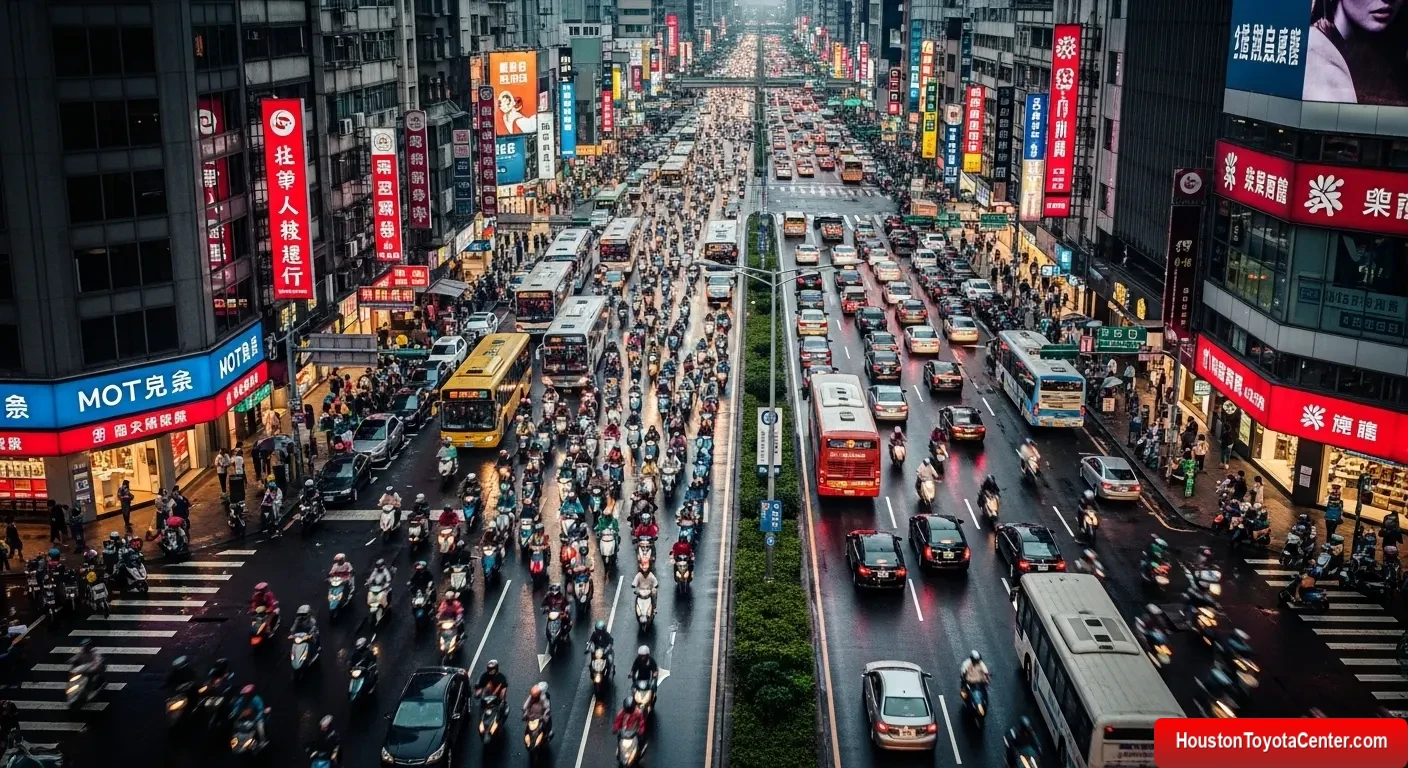
Across much of Asia, the rhythm of daily life is inseparable from the hum of scooter engines and the weaving motion of motorcycles through dense traffic. From sprawling megacities to mid-sized urban centers, two-wheeled vehicles have become more than just a mode of transportation—they are a defining feature of mobility, culture, and economic survival. Their dominance is not accidental but the result of a complex interplay of urban density, economic realities, infrastructure limitations, and cultural adaptation.
This article explores why scooters and motorcycles have come to dominate transportation systems in many Asian cities, how they shape urban life, and what their future might look like in a rapidly changing world.
1. Urban Density and Spatial Constraints
Asian cities are among the most densely populated in the world. Cities like Bangkok, Jakarta, Ho Chi Minh City, and Mumbai face extreme pressure on their road networks. In such environments, traditional car-based transportation systems struggle to function efficiently.
Scooters and motorcycles thrive in these conditions because they require significantly less space. They can:
FREE: Quickly identify and understand problems with your vehicle 🚘
CLICK HERE- Navigate narrow streets and alleyways
- Maneuver through congested traffic
- Park in tight, unconventional spaces
In cities where road expansion is limited due to existing development, two-wheelers provide a practical solution to spatial constraints. Their ability to “filter” through traffic lanes allows them to maintain mobility even during peak congestion.
2. Economic Accessibility
One of the strongest drivers behind the popularity of scooters and motorcycles is affordability. Compared to cars, two-wheelers are:
- Much cheaper to purchase
- Less expensive to maintain
- More fuel-efficient
- Easier to repair
For millions of households, especially in developing economies, owning a car is financially out of reach. A scooter, however, represents an attainable step toward personal mobility.
Cost Comparison Table
| Factor | Scooter/Motorcycle | Car |
|---|---|---|
| Purchase Price | Low | High |
| Fuel Consumption | Very Low | Moderate to High |
| Maintenance Costs | Low | High |
| Parking Costs | Minimal | Significant |
| Insurance | Lower | Higher |
This cost advantage makes scooters particularly appealing to students, low-income workers, and small business owners.
3. Efficiency in Congested Traffic
Traffic congestion is a daily reality in many Asian cities. In places where commuting by car can take hours, scooters offer a faster alternative.
Motorcycles can:
- Bypass long queues of cars
- Use side lanes and informal paths
- Reduce commuting time significantly
In cities like Ho Chi Minh City, it is common for motorcycles to outnumber cars by a wide margin. The entire traffic system adapts to their presence, with drivers expecting and accommodating their movements.
4. Cultural Integration
Over time, scooters and motorcycles have become deeply embedded in the cultural fabric of many Asian societies. They are not just tools—they are part of identity and lifestyle.
Examples of cultural integration include:
- Families traveling together on a single scooter
- Street vendors using motorcycles as mobile businesses
- Delivery services relying almost entirely on two-wheelers
In many cities, it is normal to see:
- A family of four on one bike
- Goods stacked high on the back of a scooter
- Motorcycles used as taxis
This cultural normalization reinforces their dominance and ensures their continued relevance.
5. Informal Economy and Flexibility
The informal economy plays a major role in many Asian cities, and scooters are central to its functioning.
They enable:
- Ride-hailing services (motorcycle taxis)
- Food delivery platforms
- Mobile retail businesses
- Freelance transportation work
Scooters provide flexibility that cars cannot match. A single vehicle can serve multiple income-generating purposes throughout the day.
For example:
| Use Case | Description |
|---|---|
| Ride-hailing | Transporting passengers quickly |
| Food delivery | Navigating tight urban areas efficiently |
| Mobile vending | Selling goods directly from the bike |
| Courier services | Fast document and parcel delivery |
This adaptability makes scooters essential for economic participation.
6. Infrastructure Limitations
Many Asian cities were not originally designed for modern levels of car ownership. Roads are often:
- Narrow
- Poorly maintained
- Lacking in organized traffic systems
Public transportation, while improving, may still be insufficient in coverage or reliability.
Scooters fill the gap by offering:
- Door-to-door convenience
- Independence from fixed routes
- Reduced reliance on public systems
In cities where metro systems are overcrowded or limited, scooters become the default option.
7. Fuel Efficiency and Environmental Considerations
Scooters are generally more fuel-efficient than cars, making them attractive in regions where fuel costs are a concern.
However, their environmental impact is complex.
Advantages:
- Lower fuel consumption per vehicle
- Reduced space usage (less road expansion needed)
Challenges:
- High cumulative emissions due to sheer volume
- Older models contributing to air pollution
- Noise pollution in dense urban areas
Governments are increasingly addressing these issues by promoting electric scooters and stricter emission standards.
8. Government Policies and Regulation
Policy decisions have significantly influenced the growth of two-wheelers.
In many cities:
- Import taxes on cars are high
- Licensing for motorcycles is easier
- Parking regulations favor smaller vehicles
Some governments have even encouraged motorcycle use to reduce congestion.
However, there are also efforts to regulate their impact:
- Helmet laws
- Emission controls
- Restrictions in central business districts
The balance between regulation and accessibility continues to evolve.
9. Safety Concerns
Despite their advantages, scooters and motorcycles come with serious safety risks.
Common issues include:
- High accident rates
- Limited protection for riders
- Risky driving behaviors in dense traffic
In some countries, motorcycles account for a large percentage of traffic fatalities.
Governments and organizations are working to improve safety through:
- Public awareness campaigns
- Mandatory helmet laws
- Improved traffic enforcement
Still, safety remains one of the biggest challenges associated with two-wheeler dominance.
10. Social Dynamics and Inequality
Scooters also reflect broader social and economic patterns.
They often represent:
- Entry-level mobility for lower-income groups
- A stepping stone toward car ownership
- A symbol of independence for young people
In contrast, cars are often associated with higher social status.
This creates a layered transportation system where different modes reflect economic standing.
11. Technological Evolution
The rise of technology is reshaping how scooters are used.
Key developments include:
- Ride-hailing apps integrating motorcycle taxis
- GPS navigation improving efficiency
- Electric scooters reducing emissions
Digital platforms have turned scooters into a core component of the gig economy.
Riders can now:
- Accept jobs in real time
- Optimize routes
- Increase earnings through technology
This integration strengthens their role in urban mobility.
12. The Rise of Electric Scooters
Electric scooters are emerging as a major trend in Asian cities.
Benefits:
- Zero tailpipe emissions
- Lower operating costs
- Reduced noise pollution
Challenges:
- Battery infrastructure limitations
- Initial purchase cost
- Charging accessibility
Governments are increasingly supporting this transition through subsidies and infrastructure investments.
13. Case Study Comparison
City Comparison Table
| City | Dominant Mode | Key Reason |
|---|---|---|
| Ho Chi Minh City | Motorcycles | High density, affordability |
| Jakarta | Motorcycles | Traffic congestion |
| Bangkok | Scooters | Urban layout and tourism |
| Mumbai | Mixed (bikes + trains) | Limited road space |
| Taipei | Scooters | Cultural integration |
Each city demonstrates how local conditions shape transportation choices.
14. Impact on Urban Planning
The dominance of scooters influences how cities are designed.
Urban planners must consider:
- Dedicated motorcycle lanes
- Parking zones for two-wheelers
- Traffic flow patterns
In some cities, entire systems are built around motorcycle traffic.
However, this can create challenges when trying to transition to more sustainable or public transport-focused systems.
15. The Future of Two-Wheelers in Asia
The future of scooters and motorcycles in Asian cities will likely be shaped by several factors:
1. Electrification
Electric models will replace traditional engines, reducing pollution.
2. Smart Mobility Integration
Scooters will become part of integrated transport systems with apps and data analytics.
3. Urban Policy Shifts
Some cities may restrict motorcycles in central areas to reduce congestion and pollution.
4. Public Transport Expansion
Improved metro and bus systems may reduce reliance on two-wheelers.
Despite these changes, it is unlikely that scooters will disappear. Their adaptability and efficiency make them deeply embedded in the urban ecosystem.
Conclusion
The dominance of scooters and motorcycles in Asian cities is the result of necessity, innovation, and adaptation. They provide an efficient, affordable, and flexible solution to the challenges of dense urban environments.
While they bring undeniable benefits, they also pose significant challenges in terms of safety, environmental impact, and urban planning. As cities evolve, the role of two-wheelers will also change—shaped by technology, policy, and shifting societal needs.
Yet, for the foreseeable future, the image of crowded streets filled with weaving scooters will remain one of the most recognizable and defining features of urban life across Asia.
Leave a Reply