
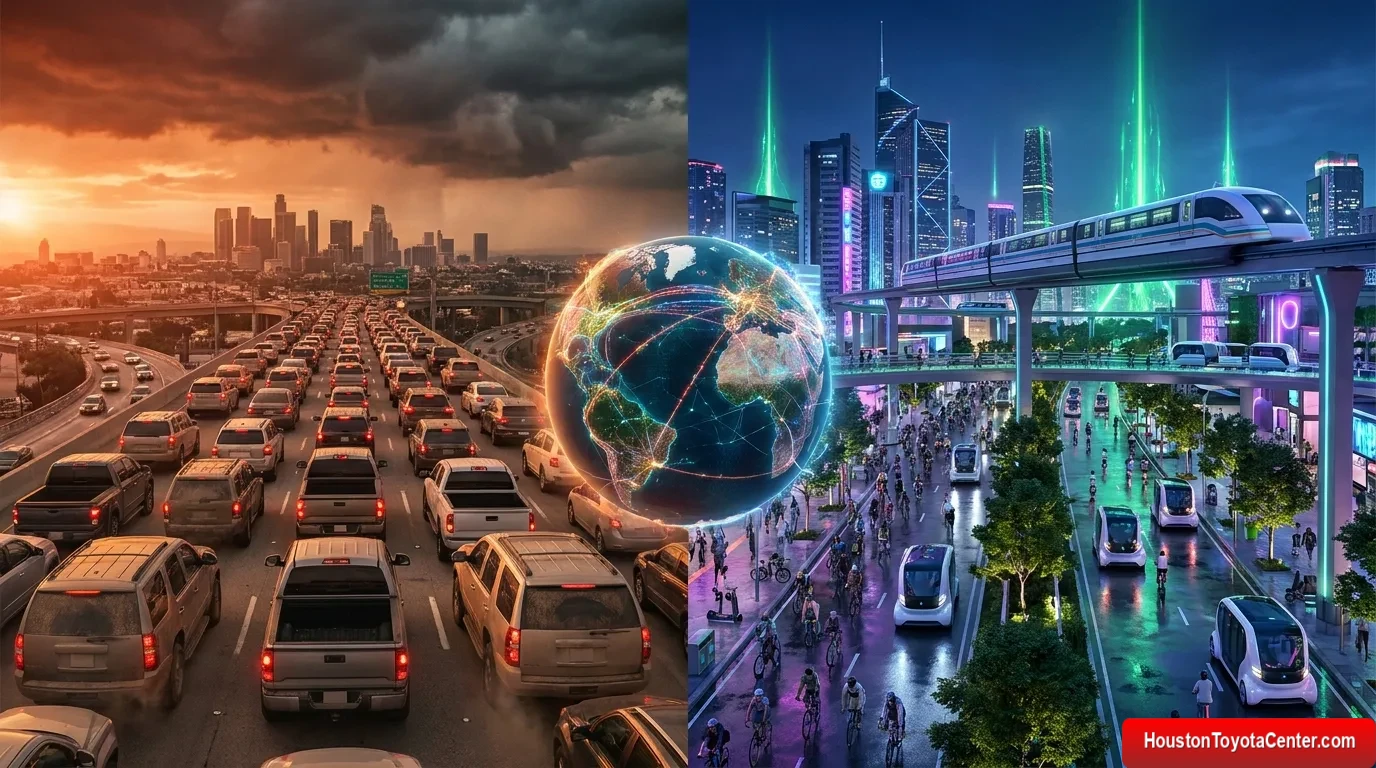
The vehicles people buy are rarely chosen in isolation. Preferences matter, culture matters, and income matters, but one of the most powerful influences is often hidden in plain sight: infrastructure. Roads, fuel stations, electric grids, public transit systems, parking availability, repair networks, ports, regulations, charging corridors, weather adaptation systems, and urban design all shape which vehicles become practical, affordable, and desirable.
Around the world, infrastructure acts like an invisible hand guiding transportation behavior. In some countries, narrow medieval streets encourage compact cars and scooters. In others, sprawling highways reward pickup trucks and SUVs. Regions with dense rail networks reduce the need for private car ownership entirely. Areas with weak road systems often rely on motorcycles, minibuses, or rugged off-road vehicles. Meanwhile, countries investing heavily in electric charging infrastructure are accelerating the transition toward electric vehicles faster than markets where charging remains unreliable.
Vehicle choice is not simply about personal taste. It is about adaptation to systems. Infrastructure determines convenience, operating costs, safety, accessibility, speed, and social expectations. The relationship works in both directions as well: once a particular vehicle type dominates, governments and private companies frequently expand infrastructure that supports it even further.
FREE: Quickly identify and understand problems with your vehicle 🚘
CLICK HEREThis interconnected relationship between infrastructure and mobility has become increasingly important in the twenty-first century. Rapid urbanization, climate policy, population growth, digital logistics, and technological innovation are reshaping transportation systems globally. As governments spend trillions on transportation projects and energy networks, the vehicles people use over the next several decades may change dramatically.
Infrastructure as a Transportation Ecosystem
Infrastructure is often misunderstood as only roads and bridges. In reality, transportation infrastructure is a broad ecosystem that includes:
- Highways and local roads
- Fuel stations and supply chains
- Electric charging networks
- Rail systems and freight corridors
- Parking facilities
- Repair and maintenance services
- Traffic management systems
- Ports and airports
- Urban zoning and land use policies
- Digital mapping and navigation networks
- Electrical grid capacity
- Bicycle lanes and pedestrian pathways
- Vehicle financing and insurance systems
Each component influences which vehicles can function efficiently within a region.
For example, a country with smooth highways, abundant parking, and cheap fuel naturally encourages larger vehicles. By contrast, dense cities with expensive parking and narrow roads tend to favor compact hatchbacks, scooters, bicycles, or public transit.
The idea of “vehicle-market fit” works similarly to product-market fit in business. A vehicle succeeds where infrastructure makes ownership practical.
Why Vehicle Choice Differs Around the World
Many people assume global vehicle preferences are mostly cultural. While culture certainly matters, infrastructure often explains more than people realize.
Consider these examples:
| Region | Common Vehicle Types | Infrastructure Influence |
|---|---|---|
| United States | Pickup trucks, SUVs | Wide highways, suburban sprawl, large parking spaces, low fuel taxes |
| Japan | Kei cars, compact vehicles | Narrow streets, high parking costs, dense urban design |
| Netherlands | Bicycles, compact EVs | Extensive bike lanes, urban planning, limited car space |
| India | Motorcycles, scooters | Congested roads, affordability, flexible mobility needs |
| Norway | Electric vehicles | Massive charging investment, incentives, renewable energy grid |
| Rural Africa | Durable utility vehicles | Rough terrain, limited maintenance networks |
| China | EVs, electric scooters | Strong industrial policy, urban air-quality concerns, charging expansion |
In each case, infrastructure creates incentives and constraints.
Consumers generally optimize around five major questions:
- Can I operate this vehicle easily?
- Can I afford to maintain it?
- Can I fuel or charge it reliably?
- Can I park or store it conveniently?
- Does the transportation network support this type of mobility?
The answers depend heavily on infrastructure.
Roads Shape Vehicle Size and Design
Road quality and design are among the oldest influences on vehicle development.
Wide Roads Encourage Larger Vehicles
Countries with broad highways and suburban road systems often see higher adoption of larger vehicles. The United States is the clearest example.
American infrastructure after World War II was built around automobile expansion. Massive interstate highway projects connected suburbs to cities. Parking lots expanded. Drive-through services became common. Fuel prices remained relatively low compared to Europe.
As a result, large vehicles became practical.
Pickup trucks evolved beyond work tools into family vehicles. SUVs became dominant because infrastructure allowed them to thrive. Wide lanes, expansive parking, and long-distance commuting made size less inconvenient.
Infrastructure also reinforced consumer psychology. Larger vehicles felt safer and more comfortable on long highway journeys. Over time, automakers optimized production around these preferences.
Narrow Streets Favor Compact Vehicles
In older European and Asian cities, infrastructure evolved centuries before automobiles existed.
Cities like Rome, Lisbon, Tokyo, and Prague contain narrow streets that limit maneuverability. Parking is limited and expensive. Residential density is high.
This environment naturally rewards compact cars.
Small hatchbacks and mini vehicles dominate many urban areas because they reduce stress, improve parking flexibility, and lower fuel costs.
Japan’s kei cars provide one of the most fascinating examples. These ultra-compact vehicles emerged partly because Japanese infrastructure constrained space. Government regulations reinforced the trend through tax incentives and parking requirements.
Infrastructure made small cars practical, and policy accelerated adoption.
Poor Roads Demand Durability
In many developing regions, road quality strongly influences vehicle construction.
Vehicles used in rugged environments often require:
- High ground clearance
- Reinforced suspension systems
- Durable tires
- Simpler mechanical systems
- Easy repairability
- Strong cargo capacity
In regions with inconsistent road maintenance, reliability often matters more than luxury or advanced digital features.
This explains why certain utility vehicles achieve near-legendary status in parts of Africa, South America, Australia, and the Middle East. Their success is deeply connected to infrastructure realities.
Fuel Infrastructure Determines Energy Choices
Vehicle adoption depends heavily on fuel accessibility.
A vehicle is only practical if drivers can reliably power it.
Gasoline and Diesel Networks Built the Modern Auto Industry
The global expansion of fuel stations enabled the rise of internal combustion vehicles.
Twentieth-century transportation systems developed around dense networks of:
- Oil refineries
- Fuel distribution hubs
- Highway fueling stations
- Maintenance garages
- Spare parts systems
This infrastructure created enormous momentum.
Gasoline vehicles became dominant partly because fueling them became easy almost everywhere.
Consumers gained confidence knowing they could travel long distances without major logistical concerns.
Infrastructure reduced uncertainty.
Electric Vehicle Growth Depends on Charging Networks
Electric vehicles illustrate infrastructure dependence more clearly than perhaps any transportation technology today.
Many consumers like the idea of EVs but hesitate due to charging concerns.
This phenomenon, often called “range anxiety,” is fundamentally an infrastructure issue.
Countries leading EV adoption usually share several characteristics:
- Dense charging networks
- Reliable electrical grids
- Fast-charging corridors
- Government incentives
- Urban charging accessibility
- Home charging capability
Norway is one of the strongest examples. Extensive investment in charging infrastructure helped normalize electric mobility. Consumers gained confidence that EV ownership would be practical.
By contrast, regions lacking charging stations face slower EV adoption even when consumer interest exists.
Electrical Grid Capacity Matters
Charging infrastructure is not only about installing chargers.
Electric grids must also support increased demand.
In some regions, aging electrical systems create bottlenecks for mass EV adoption. Fast charging requires substantial energy delivery capacity. Apartment-heavy cities face additional challenges because residents may lack private parking for overnight charging.
As a result, infrastructure planning increasingly includes:
- Grid modernization
- Renewable energy integration
- Smart charging systems
- Vehicle-to-grid technologies
- Distributed energy storage
Vehicle transitions become difficult when energy systems lag behind transportation goals.
Urban Planning and Mobility Behavior
Urban design strongly shapes transportation choices.
The structure of cities influences whether people drive large cars, compact cars, motorcycles, bicycles, or use public transit.
Dense Cities Reduce Dependence on Large Cars
High-density cities often discourage large vehicle ownership.
Factors include:
- Limited parking
- Traffic congestion
- Congestion charges
- Shorter travel distances
- Public transit accessibility
- Mixed-use neighborhoods
Residents may choose compact vehicles or abandon private ownership entirely.
Cities such as Singapore and Hong Kong demonstrate how infrastructure constraints can radically shape transportation behavior.
Vehicle ownership costs rise significantly where urban space is limited.
In Singapore, strict vehicle quotas and urban planning policies make car ownership exceptionally expensive. As a result, public transportation infrastructure becomes central to mobility.
Suburban Sprawl Encourages Car Dependence
Low-density suburban development creates different incentives.
When homes, schools, shopping centers, and workplaces are spread across large geographic areas, residents become heavily dependent on personal vehicles.
This pattern is common in North America, parts of the Middle East, and increasingly in rapidly growing metropolitan regions worldwide.
Suburban infrastructure tends to prioritize:
- Highway connectivity
- Large parking lots
- Drive-through access
- Long commuting distances
- Multi-lane arterial roads
These conditions often encourage larger vehicles designed for comfort and cargo flexibility.
Public Transit Changes Vehicle Ownership Patterns
Strong public transportation systems can reduce private vehicle demand entirely.
In cities with reliable rail systems, buses, trams, and integrated transit networks, households may:
- Own fewer vehicles
- Delay car purchases
- Prefer smaller secondary vehicles
- Use shared mobility services
- Combine transit with bicycles or scooters
Transit infrastructure changes the role of personal vehicles.
Cars shift from being essential tools to optional conveniences.
This distinction dramatically influences purchasing decisions.
Climate and Environmental Infrastructure
Climate adaptation infrastructure also affects vehicle choice.
Different environments create different mobility requirements.
Cold Climates Favor Certain Technologies
Extreme cold affects battery efficiency, road safety, and vehicle durability.
Regions with heavy snow often require:
- All-wheel drive systems
- Winter tires
- Heated garages
- Road salting systems
- Snow-clearing infrastructure
Consumers in these areas may prioritize reliability in harsh weather.
At the same time, countries with advanced winter infrastructure can successfully support EV adoption despite cold climates.
Norway again demonstrates this dynamic. Strong public infrastructure mitigates environmental challenges.
Hot Climates Stress Vehicles Differently
In extremely hot regions, vehicles face:
- Battery degradation risks
- Cooling system stress
- Tire wear
- Air conditioning demands
Infrastructure such as shaded parking, road maintenance, and power reliability influences how well different vehicle technologies perform.
Flooding and Disaster Resilience
As climate change increases severe weather events, resilient infrastructure is becoming increasingly important.
Flood-prone regions may influence demand for:
- Elevated vehicles
- Waterproofing technologies
- Rugged drivetrains
- Emergency mobility systems
Infrastructure resilience increasingly affects insurance costs and vehicle viability.
The Rise of Electric Two-Wheelers
In many parts of Asia, electric scooters and motorcycles are transforming urban transportation.
This transition highlights how infrastructure and affordability intersect.
Electric two-wheelers thrive where:
- Roads are congested
- Parking space is limited
- Distances are relatively short
- Fuel prices are significant
- Charging can occur at home or workplaces
Unlike electric cars, many electric scooters require less charging infrastructure because batteries are smaller and easier to recharge.
Some cities are also experimenting with battery-swapping systems.
Instead of waiting to charge, riders exchange depleted batteries for charged ones.
This approach demonstrates how alternative infrastructure models can reshape transportation markets.
Freight Infrastructure Influences Consumer Vehicles
Commercial transportation systems also influence passenger vehicle trends.
Freight networks shape:
- Fuel prices
- Vehicle availability
- Maintenance ecosystems
- Manufacturing priorities
- Road construction standards
Countries with strong logistics infrastructure often develop transportation systems optimized for heavy road usage.
Trucking Economies and Consumer Preferences
In countries where trucking dominates freight movement, infrastructure frequently expands around highway efficiency.
This can indirectly encourage larger personal vehicles.
Roads designed for large commercial traffic often accommodate SUVs and pickup trucks comfortably.
Meanwhile, fuel station networks become optimized for long-distance travel.
Port Infrastructure and Vehicle Imports
Vehicle availability also depends on trade infrastructure.
Ports, tariffs, shipping systems, and regional manufacturing hubs affect which vehicles consumers can easily purchase.
For example:
- Countries with strong domestic compact-car manufacturing often see higher small-car adoption.
- Countries importing large vehicles from nearby markets may develop different consumer preferences.
- Regions with weak supply chains may prioritize repairability over advanced technology.
Infrastructure affects not just transportation usage but also transportation supply.
Repair Networks and Maintenance Ecosystems
Maintenance infrastructure is one of the most underestimated factors in vehicle adoption.
Consumers need confidence that vehicles can be repaired affordably.
Mechanics Influence Market Success
Vehicles often succeed when:
- Spare parts are widely available
- Mechanics understand the technology
- Repairs are affordable
- Service centers are accessible
In many regions, consumers avoid unfamiliar technologies because repair ecosystems remain underdeveloped.
This challenge affects electric vehicles in some markets.
Even when EVs offer lower long-term operating costs, limited technician training and scarce parts availability can discourage adoption.
Simplicity vs Complexity
Infrastructure limitations often reward mechanical simplicity.
Vehicles with sophisticated electronics may struggle in areas where diagnostic tools are unavailable.
Conversely, highly developed infrastructure can support advanced vehicle technologies including:
- Autonomous driving systems
- Over-the-air software updates
- Predictive maintenance
- Connected mobility services
Technological sophistication depends heavily on support systems.
Parking Infrastructure Shapes Urban Transportation
Parking is one of the most powerful hidden forces in transportation economics.
Abundant parking encourages vehicle ownership.
Limited parking discourages it.
Cheap Parking Supports Car Culture
Many suburban and automobile-oriented cities provide massive parking availability.
Examples include:
- Shopping mall parking lots
- Office parking garages
- Residential driveways
- Street parking
When parking is easy and inexpensive, larger vehicles become more practical.
Consumers experience fewer trade-offs.
Expensive Parking Encourages Smaller Vehicles
In dense urban areas, parking constraints reshape behavior dramatically.
Drivers may prioritize:
- Compact dimensions
- Maneuverability
- Car-sharing services
- Public transportation access
- Two-wheel transportation
Parking infrastructure effectively acts as a pricing mechanism that influences transportation choices.
Digital Infrastructure and Smart Mobility
Modern transportation increasingly depends on digital infrastructure.
Vehicle choice today is influenced not only by physical systems but also by connectivity.
Navigation Technology Changes Driving Patterns
GPS systems, traffic analytics, and smartphone apps have transformed mobility.
Digital infrastructure enables:
- Route optimization
- Ride-sharing services
- Real-time traffic management
- Charging station discovery
- Fleet coordination
These systems can increase the practicality of certain vehicle types.
For example, EV drivers rely heavily on digital mapping tools to locate chargers and manage range.
Ride-Sharing and Platform Mobility
Platforms such as ride-sharing services influence vehicle demand in major cities.
Drivers may select vehicles optimized for:
- Fuel efficiency
- Passenger comfort
- Maintenance costs
- Urban maneuverability
Infrastructure supporting app-based mobility can reduce private ownership while increasing fleet-based transportation.
Autonomous Vehicles Depend on Advanced Infrastructure
Self-driving technology requires highly sophisticated infrastructure.
Autonomous systems rely on:
- High-quality road markings
- Mapping precision
- Sensor-friendly environments
- Stable connectivity
- Traffic management integration
Regions lacking these systems may face slower autonomous adoption.
Infrastructure readiness will likely determine which countries become early leaders in autonomous transportation.
Economic Infrastructure and Vehicle Financing
Vehicle choice is also shaped by financial infrastructure.
Consumers need access to:
- Credit systems
- Insurance markets
- Leasing options
- Registration systems
- Digital payment networks
Financing Expands Vehicle Access
In many developed economies, financing allows consumers to purchase more expensive vehicles.
Long-term loans can increase SUV and premium vehicle adoption.
In contrast, regions with weaker financing infrastructure may favor lower-cost vehicles with simpler ownership structures.
Insurance Systems Influence Preferences
Insurance costs strongly affect vehicle affordability.
Infrastructure supporting:
- Road safety
- Traffic enforcement
- Vehicle tracking
- Accident response systems
can influence which vehicles become economically viable.
For example, advanced driver-assistance technologies may reduce insurance costs in some markets.
Government Policy as Infrastructure
Policy itself functions as a form of infrastructure.
Regulations create incentives and constraints that shape transportation ecosystems.
Tax Structures Influence Vehicle Markets
Governments frequently shape vehicle demand through:
- Fuel taxes
- Vehicle registration fees
- Carbon taxes
- EV subsidies
- Import tariffs
- Congestion pricing
These policies can dramatically shift consumer behavior.
For example, high fuel taxes in Europe historically encouraged smaller, more fuel-efficient vehicles compared to the United States.
Zoning Laws Affect Transportation Habits
Land-use policies determine:
- Urban density
- Transit accessibility
- Parking requirements
- Commuting distances
These factors indirectly shape vehicle ownership patterns.
Infrastructure policy often influences transportation more deeply than marketing campaigns.
Cultural Identity and Infrastructure Reinforcement
Once infrastructure supports a particular transportation style, culture often reinforces it.
This creates feedback loops.
The American Truck Identity
In the United States, trucks became associated with:
- Independence
- Utility
- Outdoor lifestyles
- Rural identity
- Economic productivity
Infrastructure helped create these associations.
Suburban expansion and highway systems normalized large vehicles.
Culture then amplified demand further.
European Urban Efficiency
In many European cities, efficient compact transportation became socially normalized.
Dense urban infrastructure reinforced values such as:
- Walkability
- Public transit use
- Fuel efficiency
- Compact living
Vehicle preferences evolved alongside urban form.
Motorcycle Culture in Asia
In several Asian countries, motorcycles and scooters became deeply integrated into daily life because infrastructure made them practical.
Traffic congestion, affordability pressures, and road conditions encouraged two-wheel transportation.
Eventually, these vehicles became cultural staples.
Rural vs Urban Infrastructure Divide
Vehicle choice often differs dramatically between rural and urban populations within the same country.
Rural Areas Favor Versatility
Rural drivers frequently prioritize:
- Cargo capacity
- Durability
- Off-road capability
- Long-range travel
- Towing ability
Infrastructure realities such as longer travel distances and weaker public transportation networks shape these preferences.
Urban Areas Prioritize Efficiency
Urban residents may prioritize:
- Fuel economy
- Parking convenience
- Compact dimensions
- Shared mobility compatibility
- Transit integration
The infrastructure divide creates entirely different transportation ecosystems.
Developing Economies and Transportation Leapfrogging
Some emerging markets may skip traditional transportation stages entirely.
This phenomenon is known as leapfrogging.
Mobile Technology and New Mobility Models
Countries with limited legacy infrastructure sometimes adopt newer systems faster.
Examples include:
- App-based transportation services
- Electric motorcycles
- Digital payment transit systems
- Battery swapping networks
Without deeply entrenched infrastructure, transitions can occur more rapidly.
Informal Transportation Networks
In many developing cities, informal transportation systems fill infrastructure gaps.
These include:
- Shared minibuses
- Motorcycle taxis
- Informal ride-sharing systems
- Flexible transit routes
Vehicle choices evolve around practical necessity.
Environmental Sustainability and Future Infrastructure
Climate goals are increasingly influencing transportation infrastructure investment.
Governments worldwide are investing in:
- EV charging networks
- High-speed rail
- Bicycle infrastructure
- Renewable energy systems
- Public transit expansion
These investments may reshape vehicle preferences over the coming decades.
Low-Emission Zones
Many cities are implementing low-emission zones restricting high-pollution vehicles.
This policy infrastructure encourages:
- Electric vehicles
- Hybrid vehicles
- Public transit usage
- Micromobility solutions
Vehicle markets increasingly reflect environmental priorities.
High-Speed Rail and Reduced Car Dependence
Countries investing heavily in rail infrastructure may reduce demand for long-distance driving.
When high-speed rail becomes efficient and affordable, consumers may:
- Drive less frequently
- Delay vehicle upgrades
- Choose smaller urban vehicles
- Rely more on multimodal transportation
Transportation ecosystems become interconnected.
The Future of Charging Infrastructure
The evolution of electric infrastructure may become one of the defining transportation stories of the century.
Fast Charging Corridors
Long-distance EV adoption depends heavily on reliable charging corridors.
Governments and private companies are investing in:
- Highway charging hubs
- Ultra-fast chargers
- Integrated payment systems
- Renewable charging stations
Infrastructure reliability directly influences consumer trust.
Home Charging vs Public Charging
Vehicle adoption patterns may diverge based on housing infrastructure.
Homeowners with garages often find EV ownership easier.
Apartment residents may depend on:
- Shared charging stations
- Workplace charging
- Street charging systems
- Public charging hubs
Urban infrastructure design will strongly influence EV accessibility.
Hydrogen Infrastructure and Alternative Fuels
Alternative fuel technologies also face infrastructure barriers.
Hydrogen vehicles, for example, require:
- Specialized fueling stations
- Storage systems
- Transportation logistics
- Safety infrastructure
Without large-scale investment, adoption remains limited.
The history of transportation repeatedly demonstrates that technology alone is insufficient.
Infrastructure determines scalability.
Autonomous Fleets and Shared Mobility
Future transportation systems may shift away from individually owned vehicles.
Autonomous fleets could reshape infrastructure priorities.
Shared Fleets Could Reduce Parking Demand
If autonomous vehicles operate continuously rather than remaining parked most of the day, cities may redesign urban space.
Potential changes include:
- Reduced parking lots
- Expanded pedestrian zones
- More pickup and drop-off hubs
- Dynamic traffic systems
Infrastructure and vehicle ownership models could evolve together.
Fleet Vehicles May Differ from Consumer Vehicles
Commercial autonomous fleets may prioritize:
- Durability
- Easy cleaning
- Energy efficiency
- Standardized maintenance
This could reshape vehicle design itself.
Geopolitics and Infrastructure Strategy
Transportation infrastructure is increasingly tied to geopolitical strategy.
Countries compete over:
- Battery supply chains
- Semiconductor manufacturing
- Rare earth minerals
- Energy security
- Industrial competitiveness
Infrastructure investment now intersects with national security.
Energy Independence Influences Transportation Policy
Countries dependent on imported oil may accelerate EV infrastructure to improve energy independence.
Meanwhile, regions with domestic fossil fuel resources may transition more slowly.
Infrastructure decisions are often economic and political as much as environmental.
Consumer Psychology and Infrastructure Confidence
People choose vehicles partly based on confidence in systems.
Infrastructure reduces uncertainty.
Consumers ask questions such as:
- Will I find fuel easily?
- Can I repair this vehicle nearby?
- Is charging reliable?
- Will roads support this vehicle comfortably?
- Is parking manageable?
When infrastructure provides clear answers, adoption accelerates.
When uncertainty remains high, consumers often stay with familiar technologies.
How Infrastructure Creates Transportation Lock-In
One of the most important concepts in mobility economics is infrastructure lock-in.
Once societies invest heavily in certain systems, changing direction becomes difficult.
Legacy Systems Resist Change
Gasoline infrastructure took more than a century to build.
Today it includes:
- Millions of fuel stations
- Global oil shipping systems
- Refining capacity
- Repair ecosystems
- Manufacturing supply chains
Replacing this network requires enormous investment.
Infrastructure Transition Takes Time
Even when new vehicle technologies become technically superior, infrastructure inertia slows adoption.
This explains why transportation transitions often occur gradually.
Consumers rarely adopt technologies unsupported by mature infrastructure.
Regional Case Studies
Norway: Infrastructure-Led EV Adoption
Norway demonstrates how coordinated policy and infrastructure can rapidly transform transportation.
Key elements included:
- Extensive charging networks
- Tax incentives
- Renewable electricity generation
- Urban charging accessibility
- Consumer education
Infrastructure removed barriers to adoption.
As confidence increased, EVs became mainstream.
Japan: Compact Mobility by Necessity
Japan’s transportation system reflects spatial efficiency.
Dense urban development, strong rail systems, and limited parking created ideal conditions for compact vehicles.
The result was a transportation ecosystem emphasizing:
- Small cars
- Public transit
- Fuel efficiency
- Urban convenience
Infrastructure and cultural norms evolved together.
China: State-Led Transportation Transformation
China invested aggressively in:
- EV manufacturing
- Charging infrastructure
- Battery supply chains
- Urban transit systems
This coordinated approach accelerated electric mobility at massive scale.
Infrastructure development became industrial strategy.
Netherlands: Bicycle Infrastructure Success
The Netherlands transformed mobility through deliberate urban planning.
Protected bike lanes, traffic calming, and multimodal integration made cycling safe and practical.
Infrastructure changed behavior.
As cycling became normalized, demand for compact urban transportation increased.
The Human Side of Infrastructure
Transportation decisions are deeply personal.
People choose vehicles based on family needs, aspirations, work patterns, safety concerns, and identity.
Yet these personal decisions occur within systems shaped by infrastructure.
A parent choosing a minivan, a commuter buying a scooter, a rural worker selecting a pickup truck, or an urban resident abandoning car ownership altogether are all responding to environmental constraints and opportunities.
Infrastructure quietly structures daily life.
What the Next Twenty Years Could Look Like
The future of vehicle choice may depend less on breakthroughs in vehicle technology and more on infrastructure deployment.
Several major trends are likely to shape the coming decades.
Electrification Expansion
As charging infrastructure improves, EV adoption may accelerate across more markets.
However, adoption speed will vary depending on:
- Grid modernization
- Housing patterns
- Energy prices
- Government investment
Multimodal Transportation Growth
Cities may increasingly combine:
- Public transit
- Shared mobility
- Micromobility
- Autonomous systems
- Walking infrastructure
Vehicle ownership may become more flexible.
Rural and Urban Divergence
Urban transportation may become increasingly electrified and shared.
Rural transportation may continue prioritizing durability, range, and versatility.
Infrastructure differences will continue shaping distinct transportation cultures.
Software-Integrated Mobility
Digital infrastructure may become as important as physical infrastructure.
Vehicle ecosystems could increasingly rely on:
- AI traffic systems
- Connected charging networks
- Smart insurance platforms
- Autonomous navigation
- Predictive maintenance systems
Transportation may evolve into a deeply integrated digital service.
Conclusion
Vehicle choice is never just about vehicles.
It is about the environments in which those vehicles operate.
Infrastructure shapes transportation behavior by influencing convenience, cost, accessibility, safety, and practicality. Roads determine vehicle size. Fuel systems determine energy choices. Urban planning influences ownership patterns. Charging networks affect EV adoption. Repair ecosystems shape consumer trust. Parking availability changes city mobility. Digital systems redefine navigation and transportation services.
Every region develops transportation patterns reflecting its infrastructure realities.
Large trucks flourish where roads are wide and distances are long. Compact cars dominate where space is scarce. Scooters thrive where congestion is intense. Electric vehicles succeed where charging becomes reliable. Public transit reduces private car dependence where networks are efficient.
Infrastructure does not merely support transportation.
It actively creates transportation behavior.
As countries invest in cleaner energy, smarter cities, autonomous systems, and new mobility networks, the vehicles people choose may change profoundly. The future of transportation will likely belong not simply to the best vehicles, but to the societies that build the most effective systems around them.
Leave a Reply