
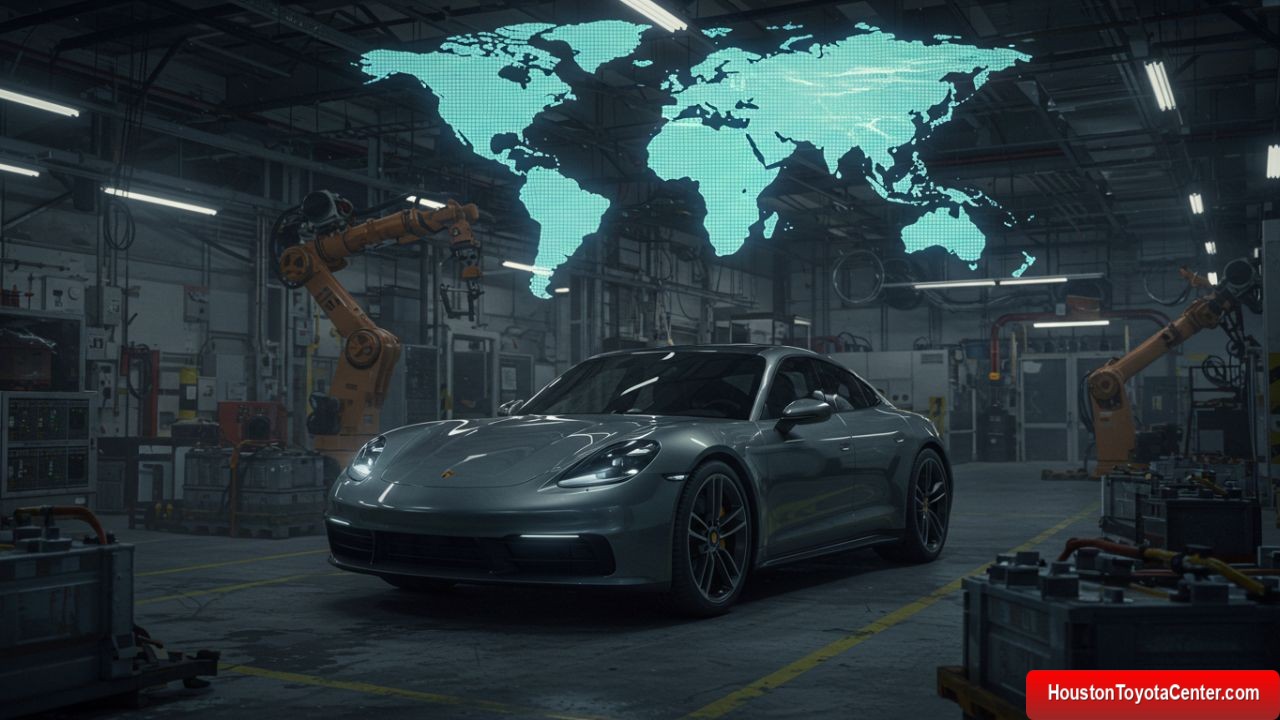
Stuttgart, Germany – August 25, 2025 – Porsche has officially announced the termination of its ambitious Cellforce battery manufacturing project, marking a significant setback not only for the German automaker but also for Europe’s dream of reducing dependence on Asian suppliers in the electric vehicle (EV) market.
The decision underscores the global challenges luxury car brands face in electrification, as sluggish EV sales in the United States and China make large-scale investments increasingly risky.
📉 Why Porsche Pulled the Plug
Launched in 2021 under CEO Oliver Blume, the Cellforce initiative promised to position Porsche as a pioneer in next-generation battery technology.
However, three years later, the company concluded the project was “economically unviable” due to unfavorable global conditions.
FREE: Quickly identify and understand problems with your vehicle 🚘
CLICK HERE| Key Factors | Impact |
|---|---|
| EV sales slump in the US & China | Insufficient demand for luxury EVs |
| Trade tariffs in the US (since Trump era) | Raised costs, reducing competitiveness |
| Chinese luxury EV market | Yet to show strong adoption |
| Lack of global production scale | Domestic battery production unsustainable |
🇪🇺 Europe vs. Global Reality
While Porsche’s European performance remains strong — with 57% of deliveries in H1 2025 being electrified — the lack of global traction has proven fatal to Cellforce’s production ambitions.
- 200 jobs at the Kirchentellinsfurt, Germany facility are expected to be cut.
- Employees will be offered positions in Volkswagen’s PowerCo division, which remains committed to broader battery development.
🔬 Future of Cellforce
According to Michael Steiner, Porsche’s head of R&D, Cellforce will not be completely abandoned but refocused on research into advanced battery cells instead of mass production.
This means Porsche will continue to experiment with next-gen technologies but rely on external suppliers for large-scale battery production.
🌍 A Broader Industry Problem
The move highlights two larger issues:
- Luxury EV adoption struggles outside Europe, making it harder for premium brands to justify billion-dollar battery investments.
- Europe’s vulnerability in the EV supply chain, still heavily dependent on China and South Korea for batteries.
For now, Porsche — once hoping to lead Europe’s EV revolution — is stepping into a more modest role in the global race for electrification.
⚡ Bottom Line: Porsche’s retreat signals that even iconic luxury brands face massive hurdles in the EV era. Without global demand to support local battery production, the European dream of battery independence remains distant.
Leave a Reply