
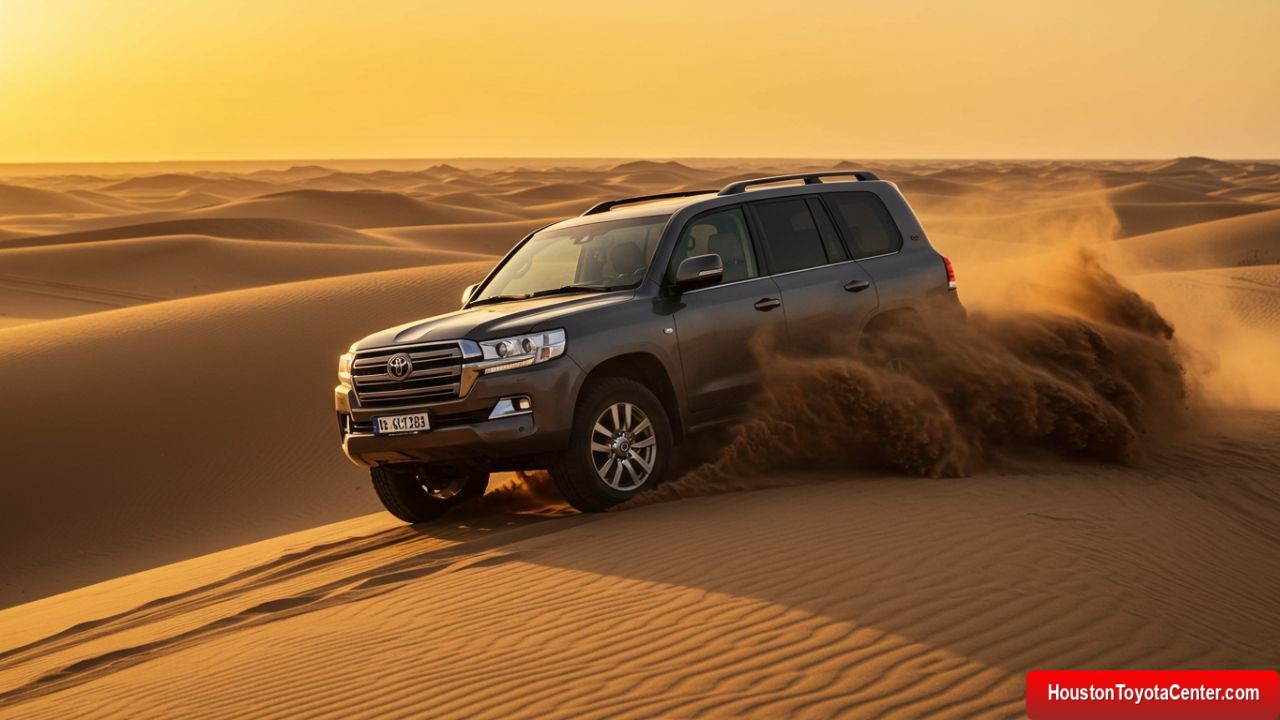
For more than seven decades, the Toyota Land Cruiser has built a reputation that extends far beyond paved highways. From the deserts of Africa to the frozen landscapes of the Arctic and the dense rainforests of South America, the model has become closely associated with long distance exploration, humanitarian missions, scientific research, and overland travel. Its legacy is not defined by luxury or speed but by the ability to reach places where reliability matters more than comfort.
Unlike many modern sport utility vehicles designed primarily for urban environments, the Land Cruiser was developed with durability as a central principle. Strong chassis construction, dependable four wheel drive systems, and mechanical simplicity in many generations have made it a preferred choice for travelers who venture far from repair facilities and fuel stations.
Built for Harsh Environments
Global expeditions often involve unpredictable terrain, changing climates, and limited infrastructure. Vehicles used in these conditions must perform consistently despite mud, sand, rocks, snow, or extreme temperatures.
The Land Cruiser has demonstrated this capability in countless real world scenarios. Expedition teams frequently choose it because replacement parts are widely available in many regions, mechanics are familiar with its engineering, and its proven drivetrain can withstand years of demanding use.
FREE: Quickly identify and understand problems with your vehicle 🚘
CLICK HEREThis practical reliability has contributed to the vehicle’s presence in remote communities, conservation programs, geological surveys, and wildlife monitoring operations around the world.
Supporting Humanitarian and Scientific Missions
The Land Cruiser has played an important role in humanitarian logistics. Medical teams, emergency response organizations, and international aid groups have relied on the platform to transport personnel, food, medicine, and equipment into areas where conventional transportation becomes impossible.
Scientific expeditions have also benefited from the vehicle’s versatility. Researchers studying glaciers, deserts, forests, and mountain ecosystems often require dependable transportation capable of carrying specialized instruments across rough terrain without compromising operational reliability.
In these environments, mechanical dependability becomes an essential part of mission success.
A Favorite Among Overland Enthusiasts
The rise of overlanding has further strengthened the Land Cruiser’s global reputation. Adventure travelers value vehicles that can support weeks or even months of self sufficient exploration.
Many owners equip their Land Cruisers with roof tents, auxiliary fuel tanks, upgraded suspension systems, recovery gear, refrigeration units, and solar powered electrical systems. These modifications transform the vehicle into a mobile base camp capable of supporting extended journeys far from developed infrastructure.
Its combination of payload capacity, off road capability, and long term durability makes it especially attractive for expeditions crossing multiple countries and diverse landscapes.
Adapting Through Generations
Although the Land Cruiser has evolved significantly over the decades, its core philosophy has remained remarkably consistent. Earlier generations emphasized mechanical simplicity and ease of field repairs, while newer models incorporate advanced driver assistance systems, improved comfort, electronic traction technologies, and enhanced safety features.
Even with these technological advances, Toyota has generally preserved the characteristics that expedition travelers appreciate most, including structural strength, dependable powertrains, and confidence in demanding environments.
This balance between modernization and proven engineering has allowed the Land Cruiser to remain relevant despite changing expectations within the global automotive market.
A Symbol of Dependability
Beyond its technical capabilities, the Land Cruiser has become a symbol of endurance and resilience. Stories of vehicles traveling hundreds of thousands of kilometers across continents have reinforced its image as a trusted expedition platform.
For many explorers, the vehicle represents freedom to reach remote destinations with confidence. Its reputation has been built gradually through decades of successful journeys rather than marketing alone, creating a legacy that continues to influence travelers, researchers, humanitarian organizations, and outdoor enthusiasts worldwide.
As global exploration evolves with new technologies and changing travel trends, the Land Cruiser remains one of the most respected names in expedition vehicles, demonstrating that true capability is measured not only by specifications but also by consistent performance in the world’s most demanding environments.
Leave a Reply