
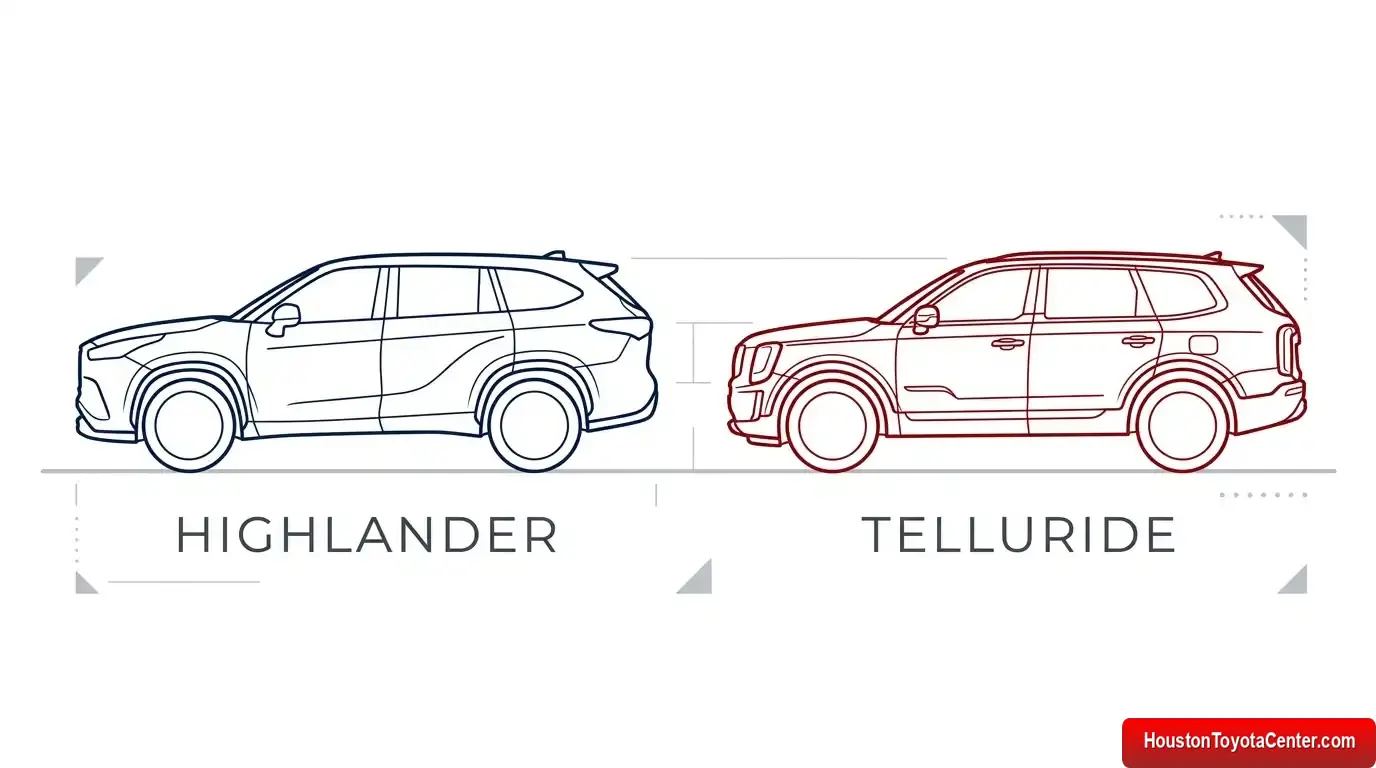
The three-row midsize SUV segment has become one of the most competitive battlegrounds in the automotive industry, with families demanding more space, better technology, improved fuel economy, and premium features without breaking the bank. Two vehicles have emerged as dominant contenders in this arena: the Toyota Highlander (including its larger sibling, the Grand Highlander) and the Kia Telluride. Both promise to deliver everything modern families need, but they take distinctly different approaches to achieving that goal.
As we navigate through 2026, prospective buyers face a critical decision that goes beyond mere brand loyalty. Should you prioritize Toyota’s legendary reliability and hybrid efficiency, or does Kia’s value proposition and luxurious interior win the day? This comprehensive comparison examines every angle of these two popular family haulers to help you make an informed decision.
💰 Price Point: The First Major Difference
Starting MSRP Comparison
When examining the initial purchase price, the Kia Telluride holds a significant advantage. The 2027 Telluride starts at $40,735, while the comparable Toyota Highlander begins at $47,865, creating a substantial gap of $7,130. For budget-conscious families, this difference could represent several months of car payments or fund essential accessories and maintenance over the vehicle’s lifetime.
Real-world transaction prices tell a similar story. According to TrueCar market data, buyers currently pay an average of $40,584 for the Telluride compared to $47,000 for the Highlander. This pricing strategy positions the Telluride as the more accessible option for families entering the three-row SUV market.
FREE: Quickly identify and understand problems with your vehicle 🚘
CLICK HERE| Feature | Kia Telluride | Toyota Highlander |
|---|---|---|
| Starting MSRP | $40,735 | $47,865 |
| Average Transaction Price | $40,584 | $47,000 |
| Price Difference | Baseline | +$7,130 |
| Hybrid Model Starting Price | $48,035 | $47,205 |
However, when comparing hybrid variants, the equation shifts slightly. The 2027 Telluride Hybrid starts at $48,035, while the 2026 Grand Highlander Hybrid begins at $47,205, making the Toyota the more affordable hybrid option by approximately $830.
Fuel Economy: Where Efficiency Matters
Gasoline Models
For traditional gasoline engines, the Toyota Highlander demonstrates superior fuel efficiency. The Highlander achieves 21 miles per gallon in city driving and 28 mpg on the highway, while the Telluride manages 20 mpg city and 26 mpg highway. Over thousands of miles annually, this translates to meaningful savings at the pump for Highlander owners.
Hybrid Powertrains
The hybrid comparison reveals even starker differences. The Grand Highlander Hybrid earns up to 34 combined MPG, dramatically outperforming the standard Telluride’s EPA-estimated 22 combined MPG with front-wheel drive. However, the newly introduced 2027 Telluride Hybrid changes this dynamic significantly, achieving an impressive 31 mpg combined according to EPA estimates.
The Grand Highlander Hybrid MAX, Toyota’s performance-oriented hybrid variant, delivers 362 horsepower while maintaining 27 mpg combined, offering an attractive balance of power and efficiency. Meanwhile, the Telluride Hybrid produces 329 combined horsepower from its turbocharged 2.5-liter engine paired with electric motors.
| Powertrain | City MPG | Highway MPG | Combined MPG | Horsepower |
|---|---|---|---|---|
| Highlander Gas | 21 | 28 | 24 | 265 |
| Telluride Gas | 20 | 26 | 22 | 274 |
| Highlander Hybrid | Varies | Varies | Up to 34 | 245 |
| Telluride Hybrid | 30 | 32 | 31 | 329 |
| Highlander Hybrid MAX | 26 | 27 | 27 | 362 |
📦 Cargo Space and Practicality
Behind the Third Row
Cargo capacity represents one area where these SUVs diverge considerably. With all three rows occupied, the Grand Highlander offers 20.6 cubic feet of space behind the third row, compared to the Telluride’s 22.3 cubic feet. While the Telluride provides slightly more room in this configuration, the real difference emerges when folding seats flat.
Maximum Cargo Capacity
When maximizing cargo space by folding all rear seats, the Grand Highlander dominates with 97.5 cubic feet, substantially exceeding the Telluride’s 89.3 cubic feet. This 8.2-cubic-foot advantage means the Grand Highlander can accommodate seven small roller bags behind the third row with every seat occupied, making it genuinely superior for families packing for road trips or hauling sports equipment.
The standard Highlander (not the Grand version) offers less cargo flexibility, with 16.0 cubic feet behind the third row and 84.3 cubic feet maximum when seats are folded. This distinction is crucial because many buyers confuse the regular Highlander with the larger Grand Highlander.
| Cargo Configuration | Grand Highlander | Telluride | Standard Highlander |
|---|---|---|---|
| Behind Third Row | 20.6 ft³ | 22.3 ft³ | 16.0 ft³ |
| Second Row Folded | Varies | 48.7 ft³ | 48.4 ft³ |
| All Seats Folded | 97.5 ft³ | 89.3 ft³ | 84.3 ft³ |
👥 Passenger Space and Comfort
Third-Row Accommodations
Adult passengers will appreciate the thoughtful engineering in both vehicles’ third rows. The Grand Highlander provides 33.5 inches of third-row legroom, edging out the Telluride’s 32.1 inches. Both vehicles can seat seven or eight passengers depending on configuration, though the Telluride more commonly accommodates eight as standard seating.
The Telluride’s third row receives praise for being more adult-friendly than expected, particularly in the hybrid model which includes heated third-row seats as an upscale touch. The Grand Highlander was specifically engineered with adult third-row occupants in mind, featuring a wide rear door opening that facilitates easier entry and exit.
Second-Row Luxury
Both SUVs offer comfortable second-row accommodations that reviewers describe as “lounge-worthy”. The Telluride provides 43.0 inches of second-row legroom compared to the Highlander’s 38.7 inches, giving the Kia a notable advantage for taller passengers. Front-row legroom favors the Highlander slightly at 42.0 inches versus the Telluride’s 41.4 inches.
🎨 Interior Design and Materials
Luxury Feel
The Telluride excels in interior ambiance, with top-notch materials that feel genuinely luxurious and would not seem out of place in a premium luxury-branded SUV. Kia’s design team created an ambitious interior with trim elements that flow seamlessly from the dashboard through the doors, available in bold color combinations including striking two-tone options.
In contrast, the Grand Highlander’s interior materials fall noticeably short of the Telluride’s luxury standards. The uniform-black design, accented sparingly with bronze touches, feels dowdy compared to Kia’s more sophisticated approach. For buyers who prioritize interior aesthetics and material quality, the Telluride presents a clear advantage.
Technology Features
Both vehicles include wireless Android Auto and Apple CarPlay compatibility as standard features. However, the Telluride extends its technological capabilities significantly further, offering built-in dash-cam functionality, streaming services including Netflix, YouTube, and Disney+, and even myQ-compatible garage door automation. Despite this feature density, Kia maintains logical infotainment layout that remains relatively easy to navigate.
🔧 Performance and Driving Dynamics
Acceleration
Performance enthusiasts will gravitate toward the Grand Highlander Hybrid MAX, which sprints from 0 to 60 mph in just 5.8 seconds, dominating nearly everything else in the segment. The Telluride Hybrid achieves a respectable 6.4-second time to 60 mph, placing it near the segment average.
More telling than straight-line acceleration is passing power. The Grand Highlander completes the 30-to-50-mph passing test nearly a full second quicker than the Telluride, demonstrating ever-present urgency that proves valuable during highway merging and overtaking maneuvers.
Ride Quality and Handling
At 70 mph cruising speed, the Grand Highlander’s cabin registers just 67 decibels of noise, matching the far more expensive Lincoln Navigator. The Telluride measures one decibel higher at 68 dBA, though both vehicles excel at providing quiet, comfortable environments for long-distance travel.
The Telluride prioritizes luxury comfort with syrupy ride motions and noticeable float, creating a relaxed driving experience. The Toyota feels slightly more dynamic from behind the wheel, yet the Kia actually wins in braking performance and maximum cornering capability, making it theoretically better at accident avoidance despite its comfort-oriented tuning.
🛡️ Warranty and Long-Term Ownership
Coverage Comparison
Long-term ownership costs extend beyond the purchase price, and warranty coverage plays a crucial role. The Telluride carries Kia’s respected 10-year/100,000-mile powertrain warranty, providing exceptional peace of mind for extended ownership. However, this coverage does not include complimentary scheduled maintenance.
The Grand Highlander offers a different value proposition: basic coverage spans 3 years and 36,000 miles, with powertrain protection extending to 5 years and 60,000 miles. Hybrid components receive 8-year/100,000-mile coverage, while the hybrid battery carries an impressive 10-year/150,000-mile warranty. Crucially, every new Grand Highlander includes ToyotaCare, providing two years or 25,000 miles of complimentary factory scheduled maintenance at no additional cost.
Reliability Ratings
Predicted reliability scores favor the Telluride slightly, with a rating of 86 out of 100 compared to the Highlander’s 81 out of 100. User ratings echo this preference, with TrueCar users averaging 4.88 out of 5 stars for the Telluride versus 4.42 out of 5 for the Highlander. However, Toyota’s longstanding reputation for durability and the brand’s overall reliability leadership remain compelling factors for many buyers.
Safety Features
Both vehicles come well-equipped with modern safety technology. Standard features across both models include automatic emergency braking, blind spot monitoring systems, and adaptive cruise control. The Highlander achieves a 5-star overall NHTSA safety rating, while the Telluride’s specific NHTSA rating appears unequipped in current databases.
Optional safety enhancements differ between the models. The Telluride includes parking sensors as standard equipment, whereas the Highlander offers them only as an option. Both vehicles provide optional surround-view camera systems for enhanced visibility during low-speed maneuvering.
✅ Final Verdict: Which Should You Choose?
Choose the Kia Telluride If:
- Budget matters most: Save over $7,000 on the initial purchase
- Interior luxury appeals: Enjoy premium materials and sophisticated design
- Technology impresses: Appreciate extensive connectivity and entertainment features
- Third-row comfort counts: Value heated third-row seats and adult-friendly space
- Warranty length matters: Prefer the security of 10-year powertrain coverage
Choose the Toyota Highlander If:
- Fuel efficiency prioritizes: Want superior MPG, especially in hybrid form
- Cargo capacity needs: Require maximum storage space for gear and luggage
- Performance excites: Desire class-leading acceleration with the Hybrid MAX
- Maintenance convenience: Value complimentary scheduled service inclusion
- Brand reliability: Trust Toyota’s decades-long reputation for durability
🎯 Conclusion
The Highlander versus Telluride debate ultimately reflects competing philosophies in the three-row SUV market. Kia delivers exceptional value, luxurious appointments, and cutting-edge technology at an accessible price point. Toyota counters with superior efficiency, greater practicality, stronger performance options, and the confidence of proven reliability.
Neither vehicle represents a wrong choice. Families prioritizing upfront savings and interior refinement will find the Telluride thoroughly satisfying. Those focused on long-term operating costs, cargo versatility, and performance will appreciate what the Highlander brings to the table. Test drive both vehicles, consider your specific family needs, and let your priorities guide you to the right three-row companion for years of adventures ahead.
The three-row SUV segment continues evolving rapidly, with both manufacturers pushing boundaries in efficiency, technology, and comfort. As hybrid options expand and consumer expectations rise, this competition benefits everyone seeking capable, comfortable family transportation in 2026 and beyond.
Leave a Reply