
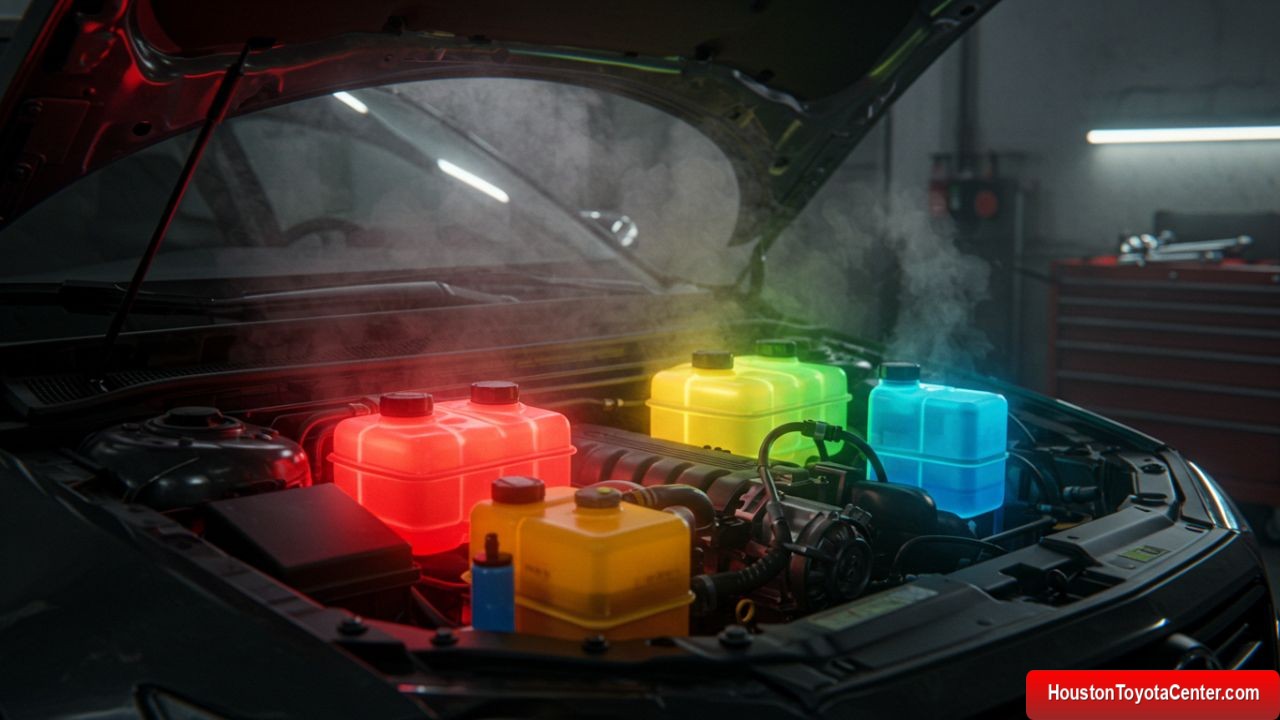
Keeping your vehicle in peak condition requires more than just filling up the gas tank and rotating your tires. One of the most crucial yet often overlooked aspects of car maintenance is checking and maintaining your vehicle’s fluids. These essential liquids keep your car running smoothly, prevent breakdowns, and ensure safety on the road. Whether you’re driving a rugged Toyota Tacoma, a sleek Camry, or a family-friendly Highlander, understanding your fluids is non-negotiable.
In this in-depth guide, we’ll walk you through the major automotive fluids—what they do, how to check them, and when to change them.
🚗 Why Fluids Matter in Your Vehicle
Think of automotive fluids as the lifeblood of your car. Just as the human body needs blood, water, and oxygen to function, your vehicle relies on a variety of fluids to operate efficiently and safely:
- Engine oil lubricates internal parts
- Coolant regulates temperature
- Brake fluid transfers force into pressure
- Transmission fluid ensures smooth gear shifting
- Power steering fluid aids in effortless turning
- Windshield washer fluid clears visibility
Neglecting these fluids can lead to engine failure, overheating, poor braking, and a whole host of other issues. Thankfully, many of these fluids are easy to check yourself.
FREE: Quickly identify and understand problems with your vehicle 🚘
CLICK HERE🛠️ Essential Tools for Fluid Checks
Before you get started, it’s helpful to gather a few tools:
| Tool | Purpose |
|---|---|
| Clean rags/paper towels | Wipe dipsticks and fluid reservoirs |
| Funnel | Pour fluids cleanly |
| Gloves | Protect your hands |
| Owner’s manual | Locate reservoirs and check specs |
| Flashlight | Improve visibility |
Always ensure your vehicle is on a flat surface and the engine is cool unless otherwise instructed.
🔧 Engine Oil: The Heart of the Machine
What It Does:
Engine oil reduces friction, cools engine parts, and prevents sludge build-up.
How to Check It:
- Park the car on level ground and turn off the engine.
- Wait a few minutes for the oil to settle.
- Pull out the dipstick, wipe it clean, reinsert it, then pull it out again.
- Check the level and color. Oil should be amber, not black.
When to Change It:
- Conventional oil: Every 3,000–5,000 miles
- Synthetic oil: Every 7,500–10,000 miles
- Check your Toyota owner’s manual for exact intervals.
| Oil Color | Condition | Action |
|---|---|---|
| Amber | Clean | Good to go |
| Dark Brown | Used, but okay | Monitor closely |
| Black | Dirty/sludgy | Change ASAP |
❄️ Coolant (Antifreeze): Temperature Control Expert
What It Does:
Coolant prevents your engine from overheating or freezing in cold temperatures.
How to Check It:
- Only check when the engine is cool.
- Locate the coolant reservoir, usually translucent with “MIN” and “MAX” lines.
- Fluid should be between these lines and have a bright green, pink, or orange color (depending on the type).
When to Change It:
- Every 30,000 to 50,000 miles, or every 2–3 years
| Symptom | Possible Issue |
|---|---|
| Low coolant frequently | Leak or radiator issue |
| Discolored coolant | Contaminated, needs flush |
| Engine runs hot | Thermostat/radiator issue |
Tip: Never open a hot radiator cap—pressure buildup can cause burns.
🛑 Brake Fluid: Critical for Safety
What It Does:
Brake fluid transfers pressure from your foot to the brake calipers, allowing you to stop the car safely.
How to Check It:
- Locate the brake fluid reservoir on the driver’s side, near the back of the engine bay.
- Fluid should be clear to light yellow.
- Dark or dirty fluid indicates contamination.
When to Change It:
- Every 2 years, regardless of mileage
- If braking feels spongy or you notice a longer stopping distance, check immediately
| Fluid Color | Condition | Action |
|---|---|---|
| Clear | Fresh | Good |
| Yellow | Aging | Consider flushing soon |
| Brown/Black | Contaminated | Change ASAP |
⚙️ Transmission Fluid: Smooth Shifting Guaranteed
What It Does:
Keeps transmission components lubricated and ensures seamless gear transitions.
How to Check It:
(Some newer vehicles don’t have a dipstick. Refer to your Toyota manual.)
- Engine should be running and warm.
- Pull out the transmission dipstick, wipe it, reinsert, and remove again.
- Fluid should be red or pink and at the correct level.
When to Change It:
- Around 60,000 to 100,000 miles, depending on your driving style and environment
| Fluid Color | Condition | Action |
|---|---|---|
| Red/Pink | Clean | Good |
| Brown | Aging | Monitor closely |
| Black/Burnt | Overheated fluid | Service immediately |
🔄 Power Steering Fluid: Effortless Turning
What It Does:
Assists in turning the wheel smoothly and with minimal effort.
How to Check It:
- Locate the power steering reservoir (may be marked with a steering wheel icon).
- Check the level against the “MIN” and “MAX” markers.
- Fluid should be clear or pinkish depending on the vehicle.
When to Change It:
- Usually every 50,000 miles, or when fluid darkens or leaks are found
🌧 Windshield Washer Fluid: Clear Visibility
What It Does:
Cleans your windshield for unobstructed visibility during rain, bugs, or dust.
How to Check It:
- Locate the washer fluid reservoir (marked with a windshield icon).
- Just open and visually inspect the level—add more if low.
- Use seasonal fluids in winter to prevent freezing.
When to Change It:
- No strict timeline—refill whenever it’s low
📆 Maintenance Schedule Overview
Here’s a quick reference guide for when to check and change your fluids:
| Fluid Type | Check Frequency | Change Interval |
|---|---|---|
| Engine Oil | Every month | 3,000–10,000 miles |
| Coolant | Monthly | Every 2–3 years |
| Brake Fluid | Every 6 months | Every 2 years |
| Transmission Fluid | Every 6 months | 60,000–100,000 miles |
| Power Steering Fluid | Every 6 months | 50,000 miles |
| Washer Fluid | Monthly | As needed |
⚠️ Warning Signs of Fluid Trouble
Being aware of early warning signs can save you from costly repairs:
- Puddles under your car: Different colors indicate different leaks (green = coolant, red = transmission, brown = oil)
- Unusual smells: Burnt smell = old transmission fluid or oil
- Noisy steering: Low power steering fluid
- Spongy brakes: Contaminated brake fluid
🔍 Fluid Myths Debunked
❌ Myth: You only need to check fluids at oil change time.
✅ Truth: You should visually inspect fluids monthly, especially before long trips.
❌ Myth: Transmission fluid lasts forever.
✅ Truth: All fluids degrade over time, even sealed systems.
❌ Myth: All engine oils are the same.
✅ Truth: Different engines require different oil weights and formulations. Always use Toyota-recommended oil for best results.
✅ Pro Tips for First-Timers
- Always double-check your owner’s manual—every car is different.
- Use high-quality fluids that meet or exceed OEM standards.
- Label each container when adding new fluids to avoid confusion.
- Take photos before and after if you’re unsure of levels.
🧼 How to Dispose of Old Fluids Safely
Never dump fluids down the drain or in the trash. Here’s how to do it right:
- Engine oil: Bring to local auto parts store or oil recycling center.
- Coolant & Brake Fluid: Check with hazardous waste facilities.
- Transmission fluid: Same as engine oil—local disposal is key.
Improper disposal harms wildlife, groundwater, and violates laws in many states.
🌟 Conclusion: Fluids = Confidence Behind the Wheel
Staying on top of your vehicle’s fluids doesn’t just extend the life of your engine—it gives you peace of mind every time you turn the key. You don’t need to be a mechanic to stay in control; a few simple monthly checks can prevent major headaches down the road.
Whether you’re tackling the terrain in a Toyota 4Runner or commuting in a Corolla, knowing your fluids means driving smarter—and safer.
Leave a Reply