
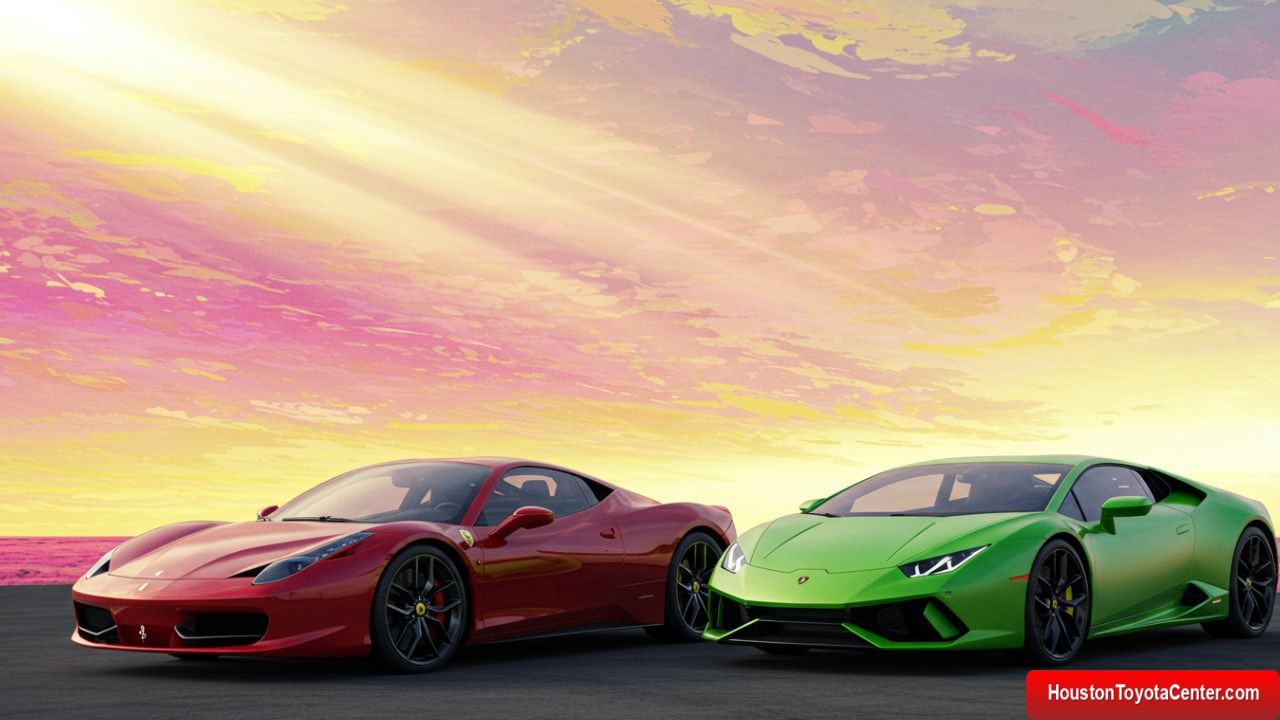
The rivalry between Ferrari and Lamborghini is the stuff of automotive legend. For decades, these two Italian icons have battled for supremacy in the realm of supercars, each representing a distinct philosophy of performance, design, and engineering. To declare a definitive “winner” is nearly impossible—passion, preference, and purpose all play a role. But by dissecting their histories, technologies, design languages, and cultural impacts, we can unravel what truly sets these marques apart and determine which might deserve the crown in specific categories.
Origins and Philosophies: A Clash of Titans
Ferrari: Born on the Track
Enzo Ferrari founded Scuderia Ferrari in 1929 as a racing team, but the first road car bearing his name—the 125 S—debuted in 1947. From the beginning, Ferrari’s identity was rooted in motorsport. The brand’s road cars were almost an afterthought, a means to fund its racing ambitions. This heritage imbues every Ferrari with a singular focus: winning on the track. Ferraris are engineered to dominate circuits, balancing raw power with precision handling, aerodynamics, and driver engagement.
Lamborghini: Revenge of the Tractor Maker
Ferruccio Lamborghini, a successful tractor manufacturer, founded Automobili Lamborghini in 1963 out of spite. Legend has it that after Enzo Ferrari dismissed his complaints about a faulty clutch in his Ferrari 250 GT, Lamborghini vowed to build a better car. The result was the 350 GT, a grand tourer that prioritized comfort, refinement, and bold styling over outright racing pedigree. Lamborghini’s ethos centers on theatricality and rebellion, combining jaw-dropping designs with brutish power.
Design Language: Elegance vs. Aggression
Ferrari: Form Follows Function
Ferrari’s designs are sculpted by wind tunnels. Every curve, vent, and spoiler serves a purpose—to slice through air, cool engines, or generate downforce. Take the F40 (1987): its wedge-shaped profile, rear wing, and louvered rear window were born from aerodynamics, not aesthetics. Modern Ferraris like the SF90 Stradale continue this tradition, blending sharp lines with organic fluidity. The result is elegance with a purpose: cars that look fast even when standing still.
FREE: Quickly identify and understand problems with your vehicle 🚘
CLICK HERELamborghini: Art Meets Shock Factor
Lamborghinis are designed to provoke. Marcello Gandini’s Countach (1974) redefined supercar aesthetics with its sharp angles, scissor doors, and sheer audacity. Today, models like the Aventador SVJ and Revuelto push boundaries further, featuring hexagonal intakes, Y-shaped LEDs, and surfaces that seem to defy physics. Lamborghini’s design chief, Mitja Borkert, calls it “spaceship meets predator”—a visual middle finger to convention.
| Design Comparison | Ferrari SF90 Stradale | Lamborghini Revuelto |
|---|---|---|
| Aesthetic Theme | Aerodynamic minimalism | Geometric aggression |
| Signature Feature | Retractable rear wing | Y-shaped headlights |
| Door Style | Conventional | Scissor (optional) |
| Interior Focus | Driver-centric cockpit | Fighter jet-inspired controls |
Engineering and Innovation: Horses vs. Bulls
Ferrari: The Pursuit of Perfection
Ferrari’s engineering mantra is evolution through racing. Its engines—historically naturally aspirated V12s and V8s—are masterclasses in high-revving performance. The F140 V12 in the 812 Superfast screams to 9,000 RPM, while the twin-turbo V8 in the F8 Tributo delivers 710 hp with razor-sharp throttle response. Hybrid tech, as seen in the SF90, adds electric motors for a combined 986 hp, but never at the expense of balance. Ferrari’s chassis systems, like Side Slip Control, prioritize driver skill over computer intervention.
Lamborghini: Power with Flamboyance
Lamborghini’s engines are visceral experiences. The Aventador’s 6.5L V12 roars with apocalyptic fury, while the Huracán’s 5.2L V10 delivers a metallic howl. The brand’s embrace of all-wheel drive (AWD) systems—starting with the Diablo VT in 1993—gives Lamborghinis tenacious grip, even in the Huracán Sterrato, an off-road supercar. The new Revuelto hybrid pairs a V12 with three electric motors for 1,001 hp, but Lamborghini insists hybrids must still “sound like Lamborghinis.”
| Powertrain Showdown | Ferrari SF90 Stradale | Lamborghini Revuelto |
|---|---|---|
| Engine | 4.0L Twin-Turbo V8 + 3 Motors | 6.5L V12 + 3 Motors |
| Total Power | 986 hp | 1,001 hp |
| Transmission | 8-Speed Dual-Clutch | 8-Speed Dual-Clutch |
| 0-60 mph | 2.5 seconds | 2.5 seconds |
| Top Speed | 211 mph | 217 mph |
Performance: Lap Times vs. Adrenaline
Ferrari: The Circuit Specialist
Ferraris dominate racetracks. The 488 Pista lapped Fiorano (Ferrari’s private circuit) in 1:21.5, while the 296 GTB hybrid set a blistering 1:21.8. The brand’s focus on weight distribution, magnetic dampers, and aerodynamics—like the LaFerrari’s active rear wing—ensures surgical precision. Ferrari’s Manettino dial lets drivers adjust settings, but even in “Race” mode, the car feels telepathic.
Lamborghini: The Theater of Speed
Lamborghinis prioritize drama. The Aventador SVJ holds a Nürburgring lap record (6:44.97) for production cars, but it’s the experience—deafening exhaust, explosive acceleration, and the sensation of barely contained chaos—that defines ownership. Models like the Huracán Performante use active aerodynamics (ALA) to cheat the air, but Lamborghini’s AWD system ensures even novices feel invincible.
| Track Performance | Ferrari 296 GTB | Lamborghini Huracán STO |
|---|---|---|
| Nürburgring Time | ~7:01 (estimated) | 6:52.01 |
| Weight | 3,241 lbs | 3,135 lbs |
| Power-to-Weight | 4.4 lbs/hp | 4.2 lbs/hp |
| Key Tech | Hybrid torque vectoring | ALA 2.0 aerodynamics |
Brand Identity: Exclusivity vs. Extroversion
Ferrari: The Enzo Mystique
Owning a Ferrari is akin to joining a secret society. The brand limits production (e.g., only 499 LaFerraris were made), and buyers often need approval from Maranello. Ferrari’s clientele includes royalty, celebrities, and racing legends, reinforcing its elitist aura. Even its logo—the prancing horse—symbolizes victory and nobility.
Lamborghini: The People’s Supercar
Lamborghini cultivates a rockstar image. Its cars are flamboyant, accessible (relatively), and unapologetically loud. The Urus SUV broadened its appeal, accounting for 60% of sales. Yet Lamborghini retains credibility among purists with limited-run monsters like the Sian FKP 37.
Ownership Experience: Passion vs. Practicality
Ferrari: High Maintenance, High Reward
Ferrari ownership is costly. A routine service can exceed $5,000, and models like the F8 Tributo depreciate slower than Lamborghinis. Ferrari’s Tailor Made program offers bespoke interiors, but the brand’s strict resale policies frustrate some.
Lamborghini: Live Loud, Pay Loud
Lamborghinis are slightly more affordable (a Huracán EVO starts at 208,571vs.208,571vs.276,000 for a Roma), but maintenance is equally steep. However, Lamborghini’s Ad Personam customization rivals Ferrari’s, and the Urus has made the brand family-friendly.
The Future: Electrification and Autonomy
Ferrari’s Purosangue SUV and Lamborghini’s Lanzador EV concept reveal diverging paths. Ferrari vows to keep combustion engines alive through synthetic fuels, while Lamborghini commits to hybrids but resists full electrification. Both face the same challenge: preserving soul in an electric era.
Conclusion: It Depends on the Driver
- Choose Ferrari if: You crave racing pedigree, nuanced handling, and understated elegance.
- Choose Lamborghini if: You want to command attention, relish raw power, and break rules.
In the end, Ferrari builds masterpieces for the mind, Lamborghini for the heart. The best supercar? That’s for your garage—and your soul—to decide.
Leave a Reply