
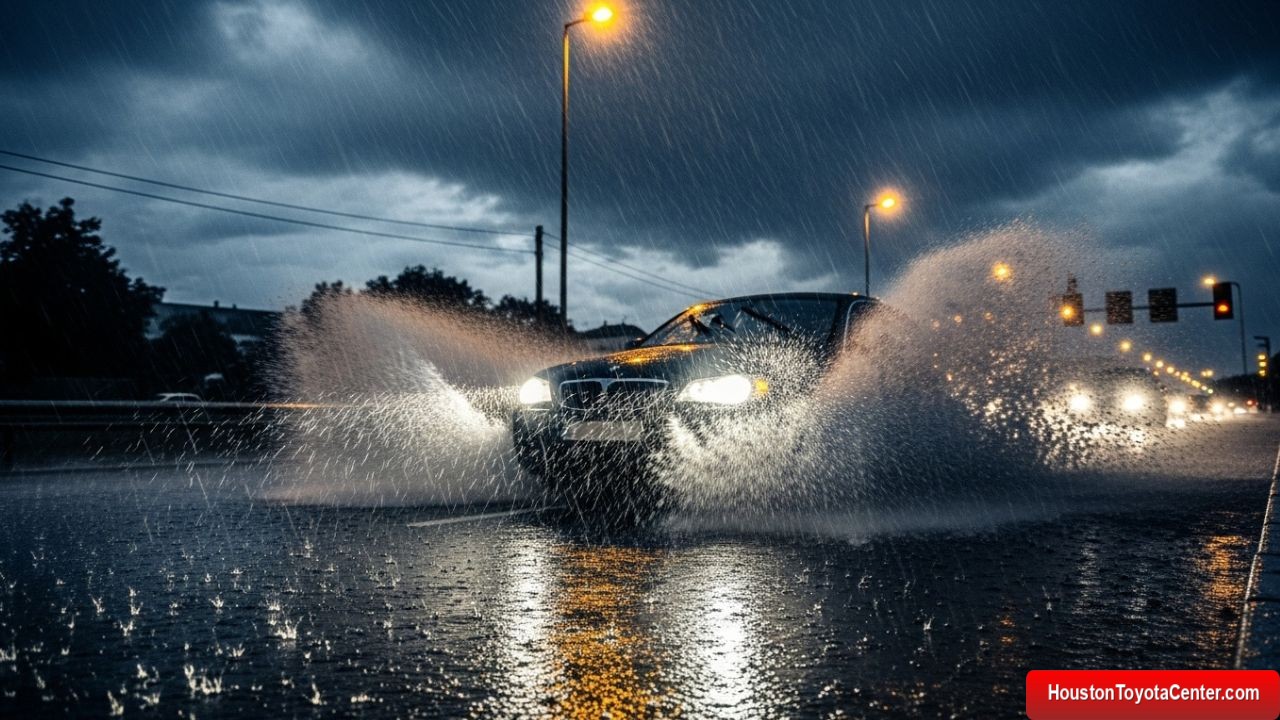
Driving in heavy rain is one of the most common yet underestimated hazards on the road. While rain may seem routine, the combination of reduced visibility, slick pavement, unpredictable traffic behavior, and the ever-present risk of hydroplaning can quickly turn an ordinary trip into a dangerous situation. Many drivers overestimate their ability to handle wet conditions, underestimate how much rain affects vehicle dynamics, or simply don’t know the science behind why cars lose control on wet roads.
This article is a comprehensive, practical, and science-backed guide to driving safely in heavy rain. It goes beyond basic advice to explain why certain techniques work, how hydroplaning happens, and what drivers can do—before, during, and after a rainstorm—to significantly reduce risk. Whether you are a daily commuter, a long-distance traveler, or a new driver, understanding these principles can save lives, including your own.
Understanding the Risks of Driving in Heavy Rain
Rain affects driving in multiple ways simultaneously, which is why it is so dangerous. Unlike snow or ice, rain often does not trigger the same level of caution in drivers, even though the risks can be just as severe.
Reduced Visibility
Heavy rain limits how far and how clearly you can see. Rainfall can blur windshields, distort lights from other vehicles, and create glare, especially at night. Large droplets can overwhelm wipers, and fogging inside the vehicle can further reduce clarity.
FREE: Quickly identify and understand problems with your vehicle 🚘
CLICK HEREVisibility problems include:
- Difficulty seeing lane markings
- Trouble judging distance and speed of other vehicles
- Reduced ability to spot pedestrians, cyclists, or debris
- Increased glare from headlights and streetlights
When visibility drops, reaction time increases—and increased reaction time means increased stopping distance.
Reduced Traction
Dry pavement provides friction between your tires and the road. Rainwater creates a thin layer that reduces this friction. As speed increases, tires may not be able to disperse water fast enough, causing loss of grip.
Traction loss affects:
- Braking efficiency
- Steering responsiveness
- Acceleration control
- Stability in curves
Unpredictable Road Conditions
Rain can reveal or create hazards that were not present before:
- Oil residue rises to the surface at the start of rainfall
- Potholes fill with water and become invisible
- Debris such as branches, trash, or gravel washes onto roads
- Standing water accumulates in low areas
These factors combine to create a driving environment where mistakes are less forgiving.
What Is Hydroplaning?
Hydroplaning (also called aquaplaning) occurs when a vehicle’s tires lose contact with the road surface and ride on a layer of water instead. When this happens, the driver effectively loses control of steering, braking, and acceleration.
Hydroplaning is not rare, and it does not require extreme weather. It can happen:
- At speeds as low as 35 mph (56 km/h)
- With as little as 1/10 inch (2.5 mm) of water
- On roads with poor drainage
- With worn or underinflated tires
The Physics Behind Hydroplaning
Tires are designed with grooves (tread) that channel water away from the contact patch—the area where the tire touches the road. When water depth exceeds the tire’s ability to disperse it, pressure builds under the tire. Eventually, the tire lifts off the pavement and rides on water.
Key factors influencing hydroplaning:
- Vehicle speed
- Tire tread depth
- Tire pressure
- Water depth
- Road texture
The faster you drive, the less time tires have to push water aside.
Common Myths About Driving in Heavy Rain
Understanding what not to believe is just as important as knowing what to do.
Myth 1: All-wheel drive prevents hydroplaning
All-wheel drive helps with acceleration on slippery surfaces, but it does nothing to improve braking or steering during hydroplaning.
Myth 2: New cars can handle rain better automatically
Modern safety features help, but they cannot defy physics. Even vehicles with advanced traction control can hydroplane.
Myth 3: Bigger tires mean better grip in rain
Wider tires can actually hydroplane more easily if tread design and water depth are unfavorable.
Myth 4: Cruise control is safe in light rain
Cruise control can delay your reaction to loss of traction and should never be used on wet roads.
Preparing Your Vehicle for Rainy Conditions
Safe driving in heavy rain starts long before you turn the key.
Tire Condition and Tread Depth
Tires are your first and most important defense against hydroplaning.
Recommended minimum tread depth:
- Legal minimum (many regions): 2/32 inch (1.6 mm)
- Recommended for rain safety: 4/32 inch (3.2 mm) or more
| Tread Depth | Wet Road Performance |
|---|---|
| 6/32″ | Excellent water dispersion |
| 4/32″ | Good rain performance |
| 2/32″ | High hydroplaning risk |
| Below 2/32″ | Dangerous and illegal in many areas |
Check tread using:
- A tread depth gauge
- The coin test
- Visual wear indicators on the tire
Proper Tire Pressure
Underinflated tires increase hydroplaning risk because they cannot maintain proper shape to disperse water.
- Check pressure monthly
- Follow manufacturer recommendations
- Adjust for temperature changes
Windshield Wipers and Washer Fluid
Wipers should clear water cleanly without streaking or skipping.
Replace wipers:
- Every 6–12 months
- Immediately if they smear or chatter
Use washer fluid rated for heavy rain and grime removal.
Lights and Signals
Ensure:
- Headlights are clean and aligned
- Brake lights and turn signals work
- Fog lights (if equipped) function properly
Visibility is not just about seeing—it’s about being seen.
Driving Techniques for Heavy Rain
Slow Down—More Than You Think
Speed magnifies every risk in rain. Reducing speed gives your tires more time to channel water and gives you more time to react.
A good rule:
- Reduce speed by at least 1/3 in heavy rain
- Reduce more if visibility is poor or water is pooling
Increase Following Distance
On wet roads, stopping distances increase dramatically.
| Speed | Dry Road Stopping Distance | Wet Road Stopping Distance |
|---|---|---|
| 30 mph | ~75 feet | ~115 feet |
| 50 mph | ~175 feet | ~265 feet |
| 70 mph | ~315 feet | ~475 feet |
Increase following distance from:
- 3 seconds (dry)
to - 5–6 seconds (wet)
Avoid Sudden Movements
Smoothness is critical.
- Brake gently and early
- Steer gradually
- Accelerate slowly
- Avoid abrupt lane changes
Sudden inputs can break traction instantly.
Use Headlights Properly
Turn on headlights whenever:
- Rain is heavy
- Visibility is reduced
- Required by law
Avoid high beams in heavy rain, as they reflect off water droplets and reduce visibility.
Recognizing Early Signs of Hydroplaning
Hydroplaning often happens suddenly, but there are warning signs.
You may notice:
- Engine revs increase without acceleration
- Steering feels light or unresponsive
- Vehicle begins to drift or slide
- Tires sound unusually quiet
Recognizing these signs early can prevent a complete loss of control.
What to Do If Your Vehicle Hydroplanes
If hydroplaning occurs, your reaction is critical.
Do NOT:
- Slam on the brakes
- Jerking the steering wheel
- Accelerate suddenly
DO:
- Stay calm
- Ease off the accelerator
- Keep steering wheel pointed in your intended direction
- Wait for tires to regain contact with the road
- Gently regain control once traction returns
Modern vehicles with ABS and stability control help, but your inputs still matter.
Braking in Heavy Rain: ABS vs Non-ABS
Vehicles with ABS
- Apply firm, steady pressure
- Let the system pulse the brakes
- Do not pump the brake pedal
Vehicles without ABS
- Use threshold braking
- Apply brake pressure until wheels nearly lock
- Release slightly if skidding occurs
- Reapply smoothly
Practice understanding your braking system before emergencies occur.
Managing Standing Water and Flooded Roads
Standing water is one of the most dangerous rain-related hazards.
How Deep Is Too Deep?
- 6 inches: Can cause loss of control
- 12 inches: Can float most cars
- 18–24 inches: Can carry away trucks and SUVs
Never assume depth based on appearance.
Rule:
If you cannot see the road surface, do not drive through it.
Night Driving in Heavy Rain
Nighttime rain driving compounds risks.
Challenges include:
- Reduced depth perception
- Headlight glare
- Harder-to-see pedestrians and cyclists
Tips:
- Reduce speed further
- Keep windshield spotless inside and out
- Use anti-fog measures
- Focus on road edges and lane reflectors
Highway vs City Driving in Rain
Highways
- Higher speeds increase hydroplaning risk
- Water may pool in worn tire tracks
- Crosswinds can be stronger
Stay in less-polished lanes when possible and avoid cruise control.
City Streets
- Frequent stops increase rear-end collision risk
- Painted lines and metal covers are slippery
- Pedestrian unpredictability increases
Anticipate stops early and watch intersections carefully.
The Role of Driver Fatigue and Stress
Rain increases cognitive load. Fatigue or stress reduces your ability to process information quickly.
If you feel:
- Tense
- Overwhelmed
- Sleepy
It is safer to:
- Pull over
- Take a break
- Wait for rain intensity to decrease
Arriving late is better than not arriving at all.
Advanced Driver Assistance Systems (ADAS) in Rain
Modern vehicles include:
- Automatic emergency braking
- Lane-keeping assist
- Adaptive cruise control
While helpful, these systems:
- May be less effective in heavy rain
- Can misinterpret lane markings
- Should never replace attentive driving
Always remain in control.
Teaching New Drivers About Rain Safety
New drivers often lack experience in rain.
Key lessons to emphasize:
- Rain requires different habits
- Slower is safer
- Confidence should never exceed conditions
- Practicing in light rain builds skills for heavier storms
Supervised practice can make a lasting difference.
Long-Term Habits That Reduce Rain-Related Risk
Safe rain driving is not just situational—it’s habitual.
Develop habits such as:
- Regular vehicle maintenance
- Conservative driving style
- Weather-aware planning
- Continuous learning and self-assessment
Drivers who respect rain drive differently, and that difference saves lives.
Final Thoughts: Respect the Rain
Heavy rain does not have to be terrifying, but it must be taken seriously. The vast majority of rain-related crashes are preventable through knowledge, preparation, and disciplined driving behavior. Hydroplaning is not a mysterious event—it is a predictable outcome of speed, water, and tire condition.
By slowing down, increasing distance, maintaining your vehicle, and responding correctly to loss of traction, you dramatically reduce your risk. The goal is not to prove skill, but to arrive safely.
Rain will always be part of driving. Safety depends on how well you adapt.
Leave a Reply