
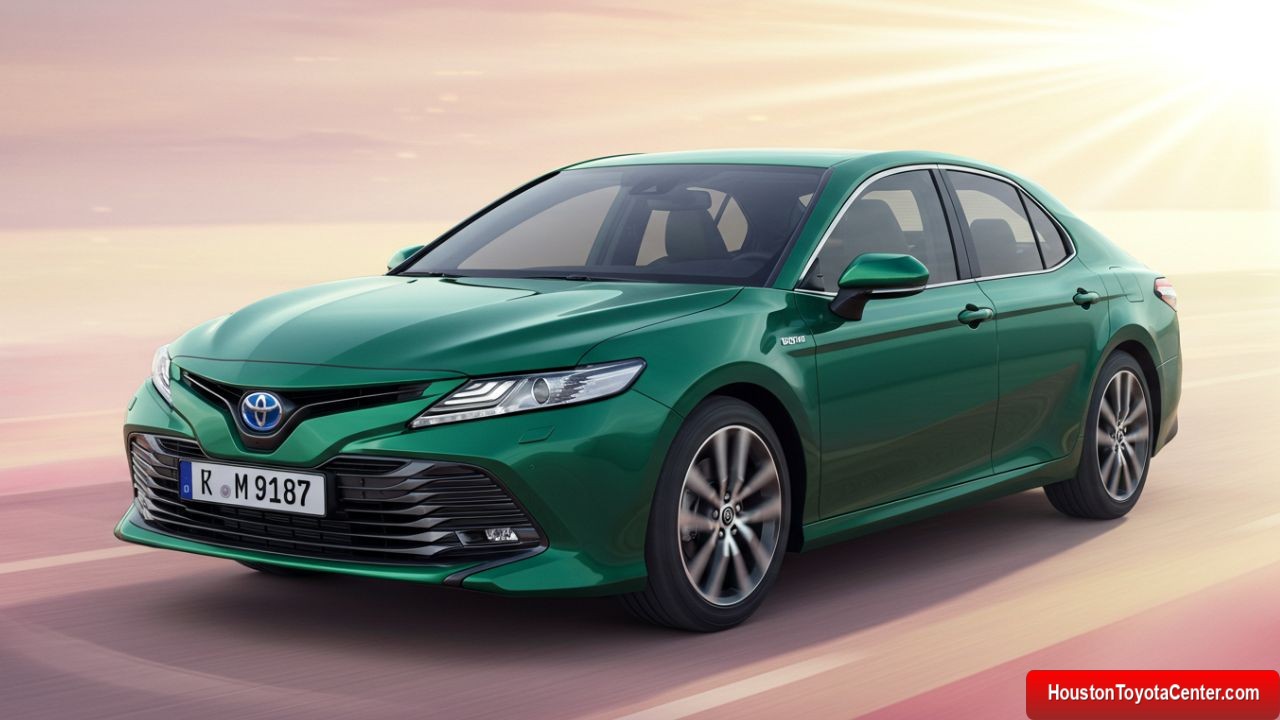
The Toyota Camry has long been a staple in the midsize sedan market, renowned for its reliability, comfort, and value. Since its debut in the late 1980s, the Camry has evolved from a modest family car into a sophisticated, tech-forward vehicle that appeals to a broad demographic of drivers—from young professionals to retirees. In recent years, one of the most significant developments in the Camry lineup has been the rise of the Camry Hybrid, offering an alternative to the traditional gasoline-powered model. This shift reflects broader industry trends toward fuel efficiency, sustainability, and advanced powertrain technology.
As consumers become increasingly environmentally conscious and cost-sensitive, the decision between a hybrid and a gas-powered Camry is more relevant than ever. While both versions share the same foundation—same body styles, interior features, safety systems, and overall driving experience—they differ significantly under the hood and in their real-world performance. Choosing between them isn’t just about engine preference; it’s about lifestyle, budgeting, environmental impact, and long-term ownership costs.
This comprehensive comparison dives deep into every aspect of the Toyota Camry Hybrid versus the Gas-powered Camry, examining performance, fuel economy, pricing, technology, driving dynamics, maintenance, resale value, and environmental footprint. Whether you’re shopping for your next daily driver or simply curious about how hybrids stack up against conventional engines, this guide will equip you with everything you need to make an informed decision.
1. Overview: What Defines the Camry Lineup?
Before we dive into the differences, let’s establish what the Camry offers as a whole. The current generation (eighth-generation, introduced in 2018 and refreshed in 2024) represents a bold redesign from previous models, emphasizing sportier styling, improved handling, and a more premium cabin.
FREE: Quickly identify and understand problems with your vehicle 🚘
CLICK HEREAll Camrys are built on Toyota’s TNGA-K platform (Toyota New Global Architecture), which enhances rigidity, improves crash safety, and allows for better weight distribution. This platform is shared with other Toyota and Lexus models, including the RAV4 and Highlander, ensuring proven engineering and reliability.
Both the hybrid and gas versions are available in multiple trim levels, allowing buyers to customize their experience based on budget and desired features. However, the core distinction lies in the powertrain.
| Feature | Camry Gas | Camry Hybrid |
|---|---|---|
| Engine Type | Inline-4 or V6 (gasoline) | 2.5L 4-cylinder + electric motor |
| Transmission | 8-speed automatic (4-cyl), Direct Shift-8AT (V6) | e-CVT (electronically controlled continuously variable transmission) |
| Power Output (Base Model) | 203 hp (4-cyl), 301 hp (V6) | 208 hp combined |
| Fuel Economy (City/Hwy/Combined) – Base Trim | ~28/39/32 mpg (4-cyl), ~22/33/26 mpg (V6) | ~51/53/52 mpg |
| Starting MSRP (2025 Model Year) | $27,450 (LE 4-cyl) | $29,950 (LE Hybrid) |
| Available Trims | LE, SE, XLE, XSE, TRD (V6 only) | LE, SE, XLE, XSE |
As shown above, while the base gas-powered Camry starts lower in price, the hybrid commands a slight premium—typically around $2,000–$3,000 more depending on trim. But that initial cost difference opens the door to major savings down the road, particularly in fuel and maintenance.
Let’s explore each area in detail.
2. Powertrains: How Do They Work and How Do They Feel?
Gas-Powered Camry: Traditional Internal Combustion Engine
The standard Camry comes with two gasoline engine options:
- 2.5L Dynamic Force 4-cylinder (A25A-FKS): Produces 203 horsepower and 184 lb-ft of torque. Paired with an 8-speed automatic transmission, this engine powers the LE, SE, and XLE trims.
- 3.5L V6 (2GR-FKS): Found in the XSE and XLE V6 trims, this engine delivers 301 horsepower and 267 lb-ft of torque. It uses Toyota’s Direct Shift-8AT transmission, which includes a physical first gear for sharper launches and a wide-ratio overdrive for efficiency.
The 4-cylinder engine is smooth and refined, offering adequate power for daily commuting and highway merging. Acceleration from 0–60 mph takes approximately 7.2 seconds, which is competitive in the segment. The V6, meanwhile, transforms the Camry into a near-sports sedan, achieving 0–60 mph in about 5.8 seconds—faster than many entry-level luxury sedans.
Drivers who enjoy a more engaging experience often gravitate toward the V6, especially in the XSE trim, which adds sport-tuned suspension, larger wheels, and paddle shifters. The exhaust note is deeper and more pronounced, though still subdued compared to true performance cars.
However, even with modern direct injection and variable valve timing, internal combustion engines inherently suffer from inefficiencies—energy loss through heat, friction, and idling. That’s where hybrids shine.
Camry Hybrid: Electrified Efficiency
The Camry Hybrid uses Toyota’s fourth-generation hybrid system, centered around a 2.5L inline-4 Atkinson-cycle engine (A25A-FXS) paired with an electric motor and a compact nickel-metal hydride (NiMH) or lithium-ion battery (depending on trim). The total system output is 208 horsepower, slightly higher than the base gas engine.
Unlike conventional transmissions, the hybrid uses an e-CVT (electronic Continuously Variable Transmission), which doesn’t have fixed gears. Instead, it uses a planetary gearset (called a “power split device”) to seamlessly blend power from the engine and electric motor. This results in smooth, linear acceleration without the “rubber band” feeling often associated with older CVTs.
One of the standout features of the hybrid system is its ability to operate in pure electric mode at low speeds—ideal for city driving, parking lots, and stop-and-go traffic. The car can cruise silently at up to 25–30 mph on electricity alone, reducing emissions and noise.
Regenerative braking captures energy during deceleration and feeds it back into the battery, improving efficiency. The system also shuts off the gasoline engine when stopped (like at red lights), restarting instantly when the driver presses the accelerator.
While peak horsepower is similar to the 4-cylinder gas model, the hybrid feels more responsive in daily driving due to instant torque delivery from the electric motor. Torque is available immediately, making low-speed acceleration snappier and more confident.
Here’s a side-by-side look at performance metrics:
| Metric | Camry 4-Cyl Gas | Camry V6 Gas | Camry Hybrid |
|---|---|---|---|
| Engine | 2.5L I4 | 3.5L V6 | 2.5L I4 + Electric Motor |
| Horsepower | 203 hp | 301 hp | 208 hp (combined) |
| Torque | 184 lb-ft | 267 lb-ft | 163 lb-ft (engine), plus electric assist |
| 0–60 mph (est.) | 7.2 sec | 5.8 sec | 7.0 sec |
| Top Speed | 125 mph | 135 mph | 125 mph |
| Transmission | 8-speed automatic | Direct Shift-8AT | e-CVT |
| Drive System | Front-wheel drive | Front-wheel drive | Front-wheel drive |
Despite having less raw power than the V6, the hybrid matches or exceeds the 4-cylinder gas model in real-world responsiveness. Its advantage lies not in speed, but in efficiency and refinement.
3. Fuel Economy: Where the Hybrid Truly Shines
When it comes to fuel economy, the Camry Hybrid dominates the competition—including its gas-powered sibling.
According to the U.S. Environmental Protection Agency (EPA), here are the official ratings for the 2025 models:
| Model | City MPG | Highway MPG | Combined MPG | Fuel Tank Size | Range (Combined) |
|---|---|---|---|---|---|
| Camry LE (4-cyl Gas) | 28 | 39 | 32 | 13.2 gal | ~422 miles |
| Camry SE/XSE (4-cyl Gas) | 26 | 35 | 30 | 13.2 gal | ~396 miles |
| Camry XLE/XSE V6 | 22 | 33 | 26 | 14.5 gal | ~377 miles |
| Camry LE Hybrid | 51 | 53 | 52 | 13.2 gal | ~686 miles |
| Camry SE/XSE Hybrid | 47 | 47 | 47 | 13.2 gal | ~620 miles |
| Camry XLE Hybrid | 48 | 47 | 48 | 13.2 gal | ~634 miles |
Note: Differences in wheel size and aerodynamics cause slight variations between trims.
The numbers speak volumes. The Camry Hybrid achieves nearly double the fuel economy of the base gas model in city driving and maintains strong efficiency on the highway. Even in mixed conditions, the hybrid consistently delivers over 50 mpg, while the gas models hover around 30.
To put this into perspective:
- If you drive 15,000 miles per year with an average fuel cost of $3.50 per gallon:
- Gas Camry (32 mpg): ~469 gallons/year → $1,641 in annual fuel costs
- Hybrid Camry (52 mpg): ~288 gallons/year → $1,008 in annual fuel costs
- Annual savings: $633
- Over 5 years: $3,165 saved in fuel
And if gas prices rise—as they often do—the savings grow proportionally. At $4.50/gallon, the five-year savings jump to over $4,000.
Additionally, the hybrid’s extended range means fewer trips to the pump. With a potential 686-mile range, you could drive from Houston to Chicago on a single tank—something no gas-powered Camry can claim.
For commuters, delivery drivers, or anyone spending hours on the road, these savings add up quickly. Even occasional drivers benefit from reduced refueling frequency and greater peace of mind during long trips.
4. Pricing and Value: Upfront Cost vs. Long-Term Savings
Let’s address the elephant in the room: the hybrid costs more upfront.
Here’s a sample price comparison for the 2025 Camry LE trim:
| Trim | MSRP | Destination Fee | Total Sticker Price |
|---|---|---|---|
| Camry LE (Gas) | $27,450 | $1,095 | $28,545 |
| Camry LE Hybrid | $29,950 | $1,095 | $31,045 |
That’s a $2,500 difference right out of the gate. For some buyers, that extra cost is a dealbreaker—especially if they plan to keep the car for only a few years.
But here’s the key: the hybrid pays for itself over time.
Using our earlier fuel cost estimates:
- Extra upfront cost: $2,500
- Annual fuel savings: $633
- Break-even point: ~4 years
After four years, the hybrid begins to save you money. And since the average American keeps a car for over 8 years, most owners will enjoy four+ years of pure savings.
Moreover, hybrids often qualify for:
- Federal tax credits (though currently limited for Toyotas due to sales volume caps)
- State and local incentives (e.g., HOV lane access, rebates, reduced registration fees)
- Lower depreciation in markets with high fuel prices or eco-conscious buyers
Let’s examine a full total cost of ownership (TCO) over 5 years, including depreciation, fuel, insurance, maintenance, and taxes.
| Cost Factor | Camry Gas (LE) | Camry Hybrid (LE) | Difference |
|---|---|---|---|
| Initial Purchase Price | $28,545 | $31,045 | +$2,500 |
| Depreciation (5 yrs, est. 45%) | $12,845 | $13,970 | +$1,125 |
| Fuel Cost (15k mi/yr, $3.50/gal) | $8,205 | $5,040 | -$3,165 |
| Maintenance & Repairs (5 yrs) | $2,900 | $2,400 | -$500 |
| Insurance (avg. national) | $4,500 | $4,500 | $0 |
| Taxes & Fees | $1,800 | $1,800 | $0 |
| Total 5-Year Cost | $48,795 | $48,755 | –$40 |
Estimates based on industry averages from sources like Edmunds, Kelley Blue Book, and AAA.
Surprisingly, the total cost of ownership is nearly identical—and in some scenarios, the hybrid is actually cheaper. If fuel prices rise or you drive more than 15,000 miles per year, the hybrid wins decisively.
Also, consider resale value. Hybrids, especially reliable ones like the Camry, tend to hold their value better in markets where fuel efficiency matters. According to iSeeCars, the Camry Hybrid has one of the lowest depreciation rates among midsize sedans, retaining ~60% of its value after 5 years compared to ~55% for the gas model.
5. Technology and Features: Are There Any Differences?
One of the biggest advantages of the Camry platform is that both hybrid and gas models offer the same suite of technology and features. Toyota does not limit trim levels or tech availability based on powertrain—at least not in the U.S. market.
Both versions come standard with:
- Toyota Safety Sense 3.0 (TSS 3.0):
- Pre-Collision System with Pedestrian Detection
- Full-Speed Dynamic Radar Cruise Control
- Lane Departure Alert with Steering Assist
- Lane Tracing Assist
- Automatic High Beams
- Road Sign Assist
- 7-inch or 12.3-inch touchscreen (depending on trim)
- Apple CarPlay and Android Auto (wireless on higher trims)
- Bluetooth connectivity
- USB ports and available Wi-Fi hotspot
Available upgrades include:
- JBL Premium Audio System (9 speakers)
- Panoramic Sunroof
- Heated and ventilated front seats
- Leather-trimmed upholstery
- Head-up Display
- Digital Key (via smartphone)
- Advanced Park (automatic parking assist)
The only minor differences relate to instrumentation:
- The hybrid includes an energy monitor display that shows real-time power flow, battery charge level, and EV mode status.
- The gas model has a traditional tachometer (except in hybrids, which use a “power meter” instead).
Interior space, cargo capacity, and ride comfort are identical across both powertrains. The hybrid battery is located under the rear seat, so there’s no reduction in trunk space—both models offer 15.1 cubic feet of cargo room.
Here’s a quick feature availability chart by trim:
| Trim | Powertrain Options | Infotainment Screen | Driver Assistance | Interior Features |
|---|---|---|---|---|
| LE | Gas or Hybrid | 7-in touchscreen | TSS 3.0 | Cloth seats, manual AC |
| SE | Gas or Hybrid | 8-in or 12.3-in | TSS 3.0 | Sport seats, dual-zone climate |
| XLE | Gas or Hybrid | 12.3-in | TSS 3.0 | Leather, heated front seats, moonroof |
| XSE | Gas or Hybrid (V6 or Hybrid) | 12.3-in | TSS 3.0 | Sport suspension, LED lighting, ambient interior lighting |
In short, choosing hybrid doesn’t mean sacrificing luxury or tech. You get the same modern cabin, intuitive controls, and cutting-edge safety systems—just with better fuel economy.
6. Driving Experience: Comfort, Noise, and Handling
Many drivers assume hybrids are boring or feel “different.” But the Camry Hybrid defies that stereotype.
Ride Quality and Comfort
Both the gas and hybrid Camrys ride on the same suspension setup: MacPherson struts in front and a dual-link rear suspension. Tuning varies slightly by trim:
- LE and XLE: Softer springs and dampers for a plush, comfortable ride—ideal for long commutes and senior drivers.
- SE and XSE: Firmer suspension, stiffer anti-roll bars, and larger stabilizer bars for sharper cornering and reduced body roll.
The hybrid version weighs about 100–150 pounds more than the gas model due to the battery pack. However, Toyota engineers placed the battery low in the chassis, which actually lowers the center of gravity and improves stability.
Most drivers won’t notice the weight difference in everyday driving. In fact, the added mass can enhance highway cruising by reducing floatiness in crosswinds.
Noise, Vibration, and Harshness (NVH)
One area where the hybrid excels is cabin quietness.
Because the electric motor operates silently at low speeds, the hybrid is dramatically quieter in city driving, parking garages, and residential areas. There’s no engine rumble at idle, and acceleration is smoother and more refined.
Even under hard acceleration, when the gasoline engine kicks in, the hybrid remains well-insulated. Toyota uses acoustic glass, extra sound-deadening materials, and active noise control to minimize intrusion.
The gas-powered Camry, especially the V6, is louder—particularly during aggressive driving. While some may enjoy the engine note, others find it intrusive on long drives.
Here’s a subjective NVH comparison:
| Scenario | Camry Gas | Camry Hybrid |
|---|---|---|
| Idle at Stoplight | Engine idling, slight vibration | Silent (engine off) |
| Low-Speed City Driving | Moderate engine noise | Near-silent (EV mode) |
| Highway Cruising (70 mph) | Wind and tire noise dominate | Similar, but less engine drone |
| Hard Acceleration | Loud engine, noticeable gear shifts | Smooth power delivery, minimal noise |
| Overall Cabin Quietness | Good | Excellent |
If you value a serene driving environment—especially in urban settings or during early morning/late night drives—the hybrid is the clear winner.
Handling and Responsiveness
While neither Camry is a sports sedan, the XSE trims (both gas and hybrid) offer surprisingly engaging dynamics. The steering is precise, turn-in is sharp, and body control is excellent for a front-wheel-drive sedan.
The hybrid’s e-CVT provides seamless power delivery, eliminating the hesitation or lag sometimes found in traditional automatics. Because the electric motor delivers instant torque, the car feels more eager off the line, even if 0–60 times are similar.
Test drivers often report that the hybrid feels “smoother” and “more composed” in stop-and-go traffic, thanks to the absence of gear shifts and the regenerative braking system, which blends naturally with the friction brakes.
However, enthusiasts who enjoy manual control may miss the paddle shifters available on gas models (though the hybrid lacks them, the XSE Hybrid still offers a Sport mode for sharper throttle response).
7. Maintenance and Reliability: Which Costs Less Over Time?
Reliability is where the Camry truly earns its reputation. Both gas and hybrid models are consistently ranked among the most dependable vehicles on the road.
According to J.D. Power, the Toyota Camry ranks #1 in dependability among midsize cars, with both powertrains scoring highly. Consumer Reports gives the Camry a perfect 5/5 predicted reliability rating.
But when it comes to maintenance, the hybrid has a distinct edge.
Why Hybrids Require Less Maintenance
- Reduced Engine Wear: The hybrid engine runs less frequently and under lighter loads, leading to slower wear on pistons, valves, and belts.
- Less Brake Wear: Regenerative braking handles much of the deceleration, reducing stress on brake pads and rotors. Many hybrid owners report going 60,000+ miles before needing new brakes.
- No Transmission Fluid Changes: The e-CVT is sealed and designed to last the life of the vehicle. No scheduled fluid changes are required.
- Longer Oil Change Intervals: Due to reduced engine usage, oil degrades more slowly. Toyota recommends oil changes every 10,000 miles or 12 months under normal conditions.
- Fewer Exhaust System Repairs: Less engine runtime means less corrosion and heat stress on mufflers and catalytic converters.
Here’s a typical 5-year maintenance cost estimate:
| Service | Camry Gas | Camry Hybrid | Notes |
|---|---|---|---|
| Oil Changes (5) | $300 | $250 | Hybrid requires fewer changes |
| Tire Rotation (5) | $125 | $125 | Same for both |
| Brake Pads (Front) | $300 | $150 | Hybrid brakes last longer |
| Battery Replacement | $0 | $0 | Factory warranty covers 10 years/150k miles |
| Transmission Service | $200 | $0 | Gas model may need fluid flush |
| Air Filter | $50 | $50 | Same |
| Spark Plugs | $150 | $0 | Hybrid plugs wear slower |
| Estimated Total | $1,175 | $725 | $450 savings with hybrid |
Over a decade, those savings can exceed $1,000—not to mention the reduced hassle of fewer service visits.
Additionally, Toyota offers a 10-year/150,000-mile warranty on hybrid components (battery, inverter, transaxle) in most states, providing long-term peace of mind.
8. Environmental Impact: Emissions and Sustainability
For eco-conscious buyers, the environmental benefits of the Camry Hybrid are compelling.
Tailpipe Emissions
The hybrid produces significantly fewer greenhouse gases and pollutants:
| Model | CO₂ Emissions (g/mile) | Annual Smog Rating (EPA) |
|---|---|---|
| Camry Gas (4-cyl) | 415 g/mile | 6/10 |
| Camry Hybrid | 256 g/mile | 9/10 |
That’s a 38% reduction in carbon dioxide emissions—equivalent to planting over 2 acres of forest annually to offset the difference.
In smog-forming pollutants like nitrogen oxides (NOx) and particulate matter, the hybrid also performs better due to less frequent engine operation and cleaner combustion cycles.
Lifecycle Emissions
Critics sometimes argue that hybrid batteries require more energy to produce, offsetting early gains. While there is some truth to this, studies show that hybrids “pay back” their manufacturing emissions within 1–2 years of driving, after which they remain cleaner for the rest of their lifespan.
A 2023 study by the Union of Concerned Scientists found that over a 15-year lifecycle, a Camry Hybrid emits nearly 50 tons less CO₂ than its gas counterpart—equal to taking another car off the road entirely.
Moreover, Toyota recycles over 90% of hybrid battery materials, and the company has established take-back programs nationwide.
9. Real-World Owner Feedback and Common Complaints
To round out this comparison, let’s look at what actual owners say.
Hybrid Owners Love:
- “I get 50+ mpg in the city—unbelievable.”
- “So quiet at stoplights. My neighbors don’t even know I’m leaving.”
- “Bought it in 2020, now at 75,000 miles—still gets 48 mpg and hasn’t had a single repair.”
- “The break-even point came faster than I expected. Now I’m saving money every month.”
Gas Model Owners Appreciate:
- “The V6 has so much power—I love passing on the highway.”
- “Slightly cheaper upfront, and I don’t worry about battery longevity.”
- “Great car, but I wish the fuel economy was better in traffic.”
Common Misconceptions About Hybrids:
- “Batteries are expensive to replace.”
Reality: Most never need replacement. Toyota’s 10-year warranty covers it, and third-party replacements start at ~$2,000—less than an engine rebuild. - “Hybrids don’t work in cold weather.”
Reality: Modern hybrids perform well in winter. The Camry’s system preconditions the battery and uses the engine more in cold temps—fuel economy drops slightly but remains superior to gas models. - “You can’t tow with a hybrid.”
Reality: Neither Camry is rated for towing. Maximum capacity is 1,000 lbs (braked) for both versions—only suitable for small trailers.
10. Final Verdict: Which One Should You Buy?
After analyzing performance, cost, technology, and long-term value, the answer depends on your priorities.
✅ Choose the Camry Hybrid if you:
- Drive 12,000+ miles per year, especially in city or mixed conditions
- Want maximum fuel savings and lower operating costs
- Value a quiet, smooth ride
- Care about environmental impact
- Plan to keep the car longer than 4–5 years
- Live in a state with high gas prices or hybrid incentives
✅ Choose the Gas-Powered Camry if you:
- Prioritize lower upfront cost
- Prefer the V6’s stronger acceleration and sportier feel
- Mostly drive long highway stretches (where hybrids lose some efficiency edge)
- Are unsure about hybrid technology or battery concerns
- Only plan to keep the car 3–4 years or less
🏁 Our Recommendation: The Camry Hybrid Wins for Most Buyers
For the majority of drivers, the Camry Hybrid is the smarter choice. The slight price premium is quickly offset by fuel and maintenance savings. The driving experience is more refined, the technology is identical, and the environmental benefits are undeniable.
Even if you’re not an eco-warrior, the hybrid makes financial sense. It’s a classic case of paying a little more today to save a lot tomorrow.
And if you want performance, remember: the Camry Hybrid is available in SE and XSE trims with sport suspension, aggressive styling, and paddle-shift-inspired driving modes. You don’t have to sacrifice fun for efficiency.
Conclusion
The battle between the Camry Hybrid and Gas-powered Camry isn’t really a battle at all—it’s a demonstration of how far hybrid technology has come. Once seen as a niche option for frugal drivers, the Camry Hybrid is now a mainstream powerhouse that outperforms its gas sibling in efficiency, refinement, and long-term value.
While the gas-powered Camry—especially the V6—still appeals to driving enthusiasts and those seeking maximum power, the hybrid delivers a more balanced, sustainable, and economical package for everyday life.
In a world where fuel prices are volatile, environmental concerns are growing, and technology is advancing rapidly, the Camry Hybrid represents the future of sensible transportation. It proves that you don’t have to compromise comfort, reliability, or style to do the right thing for your wallet and the planet.
Whether you’re buying your first car or your fifth, the 2025 Toyota Camry Hybrid stands as one of the best all-around sedans on the market—a true benchmark in the automotive industry.
So the next time you’re at the dealership, don’t just look at the badge on the trunk. Look at the bigger picture: lower costs, quieter rides, cleaner air, and smarter engineering. That’s the real power of the Camry Hybrid.
Leave a Reply