
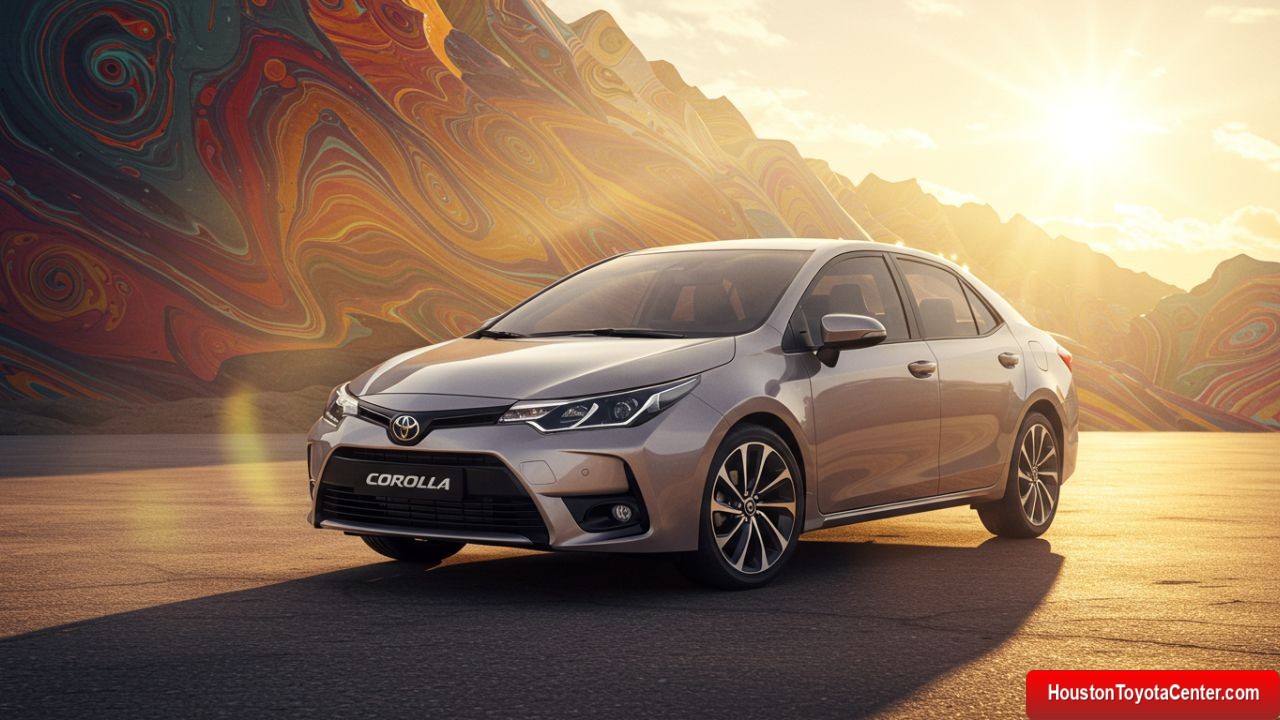
For over half a century, one name has remained synonymous with reliability, efficiency, and practicality in the world of automobiles: the Toyota Corolla. Since its debut in 1966, the Corolla has evolved from a modest compact car built to meet Japan’s growing post-war transportation needs into a global phenomenon, becoming the best-selling car in automotive history. With more than 50 million units sold worldwide as of 2024, the Corolla is not just a car—it’s a cultural icon, a benchmark in automotive engineering, and a testament to Toyota’s philosophy of continuous improvement.
But what exactly has enabled the Corolla to endure decades of economic shifts, technological revolutions, and changing consumer preferences? Why, amid fierce competition from SUVs, electric vehicles, and luxury sedans, does the Corolla continue to top sales charts across continents? This article delves deep into the multifaceted reasons behind the Corolla’s enduring popularity—examining its engineering excellence, strategic evolution, global adaptability, cultural impact, and unwavering commitment to core values that resonate with drivers everywhere.
The Birth of an Icon: Origins of the Corolla
To understand the Corolla’s longevity, we must begin at the beginning. In the mid-1960s, Japan was undergoing rapid industrialization. The economy was booming, and personal mobility became a national priority. Toyota, already established as a leading manufacturer, recognized the need for an affordable, reliable, and efficient family car that could navigate Japan’s narrow roads while offering comfort and durability.
On November 5, 1966, Toyota introduced the first-generation Corolla (E10 series). Priced competitively and equipped with a 1.1-liter engine producing 60 horsepower, the Corolla was designed with simplicity and functionality in mind. It featured rear-wheel drive, a four-speed manual transmission, and seating for four. Its boxy silhouette and upright grille gave it a no-nonsense appearance—appropriate for a vehicle meant to serve the everyday driver.
FREE: Quickly identify and understand problems with your vehicle 🚘
CLICK HEREWhat set the Corolla apart from the outset wasn’t flashiness or performance; it was dependability. Toyota implemented rigorous quality control measures and embraced the principles of kaizen (continuous improvement) and just-in-time manufacturing—practices that would later become hallmarks of the Toyota Production System. These philosophies ensured that every component met high standards, minimizing defects and maximizing long-term reliability.
The timing couldn’t have been better. As Japan’s middle class expanded, so did demand for personal vehicles. The Corolla quickly gained favor domestically and soon began exporting to international markets, including the United States, Australia, and Europe. By the early 1970s, it had established itself as a trustworthy alternative to larger, less fuel-efficient American cars.
Engineering Excellence: Built to Last
One of the primary reasons the Corolla has stood the test of time is its engineering integrity. While other automakers chased trends—bigger engines, flashy designs, or gimmicky features—Toyota focused on fundamentals: mechanical simplicity, proven technology, and long-term durability.
Reliability Through Simplicity
The Corolla’s design philosophy can be summed up in three words: simple, robust, predictable. Unlike some competitors who introduced complex electronic systems or experimental powertrains that later proved unreliable, Toyota prioritized components with proven track records. For example:
- The use of naturally aspirated four-cylinder engines across most generations ensured smooth operation and ease of maintenance.
- Conservative suspension setups provided adequate ride comfort without compromising longevity.
- Minimal reliance on cutting-edge tech (especially in earlier models) reduced the likelihood of electronic failures.
This approach paid off. Numerous studies and surveys consistently rank the Corolla among the most reliable vehicles on the road. According to Consumer Reports, the Corolla frequently earns top scores in predicted reliability, often outperforming even luxury brands. J.D. Power’s Vehicle Dependability Study has repeatedly recognized the Corolla for low repair frequency and high owner satisfaction.
| Year | Survey/Study | Result |
|---|---|---|
| 2023 | Consumer Reports – Predicted Reliability | #1 Compact Car |
| 2022 | J.D. Power U.S. Vehicle Dependability Study | Highest in Segment |
| 2021 | iSeeCars.com – Longest-Lasting Cars | 2nd Place (after Tundra) |
| 2020 | WhatCar? Reliability Survey (UK) | Top 3 Small Family Car |
Even when new technologies were adopted—such as hybrid powertrains or advanced safety suites—Toyota introduced them gradually, ensuring thorough testing and integration. The result? Innovations that enhance rather than complicate the driving experience.
Fuel Efficiency and Environmental Responsibility
In an era increasingly defined by environmental concerns, the Corolla has remained ahead of the curve in fuel efficiency. From its earliest days, the Corolla was engineered for economy. The original 1966 model achieved around 30 mpg, impressive for its time. As global oil crises struck in the 1970s, the Corolla’s frugal nature made it even more attractive.
Fast forward to today, and the Corolla continues to deliver excellent fuel economy. The current generation (E210 series, launched in 2018) offers several powertrain options, including:
- 1.8L 4-cylinder engine: ~30 mpg city / 38 mpg highway
- 2.0L Dynamic Force Engine: ~31 mpg city / 40 mpg highway
- Corolla Hybrid: Up to 53 mpg combined (EPA estimate)
The hybrid variant, introduced widely in North America in 2020, combines a 1.8-liter Atkinson-cycle engine with an electric motor and nickel-metal hydride or lithium-ion battery (depending on trim). It operates seamlessly in electric mode at low speeds, switches to gasoline power under load, and recaptures energy during braking—a hallmark of Toyota’s Hybrid Synergy Drive system.
This blend of efficiency and practicality appeals to environmentally conscious buyers, cost-sensitive commuters, and fleet operators alike. In cities like Los Angeles, New York, and Houston, thousands of Corollas serve as taxis, delivery vehicles, and rental cars—proving their resilience under demanding conditions.
Strategic Evolution: Adapting Without Losing Identity
While many cars fade into obscurity when they fail to evolve, the Corolla has managed to adapt strategically without abandoning its core identity. Over twelve generations, the Corolla has transformed significantly—but always with purpose.
Let’s examine key evolutionary milestones:
1st Generation (1966–1970): The Foundation
Launched as a rear-wheel-drive compact, the E10 laid the groundwork for future success. Simple, lightweight, and easy to produce, it established Toyota’s reputation for building dependable small cars.
5th Generation (1983–1987): Front-Wheel Drive Transition
With the E80 series, Toyota switched to front-wheel drive—a move that improved interior space, handling, and fuel efficiency. This shift aligned with global trends and positioned the Corolla as a modern competitor to European and American compacts.
9th Generation (2000–2006): Global Platform Strategy
The E120 marked Toyota’s push toward globalization. A single platform was used across multiple regions, reducing costs and streamlining production. However, regional variations persisted—North American models were slightly larger, while European versions remained nimble.
11th Generation (2013–2018): Safety and Technology Leap
The E170 introduced Toyota Safety Sense (TSS), a suite of driver-assist technologies including pre-collision braking, lane departure warning, adaptive cruise control, and automatic high beams. This made advanced safety accessible even on base trims.
12th Generation (2019–Present): TNGA Revolution
Perhaps the most transformative update came with the E210 series, built on Toyota’s TNGA (Toyota New Global Architecture) platform. This modular framework brought significant improvements:
- Lower center of gravity for better handling
- Increased structural rigidity for enhanced safety
- Improved ride comfort and noise insulation
- Support for hybrid and conventional powertrains
Despite these upgrades, the Corolla retained its affordability and practicality. Even with a more aggressive design language—featuring a prominent grille, LED lighting, and sculpted body lines—the car remained unmistakably a Corolla.
Global Appeal: Designed for the World
Few vehicles can claim true global ubiquity, but the Corolla is one of them. Sold in over 150 countries, it adapts to diverse climates, road conditions, and cultural expectations. Whether navigating congested Tokyo streets, enduring African dust storms, or cruising Australian highways, the Corolla performs reliably.
Toyota achieves this through regional customization. While the core engineering remains consistent, certain features are tailored to local markets:
| Region | Key Features / Variants | Notes |
|---|---|---|
| North America | Larger dimensions, available all-wheel drive, hybrid option | Appeals to families and suburban drivers |
| Europe | Smaller engines (1.2L turbo), hatchback focus, diesel option (discontinued) | Suited for narrow roads and urban environments |
| Southeast Asia | Manual transmissions, lower price points, simplified trims | Targets budget-conscious buyers |
| Middle East | Reinforced undercarriage, enhanced cooling systems | Built for extreme heat and rough terrain |
| Latin America | Flex-fuel engines (in Brazil), rugged suspension | Compatible with ethanol blends and unpaved roads |
In Brazil, for instance, the Corolla runs on flex-fuel engines capable of using gasoline, ethanol, or any mixture—a necessity in a country where biofuels play a major role in transportation. In Gulf states, special editions feature upgraded air conditioning and corrosion-resistant materials to combat sand and humidity.
Moreover, the Corolla’s presence in motorsports has boosted its international profile. The Toyota Corolla WRC dominated rally championships in the late 1990s, winning the World Rally Championship Manufacturers’ title in 1998 with drivers like Carlos Sainz and Didier Auriol. Though homologation rules required street-legal versions, the race-bred image elevated the Corolla’s desirability beyond mere practicality.
Today, the Corolla competes in NASCAR (as the Camry-based TRD Camry, though related), and grassroots racing series worldwide still feature modified Corollas—proof of their tunability and enthusiast appeal.
Economic Value: Affordability Meets Resale Strength
In personal finance terms, few cars offer the value proposition of the Corolla. It strikes a rare balance between low initial cost, minimal ownership expenses, and high resale value.
Purchase Price and Ownership Costs
As of 2026, the base MSRP for a new Corolla sedan in the U.S. starts around $21,000, making it one of the most affordable new cars available. Fully loaded trims with premium audio, navigation, and advanced safety tech reach about $28,000—still competitive against rivals like the Honda Civic, Mazda3, and Hyundai Elantra.
Beyond the sticker price, ongoing costs remain low:
- Insurance premiums are typically below average due to strong safety ratings.
- Maintenance schedules are straightforward, with recommended services every 5,000–10,000 miles.
- Parts availability is excellent globally, thanks to Toyota’s vast dealer network.
- Repair costs are generally lower than segment averages, especially for non-hybrid models.
According to AAA’s 2025 Your Driving Costs study, the Toyota Corolla ranked as the lowest-cost compact car to own and operate, with an estimated annual expense of just $6,780—covering depreciation, fuel, insurance, maintenance, fees, and loan interest.
Depreciation Resistance
Perhaps most impressively, the Corolla holds its value exceptionally well. Data from iSeeCars.com shows that after five years, a Corolla retains approximately 67% of its original value—significantly higher than the industry average of around 40%.
Several factors contribute to this:
- Proven reliability reduces buyer hesitation in the used market.
- High demand keeps resale prices firm.
- Low mileage accumulation in typical usage (e.g., commuting, rentals).
- Longevity encourages owners to keep them longer, reducing supply pressure.
Used Corollas with over 200,000 miles are not uncommon—and many continue running with basic maintenance. This “buy-it-for-life” perception strengthens consumer confidence and reinforces brand loyalty.
Cultural Impact: More Than Just Transportation
Beyond statistics and engineering, the Corolla’s endurance is rooted in cultural resonance. Across generations and geographies, it has become a symbol of stability, responsibility, and sensible living.
Symbol of Middle-Class Mobility
In many societies, owning a Corolla signifies entry into the middle class. In emerging economies like Indonesia, Mexico, or South Africa, purchasing a new Corolla represents achievement—a reward for hard work and financial discipline. Dealerships often report emotional reactions from first-time buyers, underscoring the car’s symbolic weight.
In developed nations, the Corolla plays a different but equally meaningful role. For college students, young professionals, and retirees, it offers independence without financial strain. Parents trust it for teen drivers. Immigrants rebuilding lives choose it for its affordability and ease of use.
Presence in Media and Pop Culture
Though not marketed as glamorous, the Corolla has appeared in films, TV shows, music videos, and literature—often reflecting real-world usage.
- In the Oscar-winning film “Crash” (2004), a stolen Corolla becomes a narrative device exploring racial tension and redemption.
- The Fast & Furious franchise, known for exotic supercars, ironically features a modified AE86 Corolla Trueno in its first installment—highlighting the car’s cult status among enthusiasts.
- Rappers like Kendrick Lamar and Childish Gambino reference “rolling in a Corolla” as a metaphor for humility or irony in lyrics.
- In Japan, the AE86 model inspired the manga and anime series “Initial D”, turning street-racing legend Takumi Fujiwara into a global icon—and sparking renewed interest in vintage Corollas.
These appearances, whether serious or satirical, affirm the Corolla’s place in the public consciousness—not as a status symbol, but as a relatable, ever-present part of daily life.
Community and Enthusiast Culture
Contrary to stereotypes, the Corolla has a dedicated enthusiast following. Online forums like ToyotaNation, Club4AG, and Reddit’s r/corolla host passionate communities discussing modifications, restoration projects, and technical tips.
The AE86 generation (1983–1987), in particular, enjoys near-mythical status. Rear-wheel drive, lightweight construction, and a responsive 4A-GE engine made it a favorite among tuners and drifters. Today, restored AE86s command premium prices at auctions, sometimes exceeding $30,000—even for high-mileage examples.
Modern Corollas also attract modifiers. The current generation’s TNGA platform provides a solid foundation for suspension upgrades, aerodynamic kits, and performance tuning. Toyota even supports this culture through official accessories and TRD (Toyota Racing Development) parts.
Safety Leadership: Protecting What Matters Most
Safety has become a cornerstone of the Corolla’s appeal. Early models offered basic protection, but since the 2010s, Toyota has made significant strides in occupant security.
Standardization of Advanced Driver Assistance Systems (ADAS)
Beginning with the 2016 model year, Toyota made Toyota Safety Sense™ (TSS) standard across all Corolla trims in the U.S. This decision was groundbreaking—most manufacturers reserved such tech for higher-end models.
TSS includes:
- Pre-Collision System with Pedestrian Detection (PCS): Uses camera and radar to detect vehicles and pedestrians, applying brakes if necessary.
- Lane Departure Alert with Steering Assist (LDA): Warns and gently corrects steering if the car drifts unintentionally.
- Dynamic Radar Cruise Control (DRCC): Maintains set speed and distance from the vehicle ahead.
- Automatic High Beams (AHB): Switches between high and low beams based on surrounding traffic.
Subsequent updates—TSS 2.0 (2018) and TSS 3.0 (2023)—added features like:
- Lane Tracing Assist (LTA): Keeps the car centered in lane during highway driving.
- Road Sign Assist (RSA): Recognizes speed limit signs and displays them on the instrument cluster.
- Proactive Driving Assist (PDA): Offers gentle deceleration and steering support in everyday driving scenarios.
These systems don’t turn the Corolla into a self-driving car, but they significantly reduce driver fatigue and prevent common types of accidents.
Crash Test Performance
Independent evaluations confirm the Corolla’s protective capabilities. As of 2026, the latest Corolla sedan earns top marks from both major safety organizations:
| Organization | Rating | Year |
|---|---|---|
| IIHS (Insurance Institute for Highway Safety) | Top Safety Pick+ | 2025 |
| NHTSA (National Highway Traffic Safety Administration) | 5-Star Overall | 2024 |
The IIHS praised the Corolla for:
- Good ratings in all six crashworthiness tests
- Standard headlights with acceptable illumination (improved from earlier critiques)
- Available front crash prevention earning Superior rating
NHTSA results show:
- 5 stars for frontal crash
- 5 stars for side crash
- 4 stars for rollover resistance
Structural enhancements from the TNGA platform—including high-strength steel usage and optimized crumple zones—contribute to this performance. Side impact protection is particularly robust, critical given the rising size of SUVs on the road.
Sustainability and Future-Readiness
As the automotive industry pivots toward electrification and sustainability, the Corolla remains relevant—not by chasing extremes, but by evolving pragmatically.
Hybrid Dominance
The Corolla Hybrid is now one of the best-selling hybrid vehicles in the world. In the U.S., hybrid variants accounted for nearly 40% of Corolla sales in 2025, a figure expected to grow.
Advantages of the Corolla Hybrid include:
- No range anxiety (unlike pure EVs)
- Lower emissions (~150 g/km CO₂ vs. ~200 g/km for gas-only)
- Eligibility for certain green incentives and HOV lane access
- Seamless driving experience with CVT-like e-CVT transmission
Toyota’s hybrid technology is mature, reliable, and cost-effective—making it ideal for mainstream adoption. Unlike plug-in hybrids or full EVs, which require charging infrastructure, the Corolla Hybrid charges itself through regenerative braking and engine operation.
Electrification Pathway
While Toyota has been cautious about fully electric vehicles (EVs), the Corolla serves as a bridge to a sustainable future. The company views hybrids as a transitional step—reducing emissions today while preparing consumers for tomorrow’s EVs.
In select markets, Toyota offers the Corolla Cross, a compact SUV derivative with hybrid and plug-in hybrid options. Though technically a separate model, it shares DNA with the Corolla and expands Toyota’s eco-friendly lineup.
Looking ahead, rumors suggest a potential all-electric Corolla could emerge by 2028–2030, likely based on Toyota’s upcoming bZ (Beyond Zero) platform. Until then, the hybrid version ensures the Corolla stays aligned with environmental goals without alienating cost-conscious buyers.
Manufacturing Sustainability
Toyota’s commitment extends beyond the vehicle itself. Corolla production facilities emphasize energy efficiency, waste reduction, and water conservation. For example:
- The Tsutsumi Plant in Japan, where many Corollas are built, runs on solar power and recycles 99% of production waste.
- Assembly lines use robots powered by renewable energy sources.
- Packaging materials are reused or biodegradable.
Such practices align with global ESG (Environmental, Social, and Governance) standards and appeal to socially responsible consumers.
Competitive Landscape: Standing Strong Amid Rivals
Despite intense competition, the Corolla maintains leadership in the compact car segment. Let’s compare it to key rivals as of 2026:
| Feature | Toyota Corolla | Honda Civic | Mazda3 | Hyundai Elantra | Volkswagen Jetta |
|---|---|---|---|---|---|
| Starting MSRP | $21,000 | $22,500 | $23,000 | $21,500 | $21,000 |
| Fuel Economy (MPG Combined) | 35–53 (hybrid) | 36–42 | 32–38 | 35–41 | 30–35 |
| Standard Safety Tech | Toyota Safety Sense 3.0 | Honda Sensing | Honda Sensing | Hyundai SmartSense | IQ.DRIVE |
| Reliability (Consumer Reports) | ⭐⭐⭐⭐½ | ⭐⭐⭐⭐ | ⭐⭐⭐⭐ | ⭐⭐⭐½ | ⭐⭐⭐ |
| Resale Value (5-Year) | 67% | 63% | 58% | 55% | 52% |
| Warranty | 3/36,000 mi; 5/60,000 mi powertrain | 3/36,000 mi; 5/60,000 mi powertrain | 5/60,000 mi bumper-to-bumper | 5/60,000 mi bumper-to-bumper | 4/50,000 mi |
While competitors offer compelling alternatives—especially in styling (Mazda3) or infotainment (Elantra)—the Corolla wins on overall package balance. It may not lead in any single category, but it excels in consistency, dependability, and long-term ownership satisfaction.
Moreover, Toyota’s dealership network—one of the largest and most service-oriented in the world—enhances customer experience. Many owners develop long-term relationships with local dealers, fostering brand loyalty that transcends individual models.
Conclusion: The Essence of Endurance
The Toyota Corolla’s 50+ years of popularity are not the result of luck or marketing hype. They stem from a deliberate, disciplined approach to automobile manufacturing—one grounded in quality, practicality, and respect for the customer.
At its core, the Corolla understands its mission: to provide safe, efficient, and dependable transportation for ordinary people doing extraordinary things—raising families, building careers, exploring cities, and connecting communities. It doesn’t seek to impress with raw power or opulent interiors. Instead, it earns trust through quiet competence.
In a world obsessed with novelty, the Corolla stands as a reminder that lasting value comes not from being the fastest or flashiest, but from being the most trustworthy. It thrives not by reinventing itself completely, but by improving incrementally—listening to feedback, embracing innovation cautiously, and staying true to its purpose.
As we look toward the future—an age of autonomous driving, artificial intelligence, and climate challenges—the Corolla will likely continue evolving. But its essence will remain unchanged: a car built not for headlines, but for humanity.
So the next time you see a Corolla—whether parked outside a school, idling at a red light, or cruising down a rural highway—take a moment to appreciate what it represents. Not just a machine, but a legacy. A promise kept. A journey shared by millions.
And that, perhaps, is why the Corolla isn’t just popular. It’s timeless.
Leave a Reply