
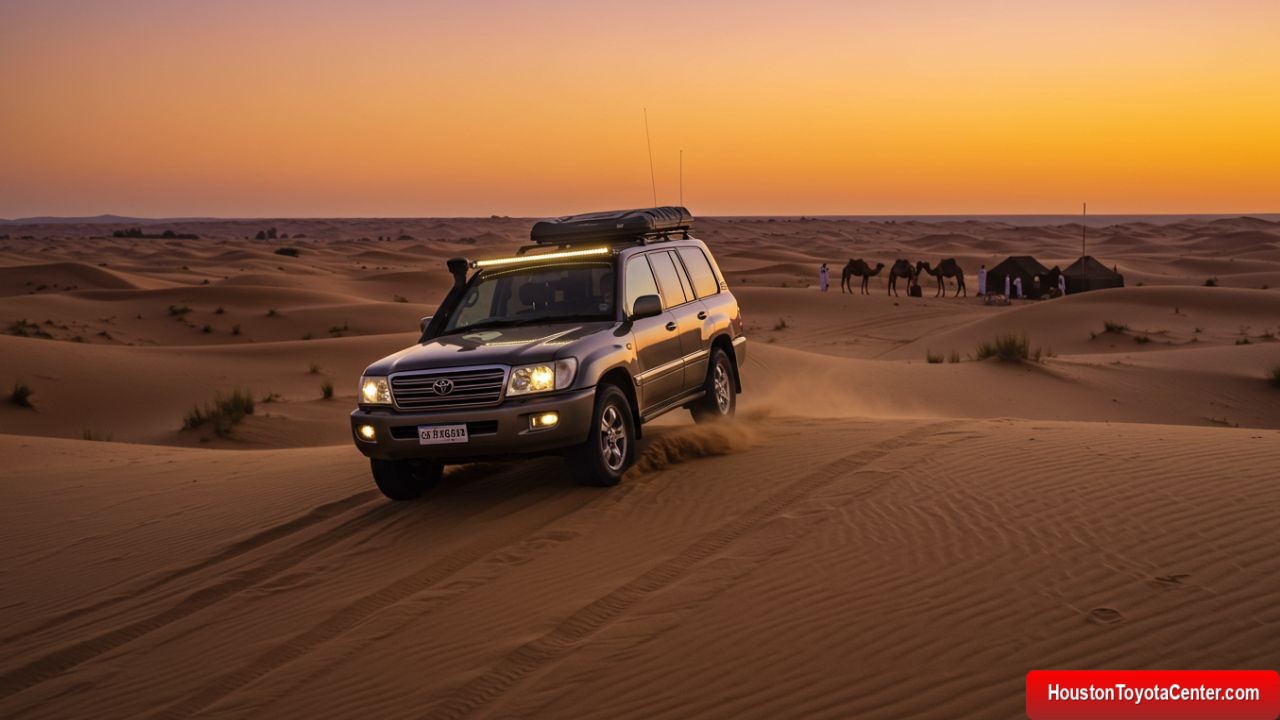
Across the wind-swept dunes of the Sahara, the dense rainforests of the Amazon, the rocky terrain of the Australian Outback, and the snow-capped summits of the Alps, one vehicle has consistently conquered the planet’s most unforgiving environments. The Toyota Land Cruiser is not merely a sports utility vehicle; it represents an automotive institution, an engineering marvel, and an international icon of dependable transport. Over seven decades, this legendary nameplate has transitioned from a utilitarian military prototype into a globally recognized benchmark for durability, off-road capabilities, and luxury.
While rival off-roaders have succumbed to modern trends, changing consumer preferences, or reliability woes, the Land Cruiser’s popularity has only amplified. Enthusiasts, adventure travelers, overlanders, and aid organizations do not just drive these vehicles; they trust them with their lives. Understanding why the Toyota Land Cruiser maintains such an intensely loyal fanbase requires looking beyond modern marketing metrics and examining its rich heritage, mechanical architecture, community culture, and uncompromising engineering philosophy.
📜 Historical Roots: Born Out of Military Necessity
The origins of the Land Cruiser trace back to the onset of the Korean War in the early 1950s. The United States military requested a compact, four-wheel-drive utility vehicle similar to the iconic Jeep to be produced within Japan. Toyota responded by creating the Model BJ prototype in 1951.
                                    EVOLUTION TIMELINE
  ┌──────────────┐      ┌──────────────┐      ┌──────────────┐      ┌──────────────┐
  │  Toyota BJ   │ ───► │  FJ40 Series │ ───► │ 80/100 Series│ ───► │ 300 / 250    │
  │   (1951)     │      │ (1960–1984)  │      │ (1990–2000s) │      │  (Present)   │
  └──────────────┘      └──────────────┘      └──────────────┘      └──────────────┘
   Military Root        Global Breakthrough    Luxury & Off-Road      Modern Hybrid
In 1951, test driver Ichiro Taira accomplished an unprecedented feat: he drove the Toyota BJ up to the 6th station of Mount Fuji, becoming the first motorized vehicle to reach such heights. Impressed by this remarkable display of power and traction, the Japanese National Police Agency adopted the vehicle immediately. In 1954, technical director Hanji Umehara named the vehicle the “Land Cruiser” to directly challenge competitors like Land Rover.
FREE: Quickly identify and understand problems with your vehicle 🚘
CLICK HEREBy 1960, Toyota introduced the legendary FJ40 Series. Featuring robust solid axles, a boxy design, and an indestructible inline-six engine, the FJ40 launched Toyota onto the global stage, proving that Japanese manufacturing could deliver top-tier utility vehicles capable of outlasting European and American counterparts.
🛠️ The Philosophy of “Over-Engineering”: Built for a 25-Year Lifecycle
At the heart of the Land Cruiser’s enduring popularity lies a fundamental engineering principle: Toyota designs the Land Cruiser for a minimum service life of 25 years under severe operational conditions. Most consumer automobiles are engineered with a 10-to-12-year lifespan in mind under standard urban driving conditions.
| Feature Category | Standard SUV Standards | Toyota Land Cruiser Standards |
| Design Lifespan Target | 10 to 12 Years (Urban Duty) | 25+ Years (Extreme Off-Road Duty) |
| Chassis Construction | Unibody or Light Ladder Frame | Heavy-Duty Fully Boxed Ladder Frame |
| Engine Tuning Priority | Maximum Peak Horsepower | Thermal Efficiency, Torque & Longevity |
| Drivetrain Components | Standard Passenger-Car Tolerances | Oversized Bearings, Axles & Cooling |
| Severe Conditions Testing | Simulated Laboratory Tests | Real-World Desert, Mud, and Arctic Trails |
Key Mechanical Design Principles:
- Oversized Components: Every axle, universal joint, differential gear, and suspension bracket is built significantly larger and stronger than required for standard street operations.
- Under-Tuned Engines: Land Cruiser engines are notoriously under-tuned relative to their displacement. By avoiding high-stress horsepower tuning, Toyota keeps combustion temperatures lower, drastically reducing stress on pistons, valvetrain, and internal bearings.
- Redundant Cooling Systems: High-capacity radiators, heavy-duty oil coolers, and robust transmission fluid cooling circuits allow the vehicle to operate continuously under extreme heat without overheating.
🏔️ Utilitarian vs. Luxury: The Split-Line Heritage
To understand the global fanbase, one must realize that the Land Cruiser family actually branched into two distinct lineages over time: heavy-duty workhorses and luxury-laden adventure cruisers.
                             THE LAND CRUISER FAMILY TREE
                                         │
                 ┌───────────────────────┴───────────────────────┐
                 ▼                                               ▼
        [ Heavy-Duty Line ]                             [ Station Wagon Line ]
    Designed for brutal utility                     Designed for comfort + capability
  (e.g., 70 Series Workmate/Troop)                (e.g., 80, 100, 200, 300 Series)
                 │                                               │
    • Leaf springs & manual hubs                    • Leather seats & climate control
    • Mine sites, UN fleets, Outback                • Family road trips & overlanding
🚜 1. The Heavy-Duty Line (70 Series)
- First Launched: 1984 (Still in production today in select regions)
- Primary Role: Agricultural work, commercial mining fleets, military service, and humanitarian aid operations.
- Key Traits: Simple mechanical layouts, hose-out interiors, front and rear locking differentials, and high snorkel intakes.
🛋️ 2. The Station Wagon Line (80, 100, 200, and 300 Series)
- Evolution: Started with the 55 and 60 series, peaking in reputation with the 80 series in the 1990s.
- Primary Role: Long-distance expedition travel, premium daily driving, and high-status transport.
- Key Traits: Plush leather upholstery, advanced multi-terrain select systems, air suspension options, yet retaining full off-road capability.
🏆 Key Generations That Defined the Legacy
                                  GENERATION HIGHLIGHTS
┌─────────────────┬─────────────────┬─────────────────┬─────────────────┬─────────────────┐
│   FJ40 Series   │    60 Series    │    80 Series    │   200 Series    │    250 Series   │
│   (1960–1984)   │   (1980–1990)   │   (1990–1997)   │   (2007–2021)   │   (2024–Present)│
├─────────────────┼─────────────────┼─────────────────┼─────────────────┼─────────────────┤
│ The Rugged Icon │  Family Comfort │ Modern Off-Road │  V8 Powerhouse  │  Retro Hybrid   │
│ Classic 4x4 style│ Boxy retro look │ Triple lockers  │  Ultimate Luxury│  Modern Utility │
└─────────────────┴─────────────────┴─────────────────┴─────────────────┴─────────────────┘
1. The FJ40 (1960–1984)
The short-wheelbase original that established Toyota in North America and Australia. Its removable top, fold-down windshield, and tractor-like reliability made it a timeless classic.
2. The 80 Series (1990–1997)
Widely considered by overlanders to be the peak of modern mechanical off-roading. It combined smooth coil-spring suspension on solid front and rear axles with optional factory-installed front, center, and rear differential lockers (“triple locked”).
3. The 100 Series (1998–2007)
Introduced the buttery-smooth 4.7-liter 2UZ-FE V8 engine and independent front suspension (IFS). While purists initially criticized the loss of the solid front axle on wagon models, the 100 series proved to be one of the most reliable long-distance cruisers ever manufactured.
4. The 200 Series (2007–2021)
Shifted the vehicle higher into luxury territory, featuring a twin-turbo diesel or powerful 5.7-liter V8 engine, crawl control technology, and premium sound systems, while maintaining its full 10,000-pound towing and rock-crawling capabilities.
5. The Modern Era: 300 Series & 250 (Prado / Land Cruiser)
With eco-regulations driving change, Toyota introduced twin-turbo V6 engines and i-FORCE MAX hybrid powertrains, preserving frame rigidity while adopting modern efficiency standards and retro styling cues.
🤝 The Global Cult Following: Why Owners Stay Loyal
The Land Cruiser fanbase is arguably unmatched in its passion and diversity. Several key factors fuel this global community:
- Unrivaled Reliability in Remote Areas: In places like northern Africa, the Australian Outback, or rural South America, a breakdown is not merely an inconvenience; it can be life-threatening. The slogan “If you want to go into the Outback, take a Land Rover; if you want to come back, take a Land Cruiser” remains famous worldwide.
- Incredible Value Retention: While most luxury SUVs lose 50% to 60% of their resale value within five years, pre-owned Land Cruisers retain their value remarkably well. Well-maintained 80 and 100 series vehicles often sell for higher prices today than they did a decade ago.
- The Overlanding Revolution: As vehicle-dependent camping and off-grid adventure travel expanded globally, the Land Cruiser became the natural choice. Its impressive payload capacity, roof-load rating, and aftermarket support allow owners to turn their vehicles into mobile homes complete with rooftop tents, dual-battery systems, and onboard water storage.
- Global Parts Availability: Because these vehicles are deployed by the United Nations, red cross organizations, and global fleets, spare parts can be sourced in almost every corner of the globe.
🔚 Conclusion: An Undefeated Legacy
In an era where many automobiles are treated as disposable consumer electronics designed for quick lease turn-ins, the Toyota Land Cruiser stands as a testament to mechanical integrity, longevity, and functional design. It bridges the gap between utilitarian toughness and comfortable everyday driving like no other vehicle on the planet.
Whether conquering desert dunes or sitting outside an urban cafe, the Land Cruiser carries an undeniable air of quiet confidence. It doesn’t need aggressive body styling or flashy gimmicks to prove itself; its reputation has been earned across billions of miles of the harshest terrain on Earth. For its global community of owners, the Land Cruiser is far more than a vehicle, it is a lifelong companion for any journey ahead.
Leave a Reply