
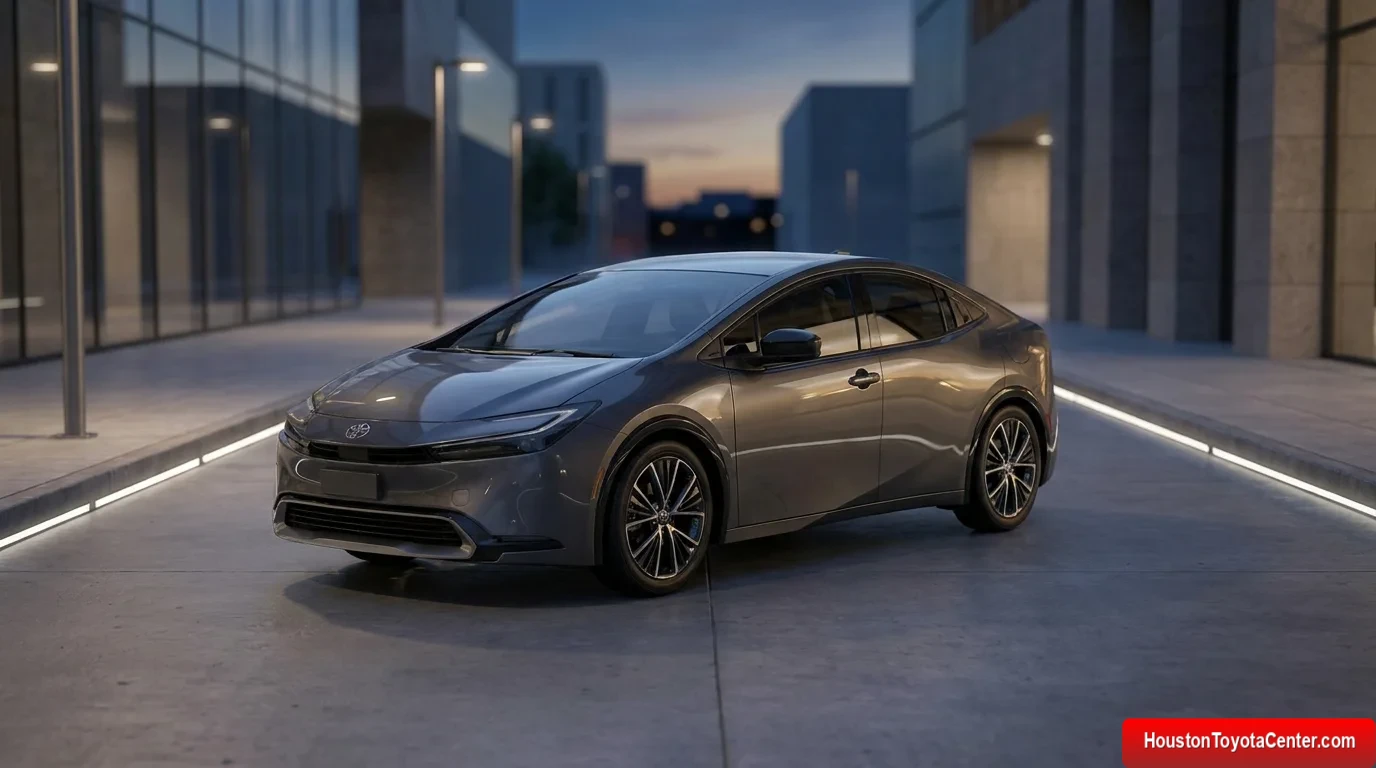
When Toyota introduced the Prius to the domestic Japanese market in 1997, few industry insiders predicted the seismic shift it would bring to global automotive manufacturing. At a time when giant sports utility vehicles and gas-guzzling sedans dominated highways, a compact vehicle powered by a quirky dual-energy engine appeared to be little more than an experimental niche project.
Yet, as environmental awareness surged at the turn of the millennium, the Prius quickly evolved from an obscure technological curiosity into a global cultural phenomenon. Across North America, Europe, and Asia, it became the quintessential symbol of ecological responsibility and intelligent vehicle engineering.
Today, as the automotive sector navigates a complex, multi-trillion-dollar transition toward full electrification, the Toyota Prius stands out not merely as a historic milestone, but as a living blueprint for practical, sustainable transportation. Its enduring success stems from a masterclass in hybrid engineering, low total ownership costs, long-term reliability, and an uncanny ability to adapt to changing driver expectations.
FREE: Quickly identify and understand problems with your vehicle 🚘
CLICK HERE⚡ The Mechanical Genius: How the Hybrid Synergy Drive Works
At the heart of the Prius’s reputation as the ultimate eco car is Toyota’s proprietary Hybrid Synergy Drive (HSD). Unlike conventional vehicles that rely solely on an internal combustion engine, or early parallel hybrids that used electric motors merely to provide a minor power boost, the Prius utilizes a sophisticated series-parallel hybrid layout connected through a planetary gear set.
       [ 1.5L / 1.8L / 2.0L Atkinson-Cycle Gas Engine ]
                              │
                              ▼
                [ Planetary Power Split Device ]
               ┌──────────────┴──────────────┐
               ▼                             ▼
   [ Electric Generator (MG1) ]    [ Electric Drive Motor (MG2) ]
               │                             │
               └──────────────┬──────────────┘
                              ▼
                     [ Front Drive Wheels ]
This arrangement allows the car to operate in multiple modes seamlessly:
- Pure Electric Mode (EV): At low speeds or during light acceleration, the vehicle relies entirely on its electric motor, producing zero localized emissions and operating in near-total silence.
- Hybrid Engine-Electric Mode: Under standard cruising conditions, power split technology dynamically routes energy from the Atkinson-cycle gas engine to both the drive wheels and an internal generator, optimizing thermal efficiency.
- Regenerative Braking Mode: During deceleration, the electric motor reverses its role to act as a generator, harvesting kinetic energy that would otherwise be lost as heat and storing it back into the battery pack.
📊 Comparative Analysis: Powertrain Efficiency Metrics
To understand why the Prius consistently outperforms traditional competitors in efficiency, it is essential to examine key technical specifications across generations:
| Vehicle Generation / Model | Engine Type | Thermal Efficiency | EPA Estimated City (MPG) | EPA Estimated Highway (MPG) | Combined Fuel Economy (MPG) |
| Generation 1 (1997–2003) | 1.5L 1NZ-FXE I4 | ~37% | 42 | 41 | 41 |
| Generation 2 (2003–2009) | 1.5L 1NZ-FXE I4 | ~38% | 48 | 45 | 46 |
| Generation 3 (2009–2015) | 1.8L 2ZR-FXE I4 | ~38.5% | 51 | 48 | 50 |
| Generation 4 (2015–2022) | 1.8L 2ZR-FXE I4 | ~40% | 58 | 53 | 56 |
| Generation 5 (2023–Present) | 2.0L M20A-FXS I4 | ~41% | 57 | 56 | 57 |
🌿 Environmental Impact Beyond the Tailpipe
Evaluating the ecological footprint of a modern automobile requires looking far beyond standard EPA fuel efficiency numbers. A comprehensive life cycle assessment (LCA) evaluates total environmental impact from raw material extraction and manufacturing through vehicle operation, maintenance, and ultimate end-of-life recycling.
🍃 Real-World Carbon Abatement
- Reduced Tailpipe Emissions: Over a typical lifespan of 150,000 miles, a high-efficiency hybrid prevents tens of tons of carbon dioxide from entering the atmosphere compared to standard non-hybrid sedans.
- Minimal Smog-Forming Pollutants: Advanced catalytic systems and optimized air-fuel ratios dramatically lower emissions of nitrogen oxides (NOx) and volatile organic compounds (VOCs).
- Grid Independence: Standard hybrid models do not rely on local electrical grids, avoiding indirect emissions from coal- or natural gas-fired power plants during peak energy demand hours.
🔋 Sustainable Material Management
Toyota has established comprehensive closed-loop battery recycling programs globally. Spent nickel-metal hydride and lithium-ion batteries are collected, dismantled, and processed to recover valuable critical minerals such as cobalt, nickel, and lithium for reuse in new energy storage systems. Furthermore, recent generations incorporate plant-derived bioplastics and recycled synthetic materials throughout interior upholstery and insulation layers.
💰 The Economic Equation: Total Cost of Ownership
While ecological benefits motivate many buyers, economic pragmatism often seals the purchasing decision. The Prius excels in delivering exceptional long-term financial value, making it an attractive option for personal commuters, rideshare operators, and commercial fleets alike.
Total Cost of Ownership (TCO)
│
├── Initial Purchase Price (Competitive MSRP)
├── Fuel Expenditure (Minimal due to high MPG)
├── Maintenance & Wear (Reduced brake & engine wear)
└── Resale Value (Strong market retention)
🛠️ Maintenance and Wear Reduction
- Extended Brake Pad Life: Thanks to regenerative braking, mechanical friction brakes are used primarily during hard stops or at low speeds under 5 mph. Consequently, brake pads and rotors frequently last over 100,000 miles without requiring replacement.
- Elimination of Traditional Wear Components: The Hybrid Synergy Drive eliminates traditional high-wear mechanical parts, such as conventional starter motors, alternators, and accessory drive belts.
- Engine Stress Reduction: Because the electric motor assists during high-load events like accelerating up steep inclines, the gas engine rarely operates under extreme strain, prolonging internal engine life.
🏎️ The Modern Evolution: Style Meets Performance
Historically, early hybrid models faced criticism for utilitarian styling and uninspiring driving dynamics. However, recent redesigns have fundamentally rewritten that narrative. The latest fifth-generation model introduces a sleek, aerodynamic silhouette with a lower center of gravity, wider stance, and aggressive LED lighting signatures.
       Historical Perception                 Modern Reality
┌─────────────────────────────────┐   ┌─────────────────────────────────┐
│ • Utilitarian design            │   │ • Sleek coupe-like profile      │
│ • Modest acceleration           │   │ • Up to 220 horsepower (PHEV)   │
│ • Compromised dynamics          │   │ • TNGA-C rigid chassis handling │
│ • Purely eco-focused image      │   │ • Engaging, responsive drive    │
└─────────────────────────────────┘   └─────────────────────────────────┘
By transitioning to the Toyota New Global Architecture (TNGA-C) platform, engineers dramatically increased structural rigidity while positioning battery components lower in the chassis. Coupled with a updated 2.0-liter engine setup producing up to 196 horsepower on all-wheel-drive variants (and 220 horsepower on plug-in hybrid Prime models), the vehicle accelerates from zero to 60 mph in roughly 6.6 seconds, proving that extreme efficiency does not require sacrificing driving pleasure.
🔮 Hybrid vs. Full Electric: The Practical Transition Tool
As the world transitions toward cleaner energy, debate continues regarding whether consumers should skip hybrid technology entirely in favor of battery electric vehicles (BEVs). While BEVs offer zero direct emissions, they present real-world challenges for millions of drivers worldwide:
- Charging Infrastructure Deficits: Many urban dwellers living in apartments or multi-family housing lack access to overnight home charging points.
- Range Anxiety and Extreme Climates: Cold weather dramatically reduces battery range in full electric cars, whereas hybrid systems maintain efficient heating and energy management through dual power sources.
- Resource Allocation Efficiency: The raw materials required to produce a single long-range 100 kWh battery pack for one large electric SUV can instead be used to manufacture over 75 standard hybrid battery packs, multiplying total carbon reduction across a much larger fleet of vehicles.
🏁 Conclusion: The Undisputed Benchmark of Practical Eco-Mobility
The title of “ultimate eco car” requires balancing raw technological innovation with real-world accessibility, affordability, and dependability. While pure electric vehicles represent a vital pillar of future transportation, the Toyota Prius remains the most versatile, reliable, and practical green vehicle for millions of drivers around the globe.
By continuously refining its hybrid powertrain, lowering total ownership costs, and elevating design standards, the Prius proves that sustainable driving does not require lifestyle compromise. It stands as a masterclass in pragmatic environmentalism, proving that true ecological progress happens when green technology is made accessible to everyone.
Leave a Reply