
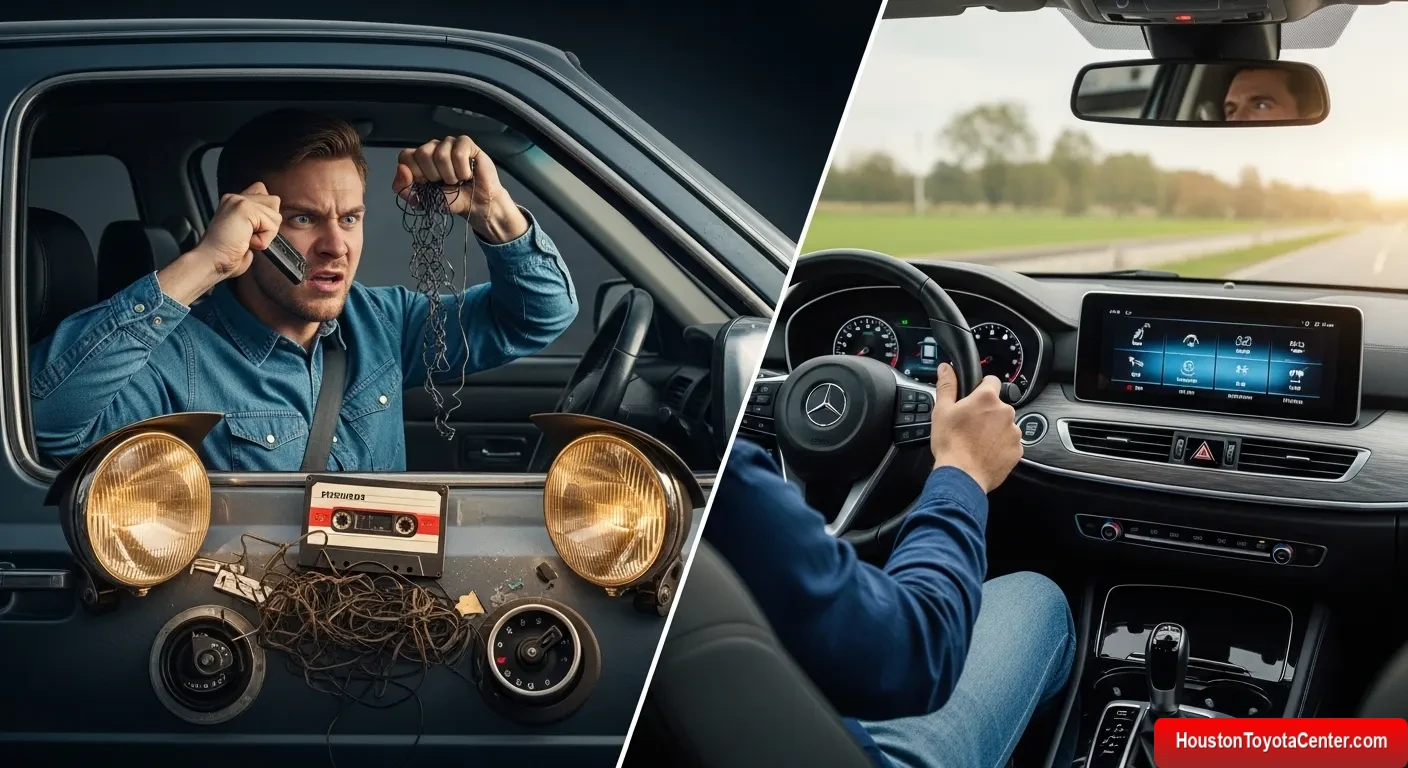
The automotive world evolves at a relentless pace. What was once cutting-edge becomes standard, and what was once standard eventually fades into obscurity. While nostalgia often paints the past in warm, glowing tones, not every feature left behind deserves a sentimental farewell. In fact, many obsolete car features are best remembered as reminders of how far safety, comfort, efficiency, and technology have come.
This article explores a wide range of outdated automotive features that have disappeared over time—sometimes quietly, sometimes with resistance—and explains why most drivers are better off without them today.
1. Manual Window Cranks
Before power windows became standard, drivers and passengers had to manually crank windows up and down using a handle.
Why They Disappeared
Manual window cranks were simple and reliable, but they were also inconvenient. Adjusting windows required physical effort, and drivers often had to lean awkwardly to reach passenger-side controls.
FREE: Quickly identify and understand problems with your vehicle 🚘
CLICK HEREWhy We Don’t Miss Them
Power windows offer:
- One-touch operation
- Child safety locks
- Integration with key fobs and remote control
While manual windows were less prone to electrical failure, the convenience of power windows has made them nearly universal.
2. Carburetors
Carburetors were once the heart of fuel delivery systems in internal combustion engines. They mixed air and fuel in precise ratios before sending it into the engine.
Why They Disappeared
Carburetors were replaced by electronic fuel injection (EFI) systems, which are:
- More efficient
- More precise
- Better for emissions control
Why We Don’t Miss Them
Carburetors required frequent tuning and were sensitive to:
- Temperature changes
- Altitude variations
- Wear and tear
Modern fuel injection systems automatically adjust to conditions, improving performance and reducing maintenance.
3. Cassette Players
Once the pinnacle of in-car entertainment, cassette players allowed drivers to listen to music on tapes.
Why They Disappeared
They were replaced by:
- CD players
- MP3 players
- Bluetooth streaming systems
Why We Don’t Miss Them
Cassette tapes were:
- Prone to tangling
- Limited in sound quality
- Easily degraded over time
Today’s digital systems provide instant access to vast libraries of music without physical media.
4. Bench Seats in Front Rows
Older cars often featured a continuous bench seat in the front, allowing three passengers to sit side by side.
Why They Disappeared
Modern vehicles prioritize:
- Individual seating
- Safety features like airbags
- Center consoles with controls and storage
Why We Don’t Miss Them
Bench seats lacked:
- Proper support
- Individual seat adjustments
- Safety considerations like seat bolstering
Bucket seats provide better comfort, ergonomics, and crash protection.
5. Ashtrays and Cigarette Lighters
Every car once came equipped with multiple ashtrays and a cigarette lighter.
Why They Disappeared
Smoking rates have declined, and health awareness has increased. Automakers shifted focus to:
- USB ports
- Power outlets
- Cleaner interiors
Why We Don’t Miss Them
Ashtrays:
- Collected unpleasant odors
- Required cleaning
- Encouraged smoking inside vehicles
Modern cars are designed with healthier lifestyles in mind.
6. Vent Windows (Wing Windows)
These small triangular windows near the front side windows could be tilted open to direct airflow into the cabin.
Why They Disappeared
Air conditioning systems became standard and far more effective.
Why We Don’t Miss Them
Vent windows:
- Created wind noise
- Were less efficient than AC
- Compromised aerodynamics
Modern climate control systems provide consistent comfort without the drawbacks.
7. Manual Choke Controls
Older cars required drivers to manually adjust the choke to regulate fuel-air mixtures during cold starts.
Why They Disappeared
Electronic engine management systems now handle this automatically.
Why We Don’t Miss Them
Manual chokes:
- Required driver knowledge
- Could cause engine flooding if misused
- Made cold starts inconsistent
Automation has made driving simpler and more reliable.
8. Pop-Up Headlights
These retractable headlights were once considered futuristic and stylish.
Why They Disappeared
They were phased out due to:
- Pedestrian safety regulations
- Mechanical complexity
- Aerodynamic inefficiencies
Why We Don’t Miss Them
Pop-up headlights:
- Could fail and get stuck
- Required additional maintenance
- Added weight and cost
Modern fixed headlights with LED technology are more efficient and safer.
9. Crank-Start Engines
In the earliest automobiles, engines were started by manually turning a crank at the front of the vehicle.
Why They Disappeared
Electric starters replaced them in the early 20th century.
Why We Don’t Miss Them
Crank-starting was:
- Physically demanding
- Dangerous (kickbacks could cause injury)
- Inconvenient
Push-button and keyless ignition systems are vastly superior.
10. Fixed Steering Columns
Older cars often had steering wheels that could not be adjusted.
Why They Disappeared
Modern vehicles offer:
- Tilt steering
- Telescoping adjustments
Why We Don’t Miss Them
Fixed steering columns:
- Limited driver comfort
- Made it harder for people of different sizes to drive comfortably
Adjustable steering improves ergonomics and safety.
11. No Cup Holders
Believe it or not, many older cars had no designated place to hold drinks.
Why They Disappeared
Consumer demand led to widespread adoption of cup holders.
Why We Don’t Miss Them
Without cup holders:
- Drinks spilled easily
- Drivers improvised unsafe solutions
Now, multiple cup holders are standard in most vehicles.
12. AM-Only Radios
Early car radios often only received AM frequencies.
Why They Disappeared
FM radio, satellite radio, and streaming services offer:
- Better sound quality
- More content
Why We Don’t Miss Them
AM radio:
- Has lower audio fidelity
- Is more prone to interference
Modern audio systems provide superior listening experiences.
13. Lack of Power Steering
Driving older cars often required significant effort, especially at low speeds.
Why They Disappeared
Power steering became standard, later evolving into electric power steering (EPS).
Why We Don’t Miss Them
Without power steering:
- Parking was difficult
- Long drives caused fatigue
Today’s systems make driving effortless and precise.
14. Manual Mirrors
Side mirrors once had to be adjusted manually, often from outside the vehicle.
Why They Disappeared
Electric mirror controls became standard.
Why We Don’t Miss Them
Manual mirrors:
- Were inconvenient
- Could not be adjusted while driving
Modern mirrors can be adjusted instantly and even include heating and auto-dimming.
15. No Airbags
Early cars lacked airbags entirely.
Why They Disappeared
Safety regulations mandated their inclusion.
Why We Don’t Miss Them
Airbags save lives by:
- Reducing impact forces
- Protecting occupants during collisions
This is one obsolete “feature” that we are unquestionably better without.
16. Thin Steering Wheels
Older steering wheels were often thin and large in diameter.
Why They Disappeared
Modern designs focus on:
- Grip comfort
- Integrated controls
Why We Don’t Miss Them
Thin wheels:
- Were less comfortable
- Provided less control
Today’s steering wheels enhance both ergonomics and functionality.
17. Single-Speed Windshield Wipers
Early wipers often had only one speed—or none at all.
Why They Disappeared
Modern systems offer:
- Variable speeds
- Rain-sensing automation
Why We Don’t Miss Them
Single-speed wipers:
- Were ineffective in varying weather
- Required constant manual adjustment
Advanced systems improve visibility and safety.
18. Floor-Mounted Dimmer Switches
Headlight dimmers were once controlled by a foot switch on the floor.
Why They Disappeared
They were replaced by steering column controls.
Why We Don’t Miss Them
Floor switches:
- Could be hard to locate
- Distracted drivers
Column-mounted controls are more intuitive and safer.
19. External Hood Ornaments
Many cars featured decorative hood ornaments.
Why They Disappeared
They were phased out due to:
- Safety concerns
- Theft risks
- Changing design trends
Why We Don’t Miss Them
Hood ornaments:
- Could cause injury in collisions
- Required maintenance
Modern design favors sleek, integrated aesthetics.
20. Manual Transmission Dominance
Manual transmissions were once the default.
Why They’re Becoming Obsolete
Automatic transmissions have improved dramatically, offering:
- Better fuel efficiency
- Easier driving in traffic
Why Many Don’t Miss Them
Manual driving:
- Requires more effort
- Can be tiring in urban environments
However, enthusiasts still appreciate manuals for engagement and control.
Comparison Table: Then vs. Now
| Feature | Then (Obsolete) | Now (Modern Equivalent) | Key Advantage Today |
|---|---|---|---|
| Windows | Manual crank | Power windows | Convenience |
| Fuel System | Carburetor | Fuel injection | Efficiency & reliability |
| Audio | Cassette player | Streaming/Bluetooth | Unlimited access |
| Seating | Bench seats | Bucket seats | Comfort & safety |
| Climate Control | Vent windows | Air conditioning | Consistent comfort |
| Steering | No power steering | Electric power steering | Ease of use |
| Mirrors | Manual adjustment | Electric mirrors | Convenience & safety |
| Safety | No airbags | Advanced airbag systems | Life-saving protection |
| Wipers | Single-speed | Rain-sensing | Adaptability |
| Lighting | Pop-up headlights | LED headlights | Efficiency & safety |
The Bigger Picture: Why Obsolescence Is Good
It’s easy to romanticize older cars—the simplicity, the mechanical feel, the analog charm. But many obsolete features disappeared for good reasons:
1. Safety Improvements
Modern vehicles are exponentially safer due to:
- Airbags
- Crumple zones
- Electronic stability control
2. Convenience and Comfort
From climate control to infotainment systems, driving is now more enjoyable and less stressful.
3. Environmental Responsibility
Technologies like fuel injection and emissions controls have significantly reduced pollution.
4. Reliability and Maintenance
Older systems required frequent attention. Modern cars:
- Self-adjust
- Self-diagnose
- Require less manual intervention
Final Thoughts
Not every piece of automotive history deserves a comeback. While certain vintage elements—like analog gauges or manual transmissions—still hold emotional appeal, many obsolete car features are best left in the past.
The evolution of automobiles reflects broader technological progress. Each outdated feature replaced represents a step toward safer, more efficient, and more comfortable transportation. And while nostalgia has its place, few drivers would willingly trade today’s conveniences for yesterday’s inconveniences.
Leave a Reply