
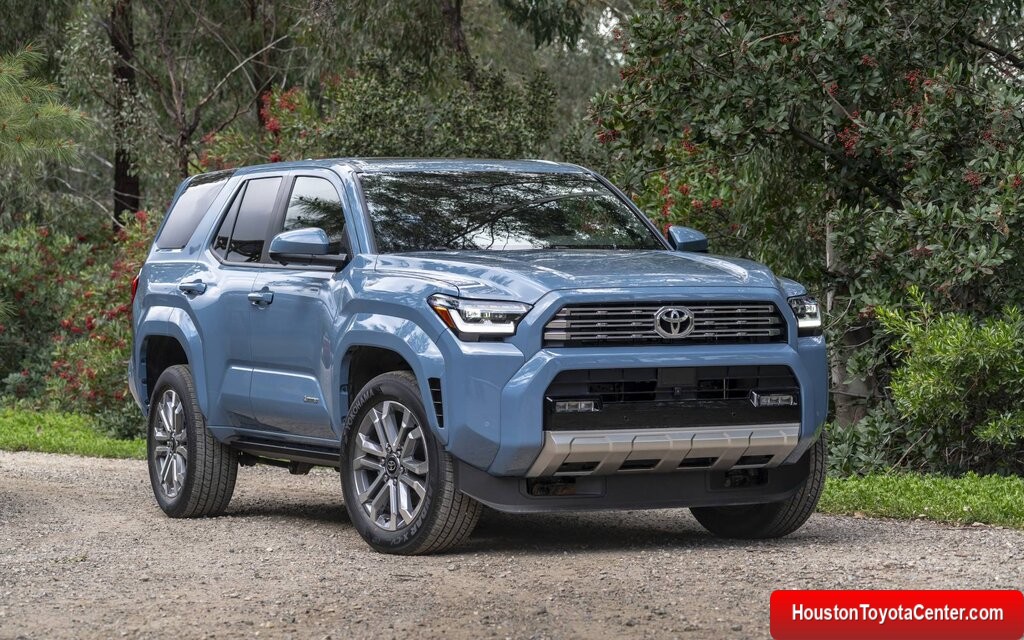
The Toyota 4Runner has entered a new era, but its evolution is far from over. After more than a decade with the previous generation, Toyota introduced an all-new sixth-generation 4Runner for the 2025 model year, bringing a new platform, turbocharged powertrains, hybrid technology, updated cabin technology and a broader range of off-road-focused versions.
That transformation raises a natural question: what could come next for the 4Runner?
There is no official announcement yet outlining a future seventh-generation 4Runner. Toyota’s current model remains relatively new, and the company is continuing to expand and refine the sixth-generation lineup. For that reason, any discussion about the next generation should be viewed as an informed look at likely directions rather than a list of confirmed specifications.
Still, the current 4Runner provides some important clues. Toyota has clearly positioned the SUV around three major themes: traditional body-on-frame capability, electrified performance and increasingly sophisticated adventure equipment. Those priorities are likely to influence whatever comes after the current model.
FREE: Quickly identify and understand problems with your vehicle 🚘
CLICK HEREA New Chapter Built on the TNGA-F Platform
The biggest change in the current 4Runner is underneath the body.
The sixth-generation model moved to Toyota’s TNGA-F platform, the body-on-frame architecture also associated with other rugged Toyota vehicles. According to Toyota, the new chassis combines a boxed frame with increased rigidity while maintaining the fundamental construction that has defined the 4Runner for decades.
That decision is significant because it suggests Toyota is not interested in transforming the 4Runner into a conventional crossover SUV.
Instead, the company appears committed to preserving the model’s traditional identity while modernizing everything around it.
A future generation will therefore likely continue using a body-on-frame architecture or an evolution of the same basic engineering philosophy. A dramatic switch to a unibody platform would represent a much larger departure from the 4Runner’s established character.
For buyers, that means the next-generation model is likely to remain focused on durability, towing, ground clearance and off-road performance rather than simply maximizing fuel economy or interior space.
Hybrid Power Is Likely to Become Even More Important
Perhaps the clearest indication of Toyota’s future direction is the introduction of the i-FORCE MAX hybrid powertrain.
In the current 4Runner, the standard 2.4-liter turbocharged i-FORCE engine produces up to 278 horsepower and 317 lb.-ft. of torque. The available i-FORCE MAX hybrid increases output to as much as 326 horsepower and 465 lb.-ft. of torque.
That hybrid system is not positioned simply as an economy option. In fact, Toyota has made it standard on some of the most expensive and off-road-oriented versions, including the TRD Pro and Trailhunter.
This could be one of the most important clues about the future.
A next-generation 4Runner will likely face increasing pressure to deliver more power while meeting increasingly demanding efficiency and emissions requirements. Hybrid technology gives Toyota a way to address both objectives without abandoning the turbocharged engine or the SUV’s traditional capability.
Future development could therefore focus on improving electric assistance, efficiency and low-speed torque while retaining a gasoline engine for long-distance travel and heavy-duty applications.
A fully electric 4Runner is technically possible, but the current product strategy does not suggest that Toyota intends to make the transition immediately. The company’s present approach is more evolutionary, using hybridization to modernize established vehicles while retaining their core characteristics.
Off-Road Capability Will Remain Central
The 4Runner has never been defined solely by horsepower.
Its reputation comes from what it can do away from paved roads, and Toyota has invested heavily in preserving that identity. The current generation offers features such as Multi-Terrain Select, Crawl Control, an electronically locking rear differential and available Multi-Terrain Monitor technology.
The most revealing addition may be the Trailhunter.
Rather than leaving customers to modify their vehicles themselves, Toyota created a factory-built overlanding-oriented version equipped with components developed with companies including ARB, Old Man Emu and RIGID Industries. The Trailhunter features 33-inch all-terrain tires, specialized suspension components, an onboard air compressor, a roof rack, rock rails and additional protective equipment.
That strategy could become even more important in a future generation.
The adventure-vehicle market has expanded considerably, and buyers increasingly want vehicles that are ready for camping, overlanding and off-road travel straight from the factory.
A future 4Runner could consequently offer more integrated equipment from the beginning. Factory-installed recovery points, modular storage, improved auxiliary power, stronger underbody protection and more sophisticated suspension systems could become increasingly common.
The key difference would be integration. Instead of simply adding more accessories, Toyota could design the vehicle around adventure equipment from the start.
Expect More Sophisticated Electrification
Hybridization is only one possible step.
A future 4Runner could potentially adopt more advanced forms of electrification, particularly if Toyota expands its use of electric motors for four-wheel-drive systems.
One advantage of electric motors is their ability to deliver torque immediately and precisely. That characteristic could be particularly useful off-road, where controlling wheel speed is often more important than achieving maximum horsepower.
Instead of relying exclusively on mechanical systems, future Toyota off-road vehicles could use increasingly sophisticated software to manage torque distribution between the wheels.
However, there is an important practical consideration.
The 4Runner is often used far from major population centers. Long-distance travel, towing and remote-area driving place different demands on a vehicle than urban commuting. Any future electrified 4Runner will therefore need to balance efficiency with range, durability and the ability to operate in environments where charging infrastructure may be limited.
That makes a high-efficiency hybrid system a particularly logical bridge between today’s 4Runner and a potentially more electrified future.
Design: Evolution Rather Than Revolution
The current 4Runner demonstrates how carefully Toyota has approached the model’s styling.
Although the sixth-generation SUV is new, its designers deliberately incorporated recognizable elements from earlier generations. The wraparound rear quarter glass and power-operated rear window, for example, maintain a visual and functional connection with the 4Runner’s history.
A future generation will probably face the same challenge: how to modernize the vehicle without making it unrecognizable.
Expect Toyota to retain a tall, upright silhouette, pronounced wheel arches, high ground clearance and a relatively squared-off rear section.
The details could change substantially. Lighting could become slimmer, aerodynamic efficiency could become more important, and active aerodynamic elements could eventually appear without compromising the vehicle’s rugged proportions.
The result would likely be evolutionary rather than revolutionary.
Technology Will Move Further Into the Cabin
The current 4Runner already represents a major technological step forward compared with its predecessor.
Depending on trim, it offers an 8-inch or 14-inch multimedia display, a 12.3-inch digital gauge cluster, wireless smartphone connectivity, available Digital Key functionality and advanced towing technology.
A future generation will inevitably push this area further.
The most obvious developments will likely involve software, connectivity and driver assistance rather than simply larger screens.
Over-the-air software updates could become more comprehensive. Navigation systems could become more useful for off-road travel. Cameras could provide increasingly detailed views of terrain around the vehicle. Trailer assistance could become more automated.
Toyota may also continue expanding the relationship between the vehicle and smartphones, allowing owners to monitor vehicle status, manage access and configure certain functions remotely.
For an adventure-oriented SUV, however, technology needs to remain functional.
Physical controls are likely to remain important for features frequently used while driving on difficult terrain. A future 4Runner that requires drivers to navigate multiple touchscreen menus for basic functions would be at odds with the model’s practical identity.
Safety and Driver Assistance Will Continue to Expand
Toyota Safety Sense 3.0 is standard across the current 4Runner lineup, bringing a broad collection of driver-assistance technologies to the model.
The next generation will almost certainly take another step forward.
Future systems could offer improved pedestrian and cyclist detection, more capable lane-centering functions, enhanced intersection assistance and better performance in poor weather.
Off-road assistance may also become more sophisticated.
Instead of simply providing camera images, future systems could potentially combine cameras, radar, navigation data and vehicle sensors to help drivers understand terrain and obstacles.
That does not mean the 4Runner would become an autonomous off-road vehicle. Rather, technology could increasingly serve as an additional layer of information for the driver.
More Attention to Efficiency
The current 4Runner already demonstrates that Toyota is taking efficiency more seriously.
The standard turbocharged engine can achieve up to an EPA-estimated 26 mpg on the highway, while the i-FORCE MAX hybrid reaches up to an EPA-estimated 24 mpg on the highway, according to Toyota’s published specifications. The 2026 model is rated at up to an estimated 23 mpg combined depending on configuration.
These numbers are not the primary reason people buy a 4Runner, but they illustrate the challenge facing future generations.
A heavier, more powerful off-road vehicle cannot simply ignore efficiency regulations.
Future engineering could therefore focus on reducing weight where possible, improving aerodynamics without sacrificing ground clearance and making the hybrid system more efficient.
Smarter transmission calibration, improved thermal management and more efficient electric components could all contribute to incremental gains.
The Interior Could Become More Flexible
The current 4Runner offers available third-row seating and up to 90.2 cubic feet of cargo volume with the seats folded. It also retains practical features such as tumble-fold rear seats and the signature power rear window.
That practical philosophy is likely to continue.
However, future generations could place even greater emphasis on modularity.
Adventure buyers often carry equipment with unusual shapes and sizes. Bikes, camping gear, coolers, recovery equipment and outdoor equipment all compete for cargo space.
A more configurable interior could therefore be just as valuable as additional cubic feet.
Toyota could explore stronger integrated tie-down systems, modular cargo rails, built-in power outlets and more durable interior materials designed specifically for outdoor use.
What Probably Will Not Change
For all the potential changes, some aspects of the 4Runner are unlikely to disappear.
The body-on-frame philosophy is one.
Four-wheel-drive capability is another.
The emphasis on durability, towing and off-road performance is also likely to remain fundamental.
Toyota has spent decades building the 4Runner’s identity around these characteristics. The sixth generation did not abandon that formula. Instead, it modernized it with turbocharging, hybridization, advanced electronics and new factory-developed adventure equipment.
That makes a future generation more likely to refine the formula than reinvent it completely.
The Bigger Question
The real question is not whether the next 4Runner will be more powerful, more efficient or more technologically advanced.
It almost certainly will be.
The more interesting question is how far Toyota can modernize the 4Runner without losing what made the SUV distinctive in the first place.
The sixth-generation model provides a clear answer to Toyota’s current philosophy. Keep the body-on-frame architecture. Add turbocharged power. Introduce hybrid technology. Improve the cabin. Expand safety and connectivity. Then make off-road equipment available directly from the factory.
The next generation will have to build on that foundation.
That could mean a more advanced hybrid system, greater electrification, smarter off-road software, improved towing technology and a more sophisticated interior. It could also mean a more efficient vehicle that remains capable of traveling deep into remote terrain.
For now, however, there is no official seventh-generation specification sheet to point to. The current 4Runner is still relatively new, and Toyota continues to develop the sixth-generation lineup. Its 2026 model, for example, retains the 2.4-liter turbocharged engine and i-FORCE MAX hybrid system, with the latter producing up to 326 horsepower and 465 lb.-ft. of torque.
That makes the future 4Runner a story of gradual evolution rather than immediate replacement.
If Toyota follows the direction established by the current generation, the next 4Runner should not be expected to abandon its roots. Instead, it will likely become a more electrified, connected and technically sophisticated interpretation of the same basic idea.
The formula may change. The mission probably will not.
Leave a Reply