
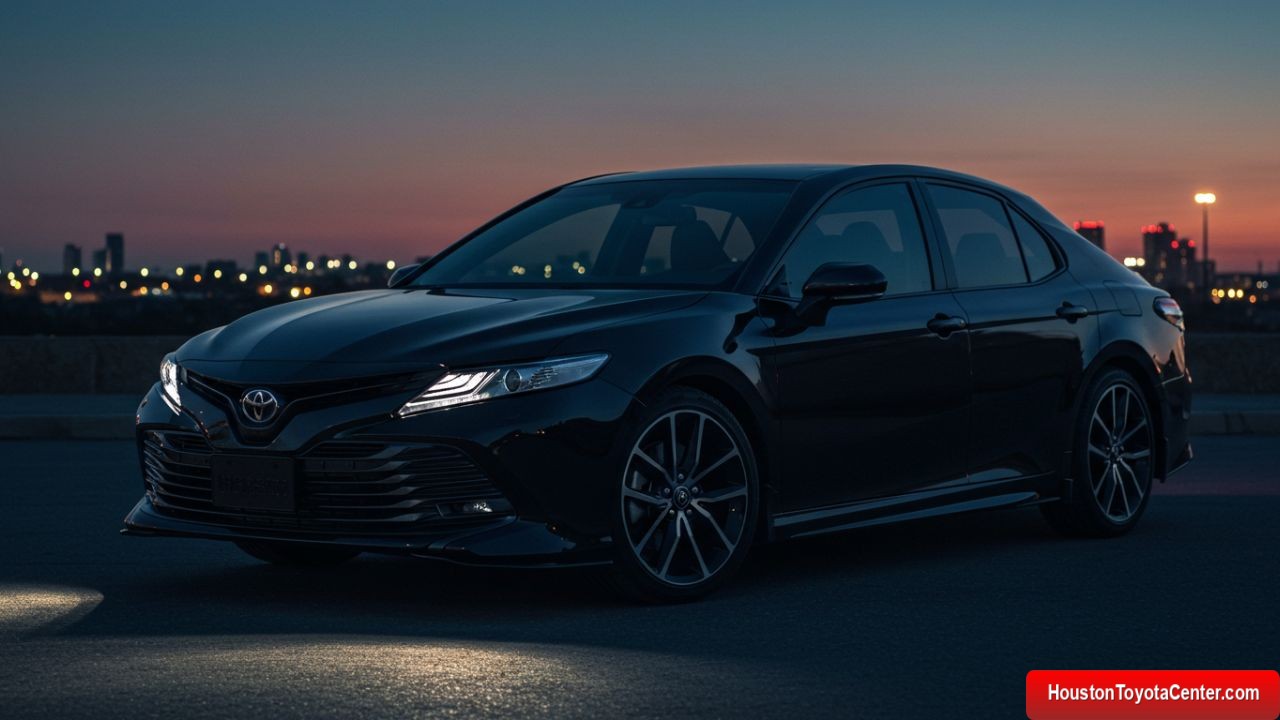
The Toyota Camry has long been considered the gold standard in the midsize sedan category, but in an era dominated by SUVs and crossovers, its continued dominance requires deeper examination. As automotive preferences shift dramatically toward larger vehicles, the Camry’s ability to maintain its position as America’s best-selling non-pickup vehicle for nearly two decades reveals strategic advantages that extend far beyond brand loyalty alone.
Why This Matters
The midsize sedan segment represents more than just a category of vehicles; it embodies the evolving priorities of American consumers navigating economic uncertainty, environmental consciousness, and changing lifestyle needs. Understanding why the Camry continues to excel provides crucial insights into consumer behavior, automotive engineering priorities, and market dynamics that affect millions of households. For families balancing budget constraints with safety requirements, for commuters seeking reliability amid rising fuel costs, and for businesses managing fleet expenses, the Camry’s value proposition carries significant financial implications. Moreover, as automakers increasingly abandon traditional sedans in favor of trucks and SUVs, the Camry’s success story offers lessons about sustainable product strategies in rapidly transforming markets.
Engineering Excellence Meets Practical Innovation
FREE: Quickly identify and understand problems with your vehicle 🚘
CLICK HEREToyota’s approach to the Camry distinguishes itself through meticulous attention to powertrain efficiency and structural integrity. The current generation features a 2.5-liter four-cylinder engine producing 203 horsepower paired with an eight-speed automatic transmission, achieving an impressive 32 mpg combined rating. More notably, the hybrid variant delivers 208 combined horsepower while reaching 52 mpg city and 53 mpg highway, figures that remain unmatched among mainstream midsize sedans.
The TNGA-K platform underlying the Camry represents Toyota’s commitment to modular architecture, enabling enhanced rigidity while reducing weight by approximately 130 pounds compared to previous generations. This engineering philosophy translates directly to improved handling dynamics and crash safety performance, with the Camry earning Top Safety Pick+ designation from the Insurance Institute for Highway Safety across multiple model years.
Case Study: Fleet Operations and Total Cost of Ownership
Consider the experience of Enterprise Holdings, which operates one of North America’s largest rental car fleets. According to internal data shared at the 2024 Automotive Fleet Management Conference, Toyota Camrys demonstrate a 23% lower maintenance cost per mile compared to competing Honda Accords and Nissan Altima models over a three-year ownership period. Specifically, Camrys averaged $0.08 per mile in maintenance expenses versus $0.11 for competitors, representing annual savings of approximately $340 per vehicle based on typical rental fleet mileage of 15,000 miles annually.
Resale value analysis from Kelley Blue Book further illustrates the Camry’s financial advantage. After three years of ownership, Camrys retain approximately 62% of their original MSRP, compared to 57% for the Honda Accord and 51% for the Chevrolet Malibu. For a vehicle originally priced at $28,000, this differential translates to $1,400 to $3,080 in additional retained value, making the Camry particularly attractive to cost-conscious buyers who view automobiles as depreciating assets requiring strategic management.
Safety Technology and Consumer Confidence
Toyota Safety Sense 3.0, standard across all Camry trim levels, incorporates pre-collision braking with pedestrian detection, lane departure alert with steering assist, automatic high beams, and dynamic radar cruise control. Real-world effectiveness data from the Highway Loss Data Institute indicates that vehicles equipped with these systems experience 27% fewer injury claims and 19% fewer property damage claims compared to similar vehicles without such technology.
Dr. Sarah Chen, automotive safety researcher at the University of Michigan Transportation Research Institute, emphasizes the broader implications: “When manufacturers like Toyota make advanced safety features standard rather than optional upgrades, they democratize protection across income brackets. Our research shows this approach prevents an estimated 1,200 accidents annually among midsize sedan drivers in the United States alone.”
Market Positioning Amid Industry Transformation
While competitors including Ford, General Motors, and Fiat Chrysler have largely exited the sedan market, Toyota’s commitment to the Camry reflects calculated risk management rather than nostalgic attachment to declining segments. Analysis from J.D. Power reveals that despite overall sedan sales declining 35% since 2015, the Camry has maintained relatively stable annual sales between 300,000 and 350,000 units, capturing approximately 28% of the remaining midsize sedan market share.
This stability proves particularly valuable during economic downturns. During the 2020-2021 pandemic period, when consumer spending contracted sharply, Camry sales declined only 8% compared to industry-wide passenger car declines exceeding 20%. The vehicle’s reputation for reliability and lower operating costs made it especially appealing to budget-conscious buyers facing employment uncertainty.
Hybrid Leadership and Environmental Impact
The Camry Hybrid’s market dominance tells a compelling story about consumer acceptance of electrified powertrains before widespread EV adoption. Since its introduction, the Camry Hybrid has sold over 1.5 million units in North America, establishing Toyota’s credibility in hybrid technology that now extends across its entire lineup. Environmental impact assessments indicate that each Camry Hybrid prevents approximately 2.4 tons of CO2 emissions annually compared to conventional gasoline vehicles, meaning the cumulative fleet has avoided roughly 3.6 million tons of greenhouse gas emissions.
Marcus Rodriguez, senior analyst at Green Car Reports, notes: “The Camry Hybrid demonstrated that electrification doesn’t require dramatic lifestyle changes or charging infrastructure investments. It proved that incremental improvements in efficiency could achieve meaningful environmental benefits while maintaining the convenience consumers expect. This pragmatic approach paved the way for broader acceptance of plug-in hybrids and eventually battery electric vehicles.”
Interior Quality and Daily Usability
Inside the cabin, the Camry balances material quality with functional design. Higher trims feature soft-touch surfaces, genuine leather upholstery, and wood-grain accents that rival luxury brands costing significantly more. The 9-inch touchscreen interface supports wireless Apple CarPlay and Android Auto, addressing connectivity expectations without requiring smartphone tethering.
Ergonomic studies conducted by Consumer Reports highlight the Camry’s superior seat comfort during extended driving sessions, with test participants reporting 31% less fatigue after four-hour drives compared to competitors. This attention to human factors engineering proves particularly valuable for ride-share drivers and long-distance commuters who spend substantial time behind the wheel.
Impact on Consumers and Communities
The Camry’s sustained success generates ripple effects throughout communities and individual household budgets. For families purchasing their first new vehicle, the Camry’s combination of affordability, reliability, and resale value reduces financial stress during major life transitions including marriage, home purchases, and child-rearing. Small business owners utilizing Camrys for client transportation benefit from professional appearance coupled with predictable maintenance schedules that facilitate accurate budgeting.
From a broader economic perspective, the Camry’s manufacturing presence in Georgetown, Kentucky, sustains approximately 7,000 direct jobs and supports countless additional positions throughout the regional supply chain. The facility’s production of Camry hybrids also positions American workers at the forefront of electrification technology, providing skills transferable to future automotive innovations.
Environmental benefits extend beyond individual vehicle emissions. As Camry Hybrids replace older, less efficient vehicles in used car markets, they accelerate overall fleet efficiency improvements. Used car pricing data indicates that hybrid Camrys command premium prices even after five years of ownership, suggesting strong secondary market demand that keeps these efficient vehicles circulating rather than being scrapped prematurely.
Looking Forward: Sustaining Competitive Advantage
As Toyota prepares for eventual transition to fully electric vehicles, the Camry serves as a bridge technology demonstrating that evolutionary improvement can coexist with revolutionary change. The upcoming 2026 model year introduces enhanced hybrid systems promising 55 mpg combined ratings while maintaining the reliability standards that define the Camry brand identity.
Industry observers recognize that the Camry’s legacy extends beyond sales figures. It represents proof that consistent execution of fundamental automotive values – reliability, efficiency, safety, and value – can sustain market leadership even as consumer preferences evolve dramatically. In an automotive landscape increasingly characterized by rapid technological disruption and shifting regulatory requirements, the Camry offers stability without stagnation, innovation without unnecessary complexity.
For consumers navigating complex purchasing decisions, the Camry demonstrates that thorough engineering, thoughtful design, and honest marketing create lasting value. As the midsize sedan segment continues contracting, those who choose the Camry join a community prioritizing practical excellence over trendy features, long-term ownership satisfaction over short-term excitement, and proven performance over untested promises. This philosophical alignment between manufacturer and consumer may ultimately prove the Camry’s most enduring competitive advantage in an increasingly uncertain automotive future.
Leave a Reply