
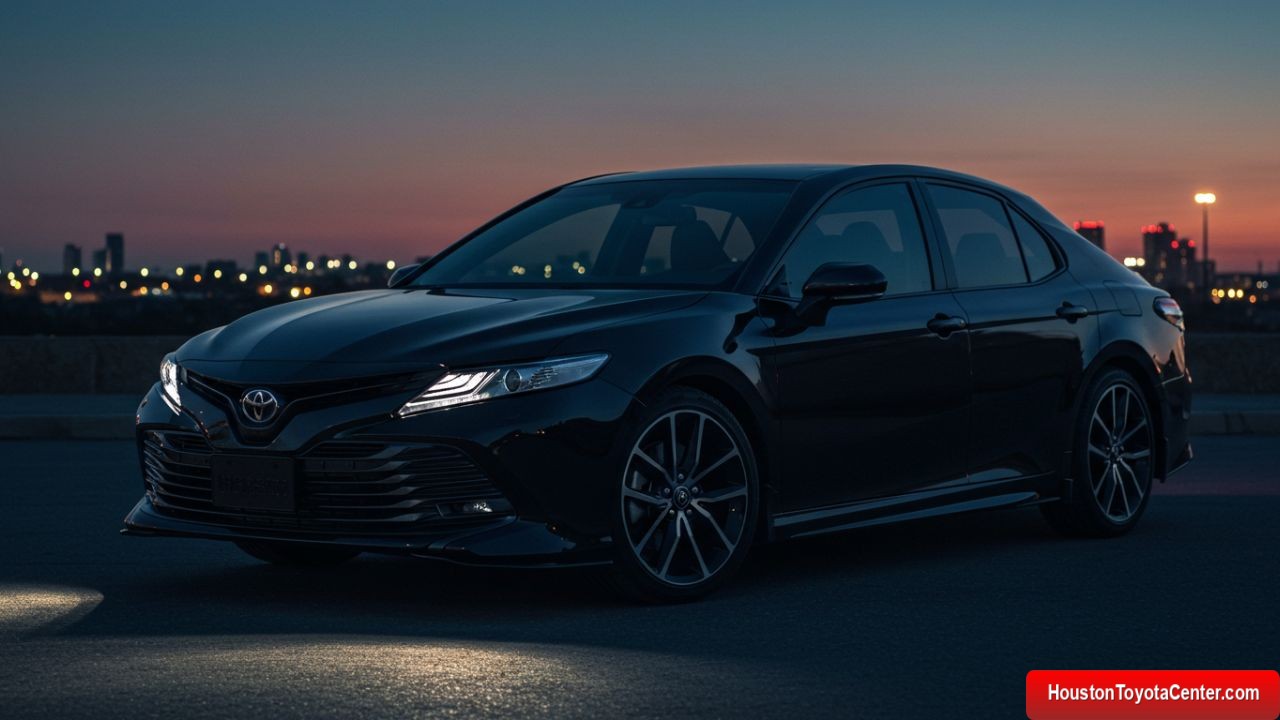
In a global automotive market increasingly shaped by efficiency, electrification, and sustainability, the Toyota Camry Hybrid stands out as one of the most consistently trusted midsize sedans. While many vehicles claim to balance performance and fuel economy, the Camry Hybrid has built its reputation on delivering real world efficiency without forcing drivers to sacrifice comfort, reliability, or usability.
This article explores the engineering philosophy, hybrid system architecture, aerodynamic design, driving behavior, and manufacturing decisions that together explain what makes the Camry Hybrid so efficient. Rather than focusing on marketing claims, we break down the mechanical and systemic reasons behind its fuel economy success and why it remains a benchmark in its segment.
The Foundation: Toyota’s Hybrid Philosophy
The efficiency of the Camry Hybrid does not come from a single breakthrough component. Instead, it is the result of decades of incremental refinement under Toyota’s Hybrid Synergy Drive philosophy.
At its core, Toyota’s approach is based on one guiding principle: optimize the relationship between the internal combustion engine and electric motor so that each operates in its most efficient range as often as possible.
FREE: Quickly identify and understand problems with your vehicle 🚘
CLICK HERERather than treating electrification as a replacement for gasoline power, the system treats it as a partner. The engine handles sustained highway loads and high speed cruising, while the electric motor assists during acceleration, low speed driving, and stop and go traffic. This division of labor reduces wasted energy and keeps fuel consumption low across a wide range of driving conditions.
The Camry Hybrid is not designed to be purely electric or purely gasoline powered. It is designed to be continuously adaptive.
The Hybrid Synergy Drive System Explained
At the heart of the Camry Hybrid is Toyota’s Hybrid Synergy Drive system, a power split architecture that uses a planetary gear set to blend power from:
- A gasoline engine
- An electric motor generator
- A second electric motor drive unit
- A high voltage battery pack
Unlike traditional transmissions with fixed gears, this system uses an electronic continuously variable transmission, often called eCVT. This allows the engine to operate at its most efficient RPM range more frequently.
Why this matters for efficiency
Internal combustion engines are not equally efficient at all speeds. They typically have a narrow band where fuel is converted into motion most effectively. Traditional transmissions force engines to operate outside this optimal range during acceleration or speed changes.
The Camry Hybrid avoids this inefficiency by decoupling engine speed from wheel speed. The result is smoother energy delivery and reduced fuel waste.
The system constantly decides:
- When to use electric power alone
- When to combine both power sources
- When to recharge the battery using the engine
- When to capture energy through regenerative braking
This constant optimization is invisible to the driver but crucial to efficiency.
Regenerative Braking: Turning Waste Into Energy
One of the most important contributors to hybrid efficiency is regenerative braking. In conventional vehicles, braking energy is lost as heat through friction. In the Camry Hybrid, part of that energy is recovered and stored in the battery.
When the driver applies the brakes or lifts off the accelerator, the electric motor reverses function and becomes a generator. This process slows the car while converting kinetic energy into electrical energy.
Although not all braking energy can be recovered, especially in emergency stops, city driving provides frequent opportunities for energy recapture.
This is especially significant in urban environments like São Paulo or Rio de Janeiro, where stop and go traffic is common. In these conditions, regenerative braking can contribute meaningfully to overall fuel savings.
The Role of the Electric Motor
The Camry Hybrid uses electric motors not as secondary features but as central components of propulsion.
Electric motors are inherently efficient at low speeds and during acceleration. They deliver maximum torque instantly, which reduces the need for the gasoline engine to work hard during initial movement.
This means:
- Less fuel used during traffic starts
- Reduced engine load in city driving
- Smoother acceleration with fewer inefficiencies
In many cases, the Camry Hybrid can move at low speeds using only electric power. While the battery is not large enough for long distance electric driving, it is sufficient for short urban distances and low load cruising.
The result is a significant reduction in fuel consumption during the most inefficient phase of driving for conventional cars, which is stop and go traffic.
Engine Efficiency: The Atkinson Cycle Advantage
The gasoline engine in the Camry Hybrid operates on the Atkinson cycle rather than the more common Otto cycle used in standard engines.
The Atkinson cycle is designed to improve thermal efficiency at the cost of peak power. It achieves this by keeping the intake valve open longer during the compression stroke, effectively reducing pumping losses and improving fuel efficiency.
What this means in practice
- Lower fuel consumption during steady driving
- Higher thermal efficiency
- Reduced energy wasted as heat
However, Atkinson cycle engines produce less power relative to their size. This is where the electric motor compensates, filling in the performance gap when needed.
The combination of a high efficiency engine and electric assistance creates a balanced system where efficiency does not compromise drivability.
Aerodynamics: Efficiency Through Shape
Fuel efficiency is not only about the powertrain. The Camry Hybrid’s exterior design plays a significant role in reducing energy consumption.
Aerodynamics affects how much energy is required to push the vehicle through air at higher speeds. Even small improvements in drag coefficient can lead to measurable fuel savings over time.
The Camry Hybrid incorporates:
- A low, sloping front profile
- Smooth underbody panels
- Carefully designed side mirrors
- Optimized airflow channels around the wheels
These elements reduce air resistance, allowing the car to maintain highway speeds with less engine effort.
At highway speeds, aerodynamic drag becomes the dominant force resisting motion. By minimizing this drag, the Camry Hybrid improves fuel efficiency during long distance travel.
Battery Strategy and Energy Management
The Camry Hybrid uses a relatively small lithium ion or nickel metal hydride battery depending on the model year and market. Unlike full electric vehicles, the goal is not long range electric driving but continuous energy balancing.
The battery operates within a narrow state of charge window. It is neither fully drained nor fully charged during normal operation. This strategy increases battery lifespan and ensures that energy is always available for acceleration support or regenerative capture.
The system is designed so that:
- The engine can recharge the battery when efficiency is optimal
- The motor can draw energy during peak demand
- The system avoids deep discharge cycles
This controlled cycling contributes to long term reliability and stable efficiency.
Software Intelligence: The Invisible Efficiency Driver
One of the most overlooked aspects of the Camry Hybrid is its software control system. The vehicle’s efficiency depends heavily on algorithms that manage energy flow in real time.
These systems evaluate:
- Speed
- Acceleration demand
- Battery state
- Road conditions
- Driver behavior
Based on these inputs, the car decides how to distribute power between the engine and electric motor.
This adaptive logic ensures that the system is always working toward the lowest possible fuel consumption without requiring driver intervention.
In practice, this means two drivers operating the same vehicle may see different fuel economy results depending on how smoothly they drive.
Driving Behavior and Real World Efficiency
While engineering plays the primary role, driver behavior also influences efficiency outcomes.
The Camry Hybrid rewards smooth driving techniques such as:
- Gradual acceleration
- Predictive braking
- Maintaining steady speeds
- Avoiding unnecessary rapid throttle input
Aggressive driving reduces the benefits of the hybrid system because it forces the gasoline engine to operate more frequently at higher loads.
However, even in less ideal driving conditions, the hybrid system still provides efficiency advantages compared to conventional gasoline vehicles.
Weight Management and Structural Efficiency
Vehicle weight directly affects fuel consumption. Heavier vehicles require more energy to accelerate and maintain speed.
Toyota engineers manage weight carefully in the Camry Hybrid through:
- Use of high strength steel in critical areas
- Lightweight materials in non structural components
- Optimization of hybrid component placement
While the Camry Hybrid is not the lightest sedan in its class, its weight distribution is engineered to support both efficiency and stability.
Thermal Efficiency and Heat Recovery
Modern hybrid systems also focus on managing heat effectively. Engines generate significant waste heat, and controlling this thermal energy improves overall efficiency.
The Camry Hybrid uses systems that:
- Reduce engine warm up time
- Retain heat during short stops
- Optimize coolant flow
A warm engine operates more efficiently than a cold one. By minimizing cold start inefficiencies, the vehicle reduces fuel consumption during short trips.
Why the Camry Hybrid Remains Competitive
Despite increasing competition from fully electric vehicles and newer hybrid designs, the Camry Hybrid remains relevant due to its balance of:
- Proven reliability
- High real world fuel efficiency
- Lower maintenance complexity compared to full EVs
- Strong resale value
- Predictable driving experience
It is not the most technologically radical hybrid on the market, but it is one of the most refined and consistently efficient in everyday conditions.
Conclusion: Efficiency as a System, Not a Feature
The efficiency of the Camry Hybrid is not the result of a single innovation. It is the product of a carefully integrated system where engine design, electric propulsion, aerodynamics, software control, and driver interaction all contribute to a unified goal.
Rather than relying on one breakthrough technology, Toyota has built a layered efficiency strategy where small gains accumulate across multiple domains.
The result is a vehicle that does not simply advertise efficiency but demonstrates it consistently in real world driving conditions.
In an era where automotive technology is rapidly evolving, the Camry Hybrid remains a strong example of how thoughtful engineering and long term refinement can produce enduring results.
Leave a Reply