
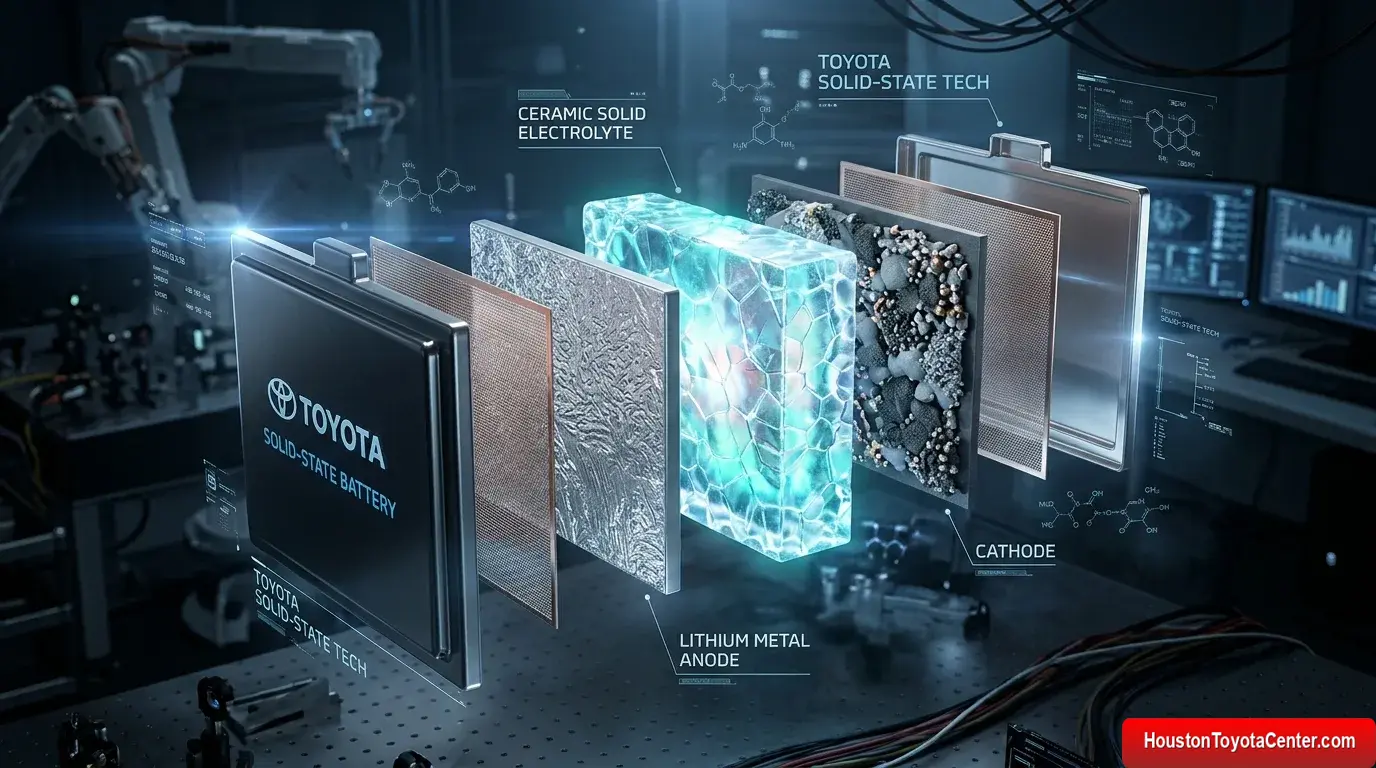
The automotive industry stands at a pivotal crossroads, where the transition from internal combustion engines to electric powertrains has become not just an environmental imperative but a technological race that will define the next century of transportation. At the forefront of this transformation is Toyota Motor Corporation, the world’s largest automaker by volume, which has been quietly developing what many experts consider the holy grail of battery technology: solid-state batteries. This comprehensive exploration delves into Toyota’s ambitious plans, technical innovations, strategic partnerships, and the profound implications their solid-state battery development could have on the global electric vehicle market, energy storage systems, and sustainable mobility solutions.
The Foundation: Understanding Solid-State Battery Technology
Before examining Toyota’s specific approach, it is essential to understand what makes solid-state batteries fundamentally different from conventional lithium-ion batteries that currently dominate the electric vehicle market. Traditional lithium-ion batteries use liquid electrolytes to facilitate the movement of lithium ions between the cathode and anode during charging and discharging cycles. While effective, these liquid electrolytes present several inherent limitations including flammability risks, limited energy density, temperature sensitivity, and relatively slow charging speeds.
Solid-state batteries replace these liquid electrolytes with solid materials, typically ceramics, polymers, or sulfides. This seemingly simple substitution creates a cascade of advantages that could revolutionize electric vehicles. The solid electrolyte acts as both an ion conductor and a physical separator between electrodes, eliminating the need for additional separator materials and enabling more compact cell designs. More importantly, solid electrolytes are non-flammable, significantly reducing fire risks associated with battery thermal runaway—a critical safety concern that has plagued some electric vehicle manufacturers.
The theoretical energy density of solid-state batteries far exceeds current lithium-ion technology. While today’s best commercial lithium-ion batteries achieve approximately 250-300 watt-hours per kilogram (Wh/kg), solid-state batteries promise densities of 400-500 Wh/kg or higher. This translates directly to longer driving ranges, lighter battery packs, and ultimately more practical electric vehicles that can compete with or exceed the convenience of gasoline-powered automobiles. Additionally, solid-state batteries demonstrate superior performance across wider temperature ranges, faster charging capabilities, and potentially longer cycle life—all crucial factors for consumer adoption of electric vehicles.
FREE: Quickly identify and understand problems with your vehicle 🚘
CLICK HEREToyota’s Historical Context and Strategic Positioning
Toyota’s interest in advanced battery technology extends back decades, rooted in the company’s pioneering work with hybrid vehicles. The success of the Prius, launched in 1997, established Toyota as a leader in electrified powertrains and provided invaluable experience in battery management systems, thermal regulation, and mass production of battery packs. However, Toyota’s approach to full battery-electric vehicles has been characterized by caution and methodical development rather than the aggressive market entry strategies employed by competitors like Tesla or various Chinese manufacturers.
This measured approach has drawn criticism from environmental advocates and some industry analysts who argue that Toyota missed early opportunities in the pure electric vehicle market. Yet, company executives have consistently maintained that their strategy focuses on developing truly transformative technologies rather than incremental improvements to existing platforms. Solid-state batteries represent the culmination of this philosophy—a technology that, if successfully commercialized, could leapfrog current electric vehicle limitations and establish Toyota as the definitive leader in next-generation mobility.
Toyota’s research into solid-state batteries began in earnest during the early 2010s, with the company filing numerous patents related to solid electrolyte materials, electrode architectures, and manufacturing processes. By 2017, Toyota had announced its intention to bring solid-state battery technology to market by the early 2020s, though subsequent timelines have been adjusted as technical challenges emerged. The company has invested billions of dollars in research and development, establishing dedicated facilities and partnering with universities, research institutions, and material suppliers to accelerate progress.
Technical Innovations and Material Science Breakthroughs
Toyota’s solid-state battery development encompasses multiple technical fronts, each presenting unique challenges and requiring innovative solutions. The company has explored various solid electrolyte materials, with particular emphasis on sulfide-based compounds that offer high ionic conductivity comparable to liquid electrolytes while maintaining the safety benefits of solid materials. These sulfide electrolytes can conduct lithium ions at rates sufficient for practical vehicle applications, addressing one of the primary technical barriers that have hindered solid-state battery commercialization.
Key Technical Specifications and Targets:
| Parameter | Current Lithium-Ion | Toyota Solid-State Target | Improvement Factor |
|---|---|---|---|
| Energy Density | 250-300 Wh/kg | 400-500+ Wh/kg | 1.6-2.0x |
| Charging Time (10-80%) | 30-40 minutes | 10-15 minutes | 2-3x faster |
| Operating Temperature Range | -20°C to 60°C | -30°C to 100°C | Wider range |
| Cycle Life | 1,000-2,000 cycles | 3,000+ cycles | 1.5-3x longer |
| Safety Rating | Moderate (flammable) | High (non-flammable) | Significantly safer |
One of Toyota’s significant innovations involves the development of thin-film solid electrolyte layers that minimize resistance while maximizing structural integrity. Traditional solid electrolytes tend to be brittle and prone to cracking during charge-discharge cycles, which degrades performance over time. Toyota researchers have developed composite materials and novel manufacturing techniques that create flexible yet robust electrolyte layers capable of withstanding thousands of cycles without significant degradation.
The company has also made substantial progress in electrode design, particularly regarding the interface between solid electrolytes and electrode materials. In solid-state batteries, maintaining good contact between solid components is challenging because there is no liquid to fill microscopic gaps. Toyota has developed surface treatment methods and interfacial layers that ensure consistent ionic contact throughout the battery’s lifetime, preventing the formation of voids or cracks that would increase resistance and reduce performance.
Another critical area of innovation involves lithium metal anodes. Conventional lithium-ion batteries use graphite anodes, which limit energy density. Solid-state batteries can theoretically utilize pure lithium metal anodes, dramatically increasing capacity. However, lithium metal tends to form dendrites—needle-like structures that can penetrate separators and cause short circuits. Toyota has developed protective coatings and three-dimensional electrode architectures that suppress dendrite formation while allowing efficient lithium deposition and extraction during cycling.
Manufacturing Challenges and Production Scaling
Perhaps the most significant hurdle facing solid-state battery commercialization is not the fundamental science but the manufacturing complexity. Producing solid-state batteries at scale requires entirely new production equipment, processes, and quality control measures. Unlike liquid electrolyte batteries, which can be manufactured using well-established roll-to-roll processing techniques, solid-state batteries require precision layering of solid materials under controlled atmospheric conditions.
Toyota has recognized that achieving cost-competitive manufacturing will be essential for widespread adoption. The company has invested heavily in developing automated production lines specifically designed for solid-state battery assembly. These facilities must maintain extremely low humidity levels because many promising solid electrolyte materials are sensitive to moisture. Additionally, the thin-film nature of solid electrolytes requires nanometer-scale precision in deposition and alignment, demanding advanced robotics and real-time quality monitoring systems.
Manufacturing Comparison:
| Aspect | Liquid Electrolyte Production | Solid-State Production | Challenge Level |
|---|---|---|---|
| Environmental Control | Standard cleanroom | Ultra-dry environment (<1 ppm H₂O) | High |
| Layer Precision | Micrometer scale | Nanometer scale | Very High |
| Assembly Speed | High throughput | Currently slower | Moderate-High |
| Quality Control | Established methods | New inspection techniques | High |
| Capital Investment | Mature supply chain | New equipment required | Very High |
| Yield Rates | >95% | Currently 70-85% | Improving |
Toyota’s approach to scaling production involves a phased strategy beginning with limited-volume manufacturing for premium vehicles before expanding to mass-market applications. The company has constructed pilot production facilities in Japan where engineers can refine processes, identify bottlenecks, and develop solutions before committing to full-scale factory construction. This methodical approach, while slower than some competitors’ aggressive timelines, aims to ensure that when Toyota does achieve volume production, the manufacturing processes will be robust, cost-effective, and capable of meeting stringent quality standards.
The company has also been working closely with equipment suppliers to develop specialized machinery for solid-state battery production. This includes advanced vacuum deposition systems for applying thin electrolyte films, laser welding equipment for creating hermetic seals, and automated inspection systems using artificial intelligence to detect microscopic defects that could compromise battery performance or safety.
Timeline and Commercialization Strategy
Toyota has communicated evolving timelines for solid-state battery commercialization, reflecting both the complexity of the technology and the company’s commitment to delivering viable products rather than premature announcements. Initial projections suggested commercial availability by 2020-2022, but technical challenges pushed these targets back. Current official statements indicate that Toyota plans to introduce vehicles equipped with solid-state batteries in the latter half of the 2020s, with initial applications likely in luxury or performance vehicles where higher costs can be absorbed.
The commercialization strategy appears to follow a deliberate progression:
Phase 1 (2024-2026): Continued refinement of laboratory prototypes and pilot production. Limited demonstration vehicles for testing and validation. Focus on resolving remaining technical issues related to cycle life, manufacturing yield, and cost reduction.
Phase 2 (2027-2029): Initial commercial deployment in select markets and vehicle segments. Production volumes in the tens of thousands of units annually. Premium pricing reflecting early-stage manufacturing costs. Real-world data collection to further optimize performance and durability.
Phase 3 (2030 and beyond): Mass production scaling to hundreds of thousands or millions of units annually. Cost reductions through economies of scale, process optimization, and supply chain development. Expansion to mainstream vehicle segments and potential licensing of technology to other manufacturers.
This phased approach allows Toyota to manage risk while building the necessary infrastructure and expertise for eventual mass production. It also provides valuable real-world feedback that can inform continuous improvement of the technology. Early adopters of solid-state battery vehicles will essentially serve as beta testers, providing data on long-term performance, degradation patterns, and user experience that will be invaluable for refining subsequent generations.
Competitive Landscape and Industry Dynamics
Toyota does not operate in isolation within the solid-state battery arena. Numerous companies worldwide are pursuing similar technology, creating a competitive landscape that simultaneously accelerates innovation and raises stakes for successful commercialization. Key competitors include:
QuantumScape, backed by Volkswagen, has made significant progress with its ceramic separator technology and claims to have achieved breakthrough performance metrics. The company has announced partnerships with major automakers and aims for commercial production in the mid-2020s.
Solid Power, supported by BMW and Ford, focuses on sulfide-based solid electrolytes similar to Toyota’s approach. The company has demonstrated prototype cells and is working toward pilot production facilities.
Samsung SDI and LG Energy Solution, South Korean battery giants, have substantial solid-state battery programs leveraging their existing manufacturing expertise and relationships with global automakers.
Chinese manufacturers including CATL and BYD are investing heavily in solid-state technology, benefiting from strong government support, massive domestic markets, and integrated supply chains.
Despite this competition, Toyota maintains several strategic advantages. The company’s vertical integration capabilities, extensive manufacturing experience, global supply chain networks, and financial resources provide significant leverage in bringing complex technologies to market. Additionally, Toyota’s reputation for quality and reliability could help overcome consumer skepticism about new battery technology, particularly regarding safety and longevity concerns.
However, the competitive pressure also means that Toyota cannot afford prolonged delays. If competitors achieve commercial viability first, they could capture market share, establish industry standards, and create switching costs that would disadvantage late entrants. This dynamic creates urgency while simultaneously demanding that Toyota maintain its characteristic focus on quality and thoroughness.
Applications Beyond Passenger Vehicles
While electric passenger vehicles represent the most visible application for solid-state batteries, Toyota envisions broader implications across multiple sectors. The technology’s superior energy density, safety profile, and temperature tolerance make it suitable for diverse applications that could accelerate the overall transition to electrification.
Commercial Transportation: Heavy-duty trucks, buses, and delivery vehicles require large battery packs that add significant weight and reduce payload capacity. Solid-state batteries’ higher energy density could enable these vehicles to achieve practical ranges without excessive weight penalties, making electric commercial fleets more economically viable.
Aviation: Electric aircraft face extreme weight constraints where every kilogram matters. Solid-state batteries could provide the energy density necessary for short-range regional flights or urban air mobility applications, potentially revolutionizing regional transportation.
Marine Applications: Electric boats and ships benefit from improved safety characteristics of solid-state batteries, particularly important in marine environments where fire suppression is challenging. The technology could enable larger electric vessels with practical operating ranges.
Grid Storage: While stationary storage applications are less sensitive to weight, the longer cycle life and improved safety of solid-state batteries could make them attractive for grid-scale energy storage, supporting renewable energy integration and grid stability.
Consumer Electronics: Although automotive applications receive most attention, solid-state batteries could eventually migrate to smartphones, laptops, and wearable devices, offering longer battery life, faster charging, and enhanced safety.
Toyota’s broad vision recognizes that solid-state battery technology represents a platform innovation with applications extending far beyond automobiles. Success in any single application area could drive down costs and improve manufacturing processes, creating positive feedback loops that benefit all applications.
Environmental and Sustainability Considerations
The environmental implications of solid-state batteries extend beyond the obvious benefit of enabling cleaner electric vehicles. The technology’s potential for longer cycle life means fewer batteries need to be manufactured and disposed of over a vehicle’s lifetime, reducing resource consumption and waste. Additionally, some solid electrolyte materials may require fewer critical minerals than current lithium-ion chemistries, potentially alleviating supply chain pressures and geopolitical concerns related to mineral sourcing.
However, solid-state batteries also present new environmental challenges. The manufacturing processes currently require more energy-intensive steps and controlled environments, resulting in higher initial carbon footprints. Some promising solid electrolyte materials contain elements that raise sustainability questions regarding mining impacts and recycling infrastructure. Toyota has acknowledged these concerns and is actively researching sustainable sourcing, energy-efficient manufacturing methods, and end-of-life recycling processes specifically designed for solid-state batteries.
The company has committed to lifecycle analysis studies comparing the total environmental impact of solid-state batteries versus conventional alternatives, considering everything from raw material extraction through manufacturing, use phase, and eventual recycling or disposal. Preliminary results suggest that despite higher manufacturing impacts, the extended service life and improved efficiency of solid-state batteries result in lower total lifecycle emissions, particularly when paired with renewable electricity sources.
Economic Implications and Market Transformation
Successful commercialization of solid-state batteries could trigger profound economic shifts throughout the automotive industry and related sectors. Vehicle manufacturers achieving superior battery technology could gain significant competitive advantages, potentially reshaping market leadership positions. Suppliers of conventional lithium-ion components might face disruption, while new supply chains for solid electrolyte materials and specialized manufacturing equipment would emerge.
For consumers, solid-state batteries could finally eliminate the primary objections to electric vehicle adoption: range anxiety, charging time, and safety concerns. Vehicles offering 500+ mile ranges with 10-minute charging times would match or exceed the convenience of gasoline vehicles, removing psychological and practical barriers to adoption. This could accelerate the transition away from internal combustion engines more rapidly than current projections suggest.
The economic impact extends to energy infrastructure as well. Faster-charging, higher-capacity electric vehicles would require upgrades to electrical grids and charging networks, creating investment opportunities and jobs in infrastructure development. Conversely, reduced dependence on petroleum could have significant geopolitical and economic implications for oil-producing nations and global energy markets.
Challenges and Risk Factors
Despite the promising potential, several significant challenges remain before solid-state batteries achieve widespread commercial success. Technical hurdles include achieving consistent performance across large-format cells suitable for vehicles, maintaining performance over thousands of charge-discharge cycles, and ensuring reliable operation across diverse climate conditions. Manufacturing scalability presents enormous challenges, requiring billions in capital investment and years of process optimization before achieving cost competitiveness.
Supply chain development for specialized materials represents another risk factor. Many promising solid electrolyte compositions require elements with limited current production capacity, necessitating new mining operations, refining facilities, and distribution networks. Geopolitical factors could complicate access to critical materials, particularly if concentration of production in specific regions creates vulnerabilities similar to current lithium and cobalt supply concerns.
Regulatory frameworks for solid-state batteries remain undeveloped in many jurisdictions. Safety standards, testing protocols, and certification processes designed for liquid electrolyte batteries may not adequately address the unique characteristics of solid-state technology. Developing appropriate regulations while avoiding unnecessary barriers to innovation will require collaboration between industry, regulators, and standards organizations.
Market acceptance also carries uncertainty. Consumers accustomed to conventional vehicles may resist new technology regardless of objective benefits, particularly if early implementations carry premium pricing. Building consumer confidence will require extensive education, transparent communication about benefits and limitations, and demonstrable reliability over time.
Conclusion: A Transformative Horizon
Toyota’s pursuit of solid-state battery technology represents one of the most significant technological endeavors in the modern automotive industry. The potential rewards—vehicles with unprecedented range, rapid charging, enhanced safety, and reduced environmental impact—justify the substantial investments and extended development timelines. While challenges remain formidable, Toyota’s methodical approach, extensive resources, and deep engineering expertise position the company favorably for eventual success.
The implications extend far beyond Toyota itself. Successful commercialization of solid-state batteries would catalyze broader transformation across transportation, energy, and manufacturing sectors. It could accelerate the global transition to electric mobility, reduce dependence on fossil fuels, and contribute meaningfully to climate change mitigation efforts. The technology’s applications across diverse sectors from aviation to grid storage multiply its potential impact.
However, success is not guaranteed. The path from laboratory breakthrough to mass-market product is littered with technologies that promised revolution but failed to deliver practical, cost-effective solutions. Toyota must navigate technical challenges, manufacturing complexities, competitive pressures, and market dynamics while maintaining its commitment to quality and thoroughness.
As we look toward the latter half of this decade, the automotive industry watches with anticipation. Toyota’s solid-state batteries could represent the missing piece that makes electric vehicles truly compelling for mainstream consumers worldwide. Whether this vision becomes reality depends on continued innovation, strategic execution, and perhaps most importantly, the ability to translate scientific possibility into commercial viability. The journey continues, and the destination promises to reshape how humanity moves through the world.
The stakes could not be higher, and the potential rewards correspondingly immense. Toyota’s solid-state battery program embodies the intersection of environmental necessity, technological ambition, and industrial capability. Its success or failure will influence not just one company’s fortunes but the trajectory of global transportation and energy systems for decades to come. As research progresses and prototypes evolve into production vehicles, the world watches to see whether this revolutionary technology will fulfill its promise and usher in a new era of sustainable, convenient, and accessible electric mobility.
Leave a Reply