
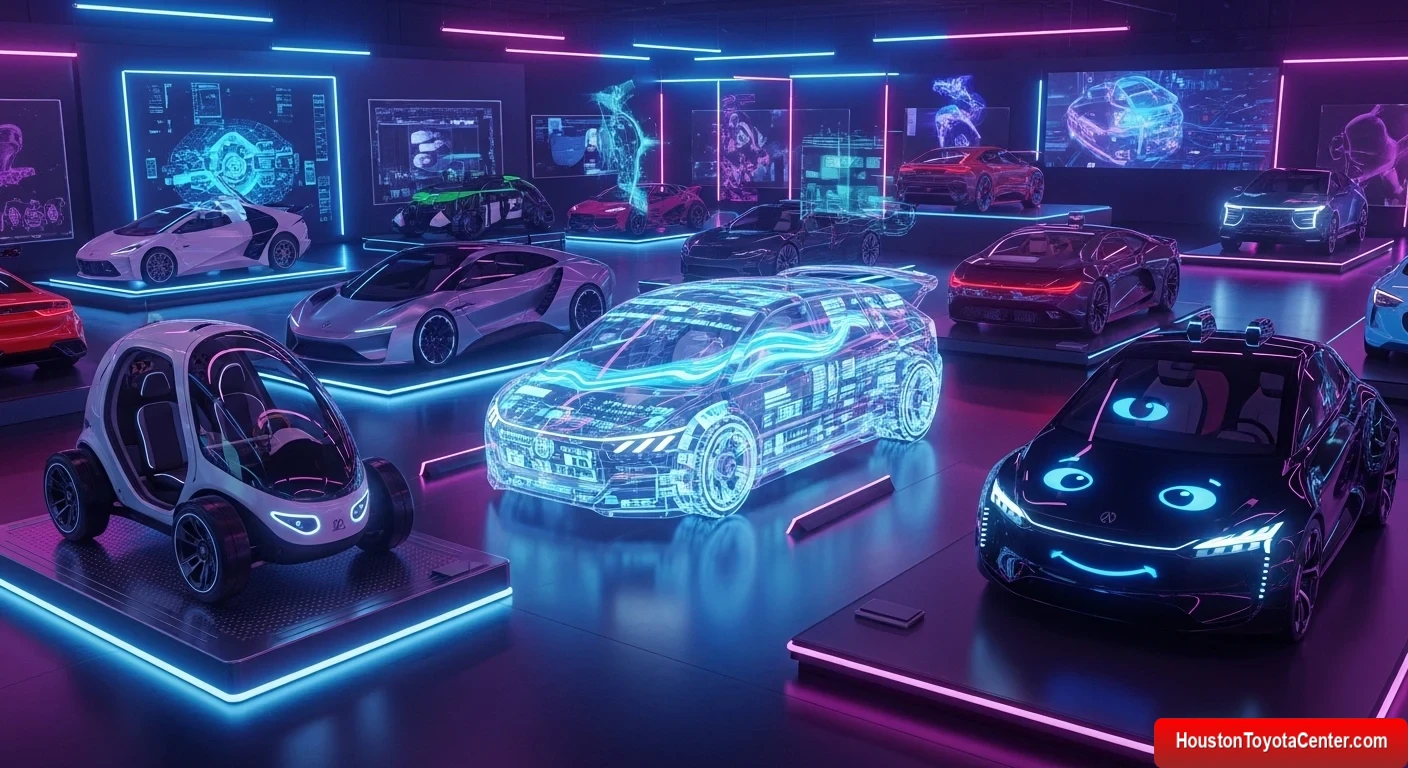
When people think of Toyota, they often picture reliability, practicality, and a quiet commitment to efficiency. Models like the Corolla and Camry have built a global reputation on dependability rather than daring design. Yet behind this conservative public image lies a wildly imaginative engineering culture—one that has produced some of the most surprising, unconventional, and futuristic concept cars in automotive history.
Toyota’s concept vehicles are more than design exercises; they are windows into possible futures. Some showcase radical mobility ideas, others explore emotional connections between humans and machines, and a few push the boundaries of what a “car” even is. Many never reach production, but their influence can be seen years later in subtle design cues, emerging technologies, or entirely new categories of transportation.
This article explores Toyota’s most surprising concept cars—vehicles that shocked audiences, challenged expectations, and revealed a side of Toyota that is anything but predictable.
The Philosophy Behind Toyota’s Concept Cars
Before diving into specific vehicles, it’s important to understand Toyota’s philosophy. Unlike many automakers that use concept cars purely as marketing tools, Toyota often uses them as experimental platforms to test:
FREE: Quickly identify and understand problems with your vehicle 🚘
CLICK HERE- Human-machine interaction
- Alternative energy sources
- Urban mobility solutions
- Emotional design language
- Robotics and AI integration
Toyota has long embraced the idea that mobility is not just about transportation—it’s about experience, accessibility, and even companionship.
Toyota i-REAL (2007): Personal Mobility Redefined
One of the earliest concept vehicles that truly surprised the world was the Toyota i-REAL. It looked less like a car and more like something from a science fiction film.
Key Features
- Three-wheel personal mobility device
- Adjustable wheelbase for stability vs. maneuverability
- Leaning mechanism for cornering
- Electric-powered drivetrain
The i-REAL allowed the driver to sit upright at low speeds (for pedestrian environments) and recline at higher speeds for stability. It blurred the line between a wheelchair, a scooter, and a car.
Why It Was Surprising
Toyota, known for family sedans, suddenly presented a vehicle that questioned whether cars were even necessary in dense urban environments. It hinted at a future where personal mobility devices replace traditional automobiles in cities.
Toyota Fun-Vii (2011): The Car That Became a Screen
The Toyota Fun-Vii (short for “Fun Vehicle Interactive Internet”) was one of the most visually shocking concepts ever revealed.
Key Features
- Entire exterior body functions as a digital display
- Fully customizable appearance (colors, patterns, animations)
- Augmented reality navigation
- AI-based assistant
What Made It Unique
The Fun-Vii transformed the car into a digital canvas. Owners could change the vehicle’s appearance instantly, turning it into a rolling billboard, art piece, or personal expression.
Broader Implications
This concept anticipated trends we now see emerging:
- Over-the-air software updates
- Personalized digital interfaces
- Vehicles as extensions of identity
Toyota ME.WE (2013): Minimalism Meets Sustainability
Developed in collaboration with designer Jean-Marie Massaud, the Toyota ME.WE took a radically different approach.
Key Features
- Lightweight polypropylene panels
- Bamboo flooring
- Modular design (pickup, convertible, off-roader)
- Extremely low environmental impact
Why It Stood Out
Instead of adding complexity, Toyota removed it. The ME.WE challenged the idea that cars need to be heavy, expensive, and feature-packed.
Key Insight
Sometimes innovation isn’t about adding technology—it’s about subtracting excess.
Toyota FV2 (2013): The Car You Control With Your Body
The Toyota FV2 was one of the most unconventional concepts ever built.
Key Features
- No steering wheel
- Controlled by shifting body weight
- Voice and emotion recognition
- Augmented reality head-up display
Human-Machine Connection
The FV2 used sensors to detect the driver’s mood and adapt accordingly. It even “learned” driver preferences over time.
Why It Was Shocking
The idea of controlling a vehicle with your body rather than your hands challenged centuries of transportation design.
Toyota Kikai (2015): Celebrating Mechanical Beauty
In an era of hidden components and sleek surfaces, the Toyota Kikai did the opposite.
Key Features
- Exposed mechanical parts (engine, suspension)
- Industrial aesthetic
- Central driving position
Design Philosophy
The Kikai emphasized transparency—both literally and metaphorically. It invited users to appreciate the mechanics behind the machine.
Why It Was Surprising
Most modern cars hide complexity. The Kikai celebrated it.
Toyota Concept-i (2017): The Car With a Soul
The Toyota Concept-i represented a shift toward emotional AI integration.
Key Features
- AI assistant named “Yui”
- Learns driver behavior and emotions
- Communicates through light, sound, and touch
- Autonomous driving capabilities
Emotional Intelligence
Yui could:
- Detect stress
- Suggest routes based on mood
- Take control when necessary
Why It Matters
This concept suggested that future cars might not just serve us—they might understand us.
Toyota e-Palette (2018): Mobility as a Service
The Toyota e-Palette was less about personal driving and more about shared mobility.
Key Features
- Fully autonomous electric platform
- Modular interior configurations
- Designed for ride-sharing, delivery, retail, and more
Real-World Impact
Unlike many concepts, the e-Palette was actually used in pilot programs, including events like the Olympics.
Why It Was Revolutionary
It redefined cars as platforms rather than products.
Toyota LQ (2019): Advanced AI and Augmented Reality
The Toyota LQ built upon the Concept-i, pushing AI interaction even further.
Key Features
- Advanced AI assistant
- Augmented reality navigation
- Autonomous driving
- Personalized environmental controls
Innovation Focus
The LQ emphasized seamless interaction between human and machine, integrating digital and physical experiences.
Toyota Woven City Vehicles (2020+): A Living Laboratory
As part of its futuristic Woven City project, Toyota introduced new concept mobility platforms.
Key Features
- Autonomous electric vehicles
- Integration with smart infrastructure
- Multi-purpose transport units
Why It’s Important
These vehicles aren’t just concepts—they are part of a functioning ecosystem designed to test future mobility in real life.
Toyota Compact Cruiser EV (2021): Retro Meets Electric Future
This concept combined nostalgia with modern technology.
Key Features
- Inspired by classic Land Cruiser design
- Fully electric drivetrain
- Compact off-road capability
Why It Surprised People
Toyota rarely blends retro aesthetics with futuristic EV design so boldly.
Toyota Sports EV Concepts: A Glimpse Into Performance
While Toyota is not always associated with radical sports cars, its EV concepts in this category have been surprising.
Features Across Concepts
- Sleek aerodynamic designs
- Electric performance platforms
- Focus on driving pleasure even in EV era
Comparison Table of Key Concept Cars
| Concept Car | Year | Main Innovation | Key Surprise Factor |
|---|---|---|---|
| i-REAL | 2007 | Personal mobility device | Not a traditional car |
| Fun-Vii | 2011 | Digital exterior | Entire body is a screen |
| ME.WE | 2013 | Minimalist eco design | Radical simplicity |
| FV2 | 2013 | Body-controlled driving | No steering wheel |
| Kikai | 2015 | Exposed mechanics | Industrial transparency |
| Concept-i | 2017 | Emotional AI | Car with personality |
| e-Palette | 2018 | Mobility platform | Car as a service unit |
| LQ | 2019 | AR + AI integration | Immersive driving experience |
| Compact Cruiser EV | 2021 | Retro electric off-roader | Nostalgia + EV |
Themes That Define Toyota’s Most Surprising Concepts
1. Human-Centered Design
Toyota consistently focuses on how people interact with vehicles—not just how vehicles perform.
2. Breaking the Definition of a Car
Many concepts challenge the idea that a car must:
- Have a steering wheel
- Be manually driven
- Look like a traditional vehicle
3. Emotional Intelligence
Toyota explores how vehicles can:
- Understand human emotions
- Respond to moods
- Build relationships with drivers
4. Sustainability Through Innovation
Concepts like ME.WE show that sustainability can come from:
- Material choices
- Simplicity
- Efficiency
5. Mobility as a Service
The e-Palette and Woven City vehicles highlight a future where ownership is less important than access.
Why Toyota’s Concept Cars Matter
Even though most of these vehicles never reach production, they influence the industry in subtle ways:
- Design trends
- User interface innovations
- Autonomous driving features
- Electric mobility solutions
Toyota uses concept cars as a testing ground for ideas that may take years—or decades—to become mainstream.
The Hidden Boldness of Toyota
Toyota’s public image may be conservative, but its concept cars reveal a different story:
- A willingness to experiment
- A focus on long-term innovation
- A deep interest in human experience
This dual identity—safe in production, bold in experimentation—is what makes Toyota unique.
Looking Ahead: The Future of Toyota Concepts
As the automotive industry evolves, Toyota’s concept cars are likely to focus on:
- Full autonomy
- Hydrogen energy
- Smart city integration
- Robotics and mobility assistance
Given Toyota’s track record, we can expect future concepts to continue surprising us—not just with how they look, but with how they redefine mobility itself.
Conclusion
Toyota’s most surprising concept cars challenge the stereotype of the brand as purely practical and conservative. From body-controlled vehicles to AI companions and cars that double as digital canvases, Toyota has consistently pushed the boundaries of what mobility can be.
These concept cars are not just experiments—they are statements. They tell us that the future of transportation is not fixed, and that even the most reliable automaker in the world is willing to imagine radical possibilities.
In the end, Toyota’s greatest surprise isn’t any single concept car—it’s the realization that innovation often comes from the places you least expect.
Leave a Reply