
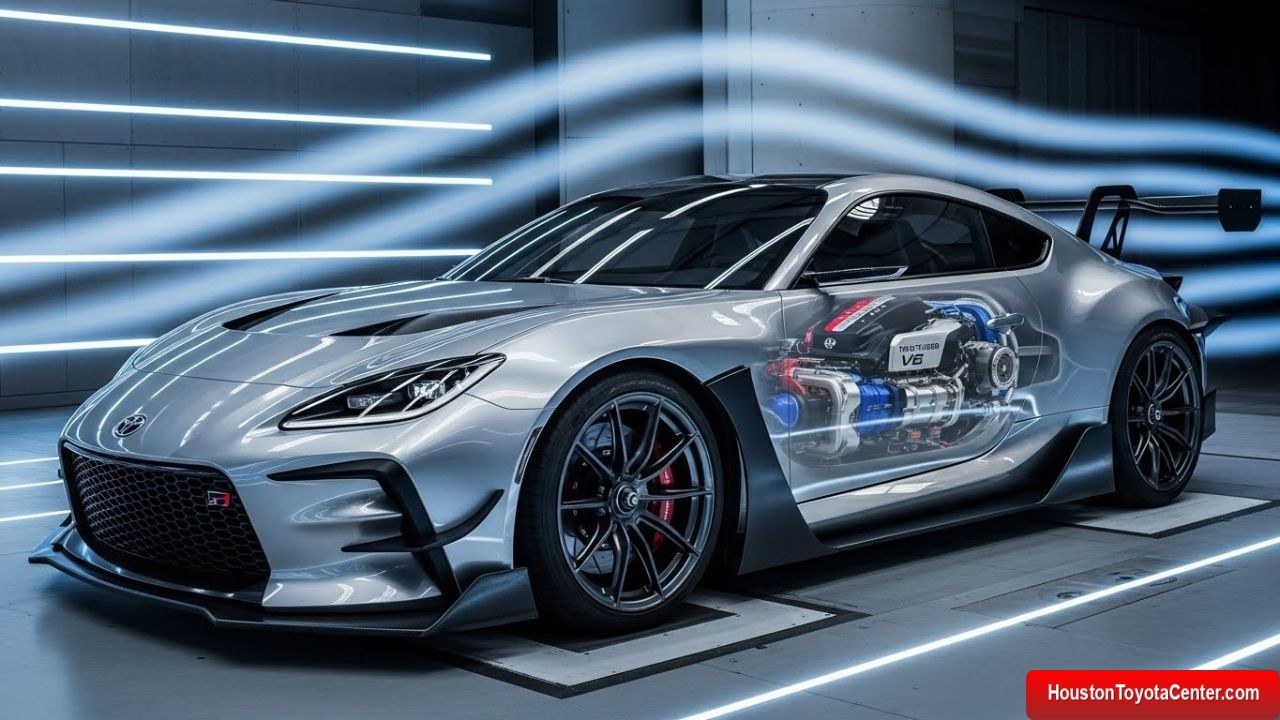
Toyota has officially detailed the GR GT and GR GT3, two high-performance machines developed under the direction of Akio Toyoda and the company’s elite test-driver team. Both models bring major improvements in aerodynamics, rigidity, weight balance, and powertrain technology.
They share a newly developed 4.0-liter twin-turbo V8, while the GR GT adds an advanced rear-mounted hybrid system. 🏎️⚡
According to Toyota, both cars were shaped using lessons from motorsport and tested extensively at Fuji Speedway, Nürburgring, and on public roads. Market launch is planned for around 2027, though specifications may still evolve.
🏗️ Architecture & Structural Innovation
Different Missions, Shared DNA
- GR GT: Designed as a street-legal homologation model.
- GR GT3: Engineered strictly for FIA GT3 competition.
Core Engineering Principles
Toyota focused on three pillars:
FREE: Quickly identify and understand problems with your vehicle 🚘
CLICK HERE| Engineering Pillar | Description |
|---|---|
| 🧱 Low Center of Gravity | Packaging optimized for stability and grip. |
| ⚖️ Low Weight + High Rigidity | Aluminum structure + CFRP components. |
| 🌬️ Aerodynamic Efficiency | Development started with aero targets before styling. |
Lightweight Construction
- GR GT: Toyota’s first fully aluminum structure, combined with CFRP exterior panels.
- GR GT3: Shares the same aluminum chassis and GT-derived suspension components.
Weight Distribution
| Model | Weight Distribution |
|---|---|
| GR GT | 45:55 (Front/Rear) |
This balance is achieved through careful placement of the battery, fuel tank, engine, and rear transaxle.
🔩 Powertrain: Twin-Turbo V8 Muscle
GR GT: Hybrid-Enhanced Performance ⚡
- Engine: 3,998 cc twin-turbo V8
- Features: dry-sump lubrication, hot-V layout, CFRP torque tube
- Integrated motor-generator placed ahead of the transaxle
- Combined power target: 650+ hp
- Torque target: 850+ Nm
Transmission:
- 8-speed automatic, wet-start clutch
- Allows manual shifting in automatic mode
- Tuned for sharp, direct response
GR GT3: Pure Racing Specification 🏁
- Uses the same V8, but no hybrid system
- Built to comply with FIA GT3 regulations
- Strict rear-wheel-drive race configuration
🛞 Suspension, Tires & Braking
| Component | GR GT | GR GT3 |
|---|---|---|
| Suspension | Double wishbone front & rear | Same |
| Arms | Forged aluminum | Forged aluminum |
| Tires | Michelin Pilot Sport Cup 2 (custom) | Race-spec tires |
| Brakes | Carbon-ceramic | Motorsport setup |
🌧️ Stability system: Multiple adjustable intervention levels based on driver skill and conditions.
🏆 Borrowed tech from endurance racing, including the 24 Hours of Nürburgring.
🌪️ Aerodynamics & Functional Design
Toyota reversed the usual design process:
- Define aerodynamic goals
- Shape the exterior around them
Design Personality
- GR GT (road model): More traditional street proportions
- GR GT3 (race model): Surfaces tailored to meet competition rules
Interior
- GR GT: Low seating, wide visibility, ergonomic layout for high-speed road use
- GR GT3: Stripped and focused for racing performance only
📏 Dimensions & Key Specs
GR GT
| Specification | Value |
|---|---|
| Length | 4,820 mm |
| Width | 2,000 mm |
| Height | 1,195 mm |
| Wheelbase | 2,725 mm |
| Weight | Up to 1,750 kg |
| Seats | 2 |
| Top Speed | 320+ km/h |
GR GT3
| Specification | Value |
|---|---|
| Length | 4,785 mm |
| Width | 2,050 mm |
| Height | 1,090 mm |
| Notes | Final specs may change |
🧪 Testing & Future Outlook
Both models have gone through countless development loops, featuring:
- Repeated simulation + rebuild cycles
- Input from Lexus LFA engineers
- Processes inspired by the Japanese Shikinen Sengu philosophy (periodic renewal)
🚀 Toyota expects both cars to enter their final development phase soon, with production planned around 2027.
Leave a Reply