The electric vehicle (EV) revolution has entered a new and more complex phase. What once seemed like a near-monopoly dominated by Tesla, with legacy automakers scrambling to catch up, has evolved into a fiercely competitive landscape where innovation, branding, capital efficiency, and manufacturing execution determine survival. Among the most prominent challengers in this new era are Rivian Automotive and Lucid Group—two American EV startups that have emerged with distinct visions, bold ambitions, and the financial backing necessary to disrupt the status quo.
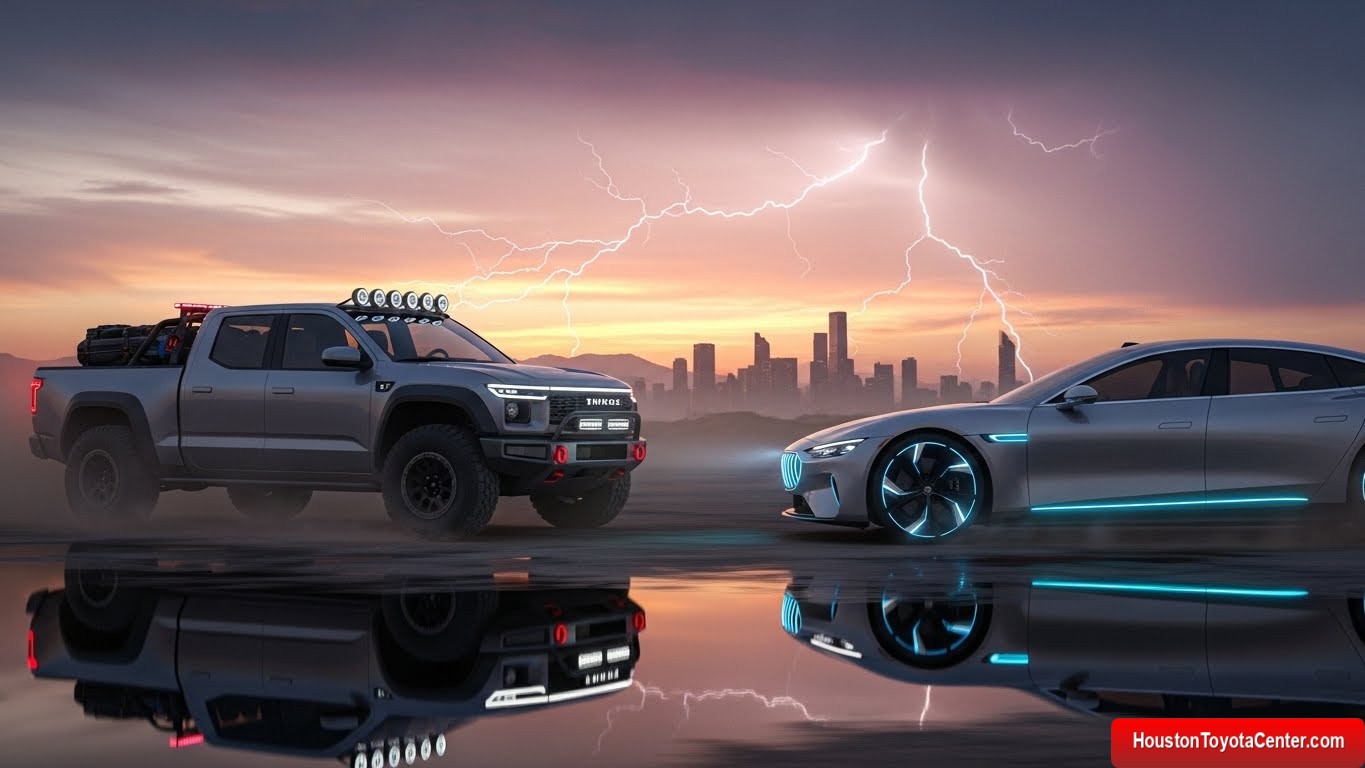
Rivian and Lucid are not merely producing electric cars; they are attempting to redefine what EVs represent. Rivian positions itself as an adventure-oriented, utility-driven brand designed for the outdoors and commercial fleets. Lucid, on the other hand, aims squarely at the luxury segment, emphasizing cutting-edge technology, efficiency, and refined performance. Together, these companies symbolize a broader shift: the EV market is no longer just about electrification—it is about identity, lifestyle, and technological leadership.
This article explores the rise of Rivian and Lucid, examining their origins, business models, technological innovations, financial challenges, market strategies, and the broader implications of their success or failure. By doing so, we gain insight into how these companies are challenging both Tesla and traditional automakers, and what their journeys reveal about the future of electric mobility.
The EV Establishment: Tesla and Legacy Automakers
Before understanding how Rivian and Lucid challenge the EV establishment, it is essential to define what that establishment looks like.
FREE: Quickly identify and understand problems with your vehicle 🚘
CLICK HERETesla: The Benchmark and the Target
Tesla remains the dominant force in the EV industry. Its success stems from a combination of early-mover advantage, vertically integrated manufacturing, proprietary battery technology, software leadership, and a globally recognized brand. Tesla proved that EVs could be desirable, fast, and profitable at scale—something many doubted for years.
However, Tesla’s dominance also created an implicit challenge: competitors are now measured against it. Range, acceleration, charging speed, over-the-air updates, and even CEO charisma have become benchmarks. This environment creates both pressure and opportunity for newcomers like Rivian and Lucid, who must differentiate themselves rather than simply replicate Tesla’s formula.
Legacy Automakers: Scale Without Agility
Traditional automakers such as Ford, General Motors, Volkswagen, BMW, and Mercedes-Benz possess massive scale, global distribution networks, and decades of manufacturing expertise. Yet, their transition to EVs has been slowed by internal bureaucracy, sunk costs in internal combustion engine (ICE) platforms, and the challenge of retooling factories and supply chains.
Rivian and Lucid benefit from starting fresh. They are unburdened by legacy infrastructure and legacy thinking, allowing them to design vehicles, factories, and software systems optimized for electrification from the ground up.
Rivian: Redefining Utility and Adventure
Origins and Vision
Rivian was founded in 2009 by RJ Scaringe, an engineer with a doctorate from MIT. Unlike many Silicon Valley startups, Rivian spent nearly a decade in stealth mode, refining its technology and vision before unveiling its first vehicles.
Rivian’s mission is centered around sustainability without sacrificing adventure. The company’s slogan—often associated with exploring the outdoors while preserving it—captures its core identity. Rivian is not trying to build a car for everyone; it is building vehicles for people who want to go off-road, haul gear, and live active lifestyles.
Product Lineup: R1T, R1S, and Commercial Vans
Rivian entered the market with two consumer vehicles:
- R1T: An all-electric pickup truck
- R1S: An all-electric SUV
Both vehicles share a common platform, featuring quad-motor configurations, impressive off-road capabilities, and rugged design elements.
In addition to consumer vehicles, Rivian secured a major commercial contract with Amazon to produce electric delivery vans. This move provided Rivian with a large, stable customer and a pathway to scale production beyond consumer demand.
Key Design and Engineering Innovations
Rivian’s engineering philosophy emphasizes modularity and durability. Some notable features include:
- Quad-motor drivetrain enabling precise torque vectoring
- Adjustable air suspension for off-road and highway driving
- Integrated gear tunnel for storage and accessories
- Over-the-air software updates
These features allow Rivian to position its vehicles as premium yet practical tools rather than purely lifestyle products.
Lucid: Elevating Luxury and Efficiency
Origins and Strategic Focus
Lucid Group traces its roots to Atieva, a company originally focused on battery technology. Founded in 2007, Lucid pivoted toward building luxury electric vehicles under the leadership of CEO Peter Rawlinson, a former chief engineer of the Tesla Model S.
Lucid’s vision is unambiguous: to create the most advanced electric vehicles in the world. Unlike Rivian, which focuses on utility and adventure, Lucid targets affluent consumers who prioritize performance, comfort, and technological sophistication.
The Lucid Air: A Statement Vehicle
Lucid’s flagship product, the Lucid Air, entered the market as a direct competitor to high-end luxury sedans from Tesla, Mercedes-Benz, BMW, and Porsche.
The Lucid Air gained widespread attention for:
- Industry-leading range exceeding 500 miles in certain trims
- Exceptionally efficient powertrain design
- Ultra-fast charging capabilities
- Minimalist yet luxurious interior
Rather than chasing volume early, Lucid opted to establish credibility at the top of the market, believing that technological leadership would eventually trickle down to more affordable models.
Vertical Integration and Technology Leadership
Lucid’s core strength lies in its in-house technology. The company designs its own:
- Battery packs
- Electric motors
- Power electronics
This vertical integration allows Lucid to achieve industry-leading efficiency, packing more range into smaller, lighter battery packs—an advantage with significant cost and performance implications.
Comparing Rivian and Lucid: Two Paths to Disruption
While both companies challenge the EV establishment, they do so in fundamentally different ways.
| Aspect | Rivian | Lucid |
|---|---|---|
| Market Focus | Adventure, utility, commercial fleets | Luxury, performance, efficiency |
| Flagship Vehicles | R1T (pickup), R1S (SUV) | Lucid Air (luxury sedan) |
| Brand Identity | Outdoors, sustainability, ruggedness | Sophistication, innovation, luxury |
| Key Strength | Platform versatility | Powertrain efficiency |
| Customer Base | Active lifestyle consumers, businesses | High-income luxury buyers |
This divergence highlights a critical insight: the EV market is not monolithic. Success does not require appealing to everyone; it requires deeply understanding a specific audience and delivering exceptional value to that group.
Manufacturing Challenges: The Reality of Scaling
The Production Bottleneck
One of the greatest challenges facing both Rivian and Lucid is manufacturing scale. Designing an exceptional vehicle is only half the battle; producing tens or hundreds of thousands of them reliably is far more difficult.
Rivian and Lucid have both experienced:
- Production delays
- Supply chain disruptions
- Quality control issues
These challenges are not unique to EV startups. Tesla itself struggled for years with what Elon Musk famously called “production hell.”
Capital Intensity and Cash Burn
Manufacturing EVs is capital-intensive. Building factories, securing battery supplies, hiring skilled labor, and maintaining inventory require billions of dollars.
Both Rivian and Lucid went public via high-profile IPOs, raising significant capital. However, public markets also bring scrutiny, quarterly earnings pressure, and volatile stock prices—especially when production targets are missed.
Financial Performance and Investor Expectations
Rivian’s Financial Landscape
Rivian’s valuation soared shortly after its IPO, briefly surpassing that of Ford. This valuation reflected enormous expectations rather than current revenue or profitability.
Key financial challenges for Rivian include:
- High per-unit production costs
- Losses driven by low initial volumes
- Dependence on scaling to achieve profitability
The Amazon delivery van contract provides a crucial revenue anchor, but Rivian must still prove it can build consumer vehicles profitably at scale.
Lucid’s Financial Position
Lucid benefits from significant backing by Saudi Arabia’s Public Investment Fund, which provides long-term financial stability. However, Lucid faces similar challenges:
- Lower-than-expected delivery numbers
- High costs associated with luxury manufacturing
- Limited brand awareness compared to legacy luxury automakers
Lucid’s strategy prioritizes technological leadership over rapid volume growth, but this approach requires patience from investors.
Competition Beyond Tesla
Legacy Automakers Are Catching Up
Rivian and Lucid are not only competing with Tesla; they are also facing renewed competition from traditional automakers launching compelling EVs.
Examples include:
- Ford F-150 Lightning
- Mercedes-Benz EQS
- BMW i7
- Porsche Taycan
These vehicles benefit from established dealer networks, brand loyalty, and manufacturing expertise, raising the stakes for EV startups.
Differentiation as Survival Strategy
To survive, Rivian and Lucid must avoid competing solely on price. Their success depends on differentiation:
- Rivian through lifestyle branding and versatility
- Lucid through unmatched efficiency and luxury
In this sense, they resemble premium technology companies more than traditional car manufacturers.
Software, Autonomy, and the Future of EVs
The Role of Software
Modern EVs are increasingly defined by software. Over-the-air updates, driver assistance systems, and digital user experiences are now central to vehicle value.
Both Rivian and Lucid invest heavily in software development, though neither currently matches Tesla’s lead in autonomy. However, the gap is narrowing as regulatory and technical challenges slow full self-driving adoption across the industry.
Data, Connectivity, and Ecosystems
Future competition will extend beyond vehicles to ecosystems:
- Charging networks
- Energy storage solutions
- Integration with smart homes and renewable energy
Companies that successfully integrate vehicles into broader energy and digital ecosystems may gain long-term advantages.
Cultural Impact and Brand Perception
Rivian as a Lifestyle Brand
Rivian has cultivated a community-oriented brand, emphasizing environmental stewardship, outdoor exploration, and social responsibility. This approach resonates strongly with younger, sustainability-conscious consumers.
Lucid as a Technology Icon
Lucid positions itself as a symbol of technological excellence. Its messaging emphasizes innovation, precision engineering, and future-forward design—appealing to consumers who view cars as extensions of personal identity and status.
Brand perception will play a decisive role as the EV market becomes more crowded.
The Broader Implications for the EV Industry
The rise of Rivian and Lucid signals a maturing EV market. Innovation is no longer limited to a single dominant player; instead, multiple companies are pushing boundaries in different directions.
This competition benefits consumers through:
- Greater choice
- Faster technological advancement
- Improved quality and performance
It also accelerates the global transition to sustainable transportation by proving that EVs can serve diverse needs and preferences.
Conclusion: Disruption Is No Longer a One-Company Story
Rivian and Lucid represent two distinct yet complementary challenges to the EV establishment. They demonstrate that success in the electric era does not require copying Tesla but rather redefining what an electric vehicle can be.
Rivian shows that EVs can be rugged, adventurous, and practical without compromising sustainability. Lucid proves that electric vehicles can surpass traditional luxury benchmarks in performance, efficiency, and refinement.
Their journeys are far from over, and their futures remain uncertain. Yet, regardless of individual outcomes, Rivian and Lucid have already reshaped the conversation around electric mobility. They are not just competing with the establishment—they are expanding the very definition of it.
Leave a Reply