
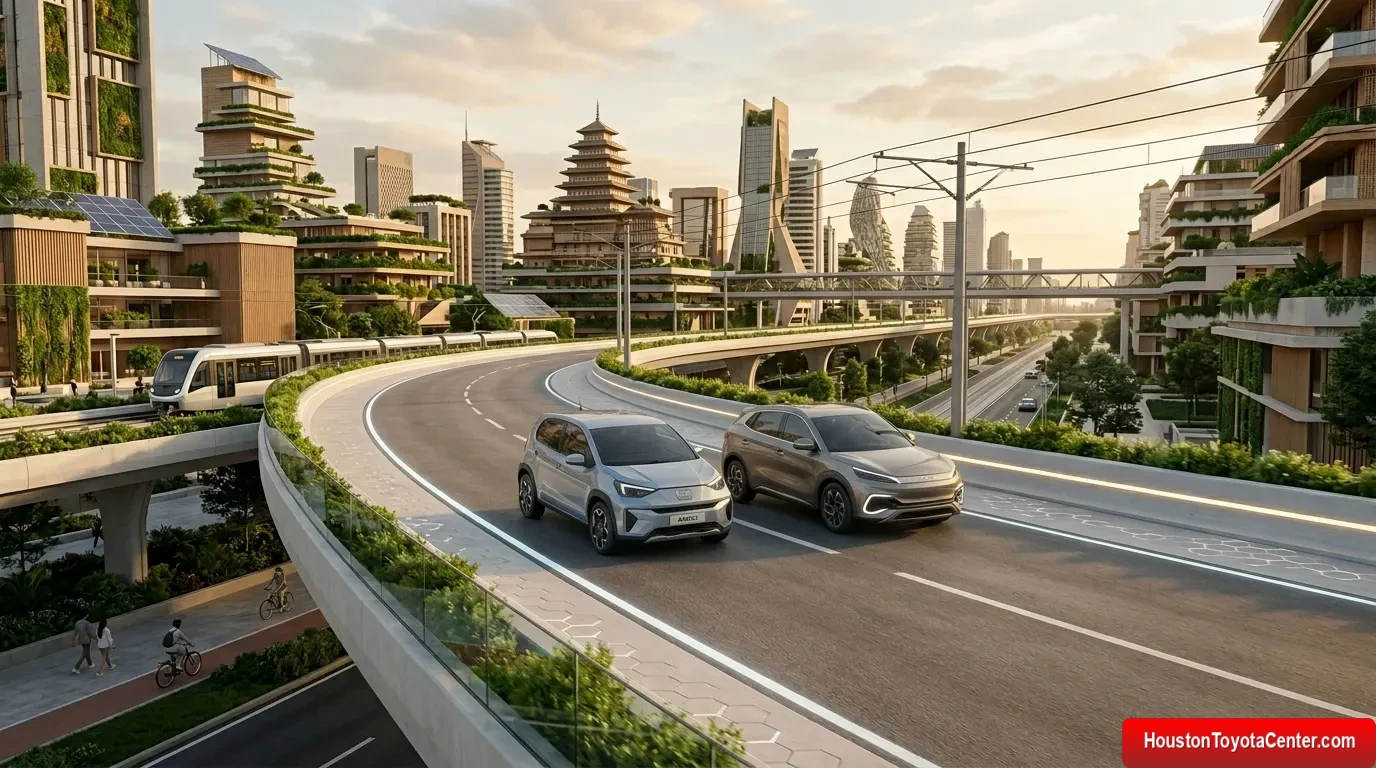
The global automotive industry is experiencing one of the most significant transformations in its history. For decades, the market was dominated by a relatively small group of manufacturers from North America, Western Europe, and Japan. Brands from countries such as the United States, Germany, France, Italy, and Japan shaped consumer expectations, engineering standards, manufacturing systems, and automotive culture across the world. In developing economies, imported vehicles or locally assembled foreign brands often represented the highest aspiration of mobility and industrial progress.
That dynamic is changing rapidly.
Across Asia, Latin America, the Middle East, and Africa, local car brands are emerging with increasing confidence and influence. These companies are no longer limited to producing low-cost copies or assembling foreign models under license. Instead, many are designing their own vehicles, building advanced manufacturing ecosystems, developing electric mobility solutions, and competing directly with established global automakers.
FREE: Quickly identify and understand problems with your vehicle 🚘
CLICK HEREThe rise of local car brands in developing economies reflects deeper economic and geopolitical changes. Growing middle classes, rapid urbanization, government industrial policies, technological democratization, and shifting supply chains have created new opportunities for domestic manufacturers. At the same time, the transition toward electric vehicles has disrupted the traditional hierarchy of automotive engineering, allowing newer companies to challenge older incumbents.
This transformation is not happening in one country alone. China has become the most powerful example, with domestic brands evolving from low-cost alternatives into global automotive leaders. India is strengthening its own automotive ecosystem through companies that understand local road conditions and consumer needs better than many foreign rivals. Brazil continues to maintain a strong industrial base while encouraging regional innovation. Vietnam is attempting to establish itself as a new automotive manufacturing hub. African countries are also experimenting with local assembly and indigenous brands aimed at increasing industrial independence.
The growth of local car brands matters far beyond transportation. Automotive manufacturing influences steel production, electronics, software engineering, logistics, battery development, artificial intelligence, telecommunications, and employment. Countries capable of building competitive car industries often strengthen their broader industrial capacity and technological capabilities.
At the same time, the rise of local automotive brands introduces complex questions. Can these companies compete internationally? Will they achieve long-term profitability? Can developing economies create globally respected automotive identities? How will established Western and Japanese automakers respond to increasingly capable competitors from emerging markets?
The answers to these questions will shape the future of global manufacturing, trade, energy systems, and urban mobility.
Why Local Car Brands Are Growing Faster Than Ever
Several structural factors explain why local automotive brands are gaining momentum in developing economies.
The first factor is economic growth. As incomes rise in emerging markets, demand for personal transportation expands dramatically. Millions of consumers who previously relied on motorcycles, public transportation, or used imports are now entering the market for affordable new vehicles.
Historically, multinational automakers captured most of this demand. However, local brands increasingly recognize that they possess unique advantages. They understand local driving environments, road quality, weather conditions, consumer priorities, and price sensitivity better than foreign competitors.
In many developing economies, consumers prioritize durability, fuel efficiency, affordability, and low maintenance costs over luxury branding or high-performance engineering. Local companies often build vehicles specifically optimized for these needs.
For example, a car designed for heavily congested urban traffic in India may differ dramatically from one designed for highways in Germany or suburban commuting in the United States. Suspension systems, fuel economy targets, cooling systems, cabin layout, and repair accessibility all become important competitive factors.
The second major factor is industrial policy.
Many governments view automotive manufacturing as a strategic industry capable of accelerating economic development. As a result, governments frequently offer:
- Tax incentives
- Import restrictions
- Local manufacturing requirements
- Research subsidies
- Infrastructure support
- Battery production incentives
- Export assistance
- Public procurement programs
These policies encourage domestic companies to invest in manufacturing capacity and technological development.
The third factor is the evolution of global supply chains.
In the past, building a competitive automotive company required decades of engineering experience and massive industrial infrastructure. Today, many technologies can be sourced from specialized suppliers. Components such as batteries, infotainment systems, sensors, electric drivetrains, and semiconductors are increasingly modular.
This allows newer automotive companies to enter the market faster and at lower cost.
The fourth factor is electrification.
Electric vehicles reduce some of the traditional advantages held by established automakers. Internal combustion engines involve highly complex mechanical systems developed over more than a century. Electric drivetrains are mechanically simpler and easier for new manufacturers to adopt.
As the industry shifts toward software-defined vehicles and battery platforms, newer companies can compete more effectively.
China: The Most Powerful Automotive Transformation
No country illustrates the rise of local car brands more dramatically than China.
For years, Chinese automotive companies were viewed primarily as low-cost manufacturers producing inexpensive vehicles for domestic consumption. International consumers often questioned their reliability, design quality, and engineering standards.
Today, that perception is changing rapidly.
Chinese automotive companies now lead in several critical areas, including electric vehicle production, battery manufacturing, digital integration, and supply chain scale.
Companies such as BYD, Geely, Chery, NIO, XPeng, and Li Auto have become major players not only in China but increasingly in international markets.
The rise of Chinese brands did not happen overnight. It resulted from decades of strategic investment, government coordination, infrastructure development, and market expansion.
The Importance of Government Support
The Chinese government identified automotive manufacturing as a strategic priority early in the country’s industrial modernization process.
Initially, foreign automakers entering China were often required to form joint ventures with domestic companies. This structure allowed local firms to gain manufacturing experience, technological exposure, and supply chain knowledge.
At the same time, China invested heavily in:
- Transportation infrastructure
- Industrial parks
- Ports
- Battery production
- Rare earth processing
- Semiconductor capabilities
- Research institutions
- Electric charging networks
These investments created an environment where domestic automotive companies could scale rapidly.
Electric Vehicles Changed the Competitive Landscape
Electric mobility became a turning point.
Rather than attempting to dominate traditional internal combustion engineering immediately, many Chinese firms focused aggressively on electric vehicles. This strategy allowed them to bypass some of the historical strengths of Western and Japanese automakers.
Battery technology became especially important.
China now controls a large share of global battery manufacturing capacity. Companies such as CATL became world leaders in battery production, giving Chinese automakers a major strategic advantage.
The relationship between battery manufacturing and vehicle production created powerful industrial synergies.
The result is that Chinese automakers can often produce electric vehicles at significantly lower cost than competitors in Europe or North America.
Consumer Technology Integration
Another major advantage of Chinese automotive brands is their integration of digital technology.
Chinese consumers often expect vehicles to function as extensions of their digital lifestyles. As a result, local automakers emphasize:
- Large touchscreen interfaces
- Voice assistants
- AI-powered features
- Smartphone integration
- Connected services
- Autonomous driving systems
- Software updates
- Advanced infotainment ecosystems
Many Chinese brands move faster than traditional automakers when implementing new digital features.
This software-focused approach aligns closely with broader changes in the automotive industry.
Chinese Brands Expanding Globally
Chinese automotive exports have grown rapidly.
Markets in Southeast Asia, Latin America, the Middle East, and parts of Europe increasingly import vehicles from Chinese brands. In many cases, these vehicles offer competitive pricing, modern technology, and attractive designs.
Some Western manufacturers initially underestimated Chinese competition. However, Chinese electric vehicles now represent a serious challenge to established global brands.
The transformation of China’s automotive sector demonstrates how quickly industrial leadership can evolve when government strategy, market size, and technological disruption align.
India’s Automotive Revolution
India represents another powerful example of local automotive growth.
The Indian market differs significantly from China in terms of income levels, infrastructure, consumer preferences, and transportation habits. Nevertheless, India has built one of the world’s largest automotive industries.
Indian car manufacturers developed by focusing intensely on affordability, practicality, and efficiency.
Understanding Indian Consumers
Indian consumers often prioritize value more than prestige.
Cars in India must operate under demanding conditions:
- Congested roads
- Extreme temperatures
- Variable fuel quality
- Limited parking space
- Diverse terrain
- Long-distance family travel
- Cost-sensitive maintenance environments
Local manufacturers gained an advantage by designing vehicles specifically for these realities.
Compact dimensions, efficient fuel consumption, and durable engineering became essential.
Tata Motors and Mahindra
Companies such as Tata Motors and Mahindra & Mahindra became symbols of India’s automotive ambitions.
Tata Motors expanded from commercial vehicles into passenger cars while also acquiring prestigious international brands such as Jaguar and Land Rover. This acquisition provided global engineering expertise while enhancing the company’s international profile.
Mahindra built a reputation for rugged utility vehicles suited to rural and semi-urban conditions. The company later expanded into electric mobility and international markets.
Both firms illustrate how local manufacturers can evolve from domestic specialists into globally recognized automotive players.
India’s Electric Vehicle Potential
India’s electric vehicle market remains smaller than China’s, but growth is accelerating.
Government initiatives encouraging electrification include:
| Initiative | Objective |
|---|---|
| Subsidies for EV purchases | Increase consumer adoption |
| Charging infrastructure investments | Expand accessibility |
| Battery manufacturing incentives | Reduce import dependence |
| Local manufacturing programs | Strengthen domestic industry |
| Public transportation electrification | Reduce pollution |
Indian automakers increasingly recognize that electric vehicles may allow them to compete more effectively against established global rivals.
Unlike traditional internal combustion platforms, electric mobility creates opportunities for newer entrants to innovate quickly.
Startups and Innovation
India is also witnessing the emergence of automotive startups focused on electric scooters, compact urban vehicles, fleet mobility, and battery technologies.
This broader ecosystem contributes to industrial innovation beyond traditional passenger vehicles.
As software development and digital services become more integrated into mobility, India’s strong technology sector may become an additional competitive advantage.
Southeast Asia and the New Automotive Frontier
Southeast Asia has become one of the most important regions for future automotive growth.
Countries such as Thailand, Indonesia, Vietnam, and Malaysia are increasingly investing in domestic automotive capabilities.
Thailand: The Detroit of Southeast Asia
Thailand developed a major automotive manufacturing ecosystem over several decades.
The country became an important production hub for Japanese automakers, especially in pickup trucks and compact vehicles.
This industrial foundation helped Thailand build:
- Skilled labor pools
- Supplier networks
- Export infrastructure
- Engineering expertise
- Manufacturing experience
While foreign brands still dominate much of Thailand’s automotive sector, local participation in the supply chain has expanded significantly.
Thailand is also investing heavily in electric vehicle production.
Indonesia’s Battery Ambitions
Indonesia possesses one of the world’s largest nickel reserves, making it strategically important in the global battery industry.
Nickel is a key component in many electric vehicle batteries.
The Indonesian government aims to move beyond raw material exports by developing domestic battery manufacturing and electric vehicle production.
This strategy reflects a broader trend among developing economies: the desire to capture more value within industrial supply chains rather than remaining commodity exporters.
Vietnam and VinFast
Vietnam’s VinFast represents one of the boldest automotive experiments in the developing world.
Rather than slowly building a domestic automotive sector over decades, Vietnam attempted to accelerate the process through aggressive investment and international partnerships.
VinFast moved rapidly into electric vehicles while pursuing global expansion strategies.
The company invested in:
- Advanced manufacturing facilities
- Battery development
- International showrooms
- Software integration
- Global marketing campaigns
Although VinFast faces significant challenges, its emergence demonstrates the ambition increasingly visible among developing economies.
Local brands no longer seek merely to survive domestically. Many aim to become global competitors.
Latin America’s Automotive Potential
Latin America has long maintained important automotive industries, particularly in Brazil, Mexico, and Argentina.
Historically, many factories in the region focused on assembly operations for foreign brands. However, local innovation and regional manufacturing capabilities are growing.
Brazil’s Industrial Base
Brazil possesses one of the largest automotive markets in the developing world.
The country developed substantial manufacturing capacity over decades through industrial policy and domestic demand.
Brazilian consumers often require vehicles adapted to local realities such as:
- Long travel distances
- Variable road quality
- Ethanol fuel compatibility
- Tropical climates
- Urban congestion
This encouraged regional adaptation and engineering specialization.
Brazil also became a leader in flex-fuel vehicle technology because of its ethanol industry.
The Importance of Regional Manufacturing
Latin America’s automotive future may depend heavily on regional integration.
Developing localized supply chains can reduce dependence on imports while strengthening industrial resilience.
However, challenges remain significant:
| Challenge | Impact |
| Currency instability | Raises production costs |
| Political uncertainty | Discourages investment |
| Infrastructure gaps | Increases logistics expenses |
| High financing costs | Reduces consumer demand |
| Import competition | Pressures local firms |
Despite these difficulties, Latin America remains an important automotive market with strong long-term potential.
Electric Mobility in Latin America
Electric vehicle adoption in Latin America is still developing, but momentum is increasing.
Governments and companies are exploring opportunities in:
- Electric buses
- Urban mobility fleets
- Battery assembly
- Renewable energy integration
- Charging infrastructure
Countries capable of aligning clean energy resources with transportation electrification may gain strategic advantages in the coming decades.
Africa’s Emerging Automotive Ecosystem
Africa remains one of the least motorized regions in the world, yet it may represent one of the automotive industry’s most important long-term growth opportunities.
Population growth, urbanization, and rising incomes are gradually increasing vehicle demand.
Several African countries are exploring local automotive manufacturing as part of broader industrialization strategies.
South Africa’s Automotive Industry
South Africa maintains the continent’s most developed automotive manufacturing sector.
The country produces vehicles for both domestic consumption and export markets.
Its industrial base includes:
- Component manufacturing
- Assembly plants
- Logistics infrastructure
- Skilled labor
- Export relationships
South Africa demonstrates that advanced automotive production is possible within Africa under the right economic conditions.
New Local Brands Across Africa
Several African entrepreneurs and governments are attempting to build indigenous automotive brands.
These projects often focus on:
- Affordable transportation
- Utility vehicles
- Electric motorcycles
- Solar-powered mobility
- Commercial fleets
- Rural transportation solutions
In many cases, local innovation is driven by practical necessity rather than luxury aspirations.
Infrastructure Challenges
African automotive development faces substantial obstacles.
These include:
- Limited road infrastructure
- High import costs
- Weak financing systems
- Electricity reliability issues
- Limited supplier ecosystems
- Political instability in some regions
Nevertheless, technological change may help African countries leapfrog certain traditional stages of industrial development.
Electric mobility, decentralized energy systems, and digital payment technologies could support new transportation models better suited to African realities.
The Strategic Role of Electric Vehicles
Electric vehicles are reshaping the global automotive hierarchy.
For more than a century, established automakers accumulated enormous advantages through expertise in internal combustion engineering, manufacturing scale, brand recognition, and dealer networks.
The transition toward electric mobility weakens some of those advantages.
Why EVs Benefit New Entrants
Electric vehicles contain fewer moving parts than traditional gasoline-powered cars.
This simplifies several aspects of manufacturing and maintenance.
While EV development still requires substantial expertise, the barriers to entry may be lower compared with mastering advanced combustion engine technology.
New companies can focus on:
- Battery integration
- Software systems
- User interfaces
- Digital ecosystems
- Autonomous driving technologies
- Manufacturing automation
rather than decades of engine optimization.
Batteries as Strategic Assets
Battery production has become one of the most important strategic industries in the world.
Countries and companies that control battery supply chains gain major economic and geopolitical advantages.
Critical materials include:
| Material | Importance |
| Lithium | Energy storage |
| Nickel | Battery density |
| Cobalt | Stability and durability |
| Graphite | Battery anodes |
| Rare earth elements | Motors and electronics |
Developing economies rich in these resources increasingly seek to move up the value chain.
Rather than exporting raw materials alone, governments aim to develop battery processing, component manufacturing, and vehicle assembly industries.
Software-Defined Vehicles
Modern vehicles increasingly resemble computers on wheels.
Software now influences:
- Navigation
- Driver assistance
- Energy management
- Entertainment systems
- Vehicle diagnostics
- Autonomous functions
- Connectivity services
This creates opportunities for countries with strong technology sectors.
Companies capable of combining automotive engineering with software innovation may dominate future mobility markets.
National Pride and Consumer Identity
The rise of local car brands is not purely economic.
National identity and consumer psychology also play important roles.
In many developing economies, successful local automotive brands symbolize technological progress, industrial capability, and national confidence.
Consumers may increasingly support domestic companies as expressions of economic patriotism.
This phenomenon is visible in several markets.
Chinese consumers, for example, have become far more willing to purchase domestic brands than in previous decades.
As product quality improved, local brands gained legitimacy and prestige.
A similar trend can emerge elsewhere when domestic manufacturers demonstrate reliability, innovation, and strong design capabilities.
Challenges Facing Local Automotive Brands
Despite rapid progress, local car brands in developing economies face significant obstacles.
Global Competition
The automotive industry remains intensely competitive.
Established multinational companies possess:
- Massive financial resources
- Global dealer networks
- Advanced research capabilities
- Strong brand loyalty
- Manufacturing scale
- Decades of engineering experience
Competing against such firms requires enormous investment.
Profitability Pressures
Many automotive startups struggle to achieve profitability.
Vehicle manufacturing involves:
- High capital expenditures
- Expensive research and development
- Complex logistics
- Strict safety regulations
- Warranty costs
- Supply chain risks
Even successful brands may require years before generating sustainable profits.
Quality and Trust
Consumers often associate established brands with reliability and resale value.
New local manufacturers must overcome skepticism regarding:
- Safety
- Durability
- Maintenance support
- Spare parts availability
- Long-term service quality
Building trust takes time.
Export Barriers
International expansion introduces additional complications.
Different countries maintain varying:
- Safety standards
- Emissions regulations
- Trade policies
- Tariff systems
- Certification requirements
Local brands attempting to expand globally must navigate these complex regulatory environments.
The Role of Supply Chains
Supply chain development is central to automotive success.
A competitive automotive industry depends on far more than vehicle assembly.
It requires ecosystems involving:
- Steel production
- Electronics manufacturing
- Semiconductor suppliers
- Chemical processing
- Battery production
- Software development
- Robotics
- Logistics networks
Countries capable of integrating these industries gain stronger industrial resilience.
Lessons from Recent Global Disruptions
The COVID-19 pandemic and semiconductor shortages exposed vulnerabilities in global supply chains.
Many countries realized they were heavily dependent on foreign suppliers for critical components.
As a result, governments increasingly support domestic manufacturing capacity.
This trend may accelerate the growth of local automotive ecosystems in developing economies.
Urbanization and Mobility Transformation
Rapid urbanization is changing transportation needs across the developing world.
Megacities face severe congestion, pollution, and infrastructure pressures.
Local automotive companies may possess advantages in designing mobility solutions tailored to these environments.
Future transportation systems could include:
- Compact electric cars
- Shared mobility fleets
- Subscription-based transportation
- Autonomous shuttles
- Electric motorcycles
- Smart city integration
Rather than copying Western automotive models directly, developing economies may create entirely different mobility ecosystems.
Sustainability and Environmental Pressures
Environmental concerns increasingly shape automotive strategy.
Air pollution, climate change, and energy security influence government policies worldwide.
Developing economies face a difficult balancing act.
They seek industrial growth and expanded mobility while also addressing environmental challenges.
Electric vehicles are often presented as a solution, but their success depends on broader energy systems.
Countries relying heavily on coal-generated electricity may achieve fewer environmental benefits from electrification compared with countries using cleaner energy sources.
Recycling and Circular Economies
Battery recycling and resource management will become increasingly important.
As EV adoption grows, countries capable of building efficient recycling industries may gain economic advantages.
Circular economy models could reduce dependence on imported raw materials while lowering environmental impact.
Technology Partnerships and International Collaboration
Many local automotive brands succeed through partnerships.
Collaboration with international firms can accelerate:
- Technology transfer
- Manufacturing expertise
- Software development
- Design capabilities
- Battery engineering
- Global distribution
Joint ventures remain common in developing markets.
However, local firms increasingly seek balanced partnerships that strengthen domestic capabilities rather than creating permanent dependence.
The Future of Automotive Employment
Automotive manufacturing creates millions of jobs globally.
The rise of local brands can significantly influence employment patterns in developing economies.
Potential benefits include:
| Economic Benefit | Description |
| Manufacturing jobs | Factory employment |
| Engineering careers | Technical workforce development |
| Supplier industries | Growth of component ecosystems |
| Software development | Digital mobility innovation |
| Export revenue | International market expansion |
| Infrastructure investment | Industrial modernization |
However, automation also presents challenges.
Modern automotive factories increasingly rely on robotics and AI-driven systems.
Countries must therefore invest not only in manufacturing but also in education and workforce development.
Geopolitics and Automotive Power
The automotive industry has become deeply intertwined with geopolitics.
Competition over batteries, semiconductors, rare earth minerals, and advanced manufacturing influences international relations.
Countries increasingly view automotive technology as strategically important.
Trade tensions, tariffs, export controls, and industrial subsidies are reshaping global competition.
The rise of local car brands in developing economies reflects broader shifts in global power.
Industrial leadership is becoming more geographically diverse.
Consumer Expectations Are Changing
Younger consumers often prioritize technology, connectivity, and affordability over traditional automotive prestige.
This shift may favor newer brands that are more agile and digitally focused.
Subscription services, online purchasing, over-the-air updates, and app-based ecosystems are transforming the customer experience.
Traditional dealership models may become less dominant over time.
Local brands that adapt quickly to changing consumer behavior could gain significant advantages.
Can Local Brands Become Global Giants?
One of the most important questions facing the automotive industry is whether local brands from developing economies can become true global leaders.
The answer increasingly appears to be yes.
Chinese companies already demonstrate global competitiveness in electric mobility.
Indian firms continue expanding their technological and manufacturing capabilities.
Southeast Asian companies are attracting international investment and building regional influence.
African and Latin American innovators are experimenting with new mobility solutions.
The next generation of automotive giants may emerge from countries previously considered peripheral to global industrial leadership.
Conditions for Long-Term Success
For local automotive brands to achieve lasting success, several factors will remain essential:
- Continuous innovation
- Manufacturing efficiency
- Strong supply chains
- Competitive pricing
- Brand trust
- Software integration
- International expansion strategies
- Sustainable profitability
- Talent development
- Infrastructure support
Companies capable of combining these elements may reshape the future of transportation.
The Psychological Shift in Global Markets
Perhaps the most profound transformation is psychological.
For decades, many consumers in developing economies assumed that the best vehicles would always come from Western countries or Japan.
That assumption is weakening.
As local brands improve quality, design, technology, and reliability, consumer perceptions evolve.
Success breeds confidence.
Confidence encourages investment.
Investment accelerates innovation.
Innovation strengthens competitiveness.
This cycle can fundamentally alter industrial hierarchies.
Conclusion
The rise of local car brands in developing economies represents one of the most important industrial transformations of the twenty-first century.
What began as localized manufacturing or low-cost assembly is evolving into a much broader movement involving technological ambition, industrial policy, software innovation, battery development, and geopolitical strategy.
Countries across Asia, Latin America, Africa, and the Middle East increasingly recognize that automotive manufacturing is about far more than transportation. It is connected to national competitiveness, energy systems, technological sovereignty, employment, and economic modernization.
Electric vehicles have accelerated this transformation by reducing some of the historical advantages held by traditional automotive powers. Software-defined mobility, battery supply chains, and digital ecosystems now matter as much as mechanical engineering expertise.
Chinese companies have demonstrated how rapidly local brands can rise when supported by scale, infrastructure, and technological investment. Indian firms show the importance of understanding local consumer realities and building cost-efficient mobility solutions. Southeast Asia is positioning itself as a manufacturing and battery powerhouse. Latin America continues to leverage regional industrial capacity, while African innovators experiment with transportation models adapted to local conditions.
Challenges remain significant. Profitability, international competition, infrastructure gaps, supply chain vulnerabilities, and regulatory complexity all create obstacles for emerging brands.
Yet the trajectory is clear.
The automotive world is becoming more decentralized, more competitive, and more technologically dynamic.
The next era of automotive leadership may not be defined solely by Detroit, Tokyo, Stuttgart, or Turin. Increasingly, it may also be shaped by Shenzhen, Mumbai, São Paulo, Jakarta, Hanoi, Nairobi, and countless other cities across the developing world.
Local car brands are no longer merely catching up.
Many are beginning to lead.
Leave a Reply