
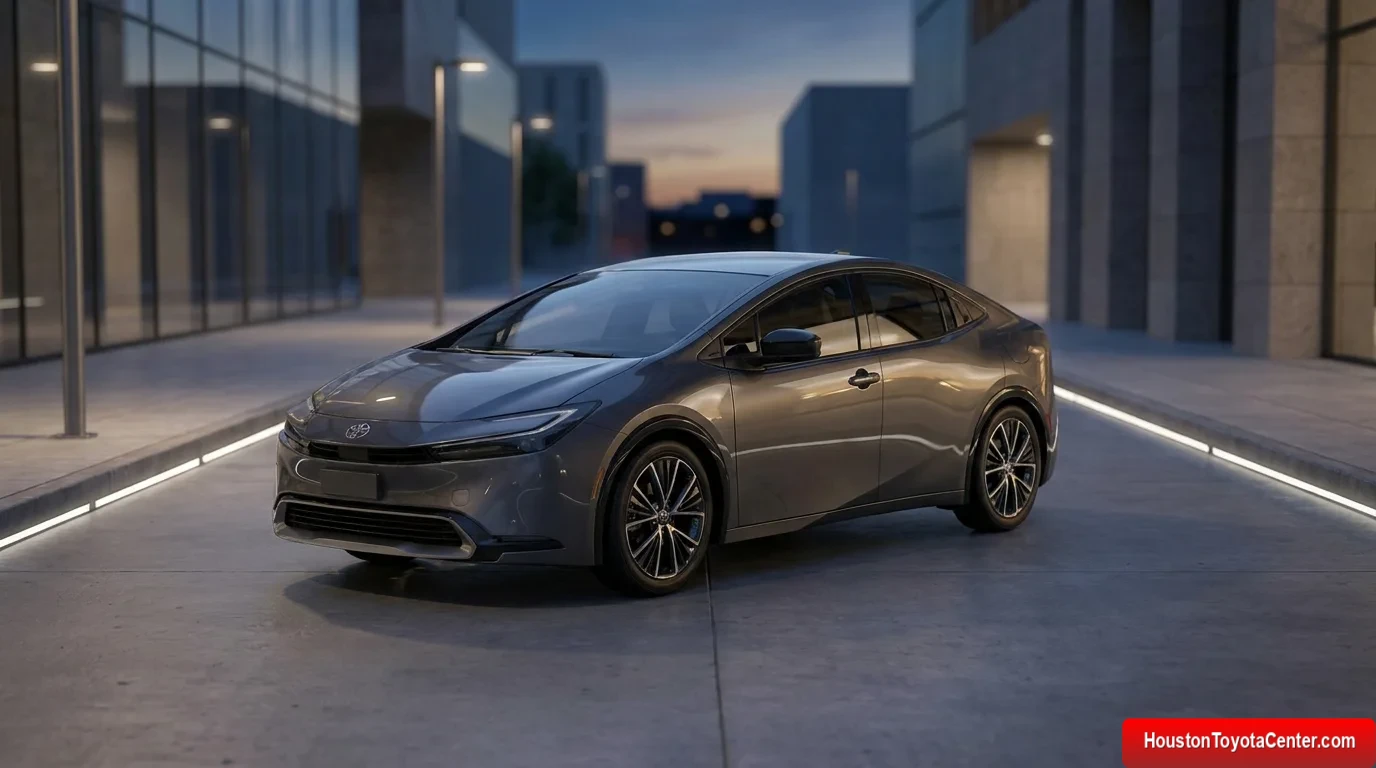
The automotive industry is in the middle of one of the biggest transitions in its history. Governments are pushing for lower emissions, consumers are demanding better fuel economy, and manufacturers are racing to electrify their lineups. In this evolving landscape, plug-in hybrids occupy a unique position. They promise the flexibility of gasoline power with the efficiency and silence of electric driving. Among all the vehicles competing in this category, the Toyota Prius Prime stands out as one of the most important and influential models.
For years, the Prius name has been synonymous with hybrid technology. Long before electric vehicles became mainstream, the Prius established itself as a symbol of efficiency and forward-thinking engineering. The Prius Prime takes that legacy further by blending traditional hybrid capabilities with meaningful electric-only driving range. It is not simply a hybrid with a larger battery. It represents a carefully balanced approach to transportation that addresses many of the limitations consumers still associate with fully electric vehicles.
The latest generation Prius Prime has transformed the reputation of the Prius brand. Earlier versions focused almost exclusively on fuel economy, often at the expense of styling and emotional appeal. The modern Prius Prime changes that narrative entirely. It delivers sleek design, surprisingly strong performance, advanced technology, and outstanding efficiency while remaining practical for everyday use.
This review explores the Prius Prime in depth, examining its design, performance, battery technology, driving dynamics, charging capabilities, practicality, safety, ownership experience, and long-term significance in the future of plug-in hybrids.
FREE: Quickly identify and understand problems with your vehicle 🚘
CLICK HEREA Radical Design Evolution
One of the biggest surprises about the Prius Prime is how dramatically Toyota changed its design philosophy. Previous generations of the Prius were intentionally unconventional, prioritizing aerodynamic efficiency above all else. While that approach helped fuel economy, it often alienated buyers who wanted a more attractive vehicle.
The latest Prius Prime looks entirely different. Toyota adopted a lower, wider, and more aggressive stance that gives the car a sporty and premium appearance. The sleek roofline, sculpted body panels, sharp LED lighting, and aerodynamic profile create a design that finally feels emotionally appealing rather than purely functional.
The front fascia is especially striking. Slim headlights integrate smoothly into a clean and modern nose design. The side profile emphasizes motion even when the vehicle is parked, while the rear adopts futuristic lighting elements that reinforce the Prius Prime’s high-tech identity.
Toyota also improved proportions significantly. The car sits lower than previous generations, which improves handling while giving the vehicle a more athletic silhouette. Larger wheel options further enhance its visual presence.
The redesign matters because it signals an important shift in the hybrid market. Consumers no longer want environmentally conscious vehicles that feel like compromises. They expect efficient cars to look exciting and modern. The Prius Prime acknowledges that efficiency and desirability can coexist.
Exterior Highlights
| Feature | Benefit |
|---|---|
| Aerodynamic body shape | Improves efficiency and reduces drag |
| LED lighting | Better visibility and premium styling |
| Lower ride height | Enhances handling and appearance |
| Sculpted side profile | Gives a sporty, dynamic look |
| Redesigned rear lighting | Adds futuristic visual identity |
The Prius Prime no longer blends into traffic as a purely practical commuter car. Instead, it attracts attention in a way earlier hybrids rarely did.
Interior Design and Comfort
Inside the cabin, Toyota made equally significant improvements. The interior of the Prius Prime feels modern, functional, and considerably more upscale than previous generations.
The dashboard design emphasizes simplicity and usability. A large infotainment display dominates the center area in higher trims, while physical controls remain available for important climate and vehicle functions. This balance between digital interfaces and tactile controls helps create a user-friendly environment.
Material quality has improved noticeably. Soft-touch surfaces, textured trim pieces, and thoughtful lighting details elevate the cabin experience. While the Prius Prime is not positioned as a luxury vehicle, it feels more refined than many competitors in the compact hybrid segment.
The seating position is lower and more engaging than older Prius models. Front seats offer good support for long-distance driving, and visibility remains excellent despite the sleek exterior shape.
Rear passenger space is respectable for a compact car, although the sloping roofline slightly impacts headroom for taller passengers. Legroom remains comfortable enough for adults during daily commuting and medium-length road trips.
Cargo space is practical, though not class-leading. The plug-in battery packaging slightly reduces total storage capacity compared to some traditional hatchbacks. However, the rear hatch opening remains wide and versatile for groceries, luggage, and everyday items.
Interior Features Overview
| Feature | Description |
| Large touchscreen | Modern infotainment interface |
| Wireless smartphone connectivity | Easy integration with devices |
| Digital instrument display | Clear driving information |
| Heated seats | Improved cold-weather comfort |
| Premium audio system | Enhanced entertainment experience |
| Multiple USB ports | Convenient device charging |
Toyota also focused heavily on ergonomics. Controls are intuitive, menus are easier to navigate than in older systems, and the overall layout feels less experimental and more refined.
Powertrain and Performance
Perhaps the most surprising aspect of the Prius Prime is how enjoyable it is to drive. Historically, the Prius prioritized efficiency above performance. Acceleration was often modest, and driving dynamics were designed primarily for comfort.
The new Prius Prime changes expectations significantly.
Toyota equipped the vehicle with a more powerful hybrid powertrain that combines a gasoline engine with electric motors and a larger battery pack. The result is noticeably quicker acceleration and a more responsive driving experience.
The vehicle delivers smooth power delivery, especially during electric-only driving. Instant electric torque gives the Prius Prime strong low-speed responsiveness in city environments. Merging onto highways and passing slower traffic feels considerably easier than in previous Prius generations.
One of the most important improvements is the seamless integration between gasoline and electric power. Transitions between the two systems occur smoothly and quietly, creating a refined driving experience.
Key Performance Characteristics
| Specification | Approximate Performance |
| Electric-only range | Around 40+ miles depending on conditions |
| Combined horsepower | Approximately 220 hp |
| Fuel efficiency | Extremely high combined MPG equivalent |
| Charging time | Several hours on standard charging |
| Drive modes | EV, Hybrid, Eco, Sport |
The availability of multiple drive modes allows drivers to tailor the experience to different situations.
- EV Mode prioritizes electric-only driving.
- Hybrid Mode balances gasoline and electric power automatically.
- Eco Mode maximizes efficiency.
- Sport Mode sharpens throttle response and steering feel.
Sport Mode deserves special attention because it changes perceptions of what a Prius can be. While the Prius Prime is not a sports car, it feels surprisingly energetic and responsive.
Electric Driving Experience
The electric-only driving capability is one of the Prius Prime’s defining features.
Many plug-in hybrids offer limited EV range that only covers short commutes. Toyota recognized that modern drivers want meaningful electric usability. The Prius Prime delivers enough electric range for many owners to complete daily driving without using gasoline at all.
For urban commuting, this transforms the ownership experience.
Electric driving is smooth, quiet, and relaxing. Stop-and-go traffic becomes far less stressful because the vehicle operates almost silently while delivering immediate torque.
The Prius Prime also excels at energy management. Regenerative braking captures energy during deceleration and sends it back to the battery, improving overall efficiency.
Drivers can even influence regenerative intensity through selectable settings, helping maximize electric range.
Benefits of Electric-Only Operation
| Benefit | Impact |
| Reduced fuel consumption | Lower operating costs |
| Quiet driving | Improved comfort |
| Instant torque | Better city responsiveness |
| Reduced emissions | Environmentally friendlier commuting |
| Home charging capability | Convenience and flexibility |
The electric driving range addresses one of the main concerns consumers have about EV adoption. Many drivers want electric commuting but remain worried about charging infrastructure or long-distance travel limitations.
The Prius Prime solves this by functioning as an EV during daily use while retaining gasoline flexibility for road trips.
Fuel Economy and Efficiency
Efficiency remains central to the Prius Prime identity.
Toyota engineered the vehicle to maximize every aspect of energy usage. The result is one of the most efficient plug-in hybrids available.
When operating in hybrid mode, fuel economy remains exceptional. Even after the battery charge is depleted, the Prius Prime continues delivering impressive efficiency numbers thanks to Toyota’s decades of hybrid expertise.
Aerodynamics play a major role in this achievement. The sleek body shape reduces drag significantly, allowing the vehicle to maintain efficiency at highway speeds.
Weight optimization also contributes to performance and efficiency. Toyota carefully balanced battery capacity with overall vehicle mass to avoid excessive weight penalties.
The heat management systems further improve efficiency by optimizing battery temperature and powertrain operation.
Real-World Efficiency Advantages
| Driving Scenario | Typical Efficiency Benefit |
| Short urban commutes | Mostly electric driving |
| Mixed driving | Excellent hybrid MPG |
| Highway travel | Strong aerodynamic efficiency |
| Daily charging routines | Minimal gasoline use |
| Long-distance trips | No range anxiety |
For many owners, fuel station visits become infrequent. Drivers who charge consistently may use gasoline only occasionally.
This dramatically reduces operating costs over time.
Charging Experience
Charging simplicity is another area where the Prius Prime performs extremely well.
Unlike fully electric vehicles that may require extensive charging planning, the Prius Prime uses a relatively modest battery size that can be charged easily overnight.
Most owners can charge the vehicle at home using standard household outlets. Faster Level 2 charging options reduce charging times further.
The convenience factor is significant. Drivers simply plug the car in during the evening and wake up with a fully charged battery ready for electric commuting.
Toyota also designed intuitive charging interfaces and scheduling systems. Owners can program charging times to take advantage of lower electricity rates during off-peak hours.
Charging Comparison
| Charging Method | Approximate Charging Time |
| Standard household outlet | Overnight charging |
| Level 2 charger | Faster multi-hour charging |
| Public charging stations | Convenient top-ups |
Because the Prius Prime does not rely exclusively on charging infrastructure, owners avoid many of the frustrations associated with public charging networks.
This balance between electric convenience and gasoline backup is one of the strongest arguments in favor of plug-in hybrids.
Technology and Connectivity
Modern consumers expect advanced technology features, and the Prius Prime delivers a strong suite of digital tools.
The infotainment system supports smartphone integration through major connectivity platforms. Wireless functionality reduces cable clutter and improves convenience.
Navigation systems include charging-related information and energy monitoring tools that help drivers understand efficiency patterns.
Toyota also integrated advanced driver assistance technologies into the Prius Prime.
Technology Features
| Technology | Purpose |
| Adaptive cruise control | Easier highway driving |
| Lane keeping assistance | Improved safety |
| Blind spot monitoring | Better awareness |
| Smartphone integration | Seamless connectivity |
| Energy flow displays | Real-time efficiency monitoring |
| Over-the-air updates | Software improvements |
The digital experience feels much more mature and polished than earlier hybrid systems.
Drivers can monitor battery usage, electric range, regenerative braking activity, and overall efficiency through detailed interfaces.
This educational component is important because it helps owners optimize driving habits for maximum efficiency.
Driving Dynamics and Ride Quality
Another major transformation for the Prius Prime is its driving character.
Older Prius models often prioritized efficiency at the expense of engagement. Steering could feel numb, acceleration modest, and handling uninspiring.
The newest Prius Prime changes that perception considerably.
Toyota lowered the center of gravity by placing battery components strategically within the chassis. This improves cornering stability and overall balance.
The suspension tuning strikes an effective compromise between comfort and responsiveness. The car absorbs rough roads well while remaining composed during spirited driving.
Steering response is sharper than expected for an efficiency-focused vehicle. Body roll is controlled effectively, and highway stability feels excellent.
Noise insulation has also improved significantly.
Electric operation is naturally quiet, but Toyota also reduced wind and road noise during gasoline operation. The result is a calmer cabin environment during long journeys.
Ride and Handling Characteristics
| Category | Driving Impression |
| Steering | Responsive and predictable |
| Ride comfort | Smooth but controlled |
| Cornering | Stable and composed |
| Cabin noise | Impressively quiet |
| Highway stability | Confident at speed |
The Prius Prime demonstrates that environmentally conscious vehicles no longer need to sacrifice driving enjoyment.
Safety and Reliability
Toyota has built a global reputation for reliability, and the Prius Prime benefits heavily from that engineering philosophy.
Hybrid systems developed by Toyota have proven exceptionally durable over millions of vehicles worldwide. The Prius family in particular has earned strong long-term reliability records.
Safety is another core strength.
The Prius Prime includes comprehensive active and passive safety systems designed to prevent accidents and protect occupants.
Safety Systems
| Safety Feature | Function |
| Automatic emergency braking | Helps avoid collisions |
| Pedestrian detection | Improves urban safety |
| Lane departure warning | Prevents unintended drifting |
| Adaptive headlights | Better nighttime visibility |
| Rear cross-traffic alert | Safer reversing |
| Multiple airbags | Enhanced occupant protection |
Toyota’s safety suite works effectively without feeling overly intrusive.
The vehicle continuously monitors surrounding traffic conditions and assists the driver in maintaining safe operation.
Reliability matters especially in electrified vehicles because consumers often worry about battery longevity and repair costs.
Toyota addresses these concerns through extensive testing, battery management systems, and long warranty coverage.
Ownership Costs
One of the strongest arguments for the Prius Prime is its long-term cost efficiency.
While plug-in hybrids may initially cost more than conventional compact cars, lower operating expenses can offset that difference over time.
Electric driving dramatically reduces fuel consumption. Maintenance costs also tend to be lower because regenerative braking reduces brake wear and hybrid systems optimize engine operation.
Toyota’s reputation for durability further strengthens the ownership equation.
Ownership Cost Factors
| Expense Category | Prius Prime Advantage |
| Fuel costs | Significantly reduced |
| Maintenance | Lower wear on components |
| Resale value | Historically strong Prius reputation |
| Reliability | Proven hybrid engineering |
| Insurance | Competitive in many markets |
Government incentives in some regions may further improve affordability.
Tax credits, rebates, and reduced registration fees can make plug-in hybrids more accessible.
Environmental Impact
The Prius Prime occupies an important environmental middle ground.
Fully electric vehicles eliminate tailpipe emissions during operation, but they still face challenges involving battery production, charging infrastructure, and energy grid variation.
Traditional gasoline vehicles remain heavily dependent on fossil fuels.
Plug-in hybrids like the Prius Prime attempt to combine the strengths of both approaches.
For short commutes, the vehicle can operate primarily as an EV. For long-distance travel, the gasoline engine eliminates charging concerns.
This flexibility can reduce emissions substantially, especially for drivers who charge consistently.
Environmental Benefits
| Environmental Factor | Prius Prime Contribution |
| Lower fuel usage | Reduced fossil fuel dependence |
| Reduced urban emissions | Cleaner city driving |
| Efficient energy use | Optimized hybrid operation |
| Smaller battery than many EVs | Reduced raw material demand |
| Regenerative braking | Better energy recovery |
The Prius Prime demonstrates that meaningful environmental progress does not necessarily require an immediate transition to fully electric transportation.
Prius Prime vs Fully Electric Vehicles
One of the most interesting discussions surrounding the Prius Prime involves its relationship with fully electric vehicles.
Battery electric vehicles receive enormous attention from manufacturers, governments, and media outlets. Many analysts predict that EVs will dominate the future automotive landscape.
However, the transition remains uneven.
Charging infrastructure varies dramatically between regions. Apartment residents may lack home charging access. Long-distance travel still requires charging planning in many locations.
The Prius Prime addresses these challenges through flexibility.
Plug-In Hybrid vs EV Comparison
| Category | Prius Prime | Typical EV |
| Range anxiety | Minimal | Depends on infrastructure |
| Charging dependence | Low | High |
| Long-distance travel | Easy | Requires planning |
| Daily electric commuting | Excellent | Excellent |
| Fuel backup | Yes | No |
| Charging speed importance | Less critical | Very important |
For many consumers, plug-in hybrids represent a practical transitional technology.
They allow drivers to experience electric commuting without completely abandoning gasoline infrastructure.
Prius Prime vs Traditional Hybrids
The Prius Prime also competes against conventional hybrids.
Traditional hybrids already offer excellent fuel economy without requiring charging. So why choose a plug-in hybrid?
The answer depends largely on driving habits.
Drivers who regularly complete short commutes and can charge at home benefit enormously from plug-in capability.
Traditional Hybrid vs Plug-In Hybrid
| Feature | Traditional Hybrid | Prius Prime |
| External charging | No | Yes |
| Electric-only range | Limited | Substantial |
| Fuel savings potential | High | Extremely high |
| Upfront cost | Lower | Higher |
| EV driving experience | Minimal | Significant |
The Prius Prime effectively bridges the gap between conventional hybrids and EVs.
Real-World Daily Use
The true strength of the Prius Prime becomes apparent during daily ownership.
Morning commutes can occur entirely in electric mode. Errands around town often require no gasoline usage at all. Highway trips remain stress-free thanks to the gasoline engine.
This versatility is difficult to overstate.
Unlike some EV owners who must carefully monitor charging availability, Prius Prime drivers enjoy greater flexibility.
Cold weather performance is also more reassuring compared to some fully electric vehicles. While EV range can decline significantly in low temperatures, the Prius Prime always retains gasoline backup capability.
Families appreciate the practicality, commuters appreciate the efficiency, and environmentally conscious drivers appreciate the reduced emissions.
Everyday Advantages
| Daily Use Case | Prius Prime Benefit |
| Urban commuting | Quiet electric driving |
| Grocery runs | Efficient short-trip operation |
| Weekend travel | Unlimited practical range |
| Cold weather | Reliable gasoline backup |
| Traffic congestion | Smooth electric operation |
The Prius Prime fits naturally into a wide variety of lifestyles.
The Evolution of the Prius Brand
The Prius Prime is also important from a branding perspective.
For years, the Prius became associated primarily with practicality and efficiency. While that identity attracted loyal customers, it also limited broader appeal.
The newest Prius Prime changes public perception.
Toyota demonstrated that an efficient vehicle can also be stylish, technologically advanced, and enjoyable to drive.
This shift matters because consumer expectations have evolved.
Modern buyers increasingly demand vehicles that combine sustainability with emotional appeal.
The Prius Prime reflects this new reality.
Market Competition
The plug-in hybrid segment continues expanding as manufacturers seek alternatives to fully electric transitions.
Competitors include vehicles from Hyundai, Kia, Ford, and other global automakers.
However, Toyota retains several important advantages.
Competitive Strengths
| Area | Toyota Advantage |
| Hybrid experience | Decades of engineering expertise |
| Reliability reputation | Strong consumer trust |
| Efficiency optimization | Industry-leading hybrid systems |
| Dealer network | Broad service availability |
| Resale value | Historically strong market performance |
The Prius Prime’s blend of practicality, efficiency, reliability, and modern styling makes it especially competitive.
Challenges and Limitations
No vehicle is perfect, and the Prius Prime still faces some limitations.
Cargo space is somewhat constrained compared to larger crossovers. Rear headroom may feel tight for taller passengers due to the sloping roofline.
Some buyers may also prefer the simplicity of a traditional hybrid that requires no charging.
Others may choose fully electric vehicles for maximum environmental benefits.
Potential Drawbacks
| Limitation | Explanation |
| Higher purchase price | More expensive than standard hybrids |
| Limited cargo compared to SUVs | Compact hatchback design |
| Charging required for maximum benefit | Best ownership experience depends on charging access |
| Not fully electric | Still uses gasoline |
Despite these limitations, the Prius Prime remains exceptionally well balanced.
Why Plug-In Hybrids Still Matter
Some industry observers argue that plug-in hybrids are merely transitional technology.
However, the Prius Prime demonstrates why they continue to matter.
Global infrastructure development remains uneven. Millions of consumers still lack reliable charging access. Electricity generation methods vary dramatically between regions.
Plug-in hybrids offer a realistic pathway toward reduced emissions without forcing abrupt lifestyle changes.
They can significantly reduce gasoline usage immediately while allowing infrastructure to continue evolving.
For many drivers, this balance may remain attractive for years.
The Future of the Prius Prime
The Prius Prime provides insight into where electrified transportation may be heading.
Future plug-in hybrids will likely deliver:
- Longer electric ranges
- Faster charging capabilities
- Improved battery density
- More advanced driver assistance systems
- Greater software integration
- Better energy management
Toyota’s continued investment in hybrid and plug-in hybrid technology suggests the company sees long-term value in diversified electrification strategies.
Rather than focusing exclusively on battery EVs, Toyota appears committed to offering multiple pathways toward lower emissions.
The Prius Prime embodies that philosophy.
Consumer Appeal Across Different Audiences
One reason the Prius Prime is so compelling is its broad appeal.
For Commuters
Daily commuters benefit from low operating costs and electric-only driving capability.
For Families
Families appreciate reliability, safety, and practical flexibility.
For Technology Enthusiasts
Tech-focused buyers enjoy the advanced interfaces, energy management tools, and electrified driving experience.
For Environmentally Conscious Drivers
The ability to reduce emissions without sacrificing convenience makes the Prius Prime highly attractive.
For Long-Distance Travelers
Unlike many EVs, the Prius Prime remains easy to use on road trips.
This broad usability is one of the vehicle’s greatest strengths.
Driving Experience in Different Environments
City Driving
Urban environments are where the Prius Prime feels most natural.
Electric driving is smooth and silent, regenerative braking improves efficiency, and compact dimensions make parking easy.
Highway Driving
Highway performance is stable and refined. The improved powertrain delivers confident acceleration, while aerodynamic efficiency helps maintain strong fuel economy.
Mountain Roads
The lower center of gravity improves composure during cornering, and electric torque helps during uphill driving.
Heavy Traffic
Traffic congestion becomes less frustrating because electric operation eliminates much of the noise and vibration associated with traditional gasoline engines.
Battery Technology and Engineering
Battery technology plays a central role in the Prius Prime’s success.
Toyota designed the battery system to balance energy density, durability, weight, and thermal management.
Unlike some larger EV batteries, the Prius Prime’s battery pack focuses on practical usability rather than extreme range.
This smaller battery approach provides several benefits:
- Faster charging relative to size
- Reduced weight
- Lower manufacturing costs
- Potentially lower long-term replacement expenses
- Improved overall efficiency
Thermal management systems help maintain battery health across varying climates.
Toyota’s conservative engineering approach may also contribute to long-term durability.
Software and Energy Intelligence
Modern electrified vehicles rely heavily on software optimization.
The Prius Prime uses intelligent energy management systems to maximize efficiency automatically.
The vehicle constantly evaluates:
- Battery state of charge
- Driving conditions
- Terrain
- Speed
- Regenerative opportunities
- Power demand
These systems work together seamlessly to optimize fuel and electricity usage.
Drivers can simply operate the vehicle normally while the software handles most efficiency decisions automatically.
Resale Value and Long-Term Ownership
Toyota hybrids historically retain value well, and the Prius Prime is likely to continue that trend.
Several factors support strong resale performance:
- Toyota reliability reputation
- Continued interest in fuel-efficient vehicles
- Increasing demand for electrified transportation
- Proven hybrid technology
Long-term ownership confidence matters especially for consumers transitioning into electrified vehicles for the first time.
The Prius Prime offers reassurance through familiarity and proven engineering.
Cultural Impact of the Prius
The Prius has always been more than just a car.
It became a cultural symbol of environmental awareness and technological progress.
The newest Prius Prime modernizes that identity.
Rather than appearing purely utilitarian, it demonstrates that sustainable transportation can also be stylish and engaging.
This evolution may help broaden the appeal of efficient vehicles to audiences that previously ignored hybrids.
Is the Prius Prime the Ideal Transitional Vehicle?
Many consumers remain uncertain about committing fully to electric vehicles.
Common concerns include:
- Charging availability
- Battery degradation
- Long-distance travel
- Cold weather range loss
- Charging times
The Prius Prime addresses nearly all of these concerns while still delivering substantial electric driving capability.
In many ways, it represents an ideal transitional vehicle.
Drivers can gradually adapt to electric charging habits without sacrificing gasoline flexibility.
This incremental approach may prove extremely important during the broader global transition toward electrified transportation.
Final Verdict
The Toyota Prius Prime represents one of the most compelling plug-in hybrids currently available.
It successfully transforms the Prius identity from purely practical transportation into something genuinely desirable.
The sleek exterior styling, refined interior, improved performance, advanced technology, and exceptional efficiency create a vehicle that feels remarkably complete.
Most importantly, the Prius Prime solves a real-world problem.
Many consumers want the environmental and financial benefits of electric driving but remain hesitant about relying entirely on charging infrastructure.
The Prius Prime bridges that gap elegantly.
It allows owners to complete daily commuting with minimal or even zero gasoline usage while retaining the convenience of traditional fueling for longer trips.
This flexibility is incredibly valuable.
Rather than forcing consumers into an all-or-nothing transition, the Prius Prime offers a balanced and highly practical alternative.
The vehicle also proves that efficient transportation no longer needs to feel boring or compromised. Toyota created a plug-in hybrid that is attractive, enjoyable to drive, technologically sophisticated, and impressively economical.
As the automotive industry continues evolving, the Prius Prime stands as evidence that plug-in hybrids still have a meaningful role to play.
For many drivers around the world, it may represent the smartest and most realistic path toward electrified mobility.
Leave a Reply