
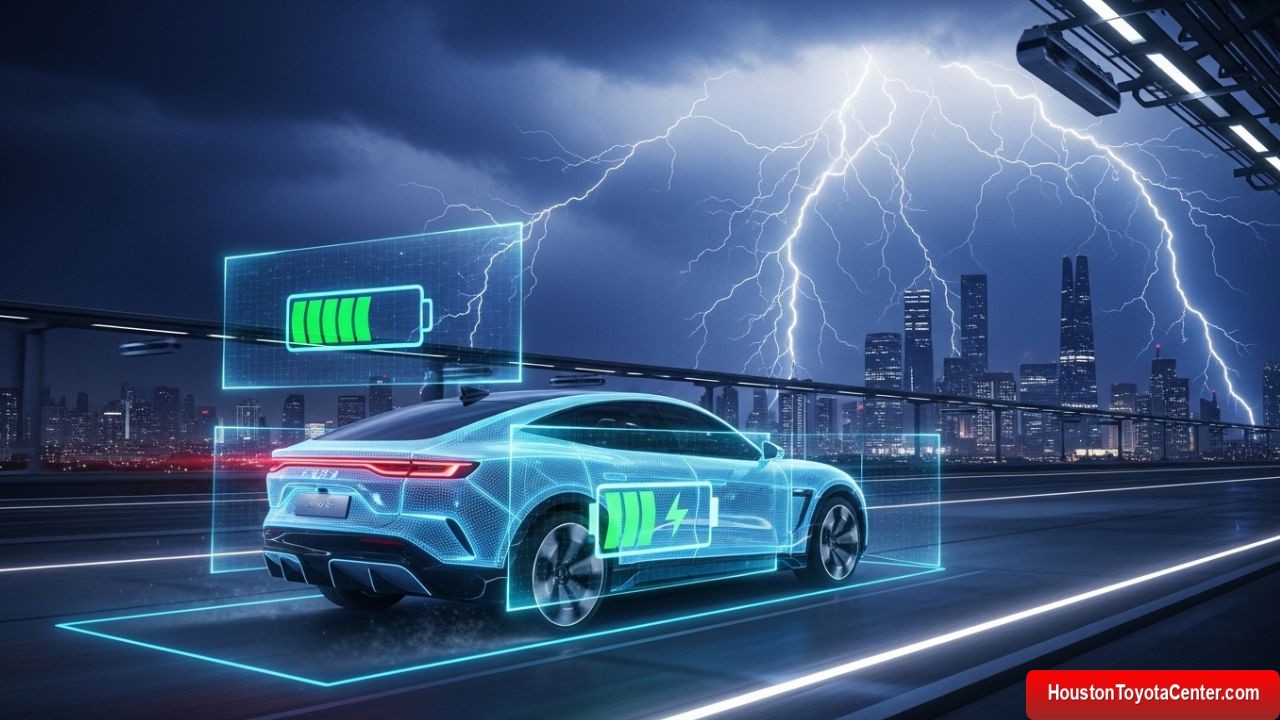
By 2030, the global automotive landscape will look dramatically different from what it was at the start of the 2020s. Electrification, software-defined vehicles, artificial intelligence, autonomous systems, hydrogen fuel cells, supply chain restructuring, and geopolitical shifts are reshaping how cars are designed, built, sold, and used. Few companies are as central to this transformation as Toyota Motor Corporation—a brand long associated with reliability, manufacturing excellence, and hybrid leadership.
For decades, Toyota built its global dominance on lean manufacturing, quality control, and cautious, incremental innovation. Yet the coming years demand more than incrementalism. By 2030, Toyota will likely evolve from being primarily a car manufacturer into a diversified mobility, software, and energy solutions company. The path there will not be without friction. But if Toyota executes well, it may once again redefine the industry—just as it did with hybrid vehicles in the late 1990s.
Below is a deep dive into what we can realistically expect from Toyota by 2030.
1. Electrification: From Hybrid Pioneer to EV Powerhouse?
Toyota’s reputation in electrification began with the launch of the Toyota Prius, widely recognized as the first mass-produced hybrid vehicle. For years, Toyota doubled down on hybrids while competitors aggressively pursued full battery-electric vehicles (BEVs). Critics accused Toyota of being slow in the EV race, especially compared to companies like Tesla, Inc..
FREE: Quickly identify and understand problems with your vehicle 🚘
CLICK HEREHowever, by 2030, Toyota’s electrification strategy will likely reveal itself as more nuanced than it first appeared.
Multi-Pathway Electrification Strategy
Toyota has consistently promoted a “multi-pathway” approach:
- Hybrid Electric Vehicles (HEVs)
- Plug-in Hybrid Electric Vehicles (PHEVs)
- Battery Electric Vehicles (BEVs)
- Hydrogen Fuel Cell Vehicles (FCEVs)
By 2030, expect:
- A dramatic expansion of Toyota’s global BEV lineup.
- Continued dominance in hybrid technology.
- Increased regional customization (BEVs in Europe/China, hybrids in emerging markets).
- Major cost reductions via in-house battery development.
Solid-State Batteries: A Potential Game-Changer
Toyota has heavily invested in solid-state battery research. If commercialized successfully by the late 2020s, solid-state batteries could offer:
- Higher energy density
- Faster charging times
- Improved safety
- Longer lifespan
Should Toyota achieve scalable production, it could leapfrog competitors. By 2030, even limited deployment in premium models would position Toyota as a technological leader rather than a cautious follower.
2. Software-Defined Vehicles and Digital Ecosystems
The future of the automobile is increasingly software-driven. By 2030, vehicles will function as connected digital platforms rather than mechanical machines.
Toyota has been building internal software capabilities through initiatives such as Woven by Toyota, which supports:
- Autonomous systems
- Advanced driver-assistance systems (ADAS)
- Cloud-connected services
- Over-the-air updates
Transition to Centralized Architecture
By 2030, Toyota vehicles will likely:
- Feature centralized computing platforms.
- Enable over-the-air updates for performance and safety.
- Integrate subscription-based features.
- Offer enhanced AI-driven personalization.
In a market increasingly defined by data and digital ecosystems, Toyota’s challenge will be competing with tech-native companies while maintaining its reputation for reliability.
3. Autonomous Driving: Cautious but Strategic
Unlike aggressive autonomy claims from some competitors, Toyota has taken a safety-first approach.
Its Guardian and Chauffeur systems represent two different philosophies:
- Guardian: Human-centric driver assistance.
- Chauffeur: Full automation capability.
By 2030, we can expect:
- Level 3 autonomy in select markets.
- Highly advanced ADAS across most models.
- Integration of AI-based hazard prediction systems.
- Fleet-based autonomous pilots in controlled environments.
Toyota’s conservative stance may pay off in regulatory trust and consumer confidence.
4. Hydrogen and the Energy Ecosystem
While many automakers focused almost exclusively on battery-electric vehicles, Toyota continued investing in hydrogen, particularly through the Toyota Mirai.
By 2030, hydrogen may not dominate passenger vehicles globally, but Toyota’s investment could yield:
- Commercial hydrogen truck solutions.
- Stationary fuel cell power generation systems.
- Partnerships in green hydrogen infrastructure.
Toyota’s vision extends beyond cars into a broader energy ecosystem where vehicles interact with renewable grids.
5. Manufacturing Revolution: Lean 2.0
Toyota pioneered the Toyota Production System (TPS), influencing global manufacturing for decades.
By 2030, expect a next-generation version of lean manufacturing:
| Area | 2020s Approach | 2030 Projection |
|---|---|---|
| Assembly | Modular platforms | Gigacasting + modular EV platforms |
| Batteries | External suppliers | Increased in-house production |
| Software | Tiered suppliers | Centralized software architecture |
| Supply Chain | Globalized | Regionalized & resilient |
Automation, AI-driven quality control, and flexible production lines will define Toyota’s factories of the future.
6. Mobility Services and Urban Integration
Toyota has expanded into mobility services through investments in ride-hailing, car-sharing, and urban planning projects.
One of the most ambitious examples is Woven City in Japan—a prototype smart city.
By 2030:
- Toyota may operate autonomous shuttle services.
- Mobility-as-a-Service (MaaS) subscriptions could become a recurring revenue stream.
- Urban micro-mobility solutions may complement vehicle ownership.
Toyota could transition from selling cars to selling mobility solutions.
7. Sustainability and Carbon Neutrality
Toyota has committed to carbon neutrality across its operations.
By 2030, we can expect:
- Increased renewable energy use in factories.
- Carbon-neutral manufacturing plants.
- Expanded battery recycling programs.
- Circular economy initiatives.
Toyota’s long-term credibility will depend on measurable sustainability achievements, not just product electrification.
8. Regional Strategy: China, Europe, and the U.S.
Different regions will shape Toyota’s future in distinct ways.
China
- Intense EV competition.
- Localization of software and connectivity.
- Joint ventures critical.
Europe
- Strict emissions regulations.
- Aggressive BEV rollout.
- Compact electric crossovers dominate.
United States
- Hybrid leadership.
- Growing EV adoption.
- Pickup truck electrification.
By 2030, Toyota’s ability to tailor its product mix regionally will determine its global competitiveness.
9. Performance and Enthusiast Identity
Toyota’s performance revival—via the GR (Gazoo Racing) lineup—signals that emotional driving remains important.
Models like:
- Toyota GR Supra
- Toyota GR Corolla
suggest Toyota does not intend to abandon driving enthusiasts.
By 2030:
- Hybrid or electric performance models are likely.
- Simulated manual interfaces in EVs may emerge.
- GR-branded electrified vehicles could redefine performance.
10. Financial Strength and Risk Management
Toyota remains one of the world’s largest automakers by volume and revenue. Its conservative financial management historically allowed it to weather crises better than many competitors.
By 2030:
- Revenue mix may shift toward software and services.
- Battery investments will require capital discipline.
- Partnerships and joint ventures will be strategic, not reactive.
Toyota’s resilience may prove as valuable as innovation.
11. Competitive Landscape
By 2030, Toyota will compete against:
- EV specialists.
- Tech companies entering mobility.
- Chinese EV manufacturers scaling globally.
Toyota’s advantages:
- Manufacturing expertise.
- Brand trust.
- Global dealer network.
- Hybrid technology leadership.
Its risks:
- Moving too slowly on full electrification.
- Software execution challenges.
- Margin pressure from price competition.
12. Brand Identity in 2030
Toyota’s brand may shift from:
“Reliable and practical”
to
“Reliable, intelligent, sustainable mobility leader.”
Brand perception will depend heavily on:
- EV execution.
- Software reliability.
- Sustainability credibility.
- Customer experience innovation.
13. Possible Scenarios for 2030
Scenario 1: Electrification Leader
Toyota successfully scales solid-state batteries and dominates global EV markets.
Scenario 2: Balanced Giant
Toyota remains hybrid-dominant but profitable and stable, sharing EV leadership.
Scenario 3: Disrupted Traditionalist
Competitors outpace Toyota in software and battery innovation.
The most realistic outcome is likely somewhere between Scenarios 1 and 2.
14. What Consumers Can Expect
By 2030, Toyota customers may experience:
- 10-minute ultra-fast charging (select models).
- Seamless smartphone integration.
- AI-driven safety systems.
- Subscription features.
- Expanded EV SUV and truck lineup.
- More affordable electrified options.
15. Conclusion: Evolution, Not Abandonment
Toyota’s future will not be defined by abandoning its core philosophy but by evolving it. The principles of continuous improvement (kaizen), quality, and long-term thinking remain deeply embedded in the company’s DNA.
By 2030, Toyota may look radically different from the outside—electric, connected, autonomous—but internally it will likely remain true to its disciplined engineering culture.
If solid-state batteries succeed, if software transitions are executed well, and if sustainability goals are met, Toyota could once again shape the direction of the automotive industry.
The next five years will determine whether Toyota becomes merely a participant in the electric revolution—or one of its architects.
Leave a Reply