
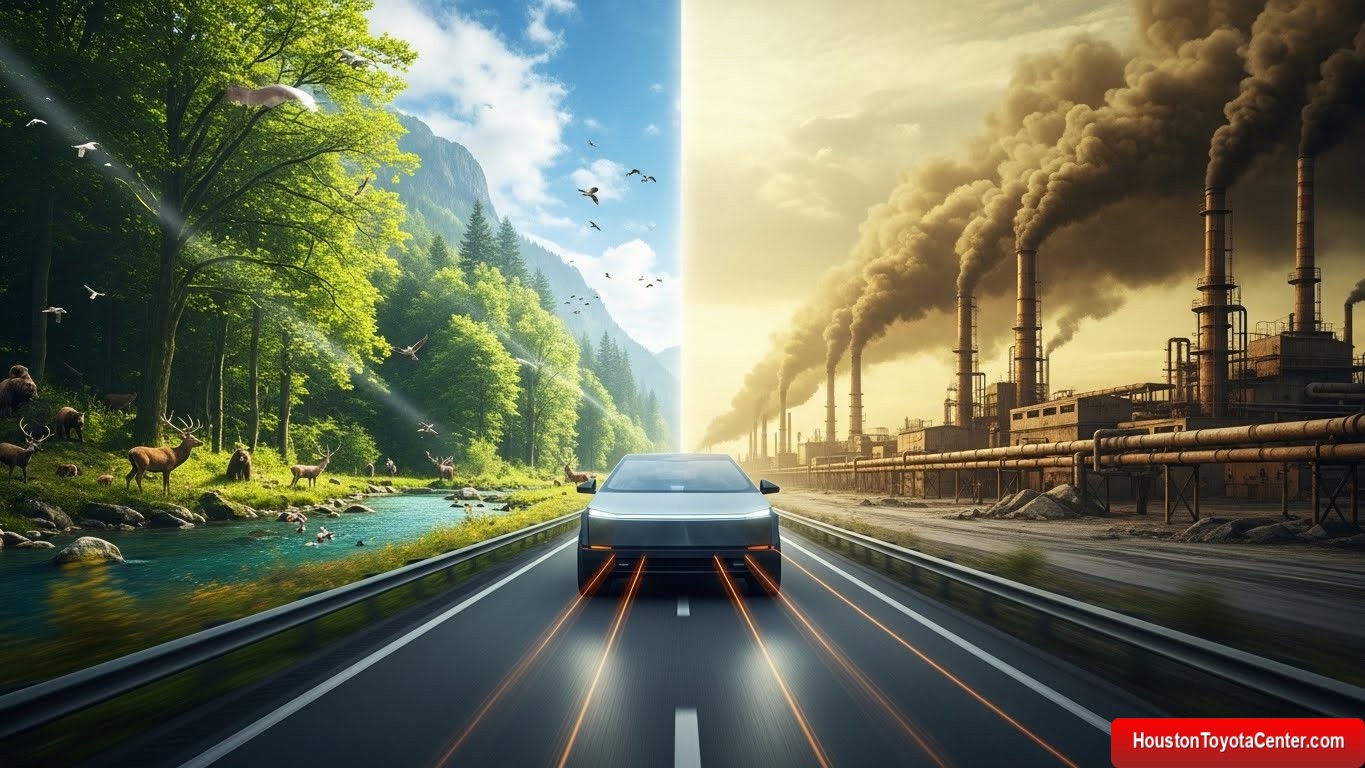
Car culture has long been an emblem of freedom, mobility, and personal identity—particularly in nations like the United States, Germany, Japan, and Australia. Cars have shaped cities, influenced industries, and become cultural artifacts imbued with meaning far beyond their mechanical purpose. Yet as concerns about pollution, climate change, and public health grew throughout the twentieth and twenty-first centuries, the environmental movement emerged as a powerful counterforce—questioning not only the environmental costs of automobiles but also the broader social structures that encourage car dependency.
The result is a dynamic, complex interaction between environmental activism and car culture—one that has reshaped technology, policy, consumer behavior, and even popular imagination. This article examines the environmental movement’s influence on car culture past and present, exploring how activists, scientists, policymakers, and automakers have negotiated the tension between sustainability and mobility.
1. Early Awareness: Pollution, Public Health, and the First Environmental Questions
Although environmental concerns about cars intensified in the 1960s and 1970s, the origins of the debate began much earlier. As early as the 1910s and 1920s, researchers noticed troubling signs of vehicle pollution. Large cities such as Los Angeles, London, and Chicago—already grappling with industrial smog—saw localized spikes in respiratory illness as car ownership increased. But these concerns remained largely overshadowed by cars’ rapid adoption.
By the 1950s, however, environmental scientists started understanding the chemistry of automobile exhaust more deeply. Smog in Los Angeles became a defining crisis—its yellow haze symbolizing the hidden cost of rapid motorization. Researchers like Arie Haagen-Smit identified the reactions between sunlight and hydrocarbons emitted by cars as a primary cause of photochemical smog. This discovery would later become a foundational argument for regulating vehicle emissions.
FREE: Quickly identify and understand problems with your vehicle 🚘
CLICK HEREAt this early stage, car culture responded defensively. Automobiles were culturally tied to modernity, prosperity, and national pride. As such, many resisted the idea that cars could be environmentally harmful. Automakers emphasized convenience and performance in advertising, rarely acknowledging ecological concerns. The public narrative was still dominated by the assumption that “progress” meant more cars, bigger cars, and faster cars.
Still, seeds of skepticism had begun to sprout, and these would soon grow into a global movement.
2. The 1960s–1970s: Birth of the Modern Environmental Movement
The environmental movement gained momentum in the 1960s, propelled by books like Rachel Carson’s Silent Spring, growing public distrust of industry, and highly visible ecological disasters. While Carson’s book focused on pesticides, its themes—corporate responsibility, scientific transparency, ecological interconnectedness—galvanized public consciousness and created fertile ground for broader environmental activism.
2.1 Smog, Oil Spills, and Public Outrage
Several high-profile pollution events made the environmental cost of industrialization impossible to ignore. In 1969, the Santa Barbara oil spill covered California beaches with sludge, killing thousands of marine animals. That same year, the Cuyahoga River famously caught fire due to industrial waste.
Cars were not the sole culprit, but they were symbolically and materially connected to oil extraction, air pollution, and American consumerism. Environmental activism now included automobile emissions as a central target.
2.2 Legislative Milestones That Remade the Automotive Landscape
The newly formed environmental movement helped shape landmark regulations that fundamentally changed car culture:
| Legislation/Policy | Year | Impact on Car Culture |
|---|---|---|
| Clean Air Act (USA) | 1970 | Required drastic reductions in vehicle emissions; automakers introduced catalytic converters. |
| Creation of the EPA | 1970 | Centralized authority over emission regulations. |
| Corporate Average Fuel Economy (CAFE) Standards | 1975 | Forced automakers to improve fuel efficiency in response to energy crisis. |
| Equivalent standards in Japan, EU, and Australia | 1970s–1980s | Encouraged global competition for cleaner engines. |
For the first time, governments directly tied vehicle performance to ecological impact. This catalyzed new automotive technologies: catalytic converters, unleaded gasoline, computerized engine management, and more aerodynamic designs.
2.3 Changing Cultural Narratives
Environmental consciousness reshaped how people viewed cars. The muscle car era of the late 1960s—dominated by horsepower-focused models like the Dodge Charger and Ford Mustang—collided with the new reality of emissions restrictions. Some enthusiasts lamented the “death of performance,” while others embraced a new era of efficiency.
The environmental movement helped introduce a reframing that persists today: the idea that cars are not just tools—they are contributors to climate and ecological systems.
3. The 1980s–1990s: Efficiency, Globalization, and Hybrid Beginnings
As environmental science advanced, public awareness began to shift. Acid rain, the hole in the ozone layer, and early discussions about global warming entered mainstream discourse. Automakers responded not only to regulation but to a new socially conscious market.
3.1 The Rise of Japanese Efficiency
Japanese automakers like Toyota, Honda, and Nissan gained global influence by offering fuel-efficient, reliable, and affordable cars. Environmental advocates often praised these models as alternatives to the larger, less efficient vehicles common in the U.S.
Cars like the Honda Civic and Toyota Corolla became symbols of responsibility and practicality, reshaping consumer priorities. The cultural narrative expanded beyond horsepower: MPG ratings, emissions scores, and fuel economy became mainstream talking points.
3.2 Early Hybrid Technology
The environmental movement’s push for cleaner cars led to breakthrough technologies:
- The Toyota Prius prototype debuted in 1995, with the production model launching in 1997 in Japan.
- Honda introduced the Insight in 1999.
- Critics initially mocked hybrids as “slow,” “unexciting,” or “ugly,” but environmental advocates embraced them as symbols of progress.
The hybrid became an ideological symbol—a car purchased not merely for utility, but as a statement of environmental identity. It was the first time since the 1970s that a new kind of car had penetrated cultural consciousness so deeply.
3.3 Environmentalism vs. Car Enthusiasts
Car enthusiasts had a mixed reaction. Some resented what they saw as an attack on driving pleasure and engineering excitement. Yet others found new arenas for innovation—tuning efficient engines, improving aerodynamics, and exploring “eco-modding” as a subculture.
Car culture was beginning to diversify, rather than simply shrinking under environmental pressure.
4. The 2000s: Climate Change, Policy Pressure, and the EV Revolution Begins
By the early 2000s, climate change had become a central global issue. International agreements like the Kyoto Protocol gained momentum, and scientists emphasized transportation’s role in greenhouse gas emissions. The automotive industry entered a transitional period.
4.1 SUVs vs. Environmentalism
Despite increased awareness, the early 2000s saw a boom in large SUVs and trucks. Many consumers valued spaciousness, safety, and power. Environmental activists criticized these vehicles as symbols of wasteful consumerism, calling them “climate killers.”
This conflict intensified:
- Environmental campaigns targeted SUV advertising.
- Activists staged protests at auto shows.
- New York and San Francisco saw anti-SUV vandalism incidents (though widely condemned).
Car culture had become a political battleground.
4.2 The Tesla Effect
Tesla, founded in 2003, redefined electric vehicles. Prior attempts at EVs were often underpowered and utilitarian. Tesla’s Roadster (2008) and Model S (2012) offered:
- high performance
- long range
- luxury aesthetics
- rapid acceleration
This fundamentally shifted cultural attitudes. Electric cars were no longer “just for environmentalists”—they were desirable.
Environmentalism played a crucial role by creating the demand, political climate, and regulatory pressure that allowed EVs to flourish.
4.3 Renewable Energy and the Grid
As renewable energy investment increased, driving an electric car became symbolically tied to a broader sustainable lifestyle. Charging infrastructure expanded globally. The synergy between clean energy and car technology became one of the defining narratives of the decade.
5. The 2010s–2020s: Mobility Revolution, Urban Planning, and Decline of Car Dependency
The impact of the environmental movement expanded beyond vehicles to challenge the very structure of urban life.
5.1 Reimagining Cities
Environmental planners and activists advocated for:
- walkable neighborhoods
- bike-friendly infrastructure
- improved public transit
- reduced parking minimums
- mixed-use development
Cities like Copenhagen, Amsterdam, Portland, and Bogotá became models of reduced car dependency. Younger generations increasingly favored access over ownership, reflecting a shift in cultural values.
5.2 Ride-Sharing and Micromobility
Services like Uber, Lyft, Bird, Lime, and various bike-share programs reshaped urban mobility. While these services presented environmental concerns of their own (rebalancing fleets, congestion), they contributed to conversations about reducing private car ownership.
The core idea from the environmental movement—rethinking the necessity of personal vehicles—had taken root.
5.3 Global EV Adoption and Policy Milestones
By the late 2010s and early 2020s:
- Norway achieved over 80% EV market share.
- The EU announced plans to phase out internal combustion engine sales by 2035.
- China became the world’s largest EV producer and market.
- States like California set aggressive zero-emission mandates.
The environmental movement had shifted from advocacy to norm-setting.
6. How Car Culture Has Transformed in the Modern Era
6.1 New Values in Car Enthusiasm
Today’s car culture incorporates environmental consciousness in surprising ways:
- EV drag racing (instant torque).
- Eco-tuning hybrids for maximum efficiency.
- Converting classic cars to electric power.
- Enthusiast communities forming around sustainable engineering.
While some enthusiasts remain skeptical of environmentalism’s influence, others see it as a new frontier for creativity and innovation.
6.2 Automaker Identity Revolutions
Manufacturers are rebranding themselves:
- Volvo pledged fully electric production.
- Ford launched electric versions of iconic models (F-150 Lightning, Mustang Mach-E).
- Porsche introduced the Taycan, blending heritage with zero-emission power.
Environmentalism has not killed car culture—it has forced it to evolve.
6.3 Shifts in Consumer Psychology
Studies show consumers increasingly prioritize:
- low emissions
- low operating costs
- low maintenance
- environmental identity alignment
Cars are now intertwined with personal values regarding sustainability. The environmental movement helped transform the automobile from a symbol of individual freedom to a symbol of collective responsibility.
7. Challenges, Contradictions, and Ongoing Debates
Despite tremendous progress, tensions remain.
7.1 Greenwashing Concerns
Some automakers exaggerate eco-friendly claims. Terms like “clean diesel” and misleading emissions tests (e.g., the 2015 Volkswagen scandal) have fueled public skepticism.
7.2 Battery Production and Resource Extraction
Environmental critics point out the ecological impact of:
- lithium and cobalt mining
- battery manufacturing
- EV end-of-life disposal
The environmental movement has responded by advocating for recycling programs, ethical sourcing, and alternative chemistries.
7.3 Equity and Accessibility
Environmental policies sometimes create unintended consequences:
- EVs remain more expensive than many used gas cars.
- Urban redesign can displace low-income residents.
- Rural communities often lack adequate charging infrastructure.
The movement now emphasizes just transitions, ensuring ecological progress benefits everyone.
7.4 Car Enthusiast Concerns
Some enthusiasts feel cultural loss as manual transmissions, V8 engines, and tuning traditions become less common. The challenge is celebrating heritage without compromising sustainability.
8. The Future: Harmonizing Mobility, Culture, and Sustainability
The environmental movement is not anti-car—it is pro-planet, pro-health, and increasingly pro-innovation. The movement has ushered in new possibilities:
- autonomous electric fleets
- hydrogen fuel cells
- renewable-powered charging networks
- smart cities with dynamic traffic systems
- sustainable materials and circular manufacturing
In the future, car culture may continue to diversify:
- Some enthusiasts will cherish classic combustion cars as cultural artifacts.
- Others will champion electric performance and sustainable engineering.
- Urban populations may rely less on personal vehicles, while rural areas adopt new low-emission technologies.
The environmental movement has not ended car culture—it has transformed it, encouraging a reimagining of mobility that blends tradition, innovation, and ecological responsibility.
Conclusion
The relationship between the environmental movement and car culture is a story of conflict, compromise, and transformation. What began as a grassroots critique of pollution has grown into a global reimagining of how humans move through the world. Car culture has evolved from a celebration of power and personal freedom to a layered, multifaceted phenomenon incorporating technology, sustainability, and new social values.
Environmental activism has challenged the automotive industry to rethink engines, materials, urban planning, and even the cultural meaning of vehicles themselves. As a result, cars today are cleaner, smarter, and more adaptable—and future innovations promise an even more profound integration of mobility and ecological stewardship.
The environmental movement has not merely influenced car culture; it has fundamentally reshaped it, driving society toward a world where mobility and sustainability are no longer opposing forces but collaborative goals.
Leave a Reply