
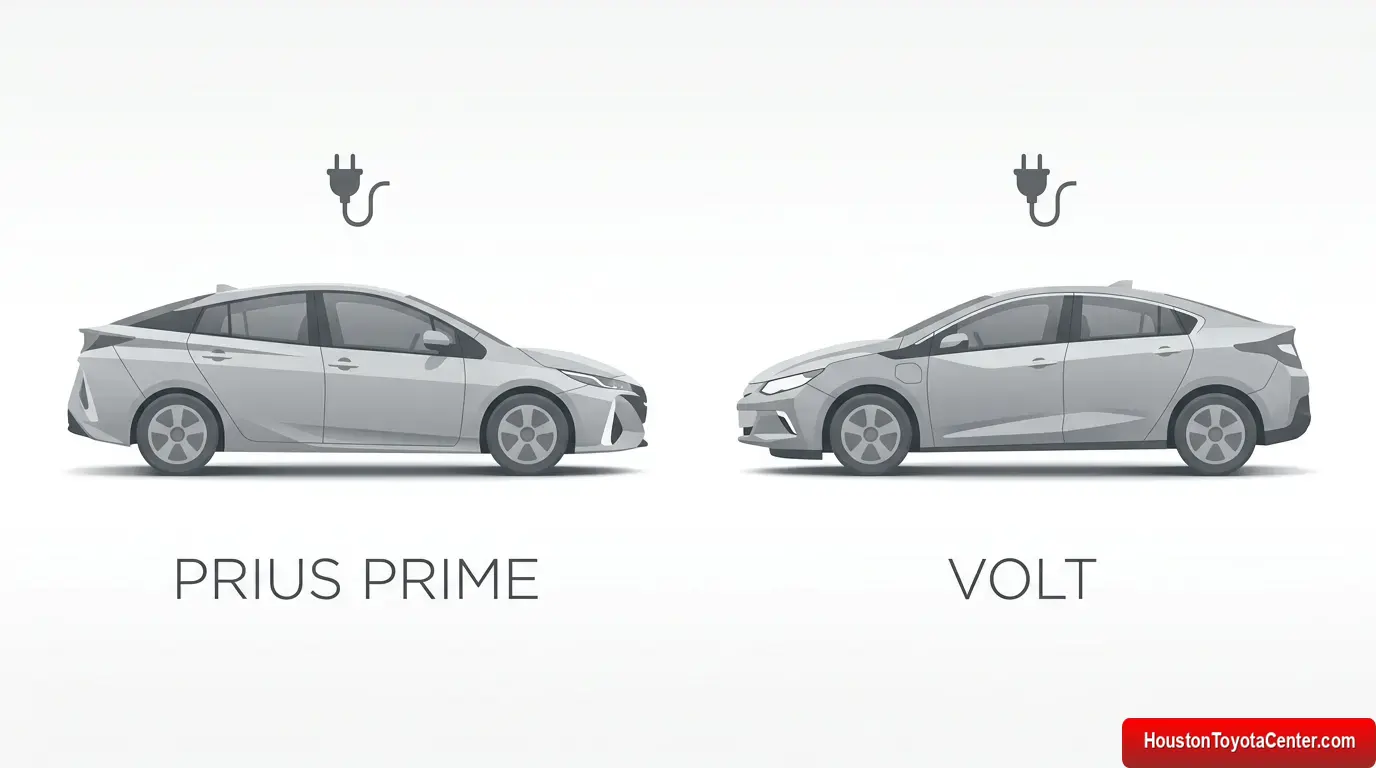
In the rapidly evolving landscape of automotive technology, plug-in hybrid electric vehicles (PHEVs) have emerged as a crucial bridge between traditional internal combustion engines and fully electric mobility. Among the most prominent contenders in this segment are two iconic models that have shaped consumer perceptions of electrified transportation: the Toyota Prius Prime and the Chevrolet Volt. Both vehicles represent decades of engineering expertise, yet they approach the challenge of sustainable driving from fundamentally different philosophical perspectives. Understanding their distinctions requires examining not just specifications on paper, but how each vehicle translates its technical architecture into real-world usability, efficiency, and ownership experience.
The Toyota Prius Prime stands as the latest evolution of what is arguably the world’s most recognized hybrid nameplate. Building upon the Prius legacy that began in the late 1990s, the Prime variant introduces a substantially larger battery pack and enhanced electric-only capability while maintaining the series-parallel hybrid system that made its predecessor famous. This configuration allows the vehicle to operate in multiple modes, seamlessly transitioning between pure electric propulsion, hybrid operation combining both power sources, and gasoline-only driving when battery charge is depleted. The result is a vehicle that promises exceptional fuel economy ratings while offering enough electric range to handle typical daily commutes without consuming any gasoline whatsoever.
Chevrolet’s Volt, meanwhile, pioneered a different approach to plug-in hybridization. Rather than functioning as a conventional hybrid with an enlarged battery, the Volt employs what General Motors termed an “extended-range electric vehicle” architecture. In this system, the gasoline engine primarily serves as a generator to produce electricity for the electric motors, rather than directly driving the wheels through mechanical linkage. This fundamental design difference creates distinct driving characteristics and efficiency profiles that set the Volt apart from traditional hybrids like the Prius family. For years, the Volt represented America’s most sophisticated attempt at mainstream electrification, earning accolades for its smooth electric driving experience and impressive overall efficiency metrics.
When comparing these two vehicles, range considerations immediately come to the forefront of discussion. The Prius Prime typically offers approximately twenty-five to thirty miles of all-electric range depending on driving conditions, temperature, and driver behavior. This distance proves sufficient for many suburban commuters whose daily round-trip travels fall within this envelope. Once the battery depletes, the vehicle transitions to hybrid mode where it continues delivering impressive fuel economy figures, often exceeding fifty miles per gallon in combined city and highway driving. The total system range extends well beyond five hundred miles, ensuring that long-distance travel remains practical without range anxiety concerns.
FREE: Quickly identify and understand problems with your vehicle 🚘
CLICK HEREThe Chevrolet Volt historically provided slightly more electric-only range, with later generations achieving upwards of fifty miles on battery power alone. This increased electric capability meant that a larger percentage of typical American drivers could complete their daily routines entirely on electricity, only engaging the gasoline engine for weekend trips or longer journeys. When operating in extended-range mode, the Volt maintained respectable fuel economy, though generally not quite matching the Prius Prime’s hybrid efficiency numbers. However, proponents argued that since most daily driving occurred on electricity, the gasoline consumption during occasional longer trips mattered less to overall ownership costs and environmental impact.
Charging infrastructure compatibility represents another critical comparison point. Both vehicles utilize standard Level 1 and Level 2 charging equipment, allowing owners to recharge using ordinary household outlets or dedicated home charging stations. The Prius Prime’s smaller battery means shorter charging times, with a full recharge possible in approximately two hours using a Level 2 charger. The Volt’s larger battery pack requires somewhat longer charging sessions, typically three to four hours on Level 2 equipment. Neither vehicle currently supports DC fast charging capabilities, which limits their flexibility compared to fully electric vehicles but remains adequate for overnight home charging scenarios that constitute the majority of PHEV charging events.
Interior space and practicality present interesting contrasts between these competitors. The Prius Prime, built upon Toyota’s compact sedan platform, offers reasonable passenger accommodation for four adults with adequate cargo space for grocery runs or weekend luggage. The battery placement affects rear seat comfort slightly, creating a modest reduction in legroom compared to the standard Prius. Storage solutions throughout the cabin reflect Toyota’s reputation for thoughtful ergonomics, with numerous cubbies and compartments designed for modern lifestyle accessories.
The Volt, configured as a five-door hatchback, provides more versatile cargo capacity and easier access to the rear seating area. Its liftgate design facilitates loading larger items, while the flat floor created by the battery placement beneath the seats maintains consistent interior volume. Passenger comfort in the Volt benefits from Chevrolet’s focus on creating a premium feel within the compact segment, with higher-quality materials and more refined sound insulation than typically expected in this price category. Both vehicles accommodate families adequately, though the Volt’s configuration may appeal more to those prioritizing cargo flexibility.
Technology integration differs notably between these approaches. The Prius Prime features Toyota’s latest infotainment systems with smartphone connectivity, navigation capabilities, and driver assistance features including adaptive cruise control and lane keeping assistance. The interface prioritizes clarity and ease of use over flashy graphics, reflecting Toyota’s conservative approach to technology deployment. Energy flow displays help drivers optimize their efficiency by illustrating real-time power distribution between electric and gasoline systems.
Chevrolet equipped the Volt with more ambitious technology offerings, including a larger touchscreen display, more comprehensive smartphone integration, and advanced driver assistance packages. The digital instrument cluster provides detailed information about energy usage, charging status, and efficiency metrics. Some reviewers praised the Volt’s tech suite as more contemporary and feature-rich, while others appreciated the Prius Prime’s straightforward, uncluttered approach that minimized distraction while driving.
Ownership costs extend beyond purchase price to include maintenance, insurance, and long-term reliability considerations. Toyota’s reputation for durability and low maintenance requirements extends to the Prius Prime, with the hybrid system proven reliable across millions of vehicles worldwide. Battery degradation concerns exist but typically remain minimal over the first decade of ownership. Chevrolet’s Volt also demonstrated strong reliability records, though its more complex extended-range architecture raised questions among some consumers about long-term maintenance costs. Both vehicles benefit from reduced brake wear due to regenerative braking systems and fewer oil changes compared to conventional vehicles.
Environmental impact assessments reveal nuanced differences. Both vehicles significantly reduce greenhouse gas emissions compared to conventional gasoline cars, particularly for owners who regularly charge their batteries and drive primarily on electricity. The actual carbon footprint depends heavily on local electricity generation mix, with cleaner grid sources amplifying the environmental benefits. Lifecycle analyses suggest that manufacturing impacts are comparable, with the larger batteries in both vehicles offset by operational savings over typical ownership periods.
Market positioning reflects each manufacturer’s strategic priorities. Toyota positioned the Prius Prime as the logical next step for hybrid enthusiasts seeking greater electrification without abandoning familiar technology. Chevrolet marketed the Volt as a gateway to full electric mobility, emphasizing its substantial electric range and premium features. Sales patterns showed the Prius Prime appealing to buyers prioritizing maximum efficiency and proven reliability, while the Volt attracted those wanting more electric driving experience and contemporary styling.
Driving dynamics offer final points of differentiation. The Prius Prime delivers predictable, comfortable handling focused on efficiency rather than excitement. Steering feel remains light, suspension tuning prioritizes ride comfort, and acceleration meets daily needs without thrilling performance enthusiasts. The Volt provides slightly more engaging driving characteristics, with quicker electric motor response and better weight distribution contributing to more confident cornering. Neither vehicle targets sporty driving, but the Volt’s electric-first architecture creates a more responsive feel during urban driving scenarios.
Resale value considerations favor the Prius brand’s established reputation, with Prius variants historically maintaining stronger residual values than competitors. The Volt faced challenges in this area due to shifting market preferences toward fully electric vehicles and discontinuation of the model line. Potential buyers should weigh these factors against their intended ownership duration and usage patterns.
Ultimately, choosing between the Prius Prime and Volt depends on individual priorities and driving patterns. Those maximizing fuel economy across mixed driving conditions while valuing proven reliability may prefer the Toyota approach. Drivers covering shorter daily distances who want maximum electric operation with premium features might lean toward the Chevrolet philosophy. Both vehicles successfully demonstrated that plug-in hybridization offers practical pathways to reduced emissions and fuel costs without requiring complete lifestyle adjustments. As the automotive industry continues its transition toward electrification, these pioneering models established important benchmarks for what consumers should expect from transitional technologies bridging conventional and fully electric mobility.
Leave a Reply