
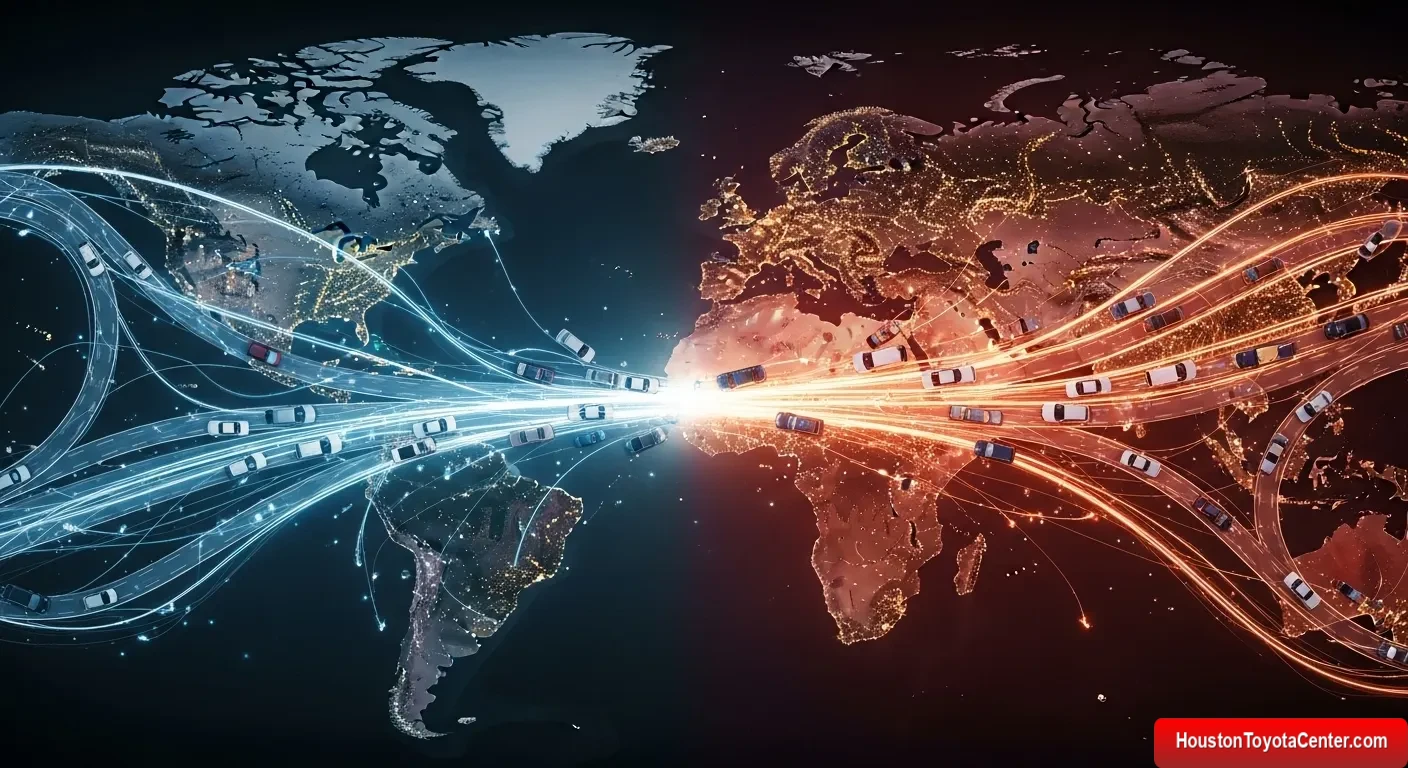
The simple act of driving—something that millions of people do every day without a second thought—is shaped by a surprisingly complex and deeply historical global pattern: which side of the road you drive on, and consequently, which side of the car the steering wheel sits on. Around the world, countries are divided between right-hand traffic (RHT), where vehicles drive on the right side of the road and typically have left-hand drive (LHD) vehicles, and left-hand traffic (LHT), where vehicles drive on the left and typically use right-hand drive (RHD) vehicles.
At first glance, this may seem like a trivial difference, but the implications ripple through infrastructure, economics, safety, culture, and even geopolitics. The division is not random—it is the result of centuries of tradition, colonial influence, technological evolution, and policy decisions. Today’s global map of driving sides is a patchwork that reflects the layered complexity of human history.
Understanding the Basics
Before diving into history and global distribution, it helps to clarify the terminology:
| Term | Meaning |
|---|---|
| Right-Hand Traffic (RHT) | Vehicles drive on the right side of the road |
| Left-Hand Traffic (LHT) | Vehicles drive on the left side of the road |
| Left-Hand Drive (LHD) | Steering wheel is on the left side of the vehicle |
| Right-Hand Drive (RHD) | Steering wheel is on the right side of the vehicle |
In general:
FREE: Quickly identify and understand problems with your vehicle 🚘
CLICK HERE- RHT countries use LHD vehicles.
- LHT countries use RHD vehicles.
This pairing ensures that the driver sits closer to the center of the road, improving visibility for overtaking and navigation.
A Historical Perspective: Why the Divide Exists
Ancient and Medieval Origins
The origins of left- vs. right-side travel go back thousands of years. Archaeological evidence suggests that many ancient societies, including the Romans, tended to travel on the left side of roads. One reason was practical: most people are right-handed, and keeping to the left allowed travelers to keep their dominant hand free to greet others or defend themselves.
Knights in medieval Europe also preferred the left side of the road, as it allowed them to wield swords with their right hand against approaching opponents.
The Shift Toward the Right
The shift toward right-hand traffic began later, particularly in continental Europe. One influential factor was the rise of large freight wagons in the 18th century. Drivers of these wagons often sat on the left rear horse so they could use their right hand to control the team. To better judge distance from oncoming traffic, they preferred to keep to the right side of the road.
Political Influence
Government mandates played a crucial role in standardization. For example:
- In France, right-hand traffic became dominant after the French Revolution.
- Napoleon spread right-hand traffic across much of Europe through conquest.
Meanwhile, Britain maintained left-hand traffic and exported that system to its colonies.
Colonial Legacy and Global Spread
One of the strongest determinants of a country’s driving side today is its colonial past.
British Influence: Left-Hand Traffic
Countries that were part of the British Empire typically adopted LHT, including:
- India
- Australia
- South Africa
- Japan (though never colonized, it was heavily influenced by British engineering)
- Many Caribbean nations
Continental European Influence: Right-Hand Traffic
Countries influenced by France, Spain, Portugal, and later the United States generally adopted RHT, including:
- Most of Europe
- The Americas
- Much of Africa outside former British territories
The Modern Global Distribution
Today, approximately:
- 65–70% of the world drives on the right (RHT)
- 30–35% drives on the left (LHT)
Regional Overview
| Region | Dominant System | Notes |
|---|---|---|
| North America | Right | Uniform across the continent |
| South America | Right | All countries use RHT |
| Europe | Right (mostly) | Only a few exceptions like the UK, Ireland, Malta, Cyprus |
| Africa | Mixed | Split between British and non-British colonial histories |
| Asia | Mixed | Includes both systems, often reflecting colonial ties |
| Oceania | Left | Australia and New Zealand use LHT |
Countries That Have Switched Sides
Switching driving sides is rare but not unheard of. It is a massive logistical challenge involving infrastructure changes, public education, and vehicle adaptation.
Notable Examples
- Sweden (1967): Switched from left to right in an event known as “Dagen H” (H-Day).
- Iceland (1968): Followed Sweden shortly after.
- Samoa (2009): Switched from right to left to better accommodate imported vehicles from Australia and New Zealand.
Challenges of Switching
Switching sides involves:
- Changing road signs and markings
- Reconfiguring intersections and roundabouts
- Updating public transportation systems
- Educating drivers and pedestrians
- Managing economic impacts (vehicle imports, insurance, etc.)
Infrastructure Implications
The side of the road a country drives on affects nearly every aspect of transportation infrastructure.
Road Design
- Intersections and roundabouts are built differently depending on traffic flow.
- Highway entry and exit ramps must match the driving side.
Vehicles
- Steering wheel placement
- Headlight alignment
- Windshield wiper direction
- Side mirror positioning
Public Transport
- Bus doors must align with sidewalks.
- Train platforms are designed accordingly.
Economic Considerations
Vehicle Manufacturing and Trade
Automakers must produce different versions of vehicles for LHD and RHD markets. This affects:
- Production costs
- Supply chains
- Import/export dynamics
Some countries allow imports of both types, but often with restrictions.
Second-Hand Markets
Countries like New Zealand and Kenya import large numbers of used vehicles from Japan, which produces many RHD cars. This influences national policies and even driving side decisions.
Safety Considerations
Is one system safer than the other? The evidence is mixed.
Factors That Matter More
- Road quality
- Driver behavior
- Traffic law enforcement
- Vehicle safety standards
Subtle Differences
Some studies suggest that right-handed drivers may have slightly better spatial awareness when seated on the right side (RHD vehicles in LHT systems), but these differences are marginal compared to broader safety factors.
Tourism and Driver Adaptation
For travelers, adjusting to a different driving side can be challenging.
Common Difficulties
- Turning at intersections
- Navigating roundabouts
- Lane discipline
- Gear shifting (especially with manual transmissions)
Adaptation Tips
- Practice in low-traffic areas
- Use visual reminders (stickers, notes)
- Follow local traffic flow
Border Crossings and Unique Cases
Some regions present interesting challenges where neighboring countries use different systems.
Examples
- Hong Kong (LHT) vs. mainland China (RHT)
- Thailand (LHT) vs. Laos (RHT)
Special infrastructure such as crossovers or transition zones is often used near borders.
Cultural Identity and Resistance to Change
Driving side is more than just a technical detail—it can become part of national identity.
Countries are often resistant to switching due to:
- Cost
- Tradition
- Public opposition
Even when economic or practical arguments exist, cultural inertia is powerful.
The Role of Technology
Autonomous Vehicles
Self-driving cars may reduce the importance of driving side differences by:
- Adapting automatically to local rules
- Reducing human error
However, infrastructure differences will still matter.
Global Standardization?
Despite globalization, a universal driving side is unlikely in the near future due to:
- High switching costs
- Established infrastructure
- National sovereignty
A Comparative Snapshot
| Feature | Right-Hand Traffic (RHT) | Left-Hand Traffic (LHT) |
|---|---|---|
| Driver Position | Left side of car | Right side of car |
| Global Prevalence | Majority (~70%) | Minority (~30%) |
| Common Regions | Americas, Europe | UK, Japan, Australia |
| Colonial Influence | French, Spanish, Portuguese | British |
| Switching Frequency | Rare | Rare |
Psychological and Behavioral Aspects
Driving on a particular side influences:
- Eye movement patterns
- Risk perception
- Reaction times
Humans adapt quickly, but habits formed over years can be hard to override, especially under stress.
Logistics and Freight
For international trucking and logistics:
- Vehicles may need to be modified or swapped at borders
- Drivers must be trained for different systems
This adds complexity and cost to cross-border trade.
Aviation and Maritime Contrast
Interestingly, aviation and maritime navigation follow more globally standardized rules, unlike road traffic. This highlights how road systems are more deeply tied to national policies and history.
The Future Outlook
While the current patchwork persists, several trends may influence the future:
Increasing Global Trade
May push for greater flexibility in vehicle design rather than standardization.
Technological Integration
Advanced driver-assistance systems (ADAS) and autonomous driving could reduce the importance of driver position.
Urban Planning Innovations
Cities may redesign transport systems in ways that make driving side less relevant.
Conclusion
The global divide between right-hand and left-hand driving is a fascinating example of how history, culture, politics, and technology intersect in everyday life. What seems like a simple rule—drive on one side of the road—turns out to be a reflection of centuries of human development.
Rather than converging toward a single global standard, the world continues to operate as a patchwork of systems, each rooted in its own historical and cultural context. And despite the inconvenience this sometimes causes, it is precisely this diversity that makes the global transportation landscape so rich and intriguing.
Leave a Reply