
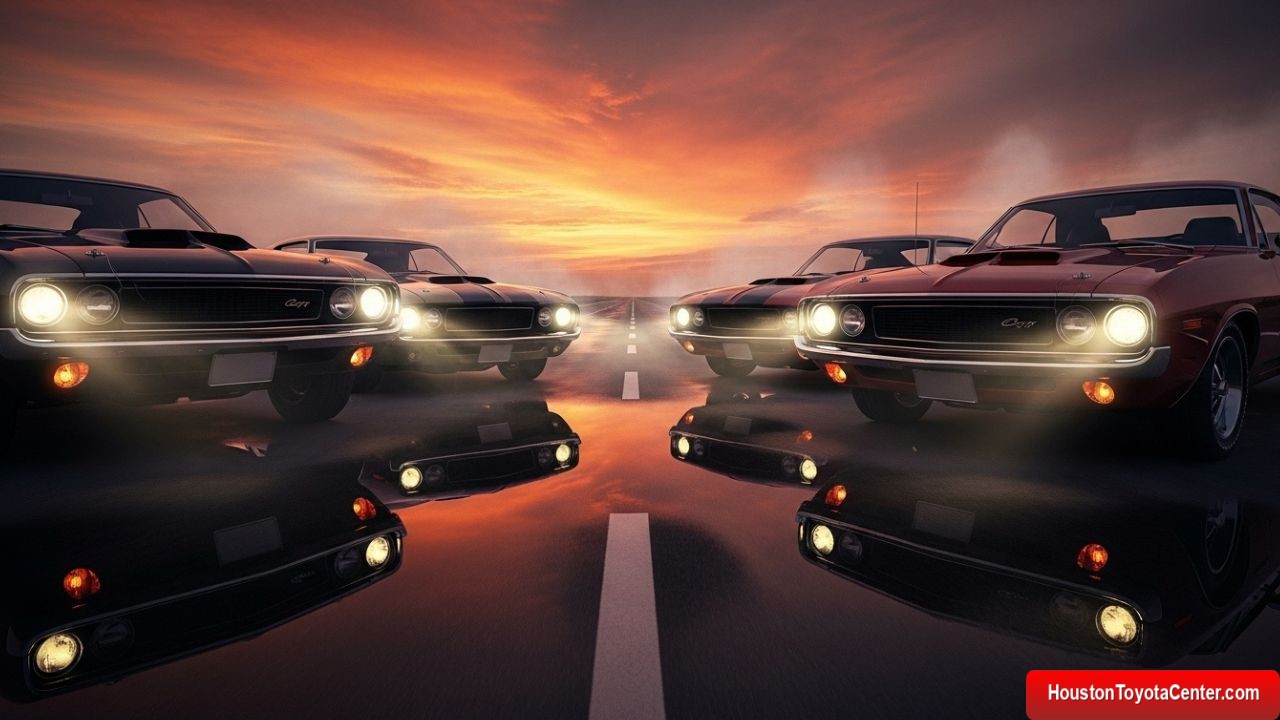
The American muscle car era of the 1960s and 70s remains one of the most electrifying chapters in automotive history. It was a time defined by raw horsepower, non-computerized engineering brilliance, rebellious styling, and a cultural shift that made cars more than machines—they became symbols of identity, freedom, and unrestrained fun. In this article, we dive deep into the rise, evolution, decline, and lasting impact of the most iconic muscle cars of this golden age. We’ll explore the legends, the engineering, the controversies, and why this era still captivates enthusiasts around the world.
The Cultural Birth of the Muscle Car
Muscle cars didn’t appear out of nowhere—they grew out of the American post-war boom. By the 1950s, car ownership was an essential part of American life, and manufacturers competed fiercely for customer loyalty. What followed was a perfect storm of cultural and economic factors:
- A booming youth population with disposable income
- Cheap gasoline, making large engines more affordable to run
- Expanding highways, including the Interstate System launched in 1956
- Racing culture, especially drag strips and NASCAR
- Detroit automakers eager to outdo each other in performance
The stage was set. What the public wanted—though they didn’t fully know it yet—was an affordable, stylish, and extremely powerful car that felt like a race machine but could be bought at the local dealership.
What Defines a Muscle Car?
Although definitions vary, several key attributes characterize classic muscle cars:
FREE: Quickly identify and understand problems with your vehicle 🚘
CLICK HERE- A powerful V8 engine, often with high-output carbs or big-block displacements
- Rear-wheel drive
- Mid-size body, offering space and practicality
- Aggressive styling, wide stance, flared fenders, bold grilles
- Affordable pricing, aimed at the American middle class
- Straight-line performance, particularly 0–60 mph and quarter-mile times
Muscle cars were never meant to be corner-carving sports cars like European coupes from Ferrari or Porsche. They were built for raw, straight-line acceleration—a uniquely American form of driving pleasure.
The Arms Race Begins: Early 1960s
While there were proto-muscle cars in the 1950s, such as the Chrysler 300 “Letter Cars” and Oldsmobile Rocket 88, the true muscle era began in the early 1960s.
Pontiac GTO (1964)
Often considered the first official muscle car, the Pontiac GTO started as an optional package for the Pontiac Tempest/Le Mans. This loophole allowed Pontiac engineers to slip a big-block V8 into a mid-size body—a move General Motors corporate rules technically prohibited.
The GTO became an overnight sensation. Its formula was simple yet revolutionary:
- 389 cu in V8
- Tri-Power carb setup (later versions)
- 325–360 horsepower
- Affordable price tag
- Cool, youthful marketing
The success of the GTO sent shockwaves through the auto industry. Other manufacturers immediately scrambled to produce their own high-powered offerings.
The Golden Age of Muscle (Mid to Late 1960s)
By 1966–1967, nearly every major U.S. manufacturer was competing in the horsepower wars. The streets and drag strips became the proving grounds for these steel titans.
Below is a reference table summarizing some of the most iconic models of the era:
Key Muscle Cars of the 1960s and 70s
| Model | Peak Output (Factory) | Engine Options | Years of Peak Popularity | Notable Features |
|---|---|---|---|---|
| Pontiac GTO | 360+ hp | 389, 400 | 1964–1970 | Tri-Power carburetion, Judge trim |
| Ford Mustang Boss 429 | 375+ hp | 429 V8 | 1969–1970 | NASCAR-bred engine |
| Chevrolet Camaro Z/28 | 290+ hp (underrated) | 302 V8 | 1967–1969 | Trans-Am racing heritage |
| Dodge Charger R/T | 425 hp | 440, 426 Hemi | 1968–1970 | Iconic fastback styling |
| Plymouth Barracuda (‘Cuda) | 425 hp | 426 Hemi | 1970–1971 | Extremely rare Hemi variant |
| Chevrolet Chevelle SS 454 | 450 hp | 454 LS6 | 1970 | Among the most powerful factory engines ever |
| Oldsmobile 442 | 370+ hp | 400, 455 | 1968–1971 | Balanced power and refinement |
| Plymouth Road Runner | 425 hp | 383, 426 Hemi | 1968–1970 | Budget-friendly muscle hero |
Icons of the Era: Deep Dives
1. Ford Mustang (1964½ and Beyond)
Although technically classified as a “pony car,” the Mustang deserves mention because of its massive cultural impact. Its lightweight body and sporty appearance attracted young buyers immediately, selling over 400,000 units in its first year.
High-performance variants emerged quickly:
- GT350 (1965) – Developed with Carroll Shelby
- Boss 302 (1969) – Trans-Am dominance
- Boss 429 (1969–1970) – One of the most legendary engines ever built
The Boss 429 was created primarily to homologate Ford’s massive semi-hemi engine for NASCAR. Its real-world horsepower was widely believed to exceed the official ratings.
2. Chevrolet Camaro (1967)
Chevrolet’s answer to the Mustang brought its own arsenal:
- Z/28’s high-revving 302
- SS 396 big-block
- COPO 427 (Central Office Production Order), a special high-displacement powerhouse reserved for enthusiasts in the know
These COPO Camaros are now among the most valuable collector cars in the world.
3. Dodge Charger (1968–1970)
The second-generation Charger remains one of the most recognizable cars in history, thanks to:
- Its “coke bottle” silhouette
- Hideaway headlamps
- Massive big-block engines
- The 426 Hemi, nicknamed “The Elephant”
The Charger cemented its legend through Hollywood as well, most notably in Bullitt (1968) and later The Dukes of Hazzard.
4. Plymouth Road Runner (1968–1970)
Created as an affordable muscle car stripped of luxury features, the Road Runner proved that you didn’t need a fat wallet to go fast. It even licensed the famous “Beep-Beep” horn from Warner Bros.
5. Chevrolet Chevelle SS 454 (1970)
When people talk about peak muscle car power, they often reference the Chevelle SS 454 LS6, which produced a staggering 450 horsepower in 1970. Many historians argue that this was the most powerful factory muscle car of the entire era.
6. Plymouth ‘Cuda 426 Hemi (1970–1971)
The ‘Cuda is legendary not only for its performance but for its rarity. Hemi ‘Cudas, especially convertibles, are some of the most expensive American cars ever sold at auction.
Engineering and Performance Innovations
The 1960s and 70s saw impressive mechanical advancements, especially considering the lack of modern computerization.
Carburetion and Induction
Manufacturers experimented with:
- Dual quads
- Tri-Power setups
- Shaker hoods
- Ram Air induction systems
These systems improved airflow and gave muscle cars their aggressive appearance and signature carburetor roar.
Transmissions
Popular transmissions included:
- Muncie M22 “Rock Crusher”
- Chrysler TorqueFlite 727
- Ford Toploader
Each had a cult following among drag racers.
Suspension and Handling
While handling wasn’t the primary focus, some models broke the stereotype:
- Boss 302 Mustang – exceptional Trans-Am handling
- Camaro Z/28 – track-ready from the factory
Still, straight-line acceleration was the primary battleground.
The Muscle Car in American Pop Culture
Muscle cars dominated movies, television, magazines, and advertising throughout the 1960s and 70s.
In Film
- Bullitt (1968) — Ford Mustang GT vs. Charger
- Vanishing Point (1971) — Dodge Challenger R/T
- Two-Lane Blacktop (1971) — 1955 Chevy
- Gone in 60 Seconds (1974) — Mustang “Eleanor”
These films immortalized muscle cars as symbols of rebellion and freedom.
In Music and Lifestyle
Rock bands and artists embraced muscle cars, which became part of the “American Dream” narrative. Car clubs, drag strips, and cruises defined youth culture.
The Downfall: Regulations, Gas Prices, and Insurance
By 1971–1973, the muscle era faced multiple existential threats.
1. Emissions Regulations
The government mandated lower emissions, forcing automakers to detune engines or redesign them.
2. Rising Insurance Costs
Insurance companies labeled muscle cars “high-risk,” causing premiums to skyrocket.
3. Oil Crisis of 1973
Fuel shortages and high gas prices killed demand for thirsty, large-displacement engines.
4. Corporate Shifts
Automakers shifted their focus toward safety, economy, and smaller vehicles.
By 1975, the original muscle era was effectively over.
The Legacy of the 1960s and 70s Muscle Cars
Even though the original era ended, the impact of these vehicles never faded.
Collector Value
Some models—like the Hemi ’Cuda convertible, COPO Camaro, or Boss 429—now sell for millions of dollars.
Modern Muscle Renaissance
In the 2000s, American automakers revived the muscle spirit:
- Ford Mustang GT500
- Dodge Challenger Hellcat
- Chevrolet Camaro ZL1
These modern monsters owe their DNA to the original pioneers.
Cultural Immortality
Classic muscle cars appear in:
- Video games
- Movies
- Car shows
- Restoration communities
- YouTube channels
- Auction events
Their influence spans generations, proving that the soul of the muscle car endures.
Why Muscle Cars Still Matter Today
Muscle cars represent:
- Freedom
- Individual expression
- Mechanical simplicity
- Raw analog driving feel
- A connection to a bygone era of creativity and minimal restrictions
In a world moving toward electrification and autonomous driving, the visceral experience of a roaring V8 remains deeply appealing.
Muscle cars of the 1960s and 70s remind us of a time when imagination—and horsepower—knew no limits.
Conclusion
The golden age of American muscle cars was far more than a trend—it was a cultural movement that reshaped automotive history. From the Pontiac GTO that started it all to the LS6 Chevelle and Hemi ‘Cuda that pushed the limits of factory performance, these machines captured the spirit of innovation and rebellion.
Though the era was short-lived, its impact is everlasting. The cars of this period continue to ignite passion, fuel nostalgia, and inspire new generations of enthusiasts around the world. For many, the thundering echo of a carbureted big-block V8 is not just a sound—it’s a heartbeat from America’s automotive soul.
Leave a Reply