
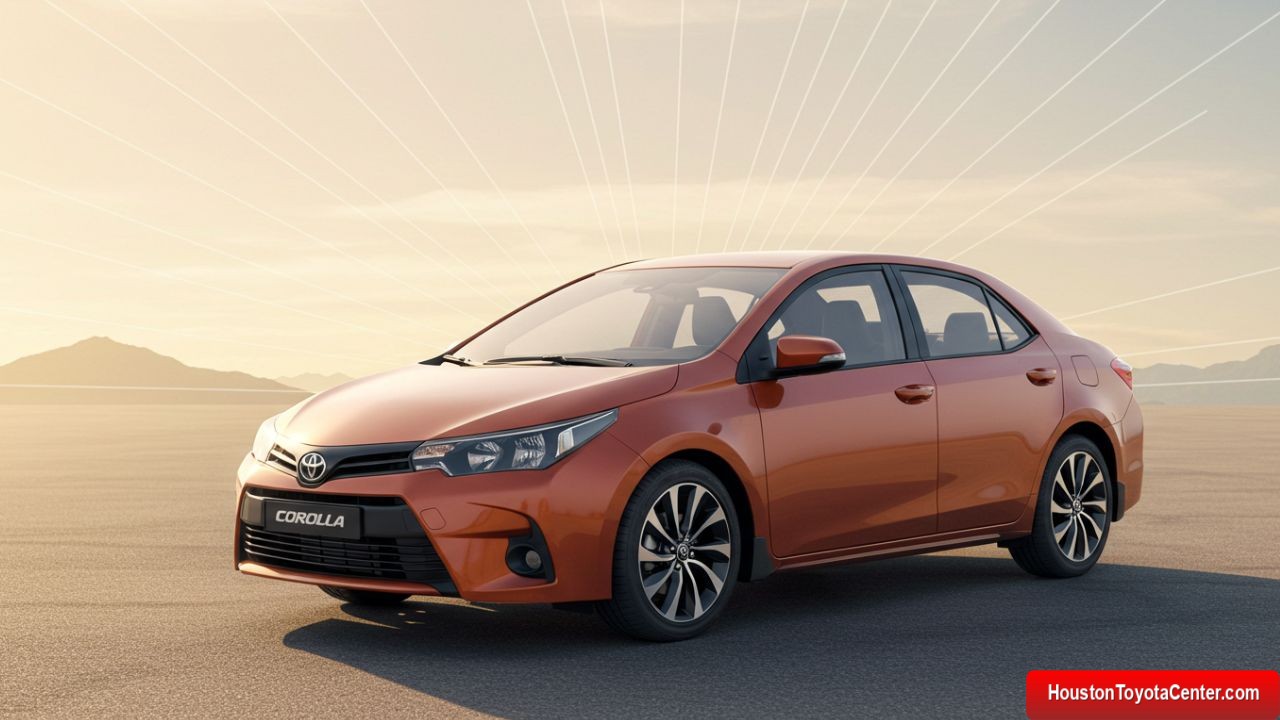
The story of how the Toyota Corolla became a global icon is not just about cars—it’s about timing, industrial strategy, cultural adaptation, and a remarkably consistent philosophy of reliability. Few products in modern industrial history have achieved such universal recognition across so many different societies, economic conditions, and driving cultures. Even fewer have managed to stay relevant for more than half a century while continuously evolving without losing their identity.
What makes the Corolla fascinating is that it did not begin as a symbol of ambition or prestige. It began as a practical solution to a very specific post-war problem: how to provide affordable, dependable transportation to a rapidly expanding middle class. Yet over time, it transformed into one of the best-selling vehicles of all time and a benchmark for compact cars worldwide.
This article explores that transformation in depth—how engineering decisions, global expansion strategies, and cultural adaptability turned a simple compact car into a global icon.
The Post-War Context: A World Ready for Small Cars
To understand the rise of the Corolla, it is necessary to understand the global conditions that made it possible.
FREE: Quickly identify and understand problems with your vehicle 🚘
CLICK HEREAfter World War II, many countries experienced rapid industrial recovery and urbanization. Japan, in particular, was rebuilding its economy and infrastructure. There was a strong demand for affordable transportation, but also severe limitations: fuel efficiency mattered, manufacturing resources were constrained, and consumers were highly price-sensitive.
During this period, Japanese automakers focused on compact, efficient vehicles. Unlike American manufacturers, who were producing large, powerful cars for wide highways and suburban expansion, Japanese companies were optimizing for narrow roads, high population density, and economic recovery.
This environment shaped the philosophy that would define the Corolla: simplicity, efficiency, and reliability above all else.
The Birth of a Name and Philosophy
The Corolla name first appeared in 1966, derived from the Latin word for “small crown.” It was a symbolic choice—suggesting modest excellence rather than luxury dominance.
From the beginning, the vehicle was designed to be:
- Affordable for the average household
- Easy to maintain
- Fuel-efficient
- Durable in varied driving conditions
Unlike performance-oriented vehicles or luxury sedans, the Corolla was never meant to impress through extravagance. Instead, it was designed to reduce ownership stress.
This philosophy would become one of its strongest long-term advantages.
Early Generations: Establishing Trust (1966–1980s)
The early generations of the Corolla established its reputation in Japan and quickly expanded into international markets.
Key strengths during this era:
- Mechanical simplicity
- Low maintenance costs
- High fuel efficiency (especially important during oil crises)
- Strong resale value relative to competitors
During the 1970s oil crisis, global demand shifted dramatically. Consumers in North America and Europe began prioritizing fuel economy over engine power. This shift played directly into the Corolla’s strengths.
While many American vehicles struggled with efficiency standards, the Corolla offered a practical alternative that did not require major lifestyle adjustments. It was not just a Japanese success anymore—it was becoming a global solution.
Global Expansion Strategy: Quiet but Effective
One of the most important factors in the Corolla’s rise was not engineering alone, but strategy.
Rather than positioning the Corolla as a premium export, Toyota focused on:
- Localized manufacturing
- Regional adaptation of models
- Gradual market penetration rather than aggressive branding
This meant the Corolla was often built in or near the countries where it was sold. Over time, production spread across North America, Europe, Asia, South America, and Africa.
This localization had several major effects:
- Reduced costs due to lower shipping and import tariffs
- Faster adaptation to local regulations
- Improved trust among local consumers (“built here, for here”)
- Stability in supply chains
By the 1980s, the Corolla was no longer just a Japanese export—it was a globally manufactured product with regional identities.
Engineering Philosophy: Reliability Over Everything
The Corolla’s engineering philosophy can be summarized in one word: consistency.
While many automakers pursued innovation through radical redesigns or performance improvements, the Corolla evolved more cautiously.
Core engineering principles:
- Incremental improvement rather than disruptive redesign
- Conservative tuning of engines and transmissions
- Emphasis on durability testing
- Reduction of mechanical complexity where possible
This approach may have made the Corolla less exciting in terms of driving dynamics, but it significantly improved long-term reliability.
Owners often reported vehicles lasting hundreds of thousands of kilometers with minimal issues. In many markets, this reputation became more valuable than performance metrics.
The Corolla as a “First Car”
By the 1990s, the Corolla had developed a strong identity in many countries as a “first car.” This is a crucial part of its cultural rise.
It became associated with:
- Young drivers
- Small families
- Budget-conscious professionals
- Urban commuters
This positioning created a powerful emotional cycle:
- People buy a Corolla as their first reliable car
- They associate it with stability and independence
- They later recommend it to others
- The next generation repeats the cycle
Unlike aspirational luxury brands, the Corolla built loyalty through trust rather than status.
Table: Key Factors Behind Global Success
| Factor | Impact on Global Success |
|---|---|
| Fuel efficiency | Strong appeal during oil crises and urban congestion |
| Reliability | Reduced ownership risk, increased trust |
| Affordability | Accessible to broad income groups worldwide |
| Local manufacturing | Lower costs and regional acceptance |
| Conservative design evolution | Consistency across generations |
| Low maintenance costs | Long-term ownership satisfaction |
| Global distribution strategy | Rapid international adoption |
The 2000s: The Era of Global Standardization
By the early 2000s, the Corolla had become one of the most widely sold cars in the world. At this stage, it was no longer just competing with other compact cars—it was defining the category itself.
Toyota refined the model into a global platform strategy. Instead of radically different regional versions, the Corolla became more standardized worldwide.
This allowed Toyota to:
- Reduce production complexity
- Maintain consistent quality standards
- Accelerate innovation cycles
- Strengthen global branding
However, standardization also introduced challenges. In some markets, consumers began to view the Corolla as too conservative or lacking excitement compared to newer competitors.
Toyota responded not by abandoning its philosophy, but by refining it.
Hybrid Technology and Modern Efficiency
In the 2010s and beyond, the automotive industry faced new pressures:
- Environmental regulations
- Rising fuel costs
- Demand for lower emissions
The Corolla adapted by integrating hybrid technology into its lineup. This shift reinforced its original identity: efficiency and practicality, now enhanced by modern innovation.
The hybrid Corolla became particularly successful in urban markets where fuel savings and emissions reduction were highly valued.
Importantly, Toyota did not reposition the Corolla as a futuristic or luxury eco-car. Instead, it remained an accessible, practical vehicle with improved efficiency.
Cultural Adaptation Across Regions
One of the most remarkable aspects of the Corolla’s global success is its ability to adapt culturally without losing identity.
North America
- Seen as reliable transportation for daily commuting
- Popular among first-time buyers and families
- Valued for low maintenance costs
Europe
- Appreciated for fuel efficiency and compact design
- Used in both urban and suburban environments
- Competes with diesel compact cars historically
Asia
- Strong presence in rapidly urbanizing cities
- Often associated with upward mobility
- Common choice for taxi fleets
Latin America
- Valued for durability on mixed road conditions
- Strong resale value and mechanical simplicity
Africa and Middle East
- Known for robustness in challenging environments
- Easy to repair and maintain with limited infrastructure
This adaptability is one of the main reasons the Corolla became a global icon rather than a regional success.
The Corolla in Taxi and Fleet Markets
Another critical but often overlooked factor is fleet adoption.
The Corolla has been widely used in:
- Taxi services
- Ride-sharing platforms
- Government fleets
- Corporate vehicle programs
Fleet buyers prioritize:
- Durability
- Predictable maintenance costs
- Fuel efficiency
- Easy servicing
The Corolla consistently scores highly in all these categories, reinforcing its global presence.
In many cities, the Corolla is not just a personal vehicle—it is part of the transportation infrastructure.
Competition and Survival in a Changing Industry
Over decades, the Corolla has faced competition from nearly every major automaker. Competitors have introduced:
- Sportier compact cars
- More luxurious interiors
- Advanced infotainment systems
- Aggressive styling designs
Yet the Corolla has survived and thrived because it does not try to win every category. Instead, it focuses on a few key strengths and executes them consistently.
This strategic discipline is rare in the automotive industry, where brands often chase trends.
Design Evolution: Subtle but Continuous
The Corolla’s design evolution is best described as gradual refinement rather than dramatic reinvention.
Across generations, changes include:
- More aerodynamic body shapes
- Improved interior materials
- Enhanced safety systems
- Larger infotainment displays
- Incremental increases in cabin comfort
But the overall identity remains recognizable: a practical, compact sedan designed for everyday use.
This consistency helps maintain brand trust. Buyers know what they are getting, even when upgrading to a newer model.
Safety and Technological Integration
Modern versions of the Corolla incorporate advanced safety systems such as:
- Lane departure alerts
- Adaptive cruise control
- Automatic emergency braking
- Pedestrian detection systems
These features reflect a broader shift in the automotive industry toward preventive safety rather than passive protection.
The Corolla’s integration of these technologies is significant because it brings advanced safety to a mass-market price point.
Why the Corolla Became a Global Icon
The Corolla’s global status is not the result of a single breakthrough. Instead, it is the accumulation of multiple reinforcing advantages:
- It solves a universal problem: affordable transportation
- It avoids cultural specificity and works in many environments
- It builds trust over time through consistency
- It evolves without losing identity
- It remains financially accessible
Unlike vehicles that become iconic through design or performance, the Corolla became iconic through ubiquity and reliability.
It is not admired because it is rare. It is respected because it is everywhere—and it works.
The Psychology of Trust in a Machine
The Corolla’s success also reveals something deeper about consumer psychology.
In transportation, trust is more valuable than excitement for most buyers. A car is not just a product—it is a daily dependency. When a vehicle starts reliably every morning for years, it builds a form of emotional security.
This is where the Corolla excels. It represents:
- Predictability
- Safety
- Financial stability
- Lack of unnecessary risk
Over time, these qualities create loyalty that advertising alone cannot generate.
The Modern Corolla: Still Relevant Today
Today, the Corolla continues to evolve in a highly competitive automotive landscape dominated by:
- Electric vehicles
- Autonomous driving technologies
- Digital ecosystems
Yet the Corolla remains relevant because it continues to serve a large global segment that values affordability, reliability, and efficiency over cutting-edge innovation.
Even as the industry changes, the need for practical transportation remains constant.
Conclusion: A Quiet Global Icon
The rise of the Toyota Corolla is a story of discipline, consistency, and global awareness. It did not become iconic by trying to dominate headlines or redefine automotive performance. Instead, it became iconic by quietly solving a problem billions of people share: the need for dependable, affordable mobility.
Its legacy is not built on spectacle, but on repetition—millions of journeys completed without incident, across decades and continents.
In many ways, the Corolla is not just a car. It is a global standard of expectation: that transportation should simply work, every time.
Leave a Reply