
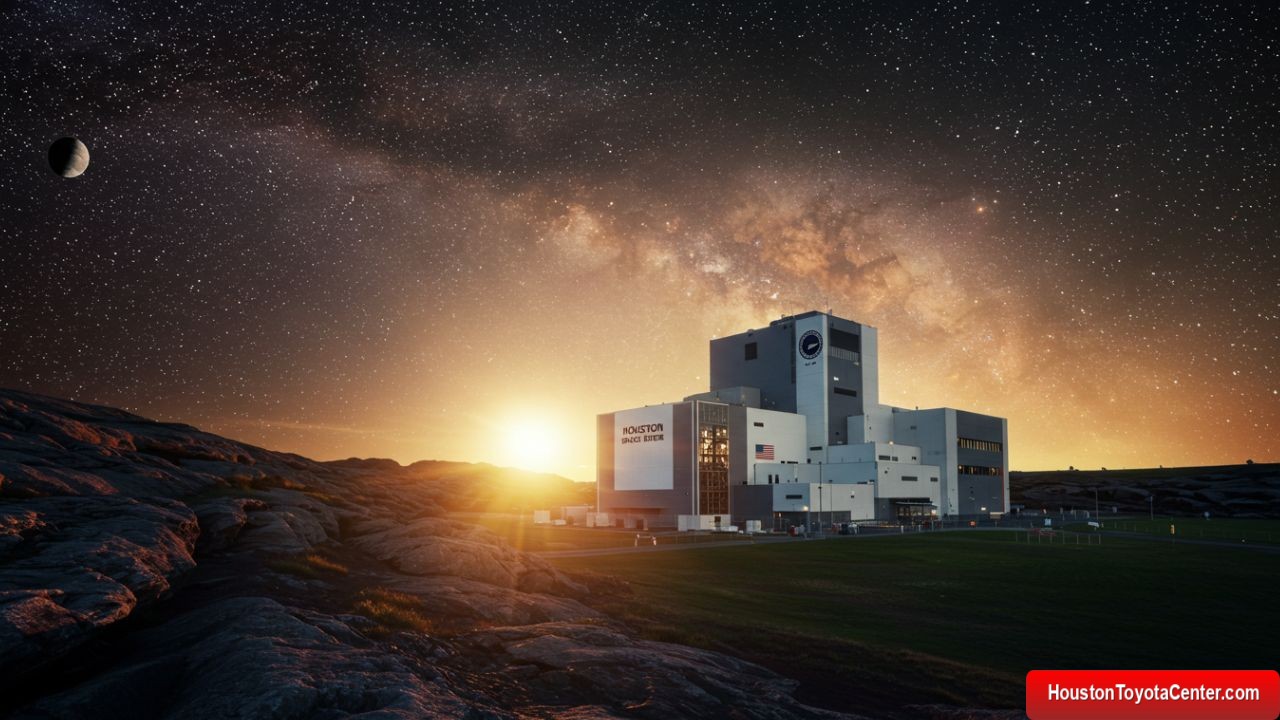
Houston, Texas, is synonymous with space exploration, earning the title “Space City” thanks to its pivotal role in NASA’s human spaceflight programs. But how did this sprawling metropolis become the epicenter of space exploration? The journey of Houston’s rise to global space prominence is a story of political maneuvering, scientific advancements, and an enduring commitment to pushing the boundaries of human capability.
1. The Birth of NASA and Houston’s Role
In the 1950s, the United States was locked in a fierce Cold War-era Space Race with the Soviet Union. The launch of Sputnik in 1957 galvanized the U.S. government into action, leading to the creation of the National Aeronautics and Space Administration (NASA) in 1958.
Why Houston?
Several factors contributed to Houston being chosen as the home for NASA’s Manned Spacecraft Center (later renamed the Johnson Space Center in 1973 in honor of President Lyndon B. Johnson):
- Political Influence: Vice President Lyndon B. Johnson, a Texan, was a key advocate for bringing space research to Texas.
- Educational and Technological Resources: Proximity to Rice University and other institutions ensured a steady supply of top-tier engineers and scientists.
- Geographical Benefits: Houston’s coastal location allowed easy access to the Gulf of Mexico for spacecraft recovery and testing operations.
- Industrial and Economic Strength: The city’s existing oil and energy industries meant a strong infrastructure was already in place to support massive engineering projects.
2. The Establishment of the Johnson Space Center (JSC)
In 1961, President John F. Kennedy famously declared that the U.S. would send a man to the Moon before the decade’s end. That same year, NASA announced Houston as the site for its new space center. By 1963, the Manned Spacecraft Center was operational, cementing Houston’s place in space history.
FREE: Quickly identify and understand problems with your vehicle 🚘
CLICK HEREKey Facilities at JSC
| Facility | Function |
|---|---|
| Mission Control Center | Directs human spaceflight missions |
| Neutral Buoyancy Laboratory | Trains astronauts for spacewalks using an underwater environment |
| Space Vehicle Mockup Facility | Houses full-scale models of spacecraft for training and research |
| Lunar Sample Laboratory Facility | Stores and analyzes Moon rocks brought back by Apollo missions |
3. Houston and the Apollo Program
Houston’s significance skyrocketed during the Apollo Program (1961-1972). The phrase “Houston, we have a problem” from Apollo 13 remains one of the most famous space-related quotes, further solidifying the city’s connection to spaceflight.
Milestones of the Apollo Program with Houston’s Role
- Apollo 11 (1969): Houston’s Mission Control directed the first Moon landing, with Neil Armstrong and Buzz Aldrin taking humanity’s first steps on the lunar surface.
- Apollo 13 (1970): When an oxygen tank exploded mid-mission, Mission Control in Houston orchestrated the dramatic and successful return of the astronauts.
- Apollo 17 (1972): The last Moon landing, marking the end of an era and setting the stage for future space endeavors.
4. Transition to the Space Shuttle Era
With the Apollo program concluded, Houston continued to play a vital role in the next phase of space exploration—the Space Shuttle Program (1981-2011). The shuttle era introduced reusable spacecraft, allowing for more frequent and cost-effective missions.
Key Contributions of Houston During the Shuttle Era
- Training Astronauts: Houston’s JSC remained the primary training center for all space shuttle crews.
- Developing the International Space Station (ISS): Houston was instrumental in designing and managing operations for the ISS, launched in 1998.
- Hubble Space Telescope Repairs: Astronauts trained in Houston before embarking on crucial servicing missions for the Hubble Space Telescope.
5. The Modern Space Era: Houston and Private Space Exploration
Houston’s role in space exploration has expanded beyond government programs to include private space ventures. Companies like SpaceX, Blue Origin, and Axiom Space now work closely with NASA and utilize Houston’s facilities for research and development.
Current and Future Contributions
- Artemis Program: Houston plays a central role in NASA’s Artemis missions, which aim to return humans to the Moon by the mid-2020s.
- Commercial Spaceflight: The city has become a hub for private-sector space initiatives, with companies establishing offices and partnerships.
- Mars Exploration: Future missions to Mars will rely on expertise and technologies developed in Houston.
6. Conclusion: Why Houston Remains the Space Capital of the World
Houston’s enduring status as the Space Capital of the World stems from decades of innovation, government support, and private-sector involvement. With new space missions on the horizon, including lunar colonization and Mars expeditions, Houston’s role in space exploration will only grow stronger.
The city’s legacy is not just in past achievements but in shaping the future of human spaceflight. Whether it’s through NASA’s ambitious Artemis missions or SpaceX’s vision for Mars, Houston remains at the heart of humankind’s greatest space endeavors.
Leave a Reply