
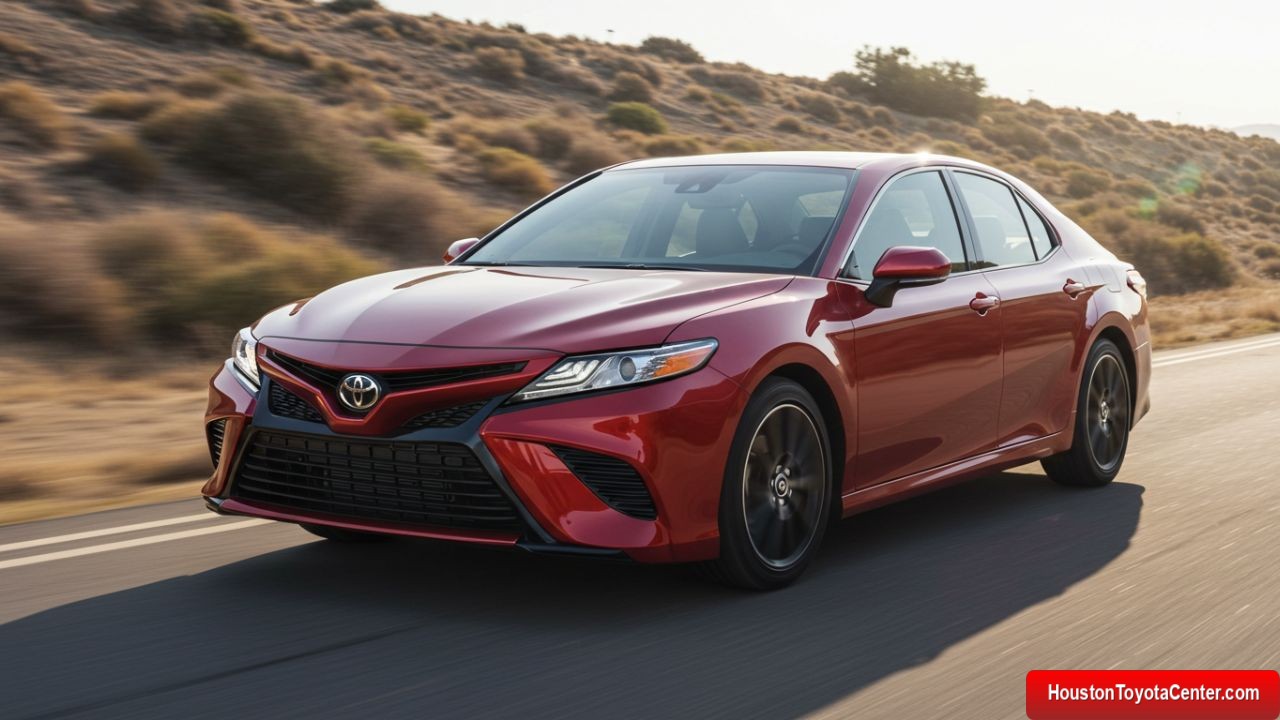
The automotive landscape has witnessed countless transformations over the past century, with vehicles rising and falling in popularity as consumer preferences shift and technological advancements reshape what drivers expect from their cars. Among these evolving narratives, few stories are as compelling or as influential as that of the Toyota Camry. Since its introduction to the global market in the early 1980s, the Camry has not merely participated in the sedan segment—it has fundamentally redefined it, establishing new benchmarks for reliability, value, and mass-market appeal that competitors have struggled to match for decades.
The Genesis of a Global Icon
The Toyota Camry’s journey began in Japan in 1982, initially conceived as a compact sedan designed to compete in the increasingly crowded mid-size segment. However, what distinguished the Camry from its contemporaries was Toyota’s unwavering commitment to quality engineering and manufacturing excellence. The first-generation Camry, known internally as the V10 series, featured front-wheel drive—a departure from the rear-wheel-drive configurations common at the time—and offered a refined driving experience that appealed to both practical commuters and those seeking a touch of sophistication.
When the Camry arrived in North America in 1983, it entered a market dominated by American manufacturers like Ford, Chevrolet, and Chrysler, alongside emerging Japanese competitors such as Honda and Nissan. The timing proved fortuitous. American consumers were beginning to prioritize fuel efficiency following the oil crises of the 1970s, and they were increasingly drawn to Japanese automakers’ reputations for building dependable, long-lasting vehicles. The Camry capitalized on this sentiment perfectly, offering a compelling combination of affordability, reliability, and comfort that resonated deeply with buyers.
Establishing Market Dominance in North America
Perhaps nowhere has the Camry’s impact been more profound than in the United States, where it has consistently ranked as one of the best-selling passenger vehicles for over three decades. This dominance is not accidental but rather the result of strategic positioning, continuous improvement, and an acute understanding of American consumer preferences.
FREE: Quickly identify and understand problems with your vehicle 🚘
CLICK HERESales Performance and Market Share
| Year | U.S. Sales Volume | Market Position | Key Competitors |
|---|---|---|---|
| 1990 | 235,000 units | Top 10 Best-Sellers | Honda Accord, Ford Taurus |
| 2000 | 406,000 units | #1 Best-Selling Car | Honda Accord, Ford Taurus |
| 2010 | 352,000 units | #1 Best-Selling Car | Honda Accord, Nissan Altima |
| 2020 | 294,000 units | Top 5 Best-Sellers | Honda Accord, Tesla Model 3 |
| 2023 | 245,000 units | Top 10 Best-Sellers | Honda Accord, Tesla Model 3 |
Note: Sales figures represent approximate annual volumes and may vary by source.
The Camry’s sustained success in the American market reflects several critical factors. First, Toyota invested heavily in domestic manufacturing, establishing production facilities in Kentucky, Indiana, and other states. This localization strategy not only reduced costs and improved supply chain efficiency but also helped the Camry overcome protectionist sentiments and trade barriers that sometimes affected imported vehicles. Second, Toyota maintained rigorous quality control standards, ensuring that each Camry rolling off the assembly line met exacting specifications for durability and performance.
Redefining Reliability Standards
One of the Camry’s most significant contributions to the global sedan market has been its role in elevating consumer expectations regarding vehicle reliability. Before the Camry’s emergence, many consumers accepted a certain degree of mechanical uncertainty as inherent to automobile ownership. Regular repairs, unexpected breakdowns, and premature component failures were considered normal aspects of car ownership.
Toyota challenged this paradigm through its implementation of the Toyota Production System (TPS), a manufacturing philosophy emphasizing continuous improvement, waste reduction, and quality at every stage of production. The Camry became a showcase for these principles, demonstrating that mass-produced vehicles could achieve exceptional reliability without sacrificing affordability or features.
Key Reliability Milestones:
- 1990s: The Camry established itself as one of the most dependable vehicles on American roads, with owners reporting significantly fewer problems compared to domestic competitors. Consumer Reports and J.D. Power studies consistently ranked the Camry among the top vehicles for predicted reliability.
- 2000s: As competitors attempted to close the reliability gap, Toyota continued to refine its processes. The Camry’s reputation for longevity became legendary, with many examples surpassing 200,000 miles with minimal major repairs. This durability translated into strong resale values, further enhancing the Camry’s value proposition.
- 2010s-Present: Despite facing challenges including recalls related to accelerator pedals and other issues, the Camry has maintained its position as one of the most reliable sedans available. Modern Camrys continue to receive high marks from reliability surveys, though the gap between Toyota and some competitors has narrowed as other manufacturers have adopted similar quality-focused manufacturing approaches.
The Camry’s influence extended beyond Toyota itself, forcing competitors to invest heavily in quality improvement initiatives. Honda, Nissan, Ford, Chevrolet, and others recognized that they could no longer compete solely on price or styling—they needed to match or exceed the Camry’s reliability standards to remain viable in the mid-size sedan segment.
Technological Innovation and Feature Evolution
While reliability formed the foundation of the Camry’s success, Toyota ensured the vehicle remained competitive through continuous technological innovation and feature enhancement. Each generation of the Camry introduced new technologies that eventually became industry standards, pushing the entire sedan market forward.
Safety Technology Leadership
The Camry has consistently been at the forefront of safety technology adoption. In the 1990s, when side airbags were still relatively uncommon, the Camry made them standard equipment. As electronic stability control emerged in the early 2000s, Toyota integrated it across the Camry lineup before many competitors followed suit.
The introduction of Toyota Safety Sense in recent generations represents another significant milestone. This suite of advanced driver-assistance systems includes pre-collision warning with automatic emergency braking, lane departure alert, adaptive cruise control, and automatic high beams. By making these features standard on most Camry trims, Toyota democratized access to safety technologies that had previously been reserved for luxury vehicles or expensive option packages.
Safety Technology Timeline:
| Generation | Years | Notable Safety Features Introduced |
|---|---|---|
| Third Generation | 1992-1996 | Driver-side airbag standard, optional passenger airbag |
| Fourth Generation | 1997-2001 | Dual front airbags standard, side-impact door beams |
| Fifth Generation | 2002-2006 | Side curtain airbags, electronic stability control |
| Sixth Generation | 2007-2011 | Knee airbags, enhanced crash structure |
| Seventh Generation | 2012-2017 | Pre-collision system (optional), blind spot monitoring |
| Eighth Generation | 2018-2023 | Toyota Safety Sense standard, pedestrian detection |
| Ninth Generation | 2024-Present | Enhanced TSS 3.0, improved camera and radar systems |
Powertrain Diversification
The Camry has also played a pivotal role in introducing alternative powertrains to the mainstream sedan market. While traditional gasoline engines have remained popular, Toyota’s introduction of hybrid technology in the Camry Hybrid marked a turning point for the segment.
Launched in 2007, the Camry Hybrid combined a gasoline engine with an electric motor to deliver superior fuel economy without requiring plug-in charging infrastructure. This approach proved highly appealing to consumers who wanted improved efficiency but weren’t ready to commit fully to electric vehicles. The Camry Hybrid quickly became one of the best-selling hybrid vehicles in America, demonstrating that electrification could succeed in the mass market.
In recent years, Toyota has expanded the Camry’s powertrain options to include more efficient conventional engines, continuously variable transmissions (CVTs), and increasingly sophisticated hybrid systems. The latest generation offers even greater efficiency improvements while maintaining the responsive driving dynamics that Camry owners expect.
Influencing Global Market Dynamics
While the Camry’s impact has been most visible in North America, its influence extends globally, affecting sedan markets in Europe, Asia, Australia, and other regions. The Camry’s success has shaped competitive strategies, influenced product development decisions, and altered consumer expectations worldwide.
Asian Markets
In Toyota’s home market of Japan, the Camry occupies a slightly different position than in North America. Japanese consumers have traditionally favored smaller vehicles due to urban density, parking constraints, and tax structures that penalize larger cars. Nevertheless, the Camry has maintained a presence in Japan, often featuring unique styling and powertrain options tailored to local preferences.
More significantly, the Camry’s global success has reinforced Toyota’s position as the world’s largest automaker, providing resources and credibility that benefit the entire brand portfolio. The Camry’s reputation for quality enhances perceptions of other Toyota models, creating a halo effect that benefits everything from the compact Corolla to the full-size Land Cruiser.
In other Asian markets such as China, India, and Southeast Asia, the Camry competes in a rapidly growing mid-size sedan segment. Chinese consumers, in particular, have embraced the Camry as a symbol of upward mobility and practical sophistication. Toyota’s joint ventures in China have enabled localized production, making the Camry more affordable and accessible to the expanding Chinese middle class.
European Challenges and Adaptations
The European sedan market presents unique challenges for the Camry and other mid-size sedans. European consumers have historically preferred smaller hatchbacks, wagons, and increasingly, SUVs and crossovers. Additionally, diesel engines have played a more prominent role in Europe than in North America, though this trend is reversing as emissions regulations tighten.
Toyota has adapted the Camry for European markets by offering diesel powertrain options in certain regions and emphasizing the vehicle’s refinement and comfort characteristics. However, the Camry faces stiff competition from European manufacturers like Volkswagen, BMW, and Mercedes-Benz, which dominate the premium sedan segments, as well as from more affordable offerings from brands like Ford and Opel.
Despite these challenges, the Camry has carved out a niche in Europe, particularly among buyers seeking reliable, comfortable transportation with lower running costs. The hybrid variant has found particular appeal in European cities with congestion charges and emissions-based taxation, where the Camry Hybrid’s efficiency provides tangible financial benefits.
Australian and Other Markets
In Australia, the Camry has enjoyed considerable success, benefiting from Toyota’s strong brand presence and the vehicle’s suitability for long-distance driving across vast distances. Australian consumers appreciate the Camry’s combination of comfort, reliability, and value, and the locally assembled versions (until production ceased in 2017) enjoyed strong support.
In Middle Eastern markets, the Camry’s reputation for durability in harsh climates has contributed to its popularity. The region’s extreme temperatures and demanding driving conditions test vehicles severely, and the Camry’s proven track record in these environments has built consumer confidence.
Competitive Response and Market Evolution
The Camry’s dominance has not gone unchallenged. Competitors have responded with their own strategies, attempting to differentiate their offerings and capture market share from Toyota’s flagship sedan. Understanding these competitive dynamics reveals how the Camry has shaped the broader sedan market.
Honda Accord: The Perennial Rival
The Honda Accord has been the Camry’s primary competitor throughout most of its history. Like the Camry, the Accord emphasizes reliability, efficiency, and value, though it has traditionally positioned itself as slightly more sporty and engaging to drive. The Accord-Camry rivalry has pushed both manufacturers to continuously improve their offerings, benefiting consumers through better products and more competitive pricing.
In recent years, Honda has emphasized technology and connectivity in the Accord, attempting to appeal to younger buyers who prioritize digital features. Meanwhile, Toyota has doubled down on the Camry’s traditional strengths while gradually incorporating more advanced technology. This divergence in strategy reflects different interpretations of what modern sedan buyers want.
The Rise of SUVs and Crossovers
Perhaps the most significant challenge to the Camry and the entire sedan segment has come from the explosive growth of SUVs and crossovers. Starting in the 2010s, American consumers increasingly shifted away from sedans toward higher-riding vehicles that offer greater cargo capacity, perceived safety advantages, and commanding driving positions.
This trend has affected Camry sales, which have declined from their peak levels in the 2000s. However, Toyota has responded strategically by expanding its SUV and crossover lineup with vehicles like the RAV4, Highlander, and Venza, while continuing to invest in the Camry. Rather than abandoning the sedan segment, Toyota has recognized that sedans still serve important market niches, particularly among buyers prioritizing fuel efficiency, lower purchase prices, and traditional driving dynamics.
Electric Vehicle Disruption
The emergence of electric vehicles represents another transformative force affecting the sedan market. Tesla’s Model 3, in particular, has disrupted the mid-size sedan segment by offering compelling performance, range, and technology at competitive prices. Traditional automakers including Toyota have responded by accelerating their electrification strategies.
While Toyota has been somewhat cautious about fully electric vehicles, preferring hybrid and plug-in hybrid approaches in the near term, the company has announced plans to introduce battery-electric Camry variants in coming years. This evolution reflects the broader industry transition toward electrification while acknowledging that the Camry’s core values—reliability, efficiency, and value—remain relevant regardless of powertrain type.
Economic and Cultural Impact
Beyond its direct influence on the automotive industry, the Camry has had broader economic and cultural impacts. The vehicle’s manufacturing footprint has created thousands of jobs in North America and other regions, contributing to local economies and supporting supplier networks. Toyota’s investment in domestic production has also facilitated technology transfer and skills development, raising manufacturing standards across the industry.
Culturally, the Camry has become synonymous with practical, sensible transportation. It appears frequently in media representations of middle-class life, often portrayed as the vehicle choice of responsible, pragmatic individuals. This cultural positioning, while sometimes criticized as boring or uninspiring, has reinforced the Camry’s appeal to its target demographic.
The Camry has also played a role in changing perceptions of Japanese automobiles. When the Camry first arrived in America, Japanese cars were sometimes viewed as inferior imports suitable only for budget-conscious buyers. The Camry’s success helped establish Japanese manufacturers as producers of high-quality, desirable vehicles worthy of consideration alongside domestic and European alternatives.
Looking Forward: The Camry’s Future Role
As the automotive industry continues to evolve, the Camry faces both challenges and opportunities. The ongoing shift toward electrification, autonomous driving technology, and shared mobility services will require Toyota to adapt the Camry while preserving the qualities that have made it successful.
Future Considerations:
- Electrification Strategy: Toyota must balance its hybrid expertise with the growing demand for fully electric vehicles. The Camry will likely offer multiple powertrain options, including conventional gasoline, hybrid, plug-in hybrid, and eventually pure electric variants.
- Technology Integration: As vehicles become increasingly connected and automated, the Camry must incorporate advanced infotainment, connectivity, and driver-assistance features without compromising its reputation for simplicity and reliability.
- Market Positioning: With sedan sales declining in favor of SUVs, Toyota must carefully position the Camry to serve specific market segments where sedans retain advantages, such as fleet sales, ride-sharing services, and buyers prioritizing efficiency and value.
- Global Expansion: Emerging markets in Africa, South America, and parts of Asia present growth opportunities for the Camry, provided Toyota can adapt the vehicle to local conditions and price points.
Conclusion: A Legacy of Transformation
The Toyota Camry’s impact on the global sedan market extends far beyond its impressive sales figures. Through four decades of continuous evolution, the Camry has raised standards for reliability, safety, efficiency, and value that have benefited consumers worldwide. It has forced competitors to improve their offerings, accelerated the adoption of new technologies, and demonstrated that mass-market vehicles can achieve excellence without sacrificing affordability.
While the automotive landscape continues to change dramatically, with electrification, autonomy, and shifting consumer preferences reshaping the industry, the Camry’s fundamental contribution remains relevant. It proved that thoughtful engineering, rigorous quality control, and deep understanding of customer needs could create a vehicle that transcends mere transportation to become a trusted companion for millions of families and individuals around the world.
The Camry’s story is ultimately one of consistent execution rather than revolutionary disruption. It did not invent the sedan, nor did it pioneer most of the technologies it now features. Instead, it perfected the formula for building a dependable, efficient, and affordable vehicle that meets the practical needs of everyday drivers. In doing so, it transformed the global sedan market, establishing benchmarks that continue to define success in the segment.
As we look toward an uncertain automotive future, the Camry’s legacy serves as a reminder that lasting impact comes not from flashy innovations alone, but from sustained commitment to delivering genuine value to customers. Whether powered by gasoline, electricity, or some combination thereof, the Camry’s influence on how we think about and build sedans will endure for generations to come. The vehicle that began as a modest competitor in the Japanese domestic market has become a global icon, reshaping expectations and elevating standards across the entire automotive industry. Its impact on the global sedan market is not merely historical—it continues to unfold with each new generation, ensuring that the Camry’s story remains one of the most important chapters in automotive history.
Leave a Reply