
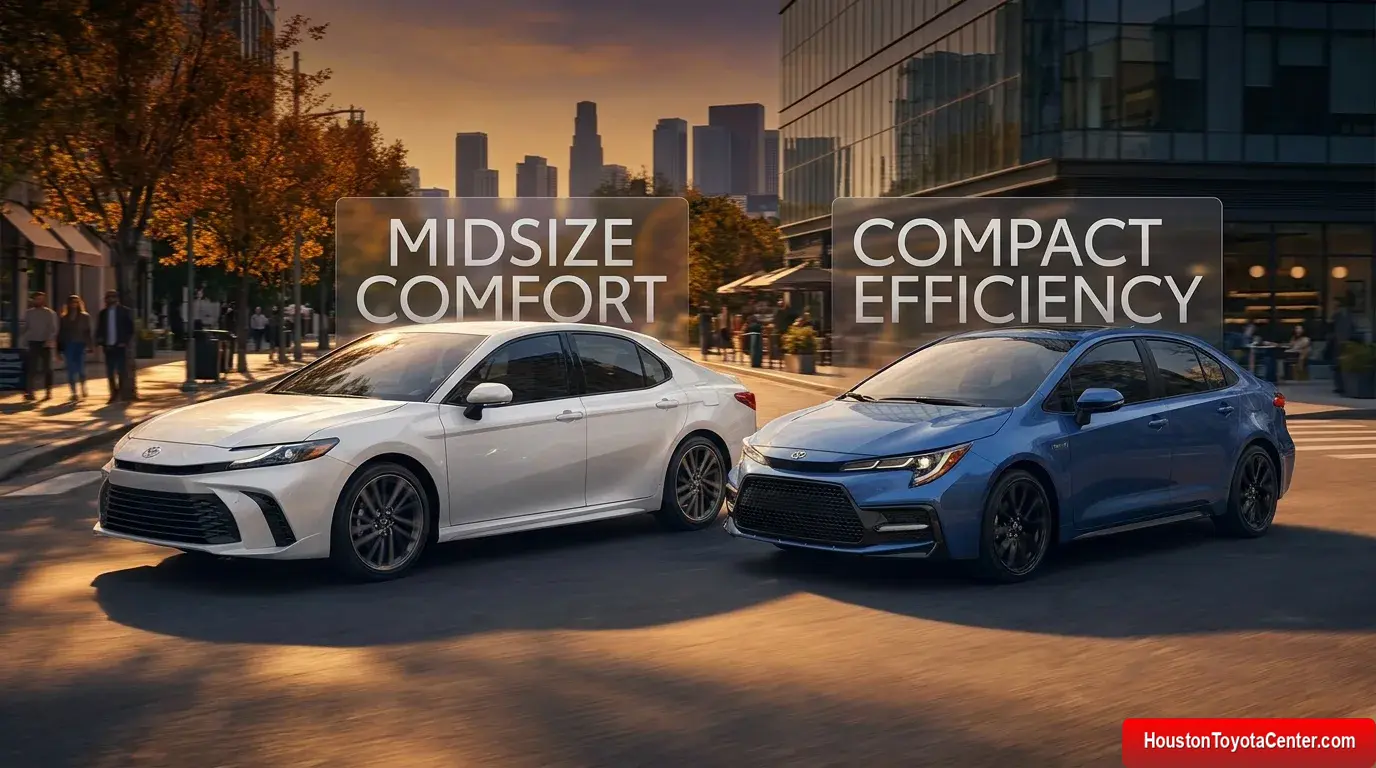
When it comes to reliable, fuel-efficient, and well-rounded sedans, few brands come to mind as quickly or confidently as Toyota. For decades, the Japanese automaker has built a reputation on durability, value retention, and smart engineering — qualities that resonate deeply with American car buyers. Among its most popular offerings are two names that have become household staples: the Toyota Camry and the Toyota Corolla.
These two vehicles represent different ends of the midsize-to-compact sedan spectrum, each appealing to distinct buyer needs and lifestyles. While both share Toyota’s hallmark reliability and modern technology, they diverge significantly in size, performance, pricing, features, and overall driving experience. Choosing between them isn’t always straightforward — especially when your budget, daily commute, family size, and long-term goals all play into the decision.
This comprehensive guide dives deep into every facet of the 2026 Toyota Camry and 2026 Toyota Corolla, comparing everything from exterior design and interior comfort to powertrain options, safety systems, fuel economy, tech integration, cargo space, resale value, and real-world ownership costs. Whether you’re a first-time car buyer, an urban commuter, a growing family, or someone seeking a dependable daily driver, this article will help you determine which Toyota sedan best aligns with your priorities.
Overview: Understanding the Core Differences
Before we dissect individual categories, let’s establish a foundational understanding of where these models stand in Toyota’s lineup:
FREE: Quickly identify and understand problems with your vehicle 🚘
CLICK HERE| Feature | Toyota Camry | Toyota Corolla |
|---|---|---|
| Vehicle Class | Midsize Sedan | Compact Sedan |
| Starting MSRP (2026) | ~$27,500 | ~$21,850 |
| Seating Capacity | 5 passengers | 5 passengers |
| Trunk Space | 15.1 cu ft | 13.1 cu ft |
| Wheelbase | 111.2 inches | 106.3 inches |
| Length | 192.1 inches | 183.1 inches |
| Drivetrain | Front-Wheel Drive (FWD) only | FWD only |
| Powertrain Options | 4-cylinder, V6 (discontinued), Hybrid | 4-cylinder, Hybrid |
| Fuel Economy (Hybrid Combined) | Up to 52 mpg | Up to 54 mpg |
| Warranty (Basic/Powertrain) | 3 years / 36,000 miles; 5 years / 60,000 miles | Same as Camry |
At a glance, the Camry is larger, more powerful, and positioned as a premium midsize sedan, while the Corolla is smaller, lighter, and focused on affordability and efficiency. But appearances can be deceiving — both cars have evolved dramatically over recent generations, blurring some traditional lines between compact and midsize segments.
The key question remains: Which one is right for you?
Let’s explore each aspect in detail.
Exterior Design & Styling: Form Meets Function
Toyota Camry – Bold, Athletic, and Modern
The 2026 Toyota Camry continues the aggressive styling language introduced in the eighth-generation redesign (2018) and further refined through annual updates. With its wide, trapezoidal grille, sharp LED headlights, and sculpted hood, the Camry exudes confidence and presence on the road.
Available in LE, SE, XLE, TRD, and Hybrid trims, the Camry offers a range of aesthetic personalities:
- LE: Conservative and professional, ideal for fleet or business use.
- SE: Sportier with blacked-out trim, rear spoiler, and available 19-inch wheels.
- XLE: Upscale touches like chrome accents, dual exhaust tips, and softer curves.
- TRD: Track-inspired body kit, lowered suspension, exclusive badging, and performance cues.
Despite being a midsize sedan, the Camry manages to look athletic rather than bulky. Its fastback-like roofline improves aerodynamics and gives it a coupe-like silhouette. The rear end features full-width LED lighting on higher trims, enhancing visibility and modern appeal.
Dimensions contribute significantly to its visual dominance:
- Length: 192.1 inches
- Width: 72.4 inches
- Height: 56.9 inches
- Wheelbase: 111.2 inches
These proportions allow for generous shoulder and legroom inside, but also mean tighter maneuverability in crowded city streets or small parking spots.
Toyota Corolla – Sleek, Youthful, and Urban-Friendly
In contrast, the 2026 Corolla embraces a more youthful, energetic design language. Inspired by Toyota’s global TNGA-C platform architecture, it features a lower stance, prominent front fascia, and dynamic character lines along the sides.
Available in L, LE, SE, XLE, and Hybrid trims (with a GR Corolla hot hatch variant sold separately), the Corolla balances practicality with flair:
- L/LE: Simple, clean lines; functional over flashy.
- SE/XSE: Darkened trim, sport seats, available JBL audio, and 18-inch wheels.
- Hybrid: Unique blue-accented badges and subtle eco-themed elements.
While not as imposing as the Camry, the Corolla stands out with its expressive face and confident posture. It’s shorter and narrower:
- Length: 183.1 inches
- Width: 69.9 inches
- Height: 56.5 inches
- Wheelbase: 106.3 inches
This makes it easier to park, navigate tight corners, and squeeze into narrow garages — a major advantage in dense urban environments like New York City, San Francisco, or Boston.
Additionally, the Corolla’s reduced footprint translates to less wind resistance and improved agility, contributing directly to better fuel economy and handling responsiveness.
🎯 Design Takeaway:
If you want a commanding road presence and upscale aesthetics, go Camry.
If you prefer nimble proportions and city-savvy styling, lean toward the Corolla.
Interior Comfort & Materials: Where You Spend Your Time
Once you step inside either vehicle, material quality, ergonomics, and cabin layout become critical factors — especially if you spend hours commuting or making frequent trips.
Camry Interior – Spacious, Quiet, and Premium
Inside the 2026 Camry, Toyota has made significant strides in elevating perceived quality. Higher trims (XLE, TRD, Hybrid XSE) feature soft-touch surfaces, faux leather upholstery, ambient lighting, and real stitching on the dashboard and doors.
Front passengers enjoy excellent headroom (39.5 inches) and legroom (41.7 inches). Rear-seat occupants benefit from generous legroom (40.4 inches), among the best in the segment — enough for adults to sit comfortably even on long drives.
Noise insulation is another highlight. Thanks to acoustic glass, extra sound-deadening materials, and careful aerodynamic tuning, the Camry delivers a remarkably quiet ride at highway speeds — a trait often associated with luxury brands.
Cargo space measures 15.1 cubic feet, sufficient for five suitcases or a week’s worth of groceries. The trunk opening is wide, and there’s a hidden storage compartment beneath the floor for valuables.
Notable interior features across trims:
- Standard 7-inch or available 12.3-inch touchscreen
- Wireless Apple CarPlay & Android Auto
- Qi wireless charging pad
- Dual-zone automatic climate control
- Heated and ventilated front seats (on XLE and above)
- Panoramic sunroof (optional)
Build quality feels solid, with minimal creaks or rattles over bumps. However, base LE models still use hard plastics on lower door panels and center console — a cost-saving measure common in the segment.
Corolla Interior – Functional, Tech-Savvy, but Compact
The Corolla’s cabin reflects its mission: deliver maximum utility without excess. While it doesn’t match the Camry’s plushness, it impresses with thoughtful design and modern tech.
Material quality varies by trim. Base L and LE models use more rigid plastics, though textures help disguise their utilitarian nature. Move up to SE or XLE, and you’ll find soft-touch dash covers, fabric-upholstered doors, and available SofTex synthetic leather.
Front seat comfort is good, with supportive bolsters and multiple adjustments. Legroom (40.4 inches) matches the Camry up front, but rear legroom drops to 37.4 inches — acceptable for kids or short trips, but cramped for tall adults on extended journeys.
Headroom is slightly better at 39.6 inches, thanks to a flatter roofline.
Trunk capacity is 13.1 cubic feet, about 2 cubic feet less than the Camry. That may not sound like much, but it means one fewer large suitcase or difficulty fitting bulky items like strollers or golf bags.
Still, Toyota maximizes usability with underfloor storage, cupholders, and configurable armrest bins.
Tech highlights include:
- Standard 8-inch touchscreen (larger than Camry’s base unit)
- Full wireless smartphone integration
- Available 7-inch or 12.3-inch digital instrument cluster
- Rain-sensing wipers
- Smart Key System with push-button start
One area where the Corolla shines is ease of use. Controls are logically placed, buttons are tactile, and menus are intuitive — no steep learning curve here.
However, rear ventilation is limited to basic vents on higher trims, and there’s no option for rear sunshades or heated seats.
🛋️ Interior Verdict:
For spaciousness, refinement, and long-haul comfort, the Camry wins decisively.
For simplicity, tech-forward design, and efficient packaging, the Corolla holds its own — especially for solo drivers or couples.
Powertrains & Performance: Efficiency vs. Power
This is where the philosophical divide between the two models becomes clearest.
Camry Powertrain Options – Balanced Blend of Power and Economy
The 2026 Camry offers three primary engine configurations:
- 2.5L Dynamic Force 4-Cylinder (I4)
- Horsepower: 203 hp @ 6,600 rpm
- Torque: 184 lb-ft @ 5,000 rpm
- Transmission: 8-speed Direct-Shift Automatic
- 0–60 mph: ~7.2 seconds
- Fuel Economy (Combined): 32 mpg
- 2.4L Turbocharged 4-Cylinder (Discontinued after 2024)
- Previously offered in TRD and SE grades for enhanced performance (295 hp).
- No longer available in 2026 model year due to emissions regulations and shift toward hybridization.
- Camry Hybrid – 2.5L I4 + Electric Motors (Series-Parallel Hybrid)
- Total System Output: 208 hp
- eCVT transmission
- 0–60 mph: ~7.5 seconds
- Fuel Economy: Up to 52 mpg combined
- EV-only mode at low speeds
All engines are paired exclusively with front-wheel drive.
Despite losing the turbocharged option, the standard 2.5L engine remains competent, offering smooth acceleration and responsive passing power on highways. The 8-speed automatic shifts smoothly and holds gears during spirited driving.
The hybrid version is increasingly popular, combining strong fuel economy with seamless electric-assist operation. Regenerative braking is well-tuned, and the transition between gas and electric power is nearly imperceptible.
Drivers who prioritize performance may miss the old V6 (last seen in 2017) or the short-lived turbo four, but Toyota’s focus has clearly shifted toward efficiency and electrification.
Corolla Powertrain Options – Lean, Light, and Efficient
The 2026 Corolla keeps things simpler:
- 2.0L M20A-FKS 4-Cylinder (I4)
- Horsepower: 169 hp @ 6,600 rpm
- Torque: 151 lb-ft @ 4,800 rpm
- Transmission: CVT with physical first gear (Direct Shift-CVT)
- 0–60 mph: ~8.2 seconds
- Fuel Economy: 31 mpg city / 40 mpg highway / 35 mpg combined
- Corolla Hybrid – 1.8L 2ZR-FXE I4 + Electric Motor
- Total System Output: 138 hp
- eCVT
- 0–60 mph: ~9.8 seconds
- Fuel Economy: Up to 54 mpg combined (one of the highest in any non-plug-in sedan)
Again, FWD only.
While the Corolla’s base engine feels adequate around town, it struggles under load — such as merging onto fast-moving freeways or climbing steep hills with passengers. The CVT does its best to mask lags with simulated shifts, but it can drone under hard acceleration.
The hybrid system prioritizes efficiency over excitement. With only 138 hp, it’s the least powerful of the two hybrids, resulting in slower acceleration. However, its ultra-lightweight construction helps compensate somewhat.
⚙️ Performance Summary Table
| Metric | Camry (2.5L Gas) | Camry Hybrid | Corolla (2.0L Gas) | Corolla Hybrid |
|---|---|---|---|---|
| Engine | 2.5L I4 | 2.5L I4 + Electric | 2.0L I4 | 1.8L I4 + Electric |
| HP | 203 | 208 | 169 | 138 |
| Torque | 184 lb-ft | 184 lb-ft | 151 lb-ft | 120 lb-ft |
| 0–60 mph | ~7.2 sec | ~7.5 sec | ~8.2 sec | ~9.8 sec |
| Transmission | 8-speed auto | eCVT | Direct Shift-CVT | eCVT |
| Fuel Economy (Combined) | 32 mpg | 52 mpg | 35 mpg | 54 mpg |
| Driving Feel | Confident, composed | Smooth, silent | Adequate, buzzy | Very efficient, relaxed |
💡 Insight:
The Camry delivers stronger performance whether in gas or hybrid form.
The Corolla Hybrid achieves superior fuel economy, ideal for hypermilers and city dwellers.
If you frequently carry heavy loads, tow (even lightly), or enjoy spirited driving, the Camry’s extra power and torque make a noticeable difference. If your priority is minimizing fuel stops and maximizing MPG, the Corolla Hybrid edges ahead.
Ride Quality & Handling: Daily Comfort vs. Agility
How a car feels on the road impacts fatigue, enjoyment, and safety.
Camry – Refined and Composed
Thanks to its longer wheelbase and stiffer TNGA-K platform, the Camry provides a smooth, isolated ride. It absorbs potholes, expansion joints, and rough pavement with composure.
Steering is light yet precise, making it easy to handle in parking lots while remaining stable at high speeds. Body roll during cornering is minimal, aided by adaptive suspension options on higher trims.
Wind and road noise are well-suppressed, contributing to a serene cabin environment — particularly important for commuters or road trippers.
However, the trade-off is a slightly numb steering feel. Enthusiasts might find it too detached compared to sportier competitors like the Honda Accord or Mazda6 (discontinued).
On twisty backroads, the Camry behaves predictably but conservatively. It encourages safe, steady progress rather than aggressive corner carving.
Corolla – Nimble and Responsive
Being smaller and lighter (~2,800 lbs vs. ~3,300 lbs for Camry), the Corolla feels more agile. It darts through traffic, changes lanes quickly, and responds promptly to steering inputs.
The electric power steering is tuned for light effort, perfect for stop-and-go driving. However, feedback is limited, and the system can feel artificial at higher speeds.
Suspension tuning leans toward firmness — great for reducing body sway but potentially jarring over broken pavement unless equipped with upgraded tires.
Higher trims (SE, XSE) offer sport-tuned suspensions and larger wheels, improving grip but sacrificing some ride comfort.
In rainy or windy conditions, the Corolla’s lighter weight makes it more susceptible to crosswinds and hydroplaning — something to consider in coastal or northern climates.
🛣️ Driving Experience Conclusion:
Choose the Camry if you value ride comfort, stability, and long-distance ease.
Opt for the Corolla if you prioritize maneuverability, quick reflexes, and urban agility.
Technology & Infotainment: Staying Connected
Modern buyers expect seamless connectivity, intuitive interfaces, and advanced driver aids. Both Toyotas deliver, but with nuances.
Camry Tech Suite
The 2026 Camry features Toyota’s latest multimedia system, now standard with:
- Standard 7-inch Touchscreen (LE, SE)
- Optional 12.3-inch Premium Display (XLE, Hybrid XSE)
- Built-in navigation (on higher trims)
- Over-the-air (OTA) software updates
- Cloud-based voice recognition
- Integrated Yelp search and fuel price lookup
- Digital Key via smartphone app
Wireless Apple CarPlay and Android Auto are standard across all trims — a major plus.
Audio options include:
- Standard 6-speaker system
- Available JBL® Premium Audio with 9 speakers and Clari-Fi™ restoration tech
Instrument cluster choices:
- Analog gauges with 4.2-inch TFT info display (base)
- Fully digital 10-inch or 12.3-inch screen (available)
Additional conveniences:
- Head-Up Display (HUD)
- Bird’s-eye view camera
- Remote Connect services (lock/unlock, start engine, locate vehicle via app)
User experience is generally positive, though some criticize the reliance on touch-sensitive climate controls in higher trims (less tactile than physical knobs).
Corolla Tech Features
The Corolla actually gets a slight edge in base infotainment:
- Standard 8-inch Touchscreen (larger than Camry’s base screen)
- Optional 12.3-inch display
- Same wireless CarPlay/Android Auto
- OTA updates
- Amazon Alexa integration
- Wi-Fi Connect hotspot capability
JBL audio is also optional, with 8 speakers.
Digital clusters:
- Base: 4.2-inch multi-info display
- Available: 7-inch or 12.3-inch full digital gauge
Unique additions:
- Bluelink-connected services (in select regions)
- In-vehicle mailbox for receiving messages
- Customizable home screen layouts
Both cars use Toyota’s Entune™ platform, which has matured into a reliable, fast-booting system. Graphics are crisp, menus are logical, and response times are snappy.
📱 Tech Winner? It’s a Tie — With Nuances
- The Corolla wins on base equipment (bigger standard screen).
- The Camry offers broader luxury options (HUD, panoramic camera, ventilated seats).
- Both provide excellent smartphone integration and cloud services.
Your preference depends on whether you want more standard tech (Corolla) or higher-end available luxuries (Camry).
Safety & Driver Assistance: Peace of Mind Standard
Toyota Safety Sense™ 3.0 (TSS 3.0) comes standard on every 2026 Camry and Corolla — a major selling point.
Toyota Safety Sense 3.0 Includes:
✅ Pre-Collision System with Pedestrian Detection
Uses radar and camera to detect vehicles, cyclists, and pedestrians. Can apply brakes automatically.
✅ Full-Speed Range Dynamic Radar Cruise Control
Adaptive cruise that works from 0 mph upward — essential for traffic jams.
✅ Lane Departure Alert with Steering Assist
Warns and gently corrects if drifting out of lane.
✅ Lane Tracing Assist
Keeps centered in lane during highway cruising (similar to Tesla’s Autopilot Lite).
✅ Automatic High Beams
Switches between high and low beams based on traffic.
✅ Road Sign Assist
Reads speed limit signs and displays them on the instrument panel.
✅ Proactive Driving Assist (PDA) (New in TSS 3.0)
Provides gentle deceleration and steering input in congested areas to reduce driver stress.
✅ Emergency Driving Stop (EDS)
If driver becomes unresponsive, vehicle pulls over and calls for help.
Both models earned top marks from IIHS (Top Safety Pick+) and NHTSA (5-star overall rating).
Minor differences:
- The Camry offers additional safety extras like blind-spot monitoring with rear cross-traffic alert (standard on SE and above), parking sensors, and surround-view camera.
- The Corolla includes blind-spot monitoring only on SE and XLE trims (not standard on base LE).
🔐 Safety Verdict:
Both are exceptionally safe.
But the Camry offers broader availability of advanced features, especially on lower trims.
Fuel Economy & Ownership Costs: Long-Term Value
One of the biggest considerations for many buyers is total cost of ownership — including fuel, maintenance, insurance, depreciation, and repairs.
Fuel Costs Comparison
Let’s assume 15,000 miles per year, with gas averaging $3.50/gallon:
| Model | MPG (Combined) | Annual Fuel Use | Annual Cost |
|---|---|---|---|
| Camry (Gas) | 32 mpg | 469 gallons | $1,641 |
| Camry Hybrid | 52 mpg | 288 gallons | $1,008 |
| Corolla (Gas) | 35 mpg | 429 gallons | $1,501 |
| Corolla Hybrid | 54 mpg | 278 gallons | $973 |
Over five years:
- Camry Gas: ~$8,205
- Camry Hybrid: ~$5,040
- Corolla Gas: ~$7,505
- Corolla Hybrid: ~$4,865
Savings with hybrids: $3,000+ over five years
Even with a higher upfront price, hybrid versions typically pay for themselves within 5–7 years depending on usage.
Maintenance & Reliability
Both vehicles inherit Toyota’s legendary reliability:
- J.D. Power Initial Quality Study: Both rank above average.
- Consumer Reports Predicted Reliability Score: Camry = 4/5, Corolla = 4/5
- Powertrain longevity: Expect 200,000+ miles with regular service.
Common maintenance intervals:
- Oil changes: Every 5,000–10,000 miles (synthetic recommended)
- Brake fluid: Every 30,000 miles
- Coolant: Every 100,000 miles
- Hybrid battery: Designed for 150,000+ miles; warranty covers 10 years/150,000 miles in most states
Independent studies show the Corolla has marginally lower repair costs due to simpler mechanics and cheaper parts. However, the difference is minimal — both are inexpensive to maintain.
Depreciation & Resale Value
According to Kelley Blue Book (KBB) and iSeeCars, both models retain value exceptionally well:
| Model | 5-Year Depreciation Rate | 5-Year Residual Value |
|---|---|---|
| Toyota Camry | 42% | 58% |
| Toyota Corolla | 38% | 62% |
| Industry Average (Sedans) | ~55% | ~45% |
Why does the Corolla depreciate slower?
- Lower starting price → less to lose
- Strong demand in rental and used markets
- Proven track record over 50+ years
That said, the Camry still holds value better than most competitors (e.g., Nissan Altima: 48%, Hyundai Sonata: 46%).
💰 Ownership Bottom Line:
The Corolla offers the lowest total cost of ownership, especially in hybrid form.
The Camry costs more to buy and fuel, but retains strong resale value and justifies premium pricing with added space and comfort.
Target Buyer Profiles: Who Should Choose Which?
To simplify the decision, let’s define ideal user personas for each model.
✅ Best For the Toyota Camry:
🔹 Growing Families
With more rear legroom, quieter cabin, and larger trunk, the Camry accommodates child seats, strollers, and weekend luggage with ease.
🔹 Commuters Seeking Comfort
If you drive 50+ miles daily, the Camry’s plush ride, noise reduction, and ergonomic seats reduce fatigue.
🔹 Professionals Wanting Presence
Doctors, lawyers, consultants — those who want a polished, upscale appearance without stepping into luxury territory.
🔹 Hybrid Buyers Needing Power + Efficiency
The Camry Hybrid strikes a rare balance: near-top-tier MPG with strong passing ability.
🔹 Long-Term Owners
Buyers planning to keep the car for 10+ years appreciate the robust build and proven durability.
✅ Best For the Toyota Corolla:
🔹 First-Time Car Buyers
Low entry price (~$21,850), affordable insurance, and stellar reliability make it ideal for teens or young adults.
🔹 City Dwellers
Compact size simplifies parallel parking, alley navigation, and garage fit.
🔹 Budget-Conscious Shoppers
Every dollar counts — the Corolla delivers essential features without frills.
🔹 Eco-Minded Drivers
The Corolla Hybrid achieves class-leading 54 mpg — perfect for hypermiling or zero-emission zones.
🔹 Fleet Managers
Rental companies and corporate fleets love the Corolla for its low operating costs and high uptime.
Trim Level Breakdown: Finding Your Fit
Let’s compare popular trims side-by-side.
Popular Camry Trims (2026)
| Trim | Price (Est.) | Key Features |
|---|---|---|
| LE | $27,500 | Steel wheels, cloth seats, 7-inch screen, TSS 3.0 |
| SE | $29,500 | Sport body kit, 18-inch wheels, paddle shifters, LED fog lights |
| XLE | $32,800 | Leather-trimmed seats, moonroof, 12.3-inch screen, rain-sensing wipers |
| Hybrid LE | $29,950 | Hybrid powertrain, 52 mpg, silver-accented grille |
| Hybrid XSE | $34,950 | Sport styling, JBL audio, digital cluster, heated steering wheel |
💡 Tip: The Hybrid LE offers the best blend of savings and features for most buyers.
Popular Corolla Trims (2026)
| Trim | Price (Est.) | Key Features |
|---|---|---|
| L | $21,850 | Basic essentials, manual AC, 7-inch cluster |
| LE | $23,500 | Smart Key, 8-inch touchscreen, backup camera |
| SE | $25,200 | Sport seats, dark gray wheels, rear spoiler, paddle shifters |
| XLE | $27,100 | Leather-wrapped wheel, power passenger seat, auto-dimming mirror |
| Hybrid LE | $25,950 | 54 mpg, hybrid blue badges, energy monitor display |
| Hybrid XLE | $28,450 | Heated front seats, proximity key, bird’s-eye camera |
💡 Tip: The Hybrid LE again offers the sweet spot — efficiency, value, and modern tech.
Environmental Impact & Sustainability
As concerns about climate change grow, vehicle emissions matter more than ever.
| Model | CO₂ Emissions (grams/mile) | Annual CO₂ (15k mi) |
|---|---|---|
| Camry (Gas) | 410 g/mi | 6.15 tons |
| Camry Hybrid | 250 g/mi | 3.75 tons |
| Corolla (Gas) | 380 g/mi | 5.7 tons |
| Corolla Hybrid | 240 g/mi | 3.6 tons |
The Corolla Hybrid produces the least emissions, making it the greenest choice in Toyota’s sedan lineup.
Additionally, Toyota uses recycled materials in both vehicles:
- Seat fabrics contain up to 30% plant-based or recycled fibers
- Packaging minimized with reusable containers in manufacturing
- Batteries recyclable through certified partners
Neither model is plug-in capable (unlike Prius Prime), but Toyota plans to expand electrification by 2030.
Final Recommendation: Which One Should You Buy?
After analyzing every dimension — performance, comfort, tech, cost, safety, and lifestyle fit — the answer ultimately hinges on your personal needs.
🏆 Choose the 2026 Toyota Camry If You…
- Need maximum interior space and comfort
- Prioritize highway stability and ride quality
- Want more horsepower and quicker acceleration
- Are willing to pay more upfront for long-term comfort
- Frequently travel with passengers or luggage
- Prefer a more upscale, premium feel
👉 Ideal for: Families, professionals, long-distance commuters, comfort seekers.
🏆 Choose the 2026 Toyota Corolla If You…
- Have a tighter budget or are financing
- Live in a city with narrow streets and limited parking
- Want the absolute best fuel economy
- Are a first-time buyer or student
- Value simplicity, reliability, and low running costs
- Don’t need maximum rear legroom or trunk space
👉 Ideal for: Urban drivers, eco-conscious consumers, budget shoppers, young adults.
Conclusion: Two Champions, One Mission
There is no definitive “better” car between the Toyota Camry and Toyota Corolla — only the one that’s better for you.
Both embody Toyota’s enduring strengths: bulletproof reliability, strong resale value, comprehensive safety, and evolutionary design. They’ve adapted to changing times — embracing hybrid tech, digital interfaces, and sustainable practices — without abandoning their core identity.
The Camry stands as the quintessential American family sedan — roomy, refined, and reassuring.
The Corolla remains the world’s best-selling car for a reason — accessible, efficient, and endlessly practical.
In a market flooded with SUVs and crossovers, these sedans prove that sometimes, less really is more — whether it’s fuel consumption, complexity, or cost.
So ask yourself:
Do I need space and comfort, or efficiency and economy?
Your honest answer will lead you to the right Toyota.
Whether you choose the bold Camry or the clever Corolla, you’re investing in peace of mind — and that’s a decision worth driving home.
Article last updated: Thursday, August 13, 2026
Sources: Toyota USA, EPA Fuel Economy Guide, Kelley Blue Book (KBB), Edmunds, Consumer Reports, J.D. Power, IIHS, NHTSA, iSeeCars
Leave a Reply