
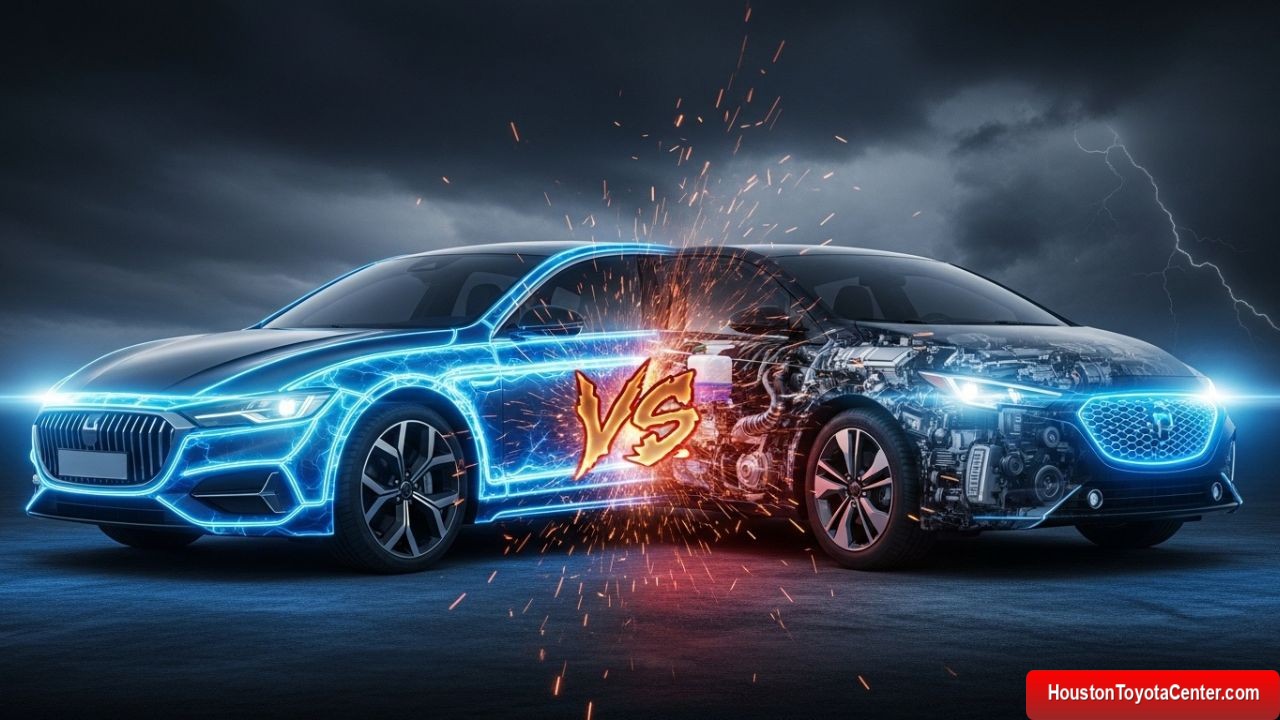
For more than two decades, hybrid vehicles have occupied an awkward yet fascinating middle ground in the automotive world. They were once hailed as the perfect compromise: cleaner than internal combustion engine (ICE) cars, less anxiety-inducing than fully electric vehicles (EVs), and technologically impressive without demanding radical lifestyle changes. But as full EVs gain momentum—supported by falling battery costs, expanding charging infrastructure, and aggressive government policies—the question has become unavoidable:
Are hybrids still relevant in the age of full EVs, or are they merely a transitional technology overstaying its welcome?
The answer is more nuanced than a simple yes or no. Hybrids are neither obsolete nor universally essential. Instead, they are evolving, reshaping their role in response to economic realities, infrastructure gaps, consumer psychology, and regional differences. To understand where hybrids stand today—and where they might go tomorrow—we need to examine their history, technology, market position, and real-world usability in comparison to full EVs.
The Original Promise of Hybrids
When hybrids first entered the mainstream in the late 1990s and early 2000s, they were revolutionary. Cars like the Toyota Prius introduced the idea that fuel efficiency could coexist with practicality, comfort, and reliability. At a time when EV technology was immature, expensive, and limited in range, hybrids felt like a logical leap forward.
FREE: Quickly identify and understand problems with your vehicle 🚘
CLICK HERETheir core value proposition was simple:
- Reduce fuel consumption
- Lower emissions
- Preserve the convenience of gasoline
- Avoid dependence on charging infrastructure
Hybrids succeeded because they required no behavioral change from drivers. You didn’t need to plan charging stops or install home equipment. You simply drove, refueled, and enjoyed better mileage.
This ease of adoption helped hybrids gain trust, especially among cautious consumers who wanted environmental benefits without technological risk.
The Rapid Rise of Full EVs
Fast forward to the 2020s, and the automotive landscape looks dramatically different. Full EVs are no longer niche products for early adopters. They are increasingly mainstream, backed by:
- Massive investments from automakers
- Rapid improvements in battery energy density
- Expanding fast-charging networks
- Strong policy incentives and mandates
In many regions, governments are announcing timelines to phase out new gasoline-only vehicles altogether. Automakers are following suit, with some pledging to become fully electric within the next decade.
From this perspective, hybrids can seem like a half-measure—neither fully electric nor fully traditional.
But appearances can be deceiving.
Understanding Hybrid Variants: Not All Hybrids Are the Same
One reason hybrids remain misunderstood is that the term “hybrid” covers several distinct technologies, each with different implications for relevance in an EV-dominated future.
Mild Hybrids (MHEVs)
Mild hybrids use a small electric motor to assist the engine but cannot drive the car on electricity alone. Their benefits are incremental rather than transformative:
- Improved fuel efficiency
- Smoother start-stop operation
- Lower manufacturing cost compared to full hybrids
Mild hybrids are best viewed as efficiency-enhanced ICE vehicles, not true electrified alternatives.
Full Hybrids (HEVs)
Full hybrids can operate on electric power alone for short distances and low speeds. They dynamically switch between electric and gasoline power to optimize efficiency.
These are the hybrids most people think of when discussing relevance today.
Plug-in Hybrids (PHEVs)
Plug-in hybrids blur the line between hybrid and EV. They offer:
- Significant all-electric range (typically 30–80 km)
- Gasoline backup for long trips
- Ability to charge from the grid
PHEVs are often described as “training wheels for EVs,” but that description underestimates their potential.
The Infrastructure Reality: Charging Is Not Equal Everywhere
One of the most critical factors sustaining hybrid relevance is charging infrastructure disparity.
Urban vs Rural Divide
In dense urban areas, EV ownership can be straightforward. Chargers are more common, commutes are shorter, and many drivers have access to workplace or residential charging.
In rural or remote regions, however:
- Public chargers may be scarce or nonexistent
- Driving distances are longer
- Power grid reliability can be inconsistent
For these drivers, full EVs can introduce logistical stress that hybrids simply avoid.
Apartment Living and Renters
Home charging is often presented as a cornerstone of EV convenience. But millions of people live in apartments or rented homes where installing a charger is difficult or impossible.
Hybrids remain attractive because they do not require infrastructure permission or upgrades.
Cost Still Matters—A Lot
While EV prices are falling, cost remains a decisive factor for many buyers.
Upfront Cost Comparison
Although long-term operating costs favor EVs, the initial purchase price can still be higher, especially for models with longer range.
Hybrids often sit in a more accessible price bracket, particularly in markets where EV incentives are limited or inconsistent.
Battery Size and Replacement Anxiety
EVs rely on large battery packs, which contribute significantly to cost and long-term ownership concerns. Even though battery durability has improved, consumer anxiety remains.
Hybrids, with their smaller batteries, feel like a lower-risk investment to many buyers.
Environmental Impact: A More Complicated Story Than It Seems
At first glance, EVs appear to be the clear environmental winner. But lifecycle analysis complicates the narrative.
Manufacturing Emissions
Producing large EV batteries involves:
- Energy-intensive mining
- Complex global supply chains
- Significant carbon emissions upfront
Hybrids, requiring smaller batteries, typically have a lower manufacturing footprint.
Electricity Source Matters
An EV charged from a coal-heavy grid may not be as clean as expected. In such regions, efficient hybrids can sometimes result in comparable or even lower overall emissions.
Real-World Driving Behavior
Plug-in hybrids, in particular, depend heavily on user behavior. A PHEV driven mostly in electric mode can deliver substantial environmental benefits. One driven exclusively on gasoline becomes inefficiently heavy.
A Practical Comparison
| Factor | Full EV | Hybrid (HEV) | Plug-in Hybrid (PHEV) |
|---|---|---|---|
| Charging Required | Yes | No | Optional |
| Electric-Only Driving | Yes | Limited | Yes |
| Long-Distance Convenience | Medium | High | High |
| Upfront Cost | Medium–High | Medium | Medium–High |
| Infrastructure Dependence | High | Low | Medium |
| Battery Size | Large | Small | Medium |
This table highlights why hybrids continue to appeal to a broad spectrum of drivers.
Psychological Barriers and Consumer Trust
Technology adoption isn’t just about specs—it’s about how people feel.
Range Anxiety Is Still Real
Even with improving range and charging speeds, many drivers remain uncomfortable with the idea of being fully dependent on electricity.
Hybrids offer psychological redundancy. If something goes wrong, gasoline is always there.
Trust Built Over Time
Hybrids have had decades to prove their reliability. Many consumers trust them more than newer EV platforms, especially in emerging markets.
Automaker Strategy: Why Hybrids Haven’t Been Abandoned
If hybrids were truly obsolete, automakers would already have phased them out. Instead, many are doubling down—at least for now.
Regulatory Flexibility
Hybrids help manufacturers meet emissions targets without fully overhauling production lines.
Market Segmentation
Not every buyer is ready for a full EV. Hybrids allow automakers to capture:
- Conservative buyers
- Fleet customers
- Regions with weak infrastructure
Profitability
In some cases, hybrids remain more profitable than EVs due to established supply chains and lower capital risk.
The Role of Hybrids in the Global South
In developing economies, hybrids may remain relevant far longer than in wealthier regions.
- Fuel quality varies
- Charging infrastructure is limited
- Vehicle lifespans are longer
For these markets, hybrids represent a realistic path to emissions reduction without relying on fragile infrastructure.
Are Hybrids Just a Transitional Technology?
This is perhaps the most debated question.
Yes, hybrids are transitional in the sense that they bridge the gap between ICE and EVs. But transitional does not mean irrelevant. Bridges exist for a reason—and they are used heavily until the destination is fully accessible.
Some technologies disappear quickly. Others linger for decades because they solve problems that newer solutions haven’t fully addressed yet.
Hybrids fall into the latter category.
The Next 10–15 Years: What’s Likely to Happen
Looking ahead, several trends seem probable:
- Mild hybrids will quietly become standard in many ICE vehicles
- Full hybrids will remain popular in regions with limited charging
- Plug-in hybrids will serve as a key transition tool for hesitant buyers
- Full EVs will dominate urban, infrastructure-rich markets
Rather than a single winner, we’re heading toward coexistence, at least for the foreseeable future.
Final Verdict: Are Hybrids Still Relevant?
Yes—but their relevance is changing.
Hybrids are no longer the futuristic stars of the automotive world. That role now belongs to full EVs. However, hybrids remain:
- Practical
- Accessible
- Flexible
- Psychologically reassuring
They are not the endpoint of electrification, but they are still a meaningful part of the journey.
In an imperfect world—where infrastructure is uneven, budgets are constrained, and consumer trust evolves slowly—hybrids continue to make sense.
And as long as those imperfections exist, hybrids will too.
Leave a Reply