
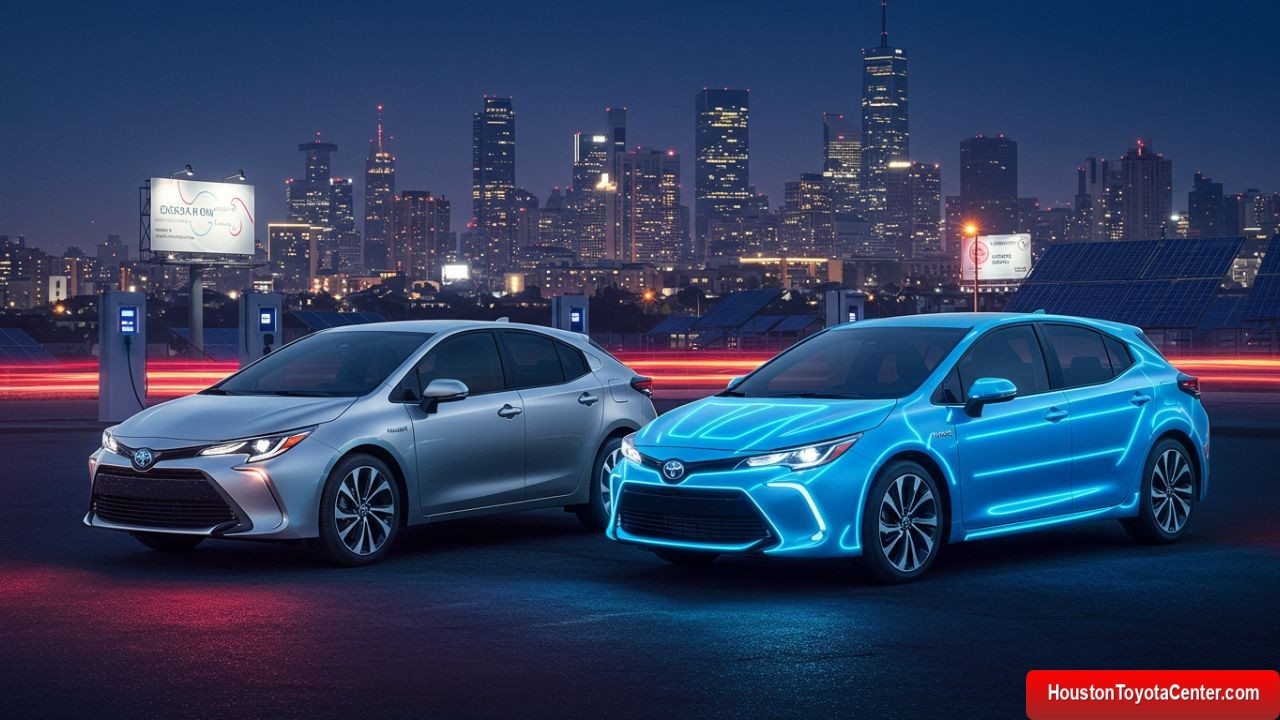
The automotive landscape is undergoing a seismic shift as the world accelerates toward electrification. By 2025, Toyota—a pioneer in hybrid technology and a growing player in electric vehicles (EVs)—will offer consumers a critical choice: stick with the proven efficiency of hybrids or embrace the cutting-edge promise of fully electric models. This article dives deep into the factors that will define this decision, from cost and performance to environmental impact and future trends.
1. Understanding Toyota’s Hybrid and Electric Lineup in 2025
Toyota’s 2025 portfolio balances its hybrid dominance with a bold push into EVs. Below is a breakdown of key models:
| Model | Type | Key Features | Estimated Range (Miles) |
|---|---|---|---|
| Prius Prime | Hybrid | Fifth-gen hybrid system, solar roof option, 50 MPG+ | 600+ (combined gas/electric) |
| bZ4X | Electric | 71.4 kWh battery, 200+ mile range, Toyota Safety Sense 3.0 | 250–300 |
| RAV4 Hybrid | Hybrid | All-wheel drive, 36 MPG, spacious interior | 500+ |
| Crown EV | Electric | Sedan with 100 kWh battery, 350-mile range, ultra-fast charging | 350–400 |
| Highlander Hybrid | Hybrid | Three-row SUV, 34 MPG, towing capacity up to 5,000 lbs | 600+ |
Note: Ranges and specs are estimates based on Toyota’s 2024–2025 roadmap.
2. Cost Analysis: Upfront vs. Long-Term Savings
Upfront Costs
FREE: Quickly identify and understand problems with your vehicle 🚘
CLICK HERE- Hybrids : Typically $2,000–$5,000 cheaper than EVs. Example: 2025 Prius ($28,000) vs. bZ4X ($42,000).
- EVs : Higher MSRP but eligible for federal tax credits (up to $7,500 in the U.S.) and state incentives.
Maintenance & Fuel Savings
- Hybrids : Lower maintenance than gas cars (regenerative braking reduces wear), but still require oil changes.
- EVs : No oil changes, fewer moving parts. Annual savings: ~$400–$700 on fuel/maintenance.
Resale Value
- Hybrids retain value better due to proven reliability (e.g., Prius).
- EVs face battery degradation concerns but may surge in demand as charging networks expand.
3. Performance: Power, Range, and Driving Experience
- Hybrids :
- Instant torque from electric motors for city driving.
- Seamless transition between gas and electric power.
- Ideal for long trips (no range anxiety).
- EVs :
- Quicker acceleration (0–60 mph in 5–6 seconds for bZ4X).
- One-pedal driving and silent operation.
- Range anxiety persists, but 2025 models will average 300+ miles.
Comparison Table: Performance Metrics
| Factor | Hybrid (Prius Prime) | EV (bZ4X) |
|---|---|---|
| 0–60 MPH | 6.6 seconds | 7.1 seconds |
| Towing Capacity | 1,500 lbs | 1,500 lbs |
| Top Speed | 112 mph | 112 mph |
| Efficiency | 50 MPG | 3.5 mi/kWh |
4. Environmental Impact: Emissions and Sustainability
- Hybrids : Lower emissions than gas cars but still reliant on fossil fuels. Toyota’s hybrids emit ~50% less CO₂ than ICE vehicles.
- EVs : Zero tailpipe emissions, but battery production has a high carbon footprint. Toyota’s partnership with Redwood Materials aims to recycle 95% of EV batteries by 2030.
Lifecycle Emissions (grams of CO₂ per mile):
- Hybrid : 150–200 g/mile
- EV : 100–150 g/mile (depends on energy grid mix)
5. Technology and Features
- Hybrids : Toyota’s Hybrid Synergy Drive now includes predictive efficiency features (e.g., GPS-linked climate control).
- EVs : One Motion Instant driving mode, bidirectional charging (power your home), and over-the-air updates.
Safety Tech : Both hybrids and EVs come with Toyota Safety Sense 3.0, including:
- Pre-collision system with pedestrian detection
- Lane-tracing assist
- Proactive driving alerts
6. Future Trends: What 2025 Holds
- Battery Tech : Toyota’s solid-state batteries (2025 target) could offer 500-mile ranges and 10-minute charging.
- Charging Infrastructure : Global rollout of 350 kW fast chargers (10–80% in 20 minutes).
- Policy : EU’s ICE ban by 2035 and California’s 2035 EV mandate will push adoption.
7. Who Should Buy a Hybrid?
- Drivers who :
- Need flexibility for long trips without charging stops.
- Live in regions with unreliable charging networks.
- Prioritize resale value and proven tech.
8. Who Should Buy an Electric Toyota?
- Drivers who :
- Have home charging access.
- Drive <15,000 miles/year (to maximize battery lifespan).
- Want the latest tech and lower long-term costs.
Conclusion
In 2025, Toyota’s hybrids remain a pragmatic choice for most, while EVs cater to early adopters and eco-conscious drivers. Your decision hinges on driving habits, budget, and trust in emerging tech.
Leave a Reply