In endurance racing, speed is only one part of the equation. A car can be the fastest machine on the circuit and still lose after twenty-four hours because of a mechanical failure, a poor strategic decision, a slow pit stop, changing weather or a mistake made at the wrong moment.
That is what makes Toyota’s record in endurance racing particularly interesting. The Japanese manufacturer has built one of the most successful programs in modern World Endurance Championship history, combining hybrid technology, reliability, operational discipline and years of accumulated experience.
Toyota does not win simply because it builds a fast racing car. Its advantage has traditionally come from treating endurance racing as a complete system.
The evidence is particularly strong in the FIA World Endurance Championship. Toyota became a dominant force in the modern WEC era and entered the 2025 season as the reigning Manufacturers’ champion for the seventh time. The team had also established a remarkable record at the 24 Hours of Le Mans, winning five consecutive editions from 2018 through 2022.
FREE: Quickly identify and understand problems with your vehicle 🚘
CLICK HEREBut Toyota’s success is not the story of an unbeatable machine. The modern Hypercar era has introduced increasingly serious competition from Ferrari, Porsche, Cadillac, BMW, Alpine and other manufacturers. In fact, Ferrari won the 2024 24 Hours of Le Mans, while Toyota finished second with its No. 7 GR010 Hybrid.
So what explains Toyota’s ability to remain competitive when the race lasts six, eight, ten or twenty-four hours?
Endurance Racing Rewards Consistency
The first answer is simple: endurance racing rewards consistency more than spectacular performance.
A sprint race can sometimes be won through outright pace. Endurance racing is different. Teams must manage tires, fuel, energy, traffic, weather, driver changes and mechanical wear while maintaining competitive lap times for hours.
The FIA WEC reflects this philosophy directly. Championship races are at least six hours long, with the 24 Hours of Le Mans serving as the centerpiece of the calendar. Points are distributed according to finishing position and race duration, making reliability and regular scoring fundamental to a manufacturer’s championship campaign.
Toyota’s approach has historically fitted this environment extremely well.
The objective is not necessarily to dominate every lap. It is to remain fast enough, efficient enough and reliable enough to still be competitive when the race enters its final hours.
That distinction is crucial.
Reliability Is a Performance Advantage
In endurance racing, reliability is not merely a defensive quality. It is performance.
Every mechanical problem costs time. A long pit stop can erase an advantage built over hundreds of kilometers. A damaged aerodynamic component can transform a race-winning car into a car fighting for points.
Toyota has repeatedly focused on reliability as a central engineering objective.
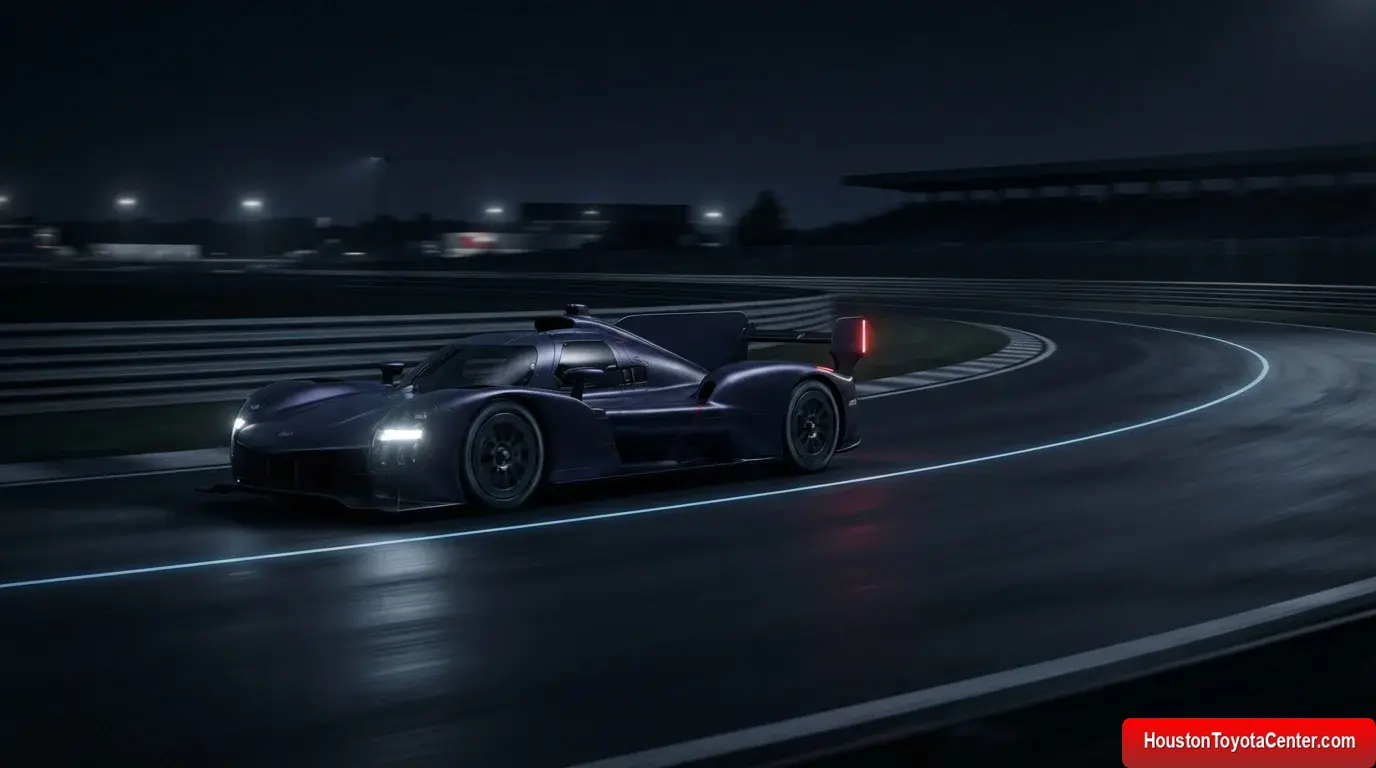
The GR010 Hybrid, introduced in 2021 for the Hypercar class, entered its fifth and final homologation season in 2025. Because the regulations restrict major changes to the fundamental components of a car during its homologation cycle, Toyota could not simply redesign the entire prototype whenever competitors introduced newer concepts.
Instead, the company concentrated heavily on maturation and reliability within the areas where development remained permitted. Toyota itself described the 2025 development direction as an effort to improve reliability and stability while competing against newer rival designs.
This is a very different philosophy from simply chasing maximum horsepower.
Toyota was effectively trying to extract more performance from a known package by making the entire machine more mature.
The GR010 Hybrid Is a System, Not Just an Engine
The Toyota GR010 Hybrid illustrates another reason for the team’s endurance success: integration.
The car combines a 3.5-liter twin-turbo V6 engine with a hybrid system. Toyota lists approximately 520 kW for the internal combustion engine and up to 200 kW of hybrid power, although the Hypercar regulations impose limits on combined output and performance is also subject to Balance of Performance adjustments.
Hybrid technology is especially relevant to endurance racing because energy management becomes part of the race strategy.
Drivers are not simply asking how fast they can drive one lap. Engineers are constantly considering how the car uses energy throughout a stint, how much fuel remains available, how traffic affects consumption and how the car’s performance changes over time.
This creates an enormous amount of data.
The team must turn that data into decisions.
When should the driver push?
When should the team conserve?
How aggressively should the car attack another competitor?
Which tire strategy makes sense?
How much risk is acceptable with several hours still remaining?
Those questions are at the heart of endurance racing.
Experience Becomes a Competitive Asset
Toyota’s experience is another important part of the equation.
The company entered the modern FIA WEC era in 2012 and has spent more than a decade developing cars, procedures and personnel specifically for endurance competition.
That creates something difficult for a new competitor to reproduce quickly: institutional knowledge.
A racing team remembers.
It remembers what happened when temperatures changed unexpectedly. It remembers how tires behaved after several consecutive stints. It remembers which setup changes helped at a particular circuit. It remembers how quickly a component can be replaced under pressure.
Over time, those experiences become procedures.
Toyota’s endurance program has therefore benefited from continuity among drivers, engineers and management. Ahead of the 2025 WEC season, Toyota retained an essentially unchanged driver lineup, emphasizing continuity after securing its seventh Manufacturers’ championship in 2024.
That continuity matters because endurance racing involves complex communication between people who may spend an entire race making decisions together.
Strategy Can Be More Important Than Raw Speed
One of the biggest misconceptions about endurance racing is that the fastest car should win.
In reality, the winner is often the team that makes the fewest costly mistakes.
A car may lose several seconds per lap but compensate through fewer pit stops. Another competitor may have a faster qualifying lap but consume more tires. A third car may be slower in dry conditions but become extremely competitive when rain arrives.
The race is constantly changing.
Toyota has built extensive experience in managing those variables.
Pit-stop planning, tire selection, driver changes and fuel strategy all interact. A decision that appears small at one moment can become decisive several hours later.
Toyota’s own descriptions of endurance racing emphasize the importance of pit work, with cars stopping for refueling, tires and driver changes according to a planned strategy designed to maximize efficiency.
This is where the team behind the car becomes just as important as the car itself.
Le Mans Reveals the Philosophy
The 24 Hours of Le Mans is perhaps the clearest demonstration of Toyota’s endurance philosophy.
Toyota’s first outright victory at Le Mans finally arrived in 2018. The company then won again in 2019, followed by victories in 2020, 2021 and 2022. In 2022, Toyota achieved a one-two finish, with the No. 8 GR010 Hybrid taking the victory.
Five consecutive victories transformed Toyota from a manufacturer still chasing its first Le Mans win into the defining team of that particular era.
But the story also demonstrates why endurance racing cannot be reduced to technological superiority.
The competitive environment changed.
New manufacturers entered the Hypercar class. Ferrari returned to the top category with a factory prototype. Porsche expanded its program. Cadillac, Peugeot, BMW and Alpine brought new concepts and resources.
The competitive balance became more complicated.
Toyota’s response was not to abandon its identity. It continued refining the GR010 Hybrid and focusing on operational execution.
That approach produced another Manufacturers’ championship in 2024, even as Ferrari won Le Mans.
Toyota Does Not Always Win
This is an important part of understanding the Toyota story.
The phrase “Why Toyota Wins Endurance Races” can make the company sound invincible. It is not.
The 2025 season provided a clear counterexample.
Toyota entered the campaign as the defending Manufacturers’ champion, but the season proved considerably more difficult. By October, the team had gone seven consecutive WEC rounds without a podium, an unusual run for a manufacturer with Toyota’s recent record.
Yet the season ended with Toyota winning the Bahrain finale. The No. 7 GR010 Hybrid converted pole position into victory, extending Toyota’s extraordinary winning streak at Bahrain to nine consecutive races.
That result illustrates something important about endurance racing.
A successful team does not have to dominate continuously.
It needs to remain capable of recovering.
The Importance of Development Discipline
Another factor is Toyota’s ability to develop within strict regulations.
Modern endurance racing is heavily regulated. The Hypercar category uses homologation rules and Balance of Performance systems designed to control performance differences between manufacturers.
This means manufacturers cannot simply spend their way to unlimited performance by redesigning everything every weekend.
Toyota’s GR010 Hybrid is a good example.
The basic architecture of the car has been constrained by its homologation cycle, while newer competitors have entered with more recently developed machines. Toyota therefore had to focus on areas where it could still make meaningful improvements, including reliability, drivability and serviceability.
In this environment, engineering maturity becomes extremely valuable.
The longer a team operates a platform, the more accurately it can understand its behavior.
A Culture Built Around Continuous Improvement
Toyota’s motorsport philosophy also matters.
The company’s Gazoo Racing identity is strongly connected to the idea of using motorsport as a laboratory for making better vehicles. The 2025 Le Mans program explicitly connected the team’s racing philosophy with concepts such as speed, continuous evolution and the development of better cars through motorsport.
That philosophy aligns naturally with endurance racing.
There is no final solution in a 24-hour race.
Every race exposes new problems.
Every problem creates new data.
Every piece of data can potentially influence the next car, the next strategy or the next procedure.
The cycle never really ends.
The Real Toyota Advantage
So, why does Toyota win endurance races?
There is no single answer.
It is not simply the hybrid system. It is not simply the engine. It is not simply the drivers. It is not simply reliability.
The advantage comes from the interaction of all those elements.
Toyota has combined long-term experience with engineering discipline, hybrid technology, operational consistency, strategic planning and an organizational culture that places enormous value on learning from competition.
That combination is particularly powerful in endurance racing because the discipline rewards teams that can maintain a high level of performance for a very long time.
A spectacular car can win a lap.
A reliable car can win a race.
But a mature organization can win championships.
That is perhaps the most important lesson from Toyota’s endurance program.
The company’s success has never depended exclusively on having the fastest machine at every moment. Instead, Toyota has repeatedly demonstrated the value of building a complete racing system in which the car, drivers, engineers, strategists and mechanics work toward the same objective.
Endurance racing is ultimately a test of how well that entire system survives pressure.
For Toyota, that has become a competitive advantage developed over decades.
And when the race enters its final hour, the advantage may no longer be measured in horsepower or lap time.
It can be measured in how many problems the team avoided, how many mistakes it prevented and how much performance it still has available when everyone else is approaching the limit.
That is why Toyota’s greatest endurance-racing weapon may not be speed at all.
It is the ability to keep going.
Leave a Reply