
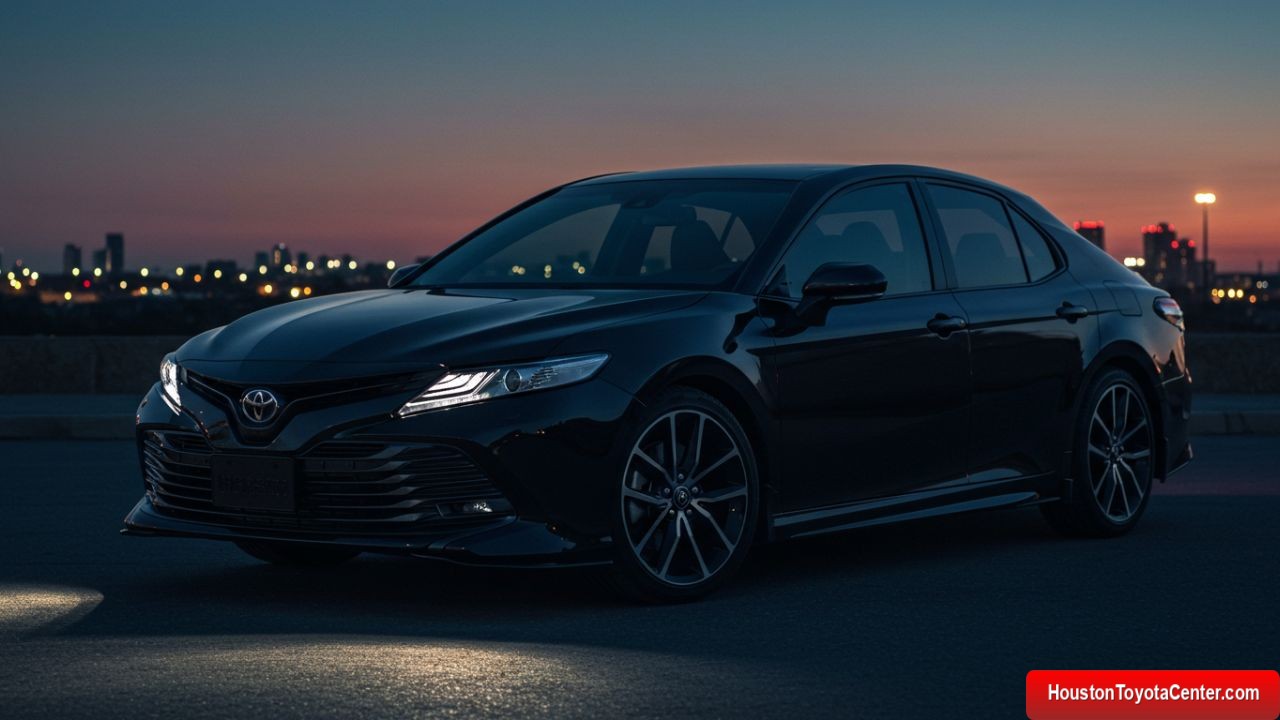
For decades, the Toyota Camry has been one of the most recognizable names in the midsize sedan market. Its reputation was built on reliability, practicality, comfort, and relatively low ownership costs. But fuel economy has become an increasingly important part of the Camry story, particularly as Toyota expanded its hybrid technology across the lineup.
The most fuel-efficient Camry models ever built are not simply the newest cars with the latest engines. They represent several important stages in Toyota’s development of gasoline-electric powertrains, aerodynamic design, engine efficiency, and energy management. From conventional four-cylinder sedans to today’s highly efficient hybrid models, the Camry’s evolution shows how dramatically a mainstream family car can improve without abandoning its traditional strengths.
The Turning Point: Camry Goes Hybrid
The biggest step forward came with the introduction of the Camry Hybrid. Toyota introduced the hybrid Camry for the 2007 model year, combining a gasoline engine with an electric motor and battery system. The goal was straightforward: deliver the comfort and practicality of a midsize sedan while significantly reducing fuel consumption.
The hybrid system changed the way the Camry used energy. Instead of relying exclusively on the gasoline engine, the vehicle could use electric power under certain conditions, recover energy during braking, and operate the engine in a more efficient range. The result was substantially better fuel economy than comparable conventional Camry models.
FREE: Quickly identify and understand problems with your vehicle 🚘
CLICK HEREEarly Camry Hybrids were already impressive for their time, but Toyota continued refining the technology. Successive generations became lighter, more aerodynamic, and more sophisticated in the way they managed gasoline and electric power.
The 2012 Camry Hybrid Raised the Bar
The seventh-generation Camry, introduced for the 2012 model year, represented another major improvement. Toyota redesigned the hybrid system while retaining a 2.5-liter four-cylinder gasoline engine.
The Camry Hybrid LE became particularly important from a fuel-economy perspective. Its EPA-rated combined fuel economy reached the mid-40-mpg range, depending on the model year and configuration, putting it among the most efficient midsize gasoline-powered sedans available at the time.
The achievement was notable because the Camry Hybrid did not look or behave like an experimental economy car. It remained a comfortable four-door sedan with enough interior space for family use and enough performance for everyday driving.
This balance became one of the defining characteristics of Toyota’s hybrid strategy. Rather than asking buyers to make major sacrifices for efficiency, the company integrated the technology into a familiar vehicle.
The 2015 Camry Hybrid LE
Among older Camry generations, the 2015 Camry Hybrid LE stands out as one of the strongest examples of Toyota’s efficiency engineering.
With an EPA rating of approximately 44 mpg city and 47 mpg highway, the Hybrid LE was capable of delivering around 46 mpg combined. Those numbers made it significantly more efficient than most conventional midsize sedans of the same period.
The specific trim level mattered. The LE was generally lighter than higher-end hybrid versions, and weight has a direct influence on fuel consumption. Wheels, tires, equipment, and vehicle weight can all affect EPA ratings, which is why the most fuel-efficient version of a model is not necessarily its most expensive or best-equipped version.
For buyers focused primarily on minimizing fuel consumption, the Camry Hybrid LE demonstrated an important lesson: choosing the right configuration can be just as important as choosing the right model.
The 2018 Camry Hybrid and a New Generation
The arrival of the eighth-generation Camry for 2018 brought another significant redesign. Toyota moved the Camry onto the company’s TNGA platform, creating opportunities to improve handling, packaging, weight distribution, and efficiency.
The hybrid powertrain was also updated. Toyota continued using a 2.5-liter four-cylinder engine paired with its hybrid system, but the overall vehicle was more sophisticated and efficient.
The Camry Hybrid LE became particularly notable again. Depending on model year and EPA testing, it achieved fuel-economy figures around 51 mpg city and 53 mpg highway, with a combined rating around 52 mpg.
That was a remarkable result for a midsize sedan.
The achievement also highlighted the importance of aerodynamics and weight. Toyota did not create those numbers through a single technological breakthrough. Instead, the company improved numerous details across the vehicle, including the platform, engine, transmission, hybrid controls, regenerative braking, and body design.
Why the Hybrid LE Is So Efficient
It is tempting to think that a hybrid’s fuel economy comes exclusively from its battery and electric motor. In reality, efficiency is the product of an entire system working together.
The gasoline engine is designed to operate efficiently, while the electric motor provides additional propulsion when it can do so more economically. During deceleration, regenerative braking converts some of the vehicle’s kinetic energy into electricity rather than wasting all of it as heat through conventional friction brakes.
The hybrid system can also shut the gasoline engine off when it is not needed. At low speeds and during certain driving conditions, the electric motor can take over propulsion. The computer continuously determines how to combine the available power sources.
The result is especially valuable in urban driving, where frequent acceleration, deceleration, and idling would otherwise reduce the efficiency of a conventional gasoline vehicle.
The 2025 Camry Changed the Formula
The ninth-generation Camry marked another major change in Toyota’s strategy. For the 2025 model year, the Camry became exclusively hybrid in the United States, eliminating conventional gasoline-only versions from the lineup.
This was a significant moment in the history of the nameplate. Hybrid technology was no longer simply an efficiency-focused alternative within the Camry range. It became the foundation of the entire U.S. lineup.
The new Camry uses Toyota’s fifth-generation hybrid system and a 2.5-liter four-cylinder engine. Front-wheel-drive versions can achieve EPA-estimated fuel economy of up to 53 mpg combined, depending on configuration.
That places the latest Camry among the most fuel-efficient midsize sedans ever sold under the nameplate.
Toyota also introduced available all-wheel drive. The system adds an electric motor to the rear axle, providing additional traction without requiring a conventional mechanical driveshaft. However, the extra hardware can affect fuel economy, which means the front-wheel-drive configuration remains the efficiency champion.
A Look at the Efficiency Leaders
When considering the most fuel-efficient Camrys ever built, several generations deserve special recognition.
The early Camry Hybrid established the concept and proved that hybrid technology could work in a mainstream family sedan. The seventh-generation Hybrid LE pushed combined fuel economy into the mid-40-mpg range and demonstrated how much Toyota could gain through continuous refinement.
The eighth-generation Camry Hybrid LE represented another major leap, reaching approximately 52 mpg combined in its most efficient configurations. The latest generation continues that trajectory, with certain 2025 and newer front-wheel-drive Camry Hybrid configurations reaching up to 53 mpg combined under EPA testing.
These numbers should not be treated as universal real-world results. Driving style, temperature, traffic, tire pressure, terrain, passenger load, and use of climate control can all affect actual fuel consumption. EPA figures are most useful as a standardized way to compare vehicles.
Conventional Camrys Still Have a Place in the Story
Although hybrids dominate the list of fuel-economy champions, gasoline-only Camrys played an important role in the model’s development.
Four-cylinder Camrys have traditionally offered better fuel economy than their V6 counterparts, largely because of their smaller engines and lower fuel requirements. For many years, the four-cylinder Camry represented the sensible middle ground between performance and efficiency.
V6 models, meanwhile, emphasized acceleration and smooth power rather than maximum fuel economy. Their presence illustrates how the Camry lineup historically served different priorities. Buyers could choose economy, performance, or a balance between the two.
The shift toward hybrid power has changed that equation. Modern hybrid Camrys can deliver strong acceleration while consuming considerably less fuel than many older V6 models.
What Makes the Newest Camry Different?
The latest Camry is significant because efficiency is no longer treated as a separate identity.
Earlier buyers often had to decide whether they wanted a conventional Camry or a Camry Hybrid. Today, hybrid technology is integrated throughout the U.S. lineup.
That change reflects a broader transformation in the automotive industry. Automakers are under pressure to improve fuel economy and reduce emissions, while customers continue to demand comfort, safety, technology, and useful performance.
The Camry’s evolution demonstrates that those goals do not necessarily have to conflict.
A modern hybrid system can provide electric assistance during acceleration, recover energy during braking, and reduce unnecessary gasoline consumption without turning the vehicle into a small, compromised economy car.
The Most Efficient Camry Ever?
If the question is simply which Camry models have achieved the highest EPA fuel-economy ratings, the answer points toward the newest hybrid generations.
The eighth-generation Camry Hybrid LE became famous for reaching roughly 52 mpg combined in its most efficient configuration. The ninth-generation Camry continues the trend, with front-wheel-drive versions reaching up to 53 mpg combined under EPA estimates.
That makes the latest Camry one of the most fuel-efficient versions in the model’s long history.
But the broader story is more interesting than a single number. The Camry did not become efficient overnight. Its progress came through nearly two decades of hybrid development, incremental engine improvements, lighter platforms, better aerodynamics, more advanced control software, and increasingly sophisticated energy management.
From the first Camry Hybrid to today’s fifth-generation hybrid system, Toyota has steadily transformed a traditional family sedan into a vehicle capable of remarkable fuel economy.
For drivers who want a practical sedan with low fuel consumption, the Camry’s most efficient models show just how far hybrid technology has come. And for anyone looking at the history of automotive efficiency, the Camry provides a clear example of how a familiar vehicle can evolve without losing the qualities that made it popular in the first place.
Leave a Reply