
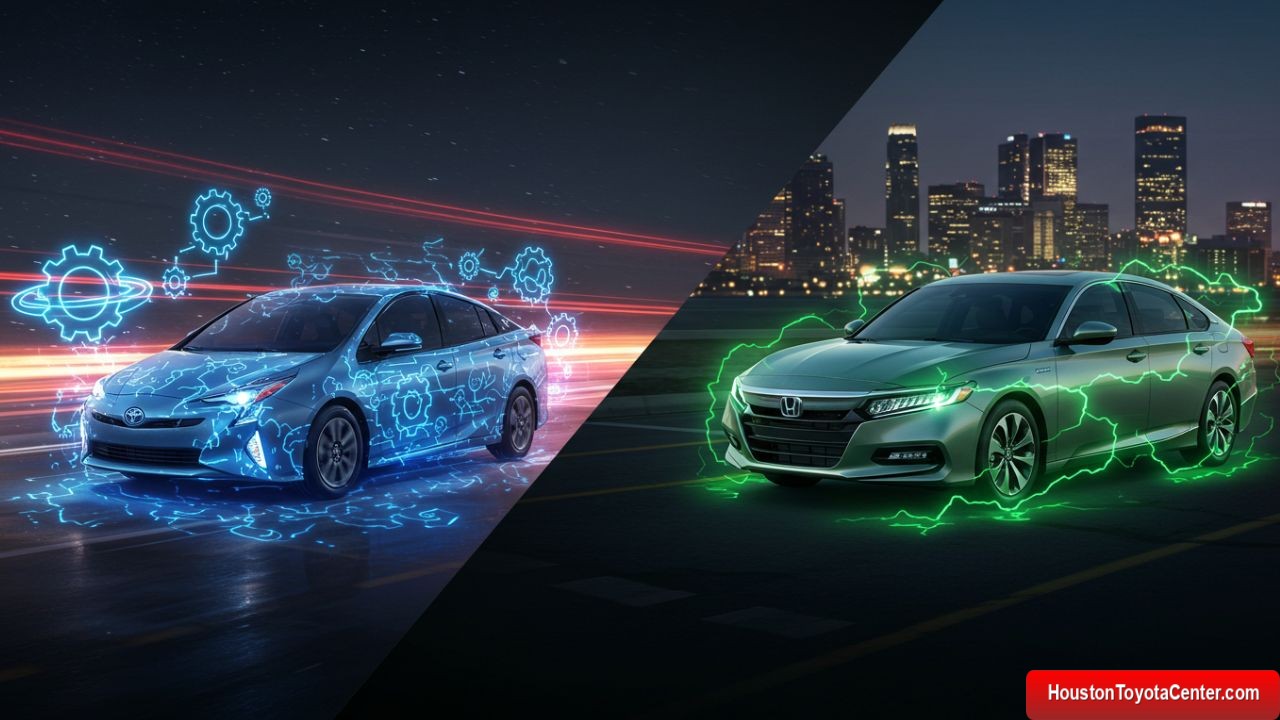
As the automotive industry continues its transition toward cleaner transportation, drivers are increasingly faced with an important decision: should they choose a hybrid vehicle or go fully electric? Toyota, a global leader in hybrid technology, now offers both hybrid and battery electric models, giving consumers more options than ever before.
The answer, however, depends on several factors including driving habits, charging availability, long-term ownership costs, and environmental priorities.
Toyota’s Hybrid Advantage
Toyota has spent more than two decades refining hybrid technology. Models such as the Prius, Corolla Hybrid, Camry Hybrid, and RAV4 Hybrid have earned a reputation for reliability, fuel efficiency, and low maintenance costs.
A Toyota hybrid combines a gasoline engine with an electric motor. The battery is automatically recharged through regenerative braking and the gasoline engine, eliminating the need to plug the vehicle into a charging station.
FREE: Quickly identify and understand problems with your vehicle 🚘
CLICK HEREFor many drivers, this offers the best balance between convenience and efficiency. Owners benefit from significantly lower fuel consumption without changing their daily routines.
Pros of Toyota Hybrid Models
- Excellent fuel economy
- No charging infrastructure required
- Proven long-term reliability
- Lower purchase price than most EVs
- Ideal for long-distance travel
Potential Drawbacks
- Still consumes gasoline
- Produces tailpipe emissions
- Fuel savings are limited compared to a fully electric vehicle
The Rise of Toyota’s Electric Vehicles
Toyota’s fully electric lineup is expanding with models such as the bZ4X, reflecting the company’s gradual move into the EV market.
Unlike hybrids, full EVs rely entirely on electric power. They produce zero tailpipe emissions and offer smooth, quiet acceleration with instant torque.
Charging can be done at home or through public fast-charging networks, although charging times remain longer than a traditional fuel stop.
Advantages of a Full EV
- Zero tailpipe emissions
- Lower energy costs in many regions
- Minimal routine maintenance
- Quiet and refined driving experience
- Strong acceleration
Challenges
- Higher upfront purchase price
- Charging infrastructure varies by location
- Longer charging times during road trips
- Battery range may concern frequent long-distance drivers
Cost Comparison
While hybrid vehicles often cost less initially, electric vehicles can offset their higher purchase price through lower operating expenses over time.
Electricity is generally cheaper than gasoline on a cost-per-mile basis, and EVs require fewer maintenance items because they lack engine oil, spark plugs, and many traditional mechanical components.
However, the financial advantage depends heavily on local electricity rates, fuel prices, available incentives, and annual mileage.
Which Option Is Better for Daily Driving?
Drivers who primarily commute in urban environments and have access to reliable home charging may find a full EV to be the most economical and environmentally friendly choice.
On the other hand, motorists who frequently travel long distances or live in areas with limited charging infrastructure often appreciate the flexibility of Toyota’s hybrid system.
Hybrids eliminate concerns about charging availability while still delivering impressive fuel efficiency.
Environmental Impact
Both technologies reduce carbon emissions compared with conventional gasoline vehicles.
Hybrid vehicles consume less fuel, lowering emissions during everyday driving. Fully electric vehicles eliminate tailpipe emissions entirely, although their overall environmental footprint depends on how electricity is generated in a particular region.
As renewable energy adoption grows, the environmental benefits of electric vehicles are expected to increase further.
Reliability and Longevity
Toyota has established one of the strongest reputations in the automotive industry for dependable hybrid systems. Millions of hybrid vehicles have demonstrated long service lives across diverse climates and driving conditions.
Toyota’s electric vehicles also benefit from modern battery management systems designed to preserve long-term battery health, though the company’s EV lineup is still relatively young compared with its hybrid portfolio.
Final Verdict
There is no universal winner.
A Toyota hybrid remains an excellent choice for drivers seeking maximum convenience, proven reliability, and outstanding fuel efficiency without relying on charging stations.
A full Toyota EV is better suited for drivers who have consistent access to charging, prioritize zero-emission driving, and want the lowest possible operating costs over the long term.
Ultimately, the best vehicle depends on your lifestyle, driving patterns, and local infrastructure. As Toyota continues investing in both hybrid and electric technologies, consumers can select the solution that best aligns with their everyday needs.
Leave a Reply