
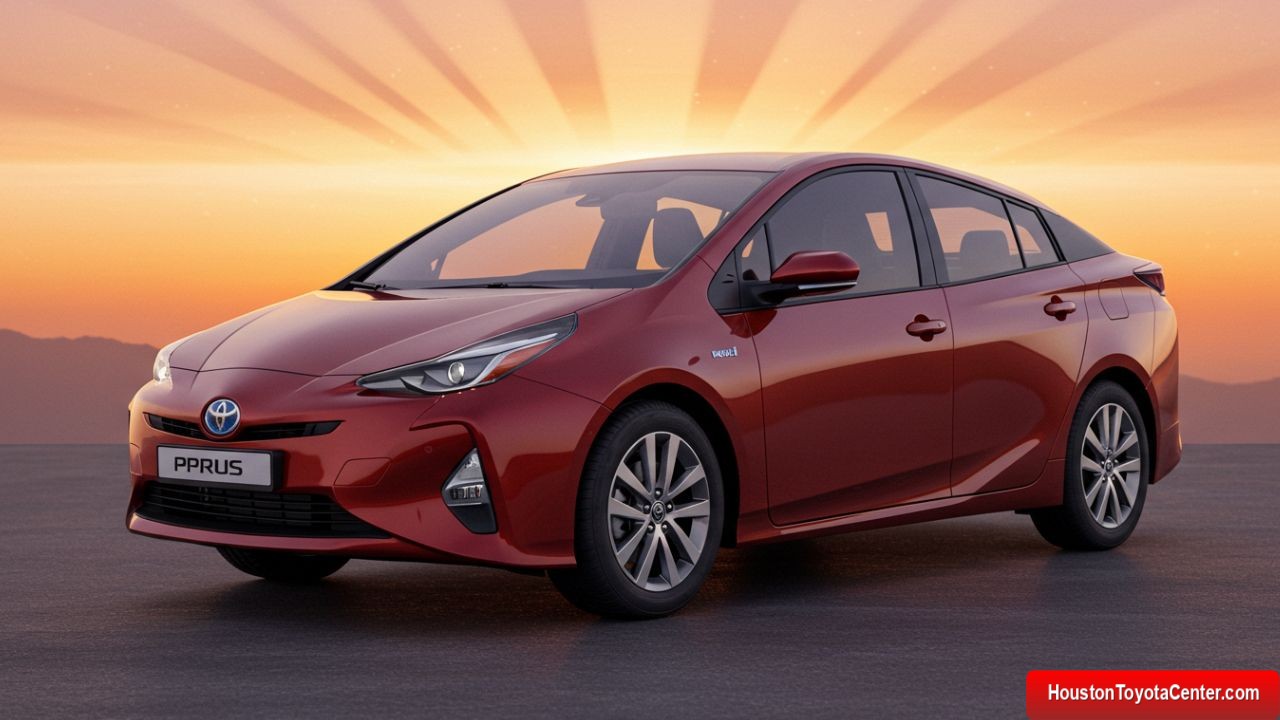
An in-depth analysis of why hybrid pioneers maintain their worth better than conventional vehicles, and what this means for consumers, manufacturers, and the automotive industry.
In the volatile world of automotive depreciation, where most new cars lose nearly half their value within the first three years, one vehicle stands as a remarkable exception. The Toyota Prius, since its introduction to global markets, has consistently defied standard depreciation curves. While luxury sedans plummet and mainstream compact cars struggle to retain even sixty percent of their original price after five years, the Prius often retains seventy percent or more. This is not merely a quirk of consumer preference but a complex interplay of engineering reliability, brand perception, market dynamics, and evolving environmental consciousness. Understanding why the Prius holds its value provides crucial insights into the future of automotive ownership and the shifting priorities of modern drivers.
Why This Matters
The resale value of a vehicle is far more than a secondary concern for car buyers. It represents the true cost of ownership. A car that depreciates rapidly effectively costs its owner significantly more per year than its sticker price suggests. For middle-class families and budget-conscious consumers, the difference between a vehicle retaining sixty percent versus seventy-five percent of its value over five years can amount to thousands of dollars. This financial reality influences purchasing decisions, loan terms, insurance costs, and long-term household budgeting.
FREE: Quickly identify and understand problems with your vehicle 🚘
CLICK HEREMoreover, the Prius’s sustained resale value signals a broader shift in the automotive landscape. It demonstrates that sustainability and economic prudence are no longer mutually exclusive. As governments worldwide implement stricter emissions regulations and consumers become increasingly aware of their carbon footprint, vehicles that offer both environmental benefits and financial stability gain a competitive edge. The Prius’s success challenges the traditional notion that eco-friendly cars are niche products with limited appeal. Instead, it proves that green technology can achieve mainstream acceptance while delivering tangible economic advantages.
For manufacturers, the Prius case study offers valuable lessons about product lifecycle management, brand loyalty, and the importance of pioneering a market segment. Toyota’s early investment in hybrid technology created a moat that competitors have struggled to cross, even as electric vehicles begin to dominate headlines. The resale value reflects not just the quality of the individual vehicle but the strength of the hybrid ecosystem Toyota has built over two decades.
The Engineering Foundation: Reliability as Currency
At the core of the Prius’s high resale value lies its legendary reliability. The hybrid powertrain, which combines a gasoline engine with an electric motor and battery pack, was initially viewed with skepticism by consumers worried about complexity and maintenance costs. However, two decades of real-world data have proven that the Prius hybrid system is remarkably durable. The battery packs, often the primary concern for used car buyers, typically last well beyond the warranty period, with many examples exceeding fifteen years of service without significant degradation.
This reliability translates directly into lower total cost of ownership. Used car buyers prioritize vehicles with predictable maintenance schedules and minimal repair risks. The Prius delivers on both fronts. Its regenerative braking system reduces wear on traditional brake components, extending the life of pads and rotors. The gasoline engine operates under less stress than conventional engines because the electric motor assists during acceleration and handles low-speed driving. These engineering choices result in fewer mechanical failures and lower repair bills, factors that used car appraisers and buyers heavily weigh when determining value.
Data from automotive research firms consistently rank the Prius among the most reliable vehicles in its class. Consumer Reports has repeatedly given the Prius top marks for predicted reliability, while J.D. Power studies show above-average scores for long-term dependability. These third-party validations create a feedback loop: high reliability ratings boost consumer confidence, which increases demand in the used car market, which sustains higher resale values.
Case Study: The Five-Year Depreciation Comparison
To understand the magnitude of the Prius’s advantage, consider a concrete comparison. In 2018, a new Toyota Prius LE had a manufacturer’s suggested retail price of approximately twenty-four thousand dollars. Five years later, in 2023, similar models in good condition were selling for between sixteen thousand and eighteen thousand dollars, representing a retention rate of roughly sixty-seven to seventy-five percent.
Compare this to a conventional compact sedan from the same era, such as the Honda Civic or Nissan Sentra. While these are also respected vehicles with solid reputations, their five-year retention rates typically hover between fifty-five and sixty-five percent. Over five years, the Prius owner might recover four thousand to six thousand dollars more at trade-in or private sale than the owner of a comparable conventional vehicle. This difference compounds when considering multiple vehicle purchases over a lifetime.
Another illuminating case study involves fleet vehicles. Rental companies and corporate fleets, which purchase vehicles in bulk and sell them after two to three years, closely monitor residual values. Data from major rental agencies shows that Prius models command premium prices in wholesale auctions compared to non-hybrid equivalents. Fleet managers report that the Prius’s strong resale value makes it economically viable despite potentially higher upfront costs, because the total cost of ownership remains competitive when depreciation is factored in.
Expert Perspectives on Market Dynamics
Automotive analysts point to several factors beyond reliability that sustain the Prius’s resale value. Jessica Caldwell, executive director of insights at Edmunds, notes that “the Prius benefits from first-mover advantage and brand association. When consumers think hybrid, they think Prius. That mental shortcut creates persistent demand in the used market.” This brand equity is difficult for competitors to replicate, even as they introduce their own hybrid models.
Dr. Michael Chen, an automotive economist at Stanford University, emphasizes the role of fuel efficiency in resale valuation. “As gas prices fluctuate, vehicles with superior fuel economy become more attractive to used car buyers,” Chen explains. “The Prius’s ability to achieve fifty miles per gallon or more in real-world driving conditions provides a hedge against energy price volatility. Buyers are willing to pay a premium for that predictability.”
Furthermore, regulatory pressures play an indirect but significant role. Cities and states implementing low-emission zones or offering incentives for clean vehicles increase the desirability of hybrids like the Prius. In California, for example, certain hybrid vehicles qualify for carpool lane access, a benefit that enhances their practical value and supports stronger resale prices.
Impact on Consumers and the Industry
The sustained high resale value of the Prius impacts various stakeholders in distinct ways. For individual consumers, it reduces the financial risk of purchasing a new vehicle. Knowing that a significant portion of their investment will be recoverable makes the Prius an attractive option for those who change vehicles every few years. It also makes certified pre-owned Prius models particularly appealing, as buyers can acquire recent-model vehicles with remaining warranty coverage at a fraction of the new-car price.
For dealerships, strong resale values simplify inventory management and reduce losses on trade-ins. Dealers can confidently accept Prius vehicles as trade-ins, knowing they can resell them quickly at favorable margins. This liquidity benefits the entire sales ecosystem, enabling more flexible financing options and promotional strategies.
For Toyota, the Prius’s resale performance reinforces brand loyalty and validates the company’s long-term investment in hybrid technology. It provides a competitive buffer as the industry transitions toward full electrification. While pure electric vehicles face uncertainty regarding battery longevity and charging infrastructure, the Prius offers a proven, low-risk alternative that appeals to cautious adopters.
However, the rise of electric vehicles presents both opportunities and challenges. As EV technology matures and battery costs decline, the Prius may face increased competition in the efficiency segment. Yet its established reputation for reliability and its extensive service network provide advantages that newer EV brands must work hard to match. The question is not whether the Prius will remain dominant forever, but how long its unique combination of attributes can sustain its premium positioning in an increasingly electrified market.
Looking Ahead: Sustainability Meets Economics
The Prius story illustrates a fundamental truth about modern consumer behavior: environmental responsibility and economic rationality are converging. Buyers no longer view green vehicles as sacrifices but as smart investments. The high resale value of the Prius proves that sustainability can enhance rather than diminish financial outcomes.
As the automotive industry continues its transformation, the lessons from the Prius will remain relevant. Manufacturers must build vehicles that are not only efficient and clean but also durable and economically sound throughout their lifecycle. Consumers will continue to reward brands that deliver on these promises with loyalty and willingness to pay premium prices in both new and used markets.
The Prius may eventually be succeeded by fully electric models, but its legacy as the vehicle that proved hybrids could achieve mainstream success while maintaining exceptional resale value will endure. It changed the conversation about what cars should be valued for, shifting focus from horsepower and luxury features to efficiency, reliability, and long-term cost effectiveness. In doing so, it created a blueprint for sustainable automotive success that the industry continues to follow.
Leave a Reply