
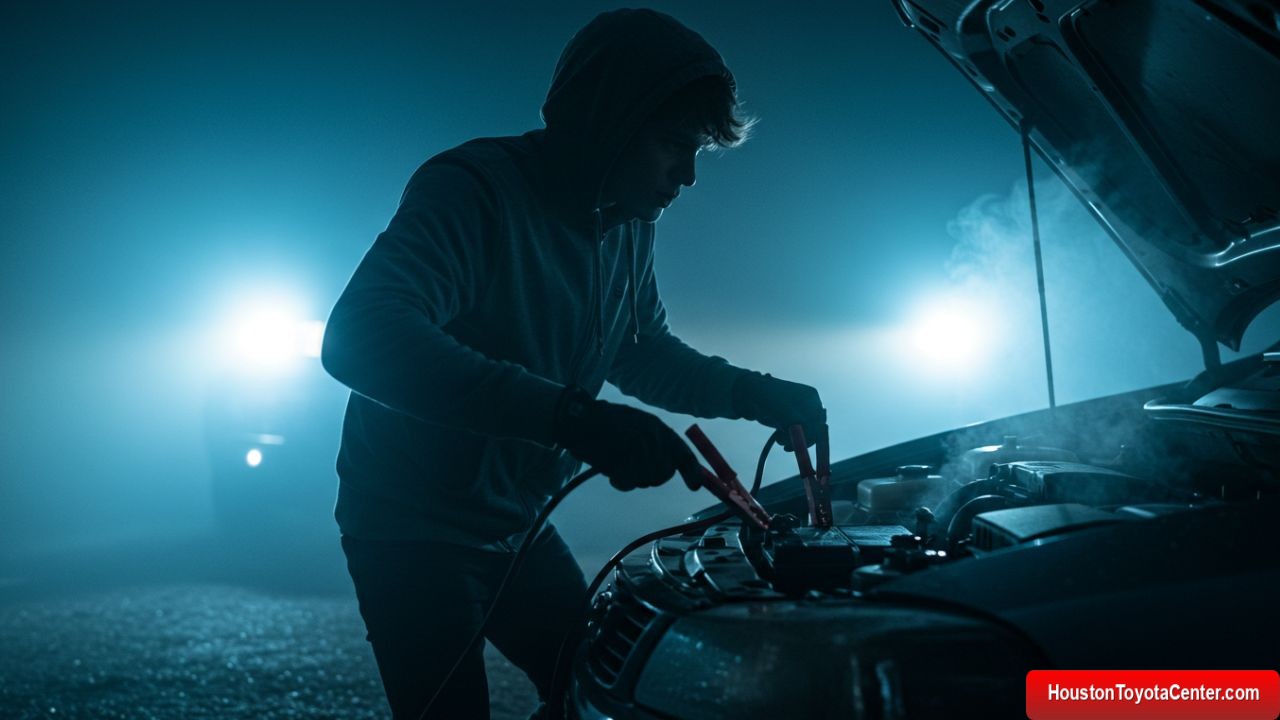
There’s nothing more frustrating than turning your car key or pressing the start button… and hearing nothing. A dead battery is one of the most common and annoying issues for any driver. But the good news? You can often fix it yourself—in minutes—with just a set of jumper cables or a jump starter.
This guide will walk you through how to safely jump start a car, common mistakes to avoid, and what to do after your car is running again. Whether you’re a first-time jumper or just need a refresher, we’ve got you covered.
Why Car Batteries Die
Before jumping into the jump-start process, it helps to know why your battery might be dead:
| Cause | Description |
|---|---|
| Lights left on | Interior or headlights drained the battery overnight |
| Extreme temperatures | Cold or heat can reduce battery performance |
| Old battery | Most car batteries last 3–5 years |
| Faulty alternator | If your alternator isn’t recharging the battery, it will eventually go flat |
| Parasitic drain | Electrical issues can drain your battery even when the car is off |
What You’ll Need
Option 1: Using Jumper Cables
You’ll need:
FREE: Quickly identify and understand problems with your vehicle 🚘
CLICK HERE- A set of jumper cables
- A working vehicle with a similar voltage (usually 12V)
- Gloves and eye protection (optional but smart)
Option 2: Using a Portable Jump Starter
You’ll need:
- A charged jump starter (make sure it matches your car’s battery size)
- Jumper cables (usually attached)
- Your vehicle
Step-by-Step: How to Jump Start a Car (Using Another Car)
⚠️ Safety First!
Always read your vehicle’s manual before jump-starting. Some modern cars (especially hybrids or EVs) have specific instructions or require special tools.
Step 1: Park Safely
- Park the helper vehicle close to your car—but don’t let them touch.
- Turn both cars off.
- Put the vehicles in park (automatic) or neutral (manual).
- Engage the parking brakes.
- Open both hoods and locate the batteries.
🛑 Important: If the battery is leaking or visibly damaged, do not attempt a jump. Call roadside assistance.
Step 2: Connect the Jumper Cables (The Right Way)
Jumper Cable Connection Order:
| Cable End | Connect To |
|---|---|
| Red Clamp #1 | Positive (+) terminal of the dead battery |
| Red Clamp #2 | Positive (+) terminal of the good battery |
| Black Clamp #1 | Negative (–) terminal of the good battery |
| Black Clamp #2 | Unpainted metal surface on the dead car (NOT the battery) |
✅ This last connection helps avoid sparks near the battery, which could ignite flammable gases.
Step 3: Start the Working Car
- Start the helper vehicle.
- Let it run for 2–5 minutes to build a charge in the dead battery.
Step 4: Try Starting the Dead Car
- Now try starting your dead car.
- If it starts:
- Let it run for at least 15–20 minutes before driving.
- If it doesn’t start:
- Wait another 5 minutes.
- Try again.
- If still dead, your battery might be too far gone, or there’s another issue (like the alternator or starter).
Step 5: Disconnect the Cables (In Reverse Order)
Once your dead car is running:
| Cable End | Disconnect From |
|---|---|
| Black Clamp #2 | Metal ground on the formerly dead car |
| Black Clamp #1 | Negative (–) on the good battery |
| Red Clamp #2 | Positive (+) on the good battery |
| Red Clamp #1 | Positive (+) on the formerly dead battery |
Keep the formerly dead car running!
Alternative: Using a Jump Starter (No Other Car Needed)
Jump starters are portable battery packs that make jumping a car easy—even when you’re alone.
How to Use One:
- Turn off your car and plug the red clamp into the positive (+) terminal.
- Plug the black clamp into an unpainted metal surface.
- Power on the jump starter.
- Wait a few seconds, then start your car.
- Once started, remove clamps in reverse order.
🔋 Keep your jump starter charged monthly.
What to Do After the Car Starts
Jump starting is just the beginning. Once your car runs, you should:
✅ Drive Around
- Drive at least 20–30 minutes to allow the alternator to recharge the battery.
- Don’t just idle—driving produces more electrical power.
🔧 Check Battery Health
If your car struggles to start again soon, the battery might be:
| Issue | What to Do |
|---|---|
| Old or weak battery | Replace it (most auto shops test for free) |
| Bad alternator | Visit a mechanic for a charging system diagnosis |
| Corroded terminals | Clean with baking soda and water |
Common Mistakes to Avoid
| Mistake | Why It’s Dangerous |
|---|---|
| Reversing cable polarity | Can damage electronics or cause sparks/fire |
| Touching clamps together | Risk of electrical shock or battery damage |
| Jumping a frozen or cracked battery | Explosion risk |
| Letting vehicles touch during jump | Can create an unwanted electrical path |
| Removing cables before car starts | The battery won’t be charged yet |
How to Know if Your Battery Needs Replacing
Signs of a Failing Battery:
- Slow cranking when starting
- Dimming headlights or electronics
- Dashboard battery warning light
- Battery is more than 3–5 years old
Many auto parts stores (like AutoZone or O’Reilly) will test your battery for free.
Should You Call a Mechanic Instead?
While jumping a car is relatively safe and easy, call a professional if:
- Your battery is damaged, corroded, or leaking
- You hear clicks or grinding (could be starter, not battery)
- You’ve tried jumping and it still won’t start
- You’re unsure about the battery’s location or access (common in hybrids or luxury cars)
Jump Starting in Special Situations
Jumping a Hybrid Vehicle
Some hybrid vehicles (like Toyota Prius) can be jump-started similarly—but check the manual first. They often have a separate 12V battery for accessories.
Jumping a Car with Start-Stop Technology
Modern vehicles with auto start-stop or lots of computers may require additional caution. Incorrect jumps could damage sensitive electronics.
Emergency Car Kit Essentials
Keep these items in your car for battery emergencies:
| Item | Why You Need It |
|---|---|
| Jumper cables | Manual jump start |
| Portable jump starter | Solo battery rescue |
| Flashlight with extra batteries | Low-light situations |
| Mechanic gloves | Protect your hands |
| Battery terminal cleaner | Remove corrosion |
| Owner’s manual | Follow car-specific instructions |
Final Tips for Battery Longevity
Want to avoid dead batteries in the future? Follow these tips:
- Don’t leave lights on overnight
- Check battery terminals every oil change
- Replace your battery every 3–5 years
- Use a battery tender if you don’t drive often
- Turn off AC and accessories before shutting off the car
Recap: Quick Start Checklist
| ✅ Step | 🔧 Action |
|---|---|
| 1 | Park cars safely and turn off both engines |
| 2 | Connect cables: red to dead → red to good → black to good → black to ground |
| 3 | Start helper car, wait a few minutes |
| 4 | Start dead car |
| 5 | Remove cables in reverse order |
| 6 | Drive for 20+ minutes to recharge battery |
Conclusion
Learning how to jump start a car safely is a crucial life skill every driver should master. It’s simple once you know the steps—but there are key safety protocols you must follow to protect yourself, your car, and others. Whether you’re stuck in your driveway or helping a stranger in a parking lot, you’re now ready to bring a dead car back to life—safely and confidently.
Drive safe—and keep those jumper cables handy!
Leave a Reply