
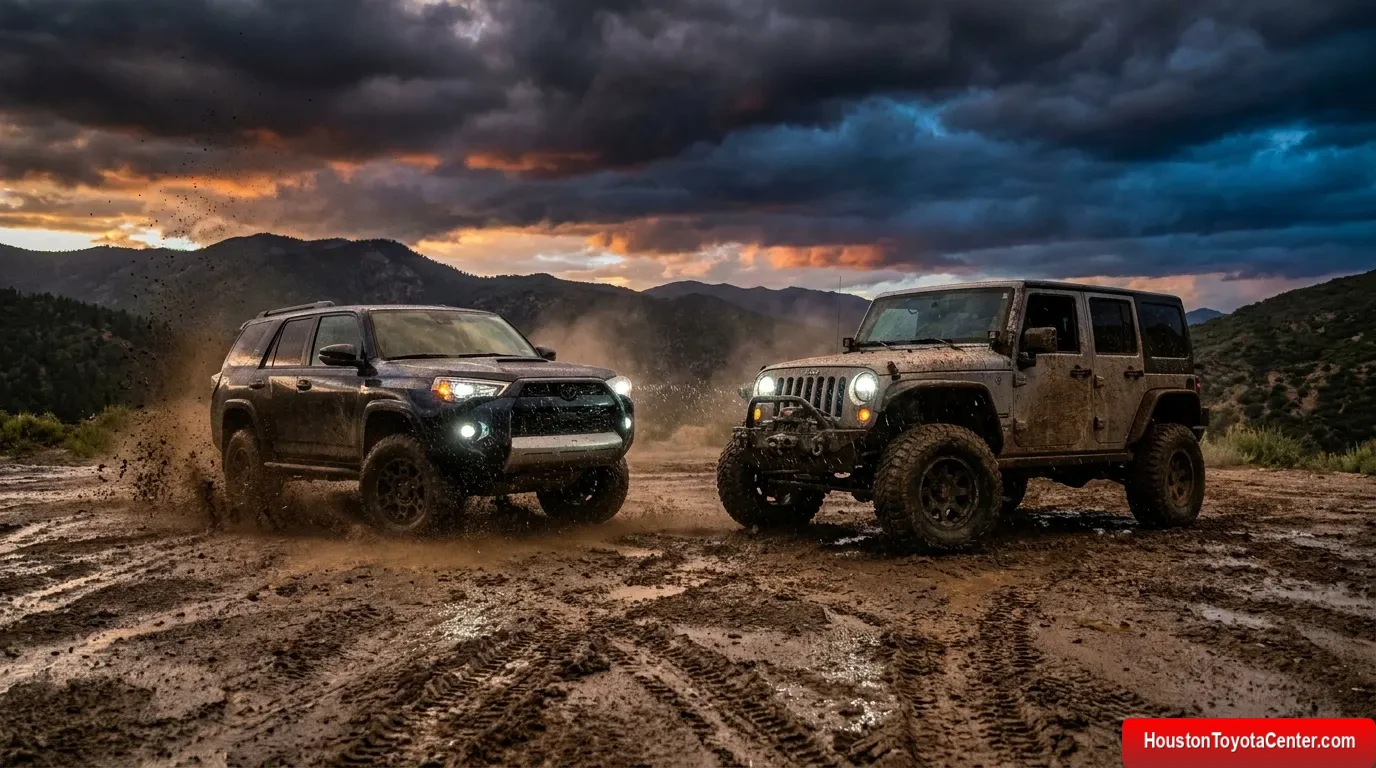
The rivalry between the Toyota 4Runner and the Jeep Wrangler is one of the longest-running debates in the SUV world. Mention either name to off-road enthusiasts, overlanders, daily commuters, or adventure travelers, and opinions immediately become passionate. Both vehicles have built legendary reputations, but they represent very different philosophies about what an SUV should be.
The Toyota 4Runner is known for durability, reliability, practicality, and long-term ownership value. The Jeep Wrangler is famous for open-air freedom, unmatched off-road customization, iconic styling, and trail capability that borders on mythical.
Choosing between them is not easy because they appeal to different lifestyles, priorities, and driving personalities. Some buyers want a dependable SUV that can comfortably handle road trips, family duties, and moderate off-road adventures without constant modifications. Others want a machine that feels purpose-built for rugged terrain and offers a driving experience unlike anything else on the road.
This comparison dives deeply into every important category: design, performance, off-road capability, reliability, comfort, technology, maintenance costs, ownership experience, resale value, fuel economy, and more. Whether you are shopping for a new SUV, planning an overlanding build, or simply curious about why these two vehicles command such loyal fan bases, this guide explores everything you need to know.
FREE: Quickly identify and understand problems with your vehicle 🚘
CLICK HEREThe Identity of Each SUV
Before comparing specifications and capabilities, it helps to understand the core identity behind each vehicle.
Toyota 4Runner Philosophy
The Toyota 4Runner is built around the idea of dependable adventure. Toyota designed it as a body-on-frame SUV capable of surviving difficult terrain while remaining practical enough for everyday life.
The 4Runner is often described as “old school” in the best possible way. It emphasizes durability over trends. Instead of chasing luxury gimmicks or aggressive redesigns every few years, Toyota has historically refined the platform slowly and carefully.
That conservative approach has created a reputation for exceptional longevity. Many owners keep their 4Runners for decades and accumulate hundreds of thousands of miles.
The 4Runner appeals strongly to:
- Long-term owners
- Families needing cargo space
- Outdoor adventurers
- Reliability-focused buyers
- Overlanders
- Drivers who want low ownership stress
- Buyers who prioritize resale value
Jeep Wrangler Philosophy
The Wrangler is different. It is not trying to be a conventional SUV.
The Wrangler exists primarily to deliver an immersive off-road experience. Nearly every part of its design reflects that mission.
Removable doors. Removable roof panels. Solid axles. Massive aftermarket support. Short overhangs. Rugged styling.
Driving a Wrangler feels more mechanical, raw, and connected than most modern vehicles. Some people love that personality immediately. Others find it too noisy, rough, or impractical.
The Wrangler appeals strongly to:
- Hardcore off-roaders
- Trail enthusiasts
- Customization fans
- Drivers who enjoy open-air driving
- Weekend adventurers
- Lifestyle-focused buyers
- People who value character over refinement
The difference in philosophy explains almost every major distinction between these SUVs.
Exterior Design Comparison
Toyota 4Runner Design
The 4Runner has a rugged but restrained appearance. It looks strong and capable without trying too hard.
Toyota’s design language emphasizes:
- Boxy proportions
- Large cargo area
- Elevated ride height
- Wide stance
- Functional roof rails
- Durable cladding
- Traditional SUV shape
Many buyers appreciate that the 4Runner avoids overly futuristic styling. It looks timeless rather than trendy.
The TRD Pro trim especially adds aggressive details such as:
- Unique grille
- Skid plates
- Off-road tires
- Special suspension tuning
- Black accents
- Wider stance appearance
The 4Runner projects confidence and practicality.
Jeep Wrangler Design
The Wrangler’s design is iconic. Even people who know nothing about vehicles instantly recognize it.
Its styling traces directly back to military Jeeps and decades of off-road heritage.
Key design traits include:
- Seven-slot grille
- Circular headlights
- Exposed door hinges
- Flat fenders
- Upright windshield
- Removable roof
- Removable doors
- Visible rugged hardware
The Wrangler looks adventurous even when parked in a city.
Unlike the 4Runner, the Wrangler embraces visual drama and personality. It is intentionally loud in its design language.
Which Looks Better?
This category depends entirely on personal preference.
The 4Runner looks mature, durable, and practical.
The Wrangler looks adventurous, rebellious, and playful.
If you want understated ruggedness, the 4Runner wins.
If you want unmistakable off-road personality, the Wrangler wins.
Interior Comfort and Daily Usability
4Runner Interior Experience
The 4Runner interior focuses on functionality.
It offers:
- Spacious seating
- Excellent cargo room
- Large center console
- Durable materials
- Easy-to-clean surfaces
- Good outward visibility
- Comfortable rear seats
The cabin feels practical rather than luxurious.
Toyota prioritizes ergonomics and durability. Buttons are large and intuitive. Controls are easy to use with gloves during outdoor adventures.
Ride comfort is another major advantage.
Compared to the Wrangler, the 4Runner generally feels:
- More stable on highways
- Quieter at speed
- Less fatiguing on long trips
- More refined over rough pavement
Families often prefer the 4Runner because it functions more naturally as a traditional SUV.
Wrangler Interior Experience
The Wrangler interior has improved dramatically over the years.
Modern Wranglers include:
- Better infotainment systems
- Improved seating
- More premium trim options
- Larger screens
- Better materials than older generations
However, the Wrangler still feels fundamentally different from a typical SUV.
The upright windshield and boxy structure create a unique cabin atmosphere.
Advantages include:
- Excellent visibility
- Distinctive driving position
- Fun open-air capability
- Removable roof experience
- Strong sense of adventure
But there are compromises:
- More wind noise
- Rougher ride quality
- Less rear cargo practicality
- More cabin vibrations
- Narrower feel inside
Long-distance highway driving generally favors the 4Runner.
Weekend fun and personality favor the Wrangler.
Off-Road Capability
This is where things become extremely interesting.
Both vehicles are highly capable off-road, but they excel in different ways.
Wrangler Off-Road Strengths
The Wrangler is arguably the benchmark off-road SUV.
Its capabilities include:
- Exceptional articulation
- Solid front and rear axles
- Excellent approach and departure angles
- Available locking differentials
- Disconnecting sway bars
- Massive aftermarket support
- Extreme rock-crawling capability
- Specialized Rubicon trim
The Wrangler Rubicon is one of the most capable factory-built off-road vehicles in the world.
It can tackle:
- Rock crawling
- Deep mud
- Technical trails
- Steep climbs
- Sand dunes
- Water crossings
The short wheelbase two-door Wrangler especially excels in tight trail environments.
4Runner Off-Road Strengths
The 4Runner is also highly capable.
Key strengths include:
- Excellent reliability in remote areas
- Strong body-on-frame construction
- Crawl Control system
- Multi-Terrain Select
- Available locking rear differential
- Durable suspension
- Better long-distance expedition comfort
- Predictable handling off-road
The TRD Off-Road and TRD Pro trims are especially respected among overlanders.
The 4Runner performs extremely well in:
- Forest trails
- Desert travel
- Overlanding
- Mountain terrain
- Snow conditions
- Remote expeditions
Where the Wrangler dominates technical crawling, the 4Runner often shines in long-range adventure travel.
Off-Road Comparison Table
| Category | Toyota 4Runner | Jeep Wrangler |
|---|---|---|
| Rock Crawling | Very Good | Excellent |
| Overlanding | Excellent | Excellent |
| Daily Driving | Better | Good |
| Highway Comfort | Better | Fair to Good |
| Technical Trails | Good | Excellent |
| Reliability in Remote Areas | Excellent | Good |
| Aftermarket Support | Strong | Massive |
| Water Fording | Good | Excellent |
| Open-Air Driving | No | Yes |
| Cargo Practicality | Better | Moderate |
Which Is Better Off-Road?
For extreme off-road enthusiasts, the Wrangler usually wins.
For balanced adventure capability combined with comfort and reliability, many buyers prefer the 4Runner.
The answer depends on whether your adventures involve:
- Hardcore trails and rock crawling
- Long-distance exploration and overlanding
The Wrangler is more specialized.
The 4Runner is more versatile.
Reliability and Long-Term Ownership
This category is one of the biggest reasons people choose the 4Runner.
Toyota 4Runner Reliability
Toyota has built one of the strongest reliability reputations in automotive history.
The 4Runner is often considered among the most durable SUVs ever made.
Owners regularly report:
- Extremely high mileage
- Minimal major mechanical failures
- Strong engine longevity
- Durable transmissions
- Low long-term maintenance stress
Many 4Runners remain operational well beyond 250,000 miles.
The naturally aspirated engines used historically in the 4Runner are often praised for simplicity and proven durability.
Another advantage is predictable ownership.
Most maintenance is straightforward:
- Oil changes
- Tires
- Brakes
- Suspension wear items
- Fluids
Unexpected catastrophic repairs are relatively uncommon compared to many competitors.
Jeep Wrangler Reliability
Wrangler reliability depends heavily on:
- Model year
- Engine choice
- Usage patterns
- Modifications
- Maintenance quality
Some Wrangler owners experience excellent reliability.
Others report:
- Electrical issues
- Water leaks
- Suspension wear
- Steering concerns
- Increased maintenance frequency
The Wrangler’s rugged nature and off-road use can accelerate wear.
Heavy modifications also frequently impact reliability.
That said, many enthusiasts willingly accept these compromises because they value the Wrangler’s personality and capability.
Ownership Philosophy Matters
People who prioritize low stress and long-term dependability often choose the 4Runner.
People who prioritize adventure experience and customization often choose the Wrangler.
One feels like a durable tool.
The other feels like a lifestyle machine.
Engine Performance and Driving Feel
Toyota 4Runner Driving Dynamics
The 4Runner traditionally prioritizes durability over excitement.
Historically, this means:
- Smooth but not fast acceleration
- Predictable power delivery
- Truck-like driving feel
- Comfortable cruising
- Stable highway behavior
The steering is usually relaxed and confidence-inspiring.
The suspension absorbs rough roads well.
Drivers often describe the 4Runner as calming and trustworthy.
However, it is not particularly sporty.
The body-on-frame design contributes to:
- More body roll
- Slower handling responses
- Less athletic cornering
Still, many buyers appreciate the old-school SUV character.
Jeep Wrangler Driving Dynamics
The Wrangler feels more rugged and mechanical.
Characteristics include:
- Heavier steering feel
- More road feedback
- More body movement
- Strong low-speed torque
- Less highway refinement
At highway speeds, the Wrangler often feels:
- Noisier
- Less aerodynamic
- More sensitive to wind
- Less stable than the 4Runner
But the Wrangler offers a unique sense of engagement.
Many enthusiasts enjoy the raw experience.
Driving with the roof removed transforms the entire personality of the vehicle.
The Wrangler becomes less about transportation and more about lifestyle.
Fuel Economy
Neither SUV is famous for exceptional fuel efficiency.
Both prioritize capability over economy.
However, there are still meaningful differences.
4Runner Fuel Economy
The 4Runner’s fuel economy is generally modest.
Contributing factors include:
- Body-on-frame construction
- High ride height
- Weight
- Off-road tires
- Traditional drivetrain setup
Real-world efficiency is often average at best.
However, the 4Runner’s highway refinement can make long drives feel less tiring.
Wrangler Fuel Economy
The Wrangler varies significantly depending on:
- Two-door vs four-door
- Tire setup
- Roof configuration
- Engine choice
- Modifications
Modern powertrain options can improve efficiency.
However, aggressive off-road tires and lifted builds often reduce economy considerably.
Aerodynamics are also not the Wrangler’s strength.
The boxy shape creates substantial wind resistance.
Which Is Better?
In stock form, some Wrangler configurations may achieve better efficiency than certain 4Runner setups.
But heavily modified Wranglers often consume much more fuel.
Neither vehicle should be purchased primarily for fuel savings.
Technology and Infotainment
Toyota 4Runner Technology
Toyota traditionally introduces technology conservatively.
The 4Runner usually emphasizes:
- Reliability
- Ease of use
- Durable controls
- Practical interfaces
Modern versions include:
- Smartphone integration
- Navigation systems
- Safety features
- Driver assistance systems
- Off-road camera systems
The infotainment layout is generally intuitive.
Some buyers appreciate the simplicity.
Others feel it lacks cutting-edge innovation.
Jeep Wrangler Technology
The Wrangler has improved significantly in this area.
Modern systems often include:
- Large touchscreens
- Advanced navigation
- Smartphone connectivity
- Off-road performance pages
- Trail mapping features
- Premium audio options
The Wrangler blends ruggedness with modern digital features surprisingly well.
Still, the experience remains more adventure-focused than luxury-focused.
Cargo Space and Practicality
4Runner Cargo Advantages
The 4Runner is generally the more practical SUV.
Benefits include:
- Larger cargo area
- Easier storage organization
- Better family usability
- More road-trip-friendly layout
- Comfortable rear-seat space
Outdoor gear fits easily.
Camping equipment, coolers, bikes, luggage, and pets are all easier to manage.
The rear cargo opening is especially useful for overlanding setups.
Wrangler Cargo Limitations
The Wrangler sacrifices practicality for capability and removable body components.
Limitations may include:
- Smaller cargo area
- Less efficient shape
- Rear door access challenges
- Reduced space with roof panels stored
- More compromise in two-door models
Four-door Wrangler Unlimited versions improve practicality substantially.
Still, the 4Runner usually feels more spacious and usable for daily life.
Towing Capability
Towing matters for many SUV buyers.
4Runner Towing
The 4Runner generally offers respectable towing capability suitable for:
- Small campers
- Boats
- Utility trailers
- Adventure gear
Its stable highway behavior helps during towing situations.
The long wheelbase also contributes to confidence.
Wrangler Towing
Wrangler towing capacity depends heavily on configuration.
Two-door models typically tow less.
Four-door versions improve capability.
However, the Wrangler is usually less ideal for frequent towing because:
- Short wheelbase versions feel less stable
- Off-road suspension priorities affect towing dynamics
- Wind sensitivity can become noticeable
The 4Runner often feels more composed for road-focused towing tasks.
Winter Driving and Snow Performance
Both vehicles perform well in winter conditions.
4Runner in Snow
The 4Runner excels due to:
- Stable wheelbase
- Predictable handling
- Effective four-wheel drive systems
- Ground clearance
- Durable traction systems
Drivers often praise the confidence it inspires during snowstorms.
The ride remains composed and manageable.
Wrangler in Snow
The Wrangler is extremely capable in deep snow.
Advantages include:
- Excellent traction
- Strong four-wheel-drive systems
- High ground clearance
- Aggressive tire compatibility
However, shorter wheelbase models may feel less stable on icy highways.
The Wrangler shines in severe conditions but may require more driver attention.
Aftermarket Support and Modifications
This category heavily favors the Wrangler.
Wrangler Customization Culture
The Wrangler has one of the largest aftermarket ecosystems in the automotive world.
Owners can modify nearly everything:
- Suspension
- Axles
- Bumpers
- Lighting
- Roof systems
- Wheels
- Tires
- Winches
- Armor
- Storage systems
- Doors
- Performance components
The Wrangler community embraces personalization.
No two builds look exactly alike.
This customization culture is a major part of Wrangler ownership.
4Runner Modification Scene
The 4Runner also has strong aftermarket support.
Popular upgrades include:
- Roof racks
- Lift kits
- Suspension systems
- Overlanding gear
- Camping setups
- Recovery equipment
- Lighting
- Skid plates
However, the culture differs.
4Runner builds often focus on:
- Reliability
- Expedition travel
- Functional upgrades
- Long-distance capability
Wrangler builds often prioritize:
- Extreme trails
- Aggressive styling
- Technical crawling performance
- Individual expression
Resale Value
Both vehicles retain value exceptionally well.
Why the 4Runner Holds Value
The 4Runner’s resale strength comes from:
- Reliability reputation
- Limited direct competition
- Strong demand
- Longevity
- Durable construction
Used 4Runners often sell at surprisingly high prices.
Even older models maintain strong market demand.
Why the Wrangler Holds Value
Wranglers also maintain excellent resale because:
- Enthusiast demand remains strong
- The design stays iconic
- Off-road popularity continues growing
- Customization attracts buyers
Special trims such as Rubicon models often hold value especially well.
Which Retains Value Better?
Both are among the strongest resale vehicles in the SUV market.
The exact winner varies by market conditions, trim levels, and mileage.
However, the 4Runner’s reliability reputation often gives buyers extra confidence in older high-mileage examples.
Ownership Costs
4Runner Ownership Costs
The 4Runner is usually less stressful financially over long periods.
Advantages include:
- Lower repair frequency
- Predictable maintenance
- Strong parts availability
- Excellent reliability
- High resale value
Insurance rates may also be favorable depending on location.
Wrangler Ownership Costs
Wrangler ownership can become expensive due to:
- Frequent modifications
- Off-road wear and tear
- Larger tires
- Suspension upgrades
- Potential repair frequency
- Fuel costs after modifications
Many Wrangler owners willingly spend heavily because customization is part of the experience.
The Wrangler often becomes a hobby as much as a vehicle.
Community and Lifestyle
Both vehicles inspire passionate communities.
4Runner Community
The 4Runner community often centers around:
- Overlanding
- Camping
- Outdoor travel
- Reliability discussions
- Expedition setups
- Long-distance adventures
The culture tends to emphasize practical capability.
Owners often share:
- Trail routes
- Camping builds
- Recovery techniques
- Reliability stories
- Travel photography
Wrangler Community
Wrangler culture is enormous and highly social.
Wrangler owners frequently participate in:
- Trail meetups
- Jeep clubs
- Rock crawling events
- Custom build showcases
- Off-road festivals
The “Jeep wave” itself reflects the strong identity among owners.
Wrangler ownership often feels like joining a subculture.
Safety Considerations
Safety is important when evaluating body-on-frame SUVs.
4Runner Safety Perspective
The 4Runner’s larger dimensions and stable behavior contribute to driver confidence.
Modern safety technologies may include:
- Adaptive cruise control
- Lane assistance
- Collision warning systems
- Automatic emergency braking
The vehicle generally feels planted and predictable.
Wrangler Safety Perspective
The Wrangler’s removable components create engineering challenges.
Its higher center of gravity and rugged design influence handling characteristics.
Modern Wranglers have improved safety significantly, but the driving experience still feels more traditional and rugged.
Drivers should understand that extreme off-road capability naturally introduces tradeoffs in refinement and dynamics.
Two-Door vs Four-Door Wrangler
One major advantage for the Wrangler is variety.
Two-Door Wrangler
The two-door version offers:
- Better maneuverability
- More classic styling
- Strong trail agility
- Lower weight
- Tighter turning radius
However, practicality is limited.
Rear-seat access and cargo room are compromised.
Four-Door Wrangler Unlimited
The Unlimited version improves:
- Family usability
- Cargo capacity
- Road-trip comfort
- Passenger space
It becomes a more realistic daily vehicle while retaining much of the Wrangler identity.
The 4Runner effectively competes more directly against the Wrangler Unlimited than the two-door version.
Overlanding Comparison
Overlanding has exploded in popularity, and both vehicles dominate this space.
Why Overlanders Love the 4Runner
The 4Runner is widely respected because it combines:
- Reliability
- Cargo space
- Long-distance comfort
- Durable drivetrain
- Strong aftermarket support
Many expedition travelers prioritize reliability above everything else.
Breaking down in remote areas can become dangerous and expensive.
Toyota’s reputation creates peace of mind.
Why Overlanders Love the Wrangler
The Wrangler excels when routes become highly technical.
Advantages include:
- Extreme trail capability
- Customization flexibility
- Better crawling geometry
- Open-air exploration experience
For adventurers who prioritize difficult terrain, the Wrangler becomes extremely attractive.
Which Is Better for Overlanding?
For international travel and reliability-focused expeditions, many choose the 4Runner.
For highly technical off-road exploration, many choose the Wrangler.
Urban Driving Experience
Living With a 4Runner in the City
The 4Runner is easier to live with daily.
Advantages include:
- Better road manners
- Less noise
- More refined ride
- Easier family use
- More practical cargo area
Parking can still be challenging because of size.
However, the overall experience feels closer to a traditional SUV.
Living With a Wrangler in the City
The Wrangler offers strong visibility and compact dimensions in some trims.
However:
- Ride quality is rougher
- Wind noise is greater
- Tire noise may become tiring
- Frequent highway commuting can feel less refined
Still, many owners happily accept these compromises because the Wrangler feels fun even during ordinary errands.
Emotional Appeal
Vehicle purchases are emotional decisions.
This category matters more than many buyers admit.
4Runner Emotional Appeal
The 4Runner inspires confidence.
Owners often describe it as:
- Dependable
- Trustworthy
- Tough
- Adventure-ready
- Long-lasting
There is satisfaction in owning something known for durability.
The 4Runner feels like a companion built to survive years of exploration.
Wrangler Emotional Appeal
The Wrangler inspires excitement.
It feels adventurous before the journey even begins.
Removing the doors and roof creates an experience few vehicles can match.
The Wrangler delivers:
- Personality
- Freedom
- Character
- Playfulness
- Community identity
For some buyers, those emotions outweigh every practical compromise.
Who Should Buy the Toyota 4Runner?
The 4Runner is ideal for buyers who want:
- Exceptional reliability
- Long-term ownership value
- Comfortable road trips
- Strong resale value
- Overlanding capability
- Practical cargo space
- Family-friendly usability
- Predictable maintenance
It works especially well for:
- Outdoor families
- Campers
- Travelers
- Daily commuters who adventure on weekends
- Buyers keeping vehicles for many years
The 4Runner is often the safer and more practical decision.
Who Should Buy the Jeep Wrangler?
The Wrangler is ideal for buyers who want:
- Maximum off-road capability
- Open-air driving
- Extensive customization
- Strong enthusiast culture
- Distinctive styling
- Trail-focused engineering
- Unique driving personality
It works especially well for:
- Hardcore off-roaders
- Jeep enthusiasts
- Weekend adventurers
- Drivers who value experience over refinement
- People who enjoy modifying vehicles
The Wrangler is often the more emotional and lifestyle-oriented decision.
Final Verdict: 4Runner vs. Wrangler
The Toyota 4Runner and Jeep Wrangler are both legendary SUVs, but they succeed for different reasons.
The 4Runner represents dependable adventure. It blends durability, comfort, practicality, and off-road capability into a package that works exceptionally well for daily life and long-term ownership.
The Wrangler represents pure off-road identity. It delivers unmatched customization, trail capability, and open-air freedom with a personality unlike almost any other vehicle.
If your priority is reliability, road-trip comfort, practicality, and long-distance adventure travel, the Toyota 4Runner is likely the better choice.
If your priority is extreme off-road capability, customization culture, and a uniquely immersive driving experience, the Jeep Wrangler is likely the better choice.
Neither vehicle is objectively superior in every category.
The best SUV depends entirely on your lifestyle, priorities, driving habits, and sense of adventure.
One thing is certain: both the 4Runner and the Wrangler have earned their legendary reputations through decades of loyal ownership, proven capability, and unforgettable experiences.
For many enthusiasts, choosing between them is not simply about transportation.
It is about choosing the kind of adventure they want to live.
Leave a Reply