
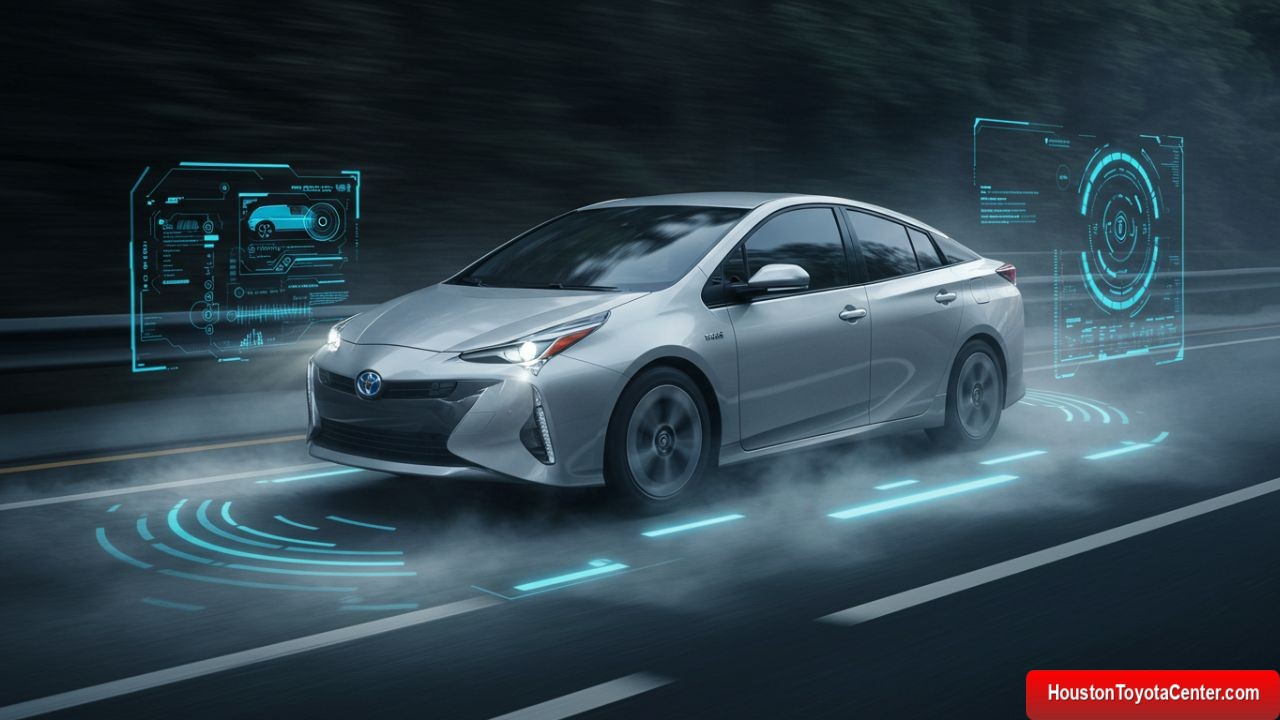
In the bustling heart of modern metropolitan areas, where traffic congestion has become a daily reality and environmental consciousness continues to shape consumer choices, one vehicle stands out as the quintessential urban companion: the Toyota Prius. Since its introduction to the global market in 1997, the Prius has evolved from a curious experiment in hybrid technology to a mainstream phenomenon that has fundamentally changed how we think about personal transportation in city environments. Today, as cities worldwide grapple with pollution, limited parking spaces, rising fuel costs, and increasingly stringent emissions regulations, the Prius offers a compelling solution that addresses nearly every challenge faced by urban drivers.
The relationship between the Prius and city driving is not merely coincidental; it represents a perfect marriage of engineering innovation and practical necessity. Urban environments present unique demands on vehicles—frequent stops and starts, short trip distances, limited maneuvering space, and the constant need for efficiency in both time and resources. The Prius was designed with these exact conditions in mind, making it not just suitable for city driving, but arguably the most appropriate conventional passenger vehicle ever created for urban environments. This comprehensive exploration will examine why the Prius excels in city settings, analyzing its technical advantages, economic benefits, environmental impact, and practical features that make it an indispensable tool for navigating the concrete jungle.
Revolutionary Hybrid Technology: The Heart of Urban Efficiency
At the core of the Prius’s suitability for city driving lies its groundbreaking hybrid powertrain system, which combines a gasoline engine with an electric motor to create a synergy that perfectly matches urban driving patterns. Unlike traditional internal combustion engines that operate inefficiently at low speeds and during frequent acceleration cycles typical of city traffic, the Prius’s hybrid system intelligently switches between power sources based on driving conditions, optimizing efficiency at every moment.
The Toyota Hybrid System (THS), now in its fourth generation, represents decades of refinement in combining electric and gasoline propulsion. In city driving scenarios, where vehicles spend considerable time idling at traffic lights, crawling through congestion, or accelerating from complete stops, the electric motor takes primary responsibility for propulsion. This eliminates the inherent inefficiency of gasoline engines operating at low RPMs and reduces fuel consumption dramatically. When additional power is needed for highway merging or hill climbing, the gasoline engine seamlessly engages, working in concert with the electric motor to provide smooth, responsive acceleration without the jerky transitions that plague some competing systems.
FREE: Quickly identify and understand problems with your vehicle 🚘
CLICK HERE| Driving Condition | Traditional Gasoline Vehicle | Prius Hybrid System | Efficiency Advantage |
|---|---|---|---|
| Idling at Traffic Light | Engine running, consuming fuel | Electric mode or engine off | 100% fuel savings during idle |
| Low-Speed Acceleration | Inefficient engine operation | Electric motor primary power | 40-60% better efficiency |
| Stop-and-Go Traffic | Frequent braking wastes energy | Regenerative braking captures energy | Recovers 15-25% of braking energy |
| Highway Cruising | Moderate efficiency | Combined power optimization | 20-30% better than average sedan |
| Cold Start | Rich fuel mixture, high emissions | Gradual warm-up, reduced emissions | 30-40% lower cold-start emissions |
The regenerative braking system deserves special attention, as it transforms one of city driving’s greatest inefficiencies into an advantage. Every time a driver applies brakes in stop-and-go traffic, kinetic energy is typically converted to heat and wasted. The Prius captures this energy through its regenerative braking system, converting it back into electrical energy stored in the battery pack. In dense urban environments where braking events occur dozens of times per mile, this continuous energy recovery creates a compounding efficiency benefit that becomes more pronounced the heavier the traffic congestion.
Furthermore, the Prius’s continuously variable transmission (CVT) works harmoniously with the hybrid system to keep both the gasoline engine and electric motor operating within their optimal efficiency ranges. Unlike traditional automatic transmissions that shift through discrete gears, creating slight interruptions in power delivery, the CVT provides seamless acceleration that feels natural and responsive while maximizing fuel economy. This is particularly valuable in city driving, where smooth, predictable power delivery enhances both comfort and safety in tight quarters.
Economic Advantages: Saving Money in the Urban Landscape
For city dwellers facing escalating costs of living, the Prius offers substantial financial benefits that extend far beyond simple fuel savings. While the initial purchase price may be slightly higher than comparable conventional vehicles, the total cost of ownership over the vehicle’s lifetime tells a different story—one of significant savings that accumulate rapidly in urban environments.
Fuel costs represent the most obvious and immediate financial advantage. With EPA ratings consistently exceeding 50 miles per gallon in combined city/highway driving, and often achieving even better results in pure city conditions where the electric motor handles most propulsion duties, the Prius dramatically reduces monthly fuel expenditures. For urban commuters driving 15,000 miles annually in areas where gasoline prices regularly exceed $4 per gallon, annual fuel savings can reach $800 to $1,200 compared to conventional compact sedans averaging 30 mpg. Over a five-year ownership period, these savings alone can offset much of the Prius’s price premium.
Beyond fuel, maintenance costs present another area of significant savings. The hybrid system’s design inherently reduces wear on several critical components. The regenerative braking system means traditional brake pads and rotors last substantially longer—often two to three times the lifespan found in conventional vehicles. This translates to fewer brake service visits and lower replacement costs. Additionally, because the gasoline engine operates less frequently and under less stressful conditions in city driving, oil changes can sometimes be extended, and overall engine wear is reduced. The absence of a traditional starter motor, alternator, and certain belt-driven accessories further simplifies the mechanical system, reducing potential failure points and associated repair costs.
Insurance costs for the Prius often prove favorable as well. Many insurance companies recognize the vehicle’s excellent safety record and lower theft rates compared to some competitors, resulting in competitive premiums. Some insurers even offer specific discounts for hybrid vehicles, acknowledging their advanced safety features and environmentally friendly nature. When combined with potential tax incentives, rebates, or reduced registration fees available in many jurisdictions for hybrid and low-emission vehicles, the financial picture becomes even more attractive.
Parking considerations add another dimension to the economic argument. In many cities, compact dimensions make the Prius easier to park in tight spaces, potentially avoiding costly parking tickets from improper parking attempts or the need to pay for premium parking spots that accommodate larger vehicles. Some municipalities offer preferential parking or reduced parking fees for low-emission vehicles, providing ongoing savings for Prius owners who regularly park in regulated urban zones.
Environmental Impact: Breathing Easier in the City
Urban air quality represents one of the most pressing environmental challenges facing modern cities, and the Prius directly addresses this concern through dramatically reduced emissions. Traditional gasoline vehicles contribute significantly to urban smog, releasing nitrogen oxides, carbon monoxide, hydrocarbons, and particulate matter that degrade air quality and pose serious health risks to city residents. The Prius’s hybrid system substantially reduces these pollutants, creating cleaner air for everyone sharing urban spaces.
The environmental benefits begin with reduced greenhouse gas emissions. By consuming less fuel per mile traveled, the Prius produces proportionally fewer carbon dioxide emissions—the primary contributor to climate change. For city drivers concerned about their carbon footprint, choosing a Prius over a conventional vehicle can reduce annual CO2 emissions by 2 to 3 tons, equivalent to planting 50 to 75 trees annually. When multiplied across thousands of urban Prius owners, the collective impact on city-wide emissions becomes substantial.
Particulate matter and nitrogen oxide reductions prove equally important for urban health. These pollutants contribute to respiratory problems, cardiovascular disease, and other health issues that disproportionately affect city populations. The Prius’s ability to operate in electric-only mode during low-speed city driving means zero tailpipe emissions during significant portions of urban trips. Even when the gasoline engine operates, it does so under optimized conditions that minimize harmful byproducts. Advanced emission control systems, including sophisticated catalytic converters and precise fuel injection management, ensure that whatever emissions do occur remain well below regulatory limits.
Noise pollution, often overlooked in environmental discussions, represents another area where the Prius improves urban quality of life. The electric motor operates nearly silently, particularly at low speeds common in city driving. This reduction in noise contributes to more peaceful urban environments, reducing stress levels for drivers and pedestrians alike. In residential neighborhoods where cars frequently pass by homes, schools, and parks, quieter vehicles create more livable communities. The cumulative effect of widespread Prius adoption could meaningfully reduce overall urban noise levels, particularly during evening and early morning hours when traffic volumes decrease but individual vehicle noise remains noticeable.
Water quality benefits also emerge indirectly from reduced fuel consumption. Less gasoline burned means fewer opportunities for fuel spills during refueling, reduced runoff contamination from parking areas, and decreased demand for petroleum extraction and refining—all processes that carry environmental risks. While individual contributions seem small, the aggregate effect of millions of efficient vehicles reduces pressure on water resources and minimizes contamination risks in urban watersheds.
Practical Design Features: Engineered for Urban Reality
The Prius’s physical design reflects careful consideration of urban driving requirements, with dimensions, visibility, and functionality optimized for city environments. At approximately 182 inches in length for recent generations, the Prius strikes an ideal balance between interior space and exterior footprint. It’s compact enough to navigate narrow city streets, fit into tight parking spaces, and maneuver through congested traffic, yet spacious enough to comfortably accommodate four adults and their belongings for daily urban activities.
Visibility ranks among the Prius’s strongest attributes for city driving. Large windows, thin pillars, and an elevated seating position provide excellent sight lines in all directions—critical for detecting pedestrians, cyclists, and other vehicles in complex urban environments. The rearview camera, standard on most trims, proves invaluable when backing into parallel parking spots or navigating crowded parking lots. Some models feature 360-degree camera systems that eliminate blind spots entirely, allowing drivers to see obstacles invisible from the driver’s seat—a genuine safety enhancement in dense urban settings where children, pets, or objects might lurk behind vehicles.
Storage versatility addresses another urban necessity. Despite its compact exterior, the Prius offers surprising cargo capacity, particularly with rear seats folded down. Recent hatchback designs provide flexible storage configurations suitable for grocery shopping, transporting work equipment, or accommodating weekend purchases from urban markets. Under-floor storage compartments keep items secure and out of sight, addressing security concerns in urban parking situations. Multiple charging ports, USB connections, and wireless charging pads ensure passengers stay connected during commutes, while climate control systems maintain comfort regardless of external urban heat island effects.
Maneuverability receives particular attention in the Prius’s engineering. Tight turning radii allow navigation of narrow streets and U-turns in confined spaces. Responsive steering provides precise control when weaving through traffic or adjusting position within lanes. The relatively light weight compared to larger SUVs or trucks reduces stopping distances and improves handling responsiveness—both crucial for safe urban driving where sudden stops and quick directional changes occur frequently.
Technology integration enhances the urban driving experience significantly. Navigation systems with real-time traffic updates help drivers avoid congestion, find optimal routes, and locate available parking. Smartphone integration allows hands-free communication and entertainment access, keeping drivers focused on the road while maintaining connectivity. Some models feature predictive efficiency coaching that analyzes driving patterns and suggests modifications to maximize fuel economy—particularly useful for new urban drivers learning to optimize their driving style for city conditions.
Safety Considerations: Protection in Complex Urban Environments
City driving presents unique safety challenges that the Prius addresses through comprehensive safety systems designed specifically for urban risk factors. Pedestrian interactions, cyclist proximity, intersection complexity, and multi-directional traffic flows create scenarios requiring heightened awareness and rapid response capabilities. The Prius incorporates multiple layers of safety technology to protect occupants and vulnerable road users alike.
Toyota Safety Sense, included standard on recent Prius models, bundles several advanced driver assistance systems particularly relevant to urban environments. Pre-collision systems with pedestrian detection can identify people crossing streets or stepping into traffic, automatically applying brakes if the driver fails to respond in time. Lane departure alert helps prevent accidental drifting into adjacent lanes or bike lanes—a common occurrence when drivers become distracted by urban visual complexity. Automatic high beams adjust lighting based on surrounding traffic, improving nighttime visibility without blinding other drivers in densely populated areas.
Blind spot monitoring proves especially valuable in cities where motorcycles, bicycles, and smaller vehicles frequently occupy spaces difficult to observe through mirrors alone. Audible and visual warnings alert drivers to vehicles approaching from sides or rear, preventing dangerous lane changes in heavy traffic. Rear cross-traffic alert assists when backing out of parking spaces, detecting approaching vehicles that might be obscured by parked cars or urban infrastructure.
Structural safety features complement electronic systems. The Prius’s rigid passenger cage, reinforced with high-strength steel, provides excellent crash protection while maintaining reasonable weight for efficiency. Multiple airbags, including side curtain and knee airbags, offer comprehensive occupant protection in various collision scenarios common to urban driving—side impacts from intersecting traffic, rear-end collisions from following too closely, and frontal impacts from unexpected stops.
Crash test ratings consistently place the Prius among the safest vehicles in its class. The Insurance Institute for Highway Safety (IIHS) and National Highway Traffic Safety Administration (NHTSA) have awarded top ratings to recent generations, validating the effectiveness of integrated safety systems. For urban families concerned about protecting children during school runs, sports activities, or family outings, these ratings provide reassurance that safety hasn’t been compromised for efficiency.
Lifestyle Compatibility: Adapting to Urban Living Patterns
The Prius aligns remarkably well with contemporary urban lifestyles, supporting diverse activities and values that characterize city living. For environmentally conscious residents who prioritize sustainability, driving a Prius represents a tangible commitment to reducing personal environmental impact. This alignment between values and actions provides psychological satisfaction beyond mere practicality, reinforcing positive identity as responsible urban citizens.
Professional commuters benefit from the Prius’s reliability and predictability. Arriving at work without worrying about finding distant parking spots due to oversized vehicles, spending minimal time and money on fuel, and experiencing less stress from mechanical issues creates smoother daily routines. The quiet cabin environment allows for productive use of commute time—taking conference calls, listening to podcasts, or simply decompressing before entering the workplace. For those using public transit part-time, the Prius serves as an ideal complement, handling trips that buses or trains cannot efficiently serve while remaining economical enough to justify occasional rather than exclusive use.
Social and recreational activities integrate seamlessly with Prius ownership. Weekend farmers’ market visits, trips to urban parks, restaurant hopping across neighborhoods, and cultural event attendance all become more enjoyable when transportation concerns fade into the background. The vehicle’s unobtrusive presence doesn’t dominate social gatherings or create awkwardness when friends need rides—it simply facilitates urban mobility without drawing excessive attention or creating logistical complications.
Family dynamics in urban settings receive support through the Prius’s practical features. School drop-offs and pickups become less stressful with easy parking near educational facilities. Grocery shopping trips require fewer visits thanks to adequate cargo space. Medical appointments, extracurricular activities, and family errands proceed smoothly without transportation becoming a limiting factor. For single parents or dual-career households juggling complex schedules, reliable, efficient transportation removes one source of daily friction.
The growing availability of Prius Plug-in Hybrid (Prius Prime) variants extends lifestyle compatibility further. For urban residents with access to home or workplace charging, the Prime offers extended all-electric range sufficient for most daily city driving, essentially eliminating gasoline consumption for typical urban usage patterns. This appeals to those seeking maximum environmental benefit while retaining gasoline backup for occasional longer trips outside the city.
Comparative Analysis: The Prius Versus Urban Alternatives
Understanding why the Prius excels requires examining how it compares to alternative vehicles commonly considered for city driving. Electric vehicles (EVs) present the most direct competition, offering zero tailpipe emissions and potentially lower operating costs. However, EVs face challenges in urban environments that the Prius avoids. Charging infrastructure remains inconsistent in many cities, with limited public charging stations and lengthy charging times incompatible with spontaneous urban mobility needs. Range anxiety affects even experienced EV drivers, particularly during extreme weather when heating or cooling demands reduce available range. The Prius eliminates these concerns entirely, offering unlimited range with quick refueling while still delivering exceptional efficiency.
Conventional compact cars like the Honda Civic or Mazda3 provide familiar driving experiences and lower initial costs but sacrifice substantial efficiency in city conditions. Their gasoline engines operate poorly during frequent stops and low-speed maneuvers, consuming significantly more fuel and producing more emissions than the Prius. Over typical urban ownership periods, fuel cost differences often exceed any initial price advantage, while environmental impacts remain substantially higher.
Small SUVs and crossovers, increasingly popular despite poor suitability for urban environments, offer higher seating positions and perceived utility but penalize city drivers with worse fuel economy, larger footprints complicating parking, and higher centers of gravity affecting handling in tight spaces. The Prius provides comparable interior volume and cargo flexibility without these urban disadvantages, proving that elevated ride height isn’t necessary for comfortable city transportation.
Public transportation represents another alternative, and indeed many urban residents successfully combine Prius ownership with regular transit use. However, complete reliance on public transit limits flexibility, increases travel times for certain trips, and may not serve all destinations adequately. The Prius fills gaps in transit coverage while remaining economical enough to justify ownership even with partial transit use—a hybrid approach to urban mobility that maximizes convenience while minimizing costs and environmental impact.
Ride-sharing services offer convenience without ownership responsibilities but prove expensive for regular users and lack the spontaneity and privacy of personal vehicle access. For urban residents making multiple trips daily or requiring vehicle access during off-peak hours when ride-share availability decreases, Prius ownership provides superior value and reliability.
Future-Proofing Urban Mobility
As cities evolve toward smarter, more sustainable futures, the Prius positions itself as a transitional technology bridging current realities and future possibilities. Municipalities increasingly implement low-emission zones, congestion pricing, and parking restrictions favoring efficient vehicles. The Prius qualifies for preferential treatment under most such policies, ensuring continued accessibility as regulations tighten. Some cities already offer reduced tolls, priority parking, or exemption from certain restrictions for hybrid vehicles—benefits likely to expand rather than contract as environmental priorities intensify.
Technological advancement continues enhancing the Prius’s urban suitability. Each generation introduces improved battery technology, more sophisticated power management systems, and enhanced connectivity features. Over-the-air software updates keep vehicles current with latest efficiency algorithms and safety features without requiring dealership visits. Integration with smart city infrastructure—including traffic signal coordination, dynamic routing based on real-time conditions, and automated parking assistance—becomes increasingly feasible as vehicles and urban systems develop compatible communication protocols.
The Prius’s proven reliability and extensive service network provide confidence for long-term urban ownership. Toyota’s reputation for durability means Prius vehicles routinely exceed 200,000 miles with proper maintenance, outlasting many competitors. Extensive dealer networks ensure service availability even in dense urban areas where independent repair shops might struggle with hybrid-specific expertise. Strong resale values reflect sustained demand, protecting owners’ investments and facilitating easier upgrades to newer models as technology advances.
Conclusion: The Definitive Urban Vehicle Choice
The Toyota Prius represents more than just a fuel-efficient automobile; it embodies a comprehensive solution to the multifaceted challenges of city driving. Through revolutionary hybrid technology that perfectly matches urban driving patterns, substantial economic advantages that accumulate rapidly in high-cost urban environments, meaningful environmental benefits that improve quality of life for entire communities, practical design features engineered specifically for urban realities, comprehensive safety systems addressing unique city risks, and lifestyle compatibility supporting diverse urban living patterns, the Prius has earned its position as the premier choice for city motorists.
While no single vehicle can address every urban transportation need perfectly, the Prius comes remarkably close, balancing competing priorities in ways that alternatives struggle to match. It offers environmental responsibility without sacrificing convenience, economic efficiency without compromising capability, technological sophistication without overwhelming complexity, and practical functionality without aesthetic compromise. For individuals navigating the complexities of modern urban life, the Prius provides reliable, efficient, and responsible transportation that enhances rather than hinders city living.
As urbanization continues accelerating globally and cities confront mounting pressures from population growth, environmental degradation, and infrastructure limitations, vehicles like the Prius become increasingly essential rather than merely optional. They represent pragmatic steps toward sustainable urban mobility that acknowledge current technological and infrastructural realities while pushing boundaries of what’s possible. For anyone seeking to optimize their urban driving experience—whether motivated by economic considerations, environmental values, practical necessities, or simply the desire for a better daily commute—the Prius stands ready as the perfect partner for city life, proving that thoughtful engineering can indeed create harmony between human mobility and urban environments.
Leave a Reply