
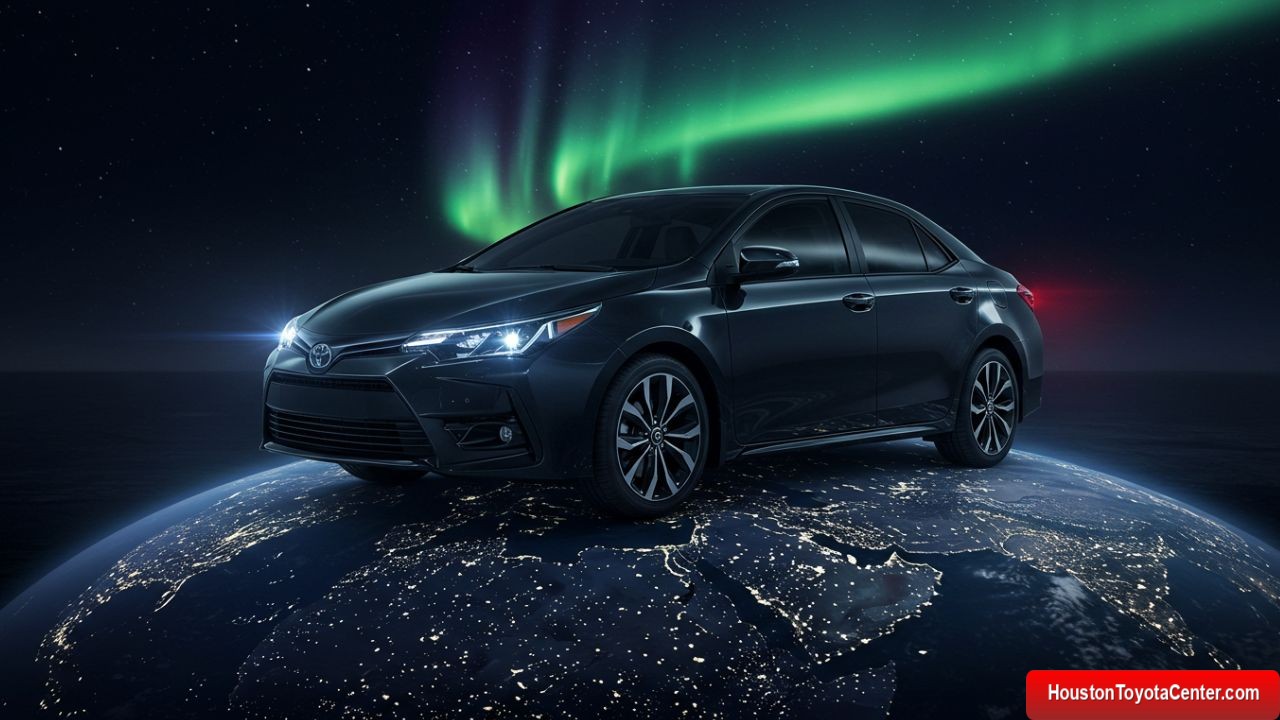
The automotive landscape has witnessed countless shifts, technological revolutions, and changing consumer preferences over the decades. Yet amidst this constant evolution, one name has remained synonymous with reliability, value, and enduring appeal: the Toyota Corolla. Since its introduction in 1966, the Corolla has not only survived but thrived, becoming the best-selling car in history with over 50 million units sold worldwide. In the fiercely competitive compact sedan segment, where manufacturers battle for market share through aggressive pricing, cutting-edge technology, and bold styling, the Corolla continues to dominate. But what exactly makes this humble sedan the undisputed leader in its class? The answer lies in a carefully crafted combination of legendary reliability, exceptional fuel efficiency, comprehensive safety features, strong resale value, and an evolving design philosophy that keeps pace with modern demands while never losing sight of its core identity.
A Legacy Built on Trust
The foundation of the Corolla’s dominance rests upon decades of accumulated trust. When consumers consider purchasing a vehicle, particularly in the compact sedan category where buyers are often first-time car owners or budget-conscious families, reliability becomes paramount. Toyota has cultivated a reputation for building vehicles that simply work, day after day, year after year, with minimal unexpected repairs or mechanical failures. This reputation didn’t emerge overnight; it was built through consistent delivery of dependable transportation across generations of drivers.
The Corolla’s engineering philosophy emphasizes proven technology over experimental innovations. While competitors may rush to implement untested systems or complex powertrains that promise marginal improvements but carry higher risks of failure, Toyota takes a more measured approach. Each new generation of the Corolla introduces refinements and improvements, but these changes are thoroughly validated before reaching production. This conservative yet effective strategy means that Corolla owners rarely face the frustration of being early adopters of problematic technology. Instead, they benefit from mature, well-understood systems that have been refined through extensive testing and real-world use.
Consumer reports and independent reliability studies consistently rank the Corolla at or near the top of its segment. Organizations like J.D. Power, Consumer Reports, and various automotive research firms regularly highlight the Corolla’s low incidence of reported problems, minimal maintenance requirements, and impressive longevity. Many Corollas routinely exceed 200,000 miles with proper maintenance, a testament to the quality of their construction and the durability of their components. For buyers who view their vehicle as a long-term investment rather than a short-term possession, this track record provides invaluable peace of mind.
FREE: Quickly identify and understand problems with your vehicle 🚘
CLICK HEREThe global nature of the Corolla’s success further reinforces its reliability credentials. Sold in more than 150 countries across diverse climates and driving conditions, from the scorching deserts of the Middle East to the freezing winters of Scandinavia, the Corolla has proven its adaptability and resilience. This worldwide presence means that replacement parts are readily available almost everywhere, service networks are extensive, and mechanics familiar with Toyota vehicles can be found in virtually any community. For owners who travel frequently or may relocate, this global support infrastructure represents a significant advantage over competitors with more limited distribution networks.
Exceptional Fuel Efficiency That Matters
In an era where fuel costs fluctuate unpredictably and environmental consciousness continues to grow, the Corolla’s outstanding fuel efficiency represents a compelling advantage. The current generation Corolla offers multiple powertrain options designed to maximize mileage without sacrificing performance, including traditional gasoline engines and hybrid variants that set benchmarks in the compact sedan category.
The standard gasoline-powered Corolla typically achieves EPA-estimated ratings of around 31 mpg in the city and 40 mpg on the highway, figures that remain competitive even against newer rivals employing advanced turbocharging and cylinder deactivation technologies. However, it’s the Corolla Hybrid that truly distinguishes itself, delivering an impressive combined fuel economy rating of approximately 50 mpg. This remarkable efficiency translates directly into substantial savings at the pump, particularly for drivers who accumulate high annual mileage or commute long distances regularly.
| Powertrain Option | City MPG | Highway MPG | Combined MPG | Annual Fuel Cost* |
|---|---|---|---|---|
| Standard Gasoline | 31 | 40 | 34 | $1,450 |
| Hybrid | 53 | 52 | 52 | $950 |
| Competitor A (Gas) | 28 | 37 | 31 | $1,590 |
| Competitor B (Hybrid) | 49 | 47 | 48 | $1,030 |
*Based on 15,000 miles annually and average fuel prices
Beyond the immediate financial benefits, the Corolla’s fuel efficiency contributes to reduced environmental impact. Lower fuel consumption means fewer greenhouse gas emissions, aligning with the values of environmentally conscious consumers who seek to minimize their carbon footprint without compromising on practicality or affordability. The hybrid variant, in particular, offers an accessible entry point into electrified transportation for buyers who may not be ready to commit fully to battery electric vehicles but want to reduce their environmental impact.
Toyota’s hybrid technology, refined over more than two decades since the introduction of the Prius, represents some of the most reliable and efficient electrified powertrains available. The Corolla Hybrid employs a sophisticated system that seamlessly blends power from its gasoline engine and electric motor, optimizing efficiency across various driving conditions. Unlike some competitors whose hybrid systems feel intrusive or compromise driving dynamics, the Corolla Hybrid operates smoothly and transparently, providing adequate acceleration for daily driving while maximizing energy recovery during deceleration and braking.
The real-world fuel economy of the Corolla often exceeds official EPA estimates, particularly for drivers who adopt efficient driving habits. Features like Eco mode, which adjusts throttle response and climate control settings to prioritize efficiency, help drivers maximize their mileage without requiring significant changes to their driving style. Additionally, the Corolla’s relatively lightweight construction and aerodynamic design contribute to its efficiency advantages, reducing the energy required to move the vehicle through air and over roads.
Comprehensive Safety Without Compromise
Safety has become increasingly important to car buyers, and the Corolla responds with a comprehensive suite of protective features that rival or exceed those offered by competitors, often at no additional cost. Toyota Safety Sense, the brand’s standard advanced driver assistance system, comes equipped on every Corolla regardless of trim level, ensuring that all buyers receive essential safety technologies without having to upgrade to expensive packages or premium trims.
The current Toyota Safety Sense package includes several critical features that work together to prevent accidents or mitigate their severity. Pre-Collision System with Pedestrian Detection uses cameras and radar to identify potential collision threats and can automatically apply brakes if the driver doesn’t respond in time. Lane Departure Alert with Steering Assist helps keep the vehicle centered in its lane, reducing the risk of unintentional drifting that could lead to sideswipe collisions or run-off-road incidents. Automatic High Beams adjust headlight intensity based on surrounding traffic conditions, improving nighttime visibility without blinding other drivers. Dynamic Radar Cruise Control maintains a safe following distance from vehicles ahead, reducing driver fatigue during highway travel and helping prevent rear-end collisions.
Key Safety Features Standard on All Corolla Models:
- Pre-Collision System with Pedestrian Detection: Identifies vehicles and pedestrians ahead, providing visual and audible warnings and automatic braking when necessary
- Lane Departure Alert with Steering Assist: Monitors lane markings and provides steering input to help keep the vehicle in its lane
- Automatic High Beams: Adjusts headlight intensity based on detected traffic to optimize visibility
- Dynamic Radar Cruise Control: Maintains preset speed and following distance from vehicles ahead
- Road Sign Assist: Recognizes certain road signs and displays them on the instrument cluster
- Full-Speed Range Dynamic Radar Cruise Control: Operates effectively from highway speeds down to complete stops in traffic
Beyond these active safety systems, the Corolla’s structural design incorporates high-strength steel and strategic crumple zones that absorb and distribute crash energy away from occupants. Multiple airbags, including front, side, curtain, and knee airbags, provide comprehensive protection in various collision scenarios. The vehicle’s stability control and traction control systems help maintain control during adverse weather conditions or emergency maneuvers, while anti-lock brakes prevent wheel lockup during hard stopping situations.
Independent safety organizations have recognized the Corolla’s protective capabilities with top ratings. The Insurance Institute for Highway Safety (IIHS) has consistently awarded the Corolla Top Safety Pick status, reflecting excellent performance in crash tests and the availability of superior front crash prevention systems. The National Highway Traffic Safety Administration (NHTSA) has also given the Corolla five-star overall safety ratings, confirming its ability to protect occupants in various crash scenarios.
What sets the Corolla apart from many competitors is the democratization of these safety features. While some manufacturers reserve advanced driver assistance systems for higher trim levels or charge substantial premiums for safety packages, Toyota includes Toyota Safety Sense as standard equipment across the entire Corolla lineup. This approach ensures that budget-conscious buyers don’t have to sacrifice safety to afford their vehicle, a principle that aligns with Toyota’s broader mission of making quality transportation accessible to everyone.
Outstanding Resale Value and Total Cost of Ownership
When evaluating a vehicle purchase, savvy consumers look beyond the initial sticker price to consider the total cost of ownership, which includes depreciation, maintenance, repairs, insurance, and fuel costs over the period they expect to own the vehicle. In this comprehensive assessment, the Corolla excels, particularly in the crucial areas of resale value and long-term reliability that significantly impact overall ownership costs.
Depreciation represents the largest single expense in vehicle ownership for most buyers, typically accounting for 40-60% of total costs during the first five years. The Corolla’s strong brand reputation, proven reliability, and sustained demand in the used car market help it retain value better than many competitors. According to industry data from sources like Kelley Blue Book and Edmunds, the Corolla consistently ranks among the top compact sedans for residual value, often retaining 50-55% of its original value after three years and 40-45% after five years. These figures compare favorably against rivals that may depreciate more rapidly due to concerns about reliability, higher maintenance costs, or weaker brand perception.
| Vehicle Model | 3-Year Residual Value | 5-Year Residual Value | Average Annual Maintenance Cost |
|---|---|---|---|
| Toyota Corolla | 53% | 43% | $450 |
| Honda Civic | 51% | 41% | $475 |
| Mazda3 | 48% | 38% | $520 |
| Hyundai Elantra | 46% | 36% | $490 |
| Nissan Sentra | 44% | 34% | $510 |
The Corolla’s maintenance costs also tend to be lower than average for the segment. Toyota’s reputation for reliability translates into fewer unexpected repairs, while the widespread availability of parts and service centers keeps routine maintenance affordable. Simple oil changes, tire rotations, and brake services cost less for the Corolla than for many competitors, partly because the vehicle’s straightforward mechanical design doesn’t require specialized tools or extensive labor time. Additionally, Toyota’s recommended maintenance intervals are reasonable, and the company provides clear guidance on what services are needed and when, helping owners avoid unnecessary expenses.
Insurance costs for the Corolla typically fall in the lower range for the compact sedan segment. Insurance companies base their rates on factors including repair costs, theft rates, and accident frequency, and the Corolla scores well across these metrics. Its moderate repair costs, low theft rates compared to some sportier competitors, and strong safety record contribute to favorable insurance premiums. For young drivers or those seeking to minimize their monthly expenses, these lower insurance costs represent another financial advantage.
The combination of strong resale value, low maintenance costs, reasonable insurance premiums, and excellent fuel efficiency creates a compelling total cost of ownership proposition. Over a typical five-year ownership period, a Corolla owner might save thousands of dollars compared to owning a competitor with similar initial purchase price but higher depreciation, more frequent repairs, or poorer fuel economy. These savings can be redirected toward other financial goals or simply provide greater flexibility in household budgeting.
Evolution Without Abandonment of Core Values
One of the most remarkable aspects of the Corolla’s continued success is Toyota’s ability to evolve the vehicle to meet changing consumer expectations while maintaining the fundamental qualities that made it popular in the first place. The current generation Corolla represents a significant departure from earlier iterations in terms of styling, technology, and driving dynamics, yet it remains unmistakably a Corolla at its core.
The exterior design has grown more sophisticated and contemporary, shedding the bland, anonymous appearance that characterized some previous generations. Sharp character lines, a more aggressive front fascia, and athletic proportions give the modern Corolla visual appeal that competes effectively with stylish rivals like the Mazda3 and Honda Civic. Interior quality has similarly improved, with better materials, more thoughtful ergonomics, and increased attention to detail. Touchscreens are larger and more responsive, connectivity options include both Apple CarPlay and Android Auto as standard features, and available premium audio systems provide entertainment quality that satisfies discerning listeners.
Driving dynamics, once considered the Corolla’s weakest attribute, have received substantial attention in recent generations. The current model offers improved handling, better steering feel, and more refined ride quality than its predecessors. While it may not match the sportiest competitors in terms of outright performance or engagement, the Corolla now provides a competent, comfortable driving experience that satisfies most buyers’ expectations. Available all-wheel drive in certain markets further expands the Corolla’s appeal to buyers in regions with challenging weather conditions.
Despite these enhancements, the Corolla hasn’t abandoned its fundamental identity. It remains practical, offering adequate space for passengers and cargo in a reasonably sized package. It continues to prioritize ease of use, with intuitive controls and straightforward operation that don’t require extensive learning curves. Most importantly, it maintains its focus on providing dependable, efficient transportation at an accessible price point. Toyota has resisted the temptation to transform the Corolla into something it’s not—a luxury vehicle, a performance machine, or a technology showcase—instead choosing to refine and enhance its core strengths.
This balanced approach to evolution has allowed the Corolla to attract new buyers who might have previously overlooked it due to perceptions of boredom or outdated design, while retaining loyal customers who appreciate its traditional virtues. Younger buyers drawn to the modern styling and technology find that the Corolla still delivers the reliability and value their parents valued, creating a bridge between generations of Toyota enthusiasts.
Market Position and Competitive Advantages
The compact sedan segment remains one of the most competitive in the automotive industry, with established players like Honda, Mazda, Hyundai, Kia, and Nissan all vying for customers’ attention and dollars. Each competitor brings distinct strengths to the table: Honda offers refined driving dynamics and strong brand loyalty, Mazda provides upscale interiors and engaging handling, Hyundai and Kia deliver generous warranties and feature content, and Nissan focuses on comfort and value pricing. Yet despite these formidable competitors, the Corolla maintains its leadership position through a combination of factors that create a compelling overall package.
Brand recognition and trust play significant roles in the Corolla’s market dominance. Toyota’s global reputation for quality and reliability precedes the Corolla, giving it an inherent advantage in consumer consideration sets. Many buyers begin their shopping process with Toyota already on their shortlist, a testament to the brand’s marketing effectiveness and word-of-mouth recommendations from satisfied owners. This brand equity allows Toyota to command slightly higher prices than some competitors while still maintaining strong sales volumes.
The breadth of the Corolla lineup also contributes to its market success. With multiple trim levels, body styles (sedan and hatchback in most markets), and powertrain options (gasoline and hybrid), the Corolla can appeal to diverse customer segments. Budget-conscious buyers can enter the Corolla family at an accessible price point, while those willing to spend more can access additional features, premium materials, and enhanced technology. This flexibility allows Toyota to capture sales across various price points within the compact segment, rather than concentrating only on specific niches.
Toyota’s manufacturing scale and supply chain efficiency provide additional competitive advantages. As one of the world’s largest automakers, Toyota benefits from economies of scale that allow it to produce the Corolla cost-effectively while maintaining quality standards. Vertical integration in certain component categories and long-standing relationships with suppliers help ensure consistent quality and availability of parts. These operational efficiencies translate into competitive pricing for consumers while preserving profit margins for Toyota and its dealer network.
The Corolla’s global platform strategy further enhances its competitiveness. By developing vehicles on shared platforms that can be adapted for different markets, Toyota reduces development costs and accelerates time-to-market for new models. This approach allows resources saved in engineering and development to be redirected toward quality improvements, feature enhancements, or pricing strategies that benefit consumers.
Looking Forward: Sustaining Leadership in a Changing Market
As the automotive industry undergoes transformative changes driven by electrification, autonomous driving technology, and shifting consumer preferences, the Corolla faces both challenges and opportunities. Toyota has indicated that electrification will play an increasingly important role in the Corolla’s future, with expanded hybrid offerings and potentially fully electric variants joining the lineup in coming years. This strategy allows Toyota to leverage its hybrid expertise while gradually transitioning toward zero-emission transportation, maintaining the Corolla’s relevance as regulations tighten and consumer interest in electric vehicles grows.
The rise of SUVs and crossovers has impacted sedan sales across the industry, with many buyers preferring the elevated seating position, cargo versatility, and perceived safety of taller vehicles. Toyota has responded by expanding its crossover offerings, including the Corolla Cross, which applies the Corolla nameplate to a small SUV format. This extension of the Corolla brand into adjacent segments demonstrates Toyota’s willingness to adapt to market trends while capitalizing on the Corolla’s strong brand recognition and reputation.
Technology integration will continue to evolve, with expectations for more sophisticated connectivity, over-the-air software updates, and advanced driver assistance features. Toyota’s approach of implementing proven, reliable technology rather than rushing to market with untested innovations should serve the Corolla well as these systems become more complex. Consumers increasingly recognize that flashy technology means little if it doesn’t work reliably, and the Corolla’s reputation for dependability extends to its electronic systems as well as its mechanical components.
Sustainability concerns are driving changes throughout the automotive industry, from manufacturing processes to material selection to end-of-life recycling. Toyota has made commitments to reduce the environmental impact of its vehicles and operations, initiatives that align well with the Corolla’s existing strengths in fuel efficiency and longevity. The ability to keep a Corolla on the road for many years represents a form of sustainability, as it delays the resource consumption and environmental impact associated with manufacturing replacement vehicles.
Conclusion: The Enduring Appeal of Excellence
The Toyota Corolla’s leadership in the compact sedan segment isn’t accidental or temporary—it’s the result of decades of consistent execution, strategic decision-making, and unwavering commitment to delivering value to customers. While competitors may occasionally surpass the Corolla in individual categories like styling, technology, or driving dynamics, none have matched its comprehensive combination of reliability, efficiency, safety, value retention, and affordability.
For buyers seeking a vehicle that will start every morning, require minimal unexpected repairs, cost little to operate, protect their families effectively, and retain reasonable value when it’s time to move on, the Corolla remains the obvious choice. It represents a rational, responsible decision that prioritizes long-term satisfaction over short-term excitement, practical considerations over prestige, and proven performance over unproven promises.
As the automotive landscape continues to evolve, the Corolla’s fundamental appeal remains unchanged. In a world of increasing complexity, uncertainty, and rapid change, there’s something deeply comforting about a vehicle that simply works, day after day, year after year. The Corolla doesn’t try to be everything to everyone; instead, it excels at being exactly what most compact sedan buyers need: a reliable, efficient, safe, and affordable transportation solution that respects their intelligence and rewards their trust.
This focused excellence, maintained consistently across generations and markets, explains why the Corolla continues to lead its segment despite intense competition. It’s not the flashiest, fastest, or most technologically ambitious vehicle available, but it may well be the smartest choice for millions of buyers who understand that in automotive purchases, as in life, consistency and reliability ultimately matter more than novelty and hype. The Corolla’s continued success proves that doing the basics exceptionally well, year after year, remains a winning strategy in any competitive marketplace.
Leave a Reply