
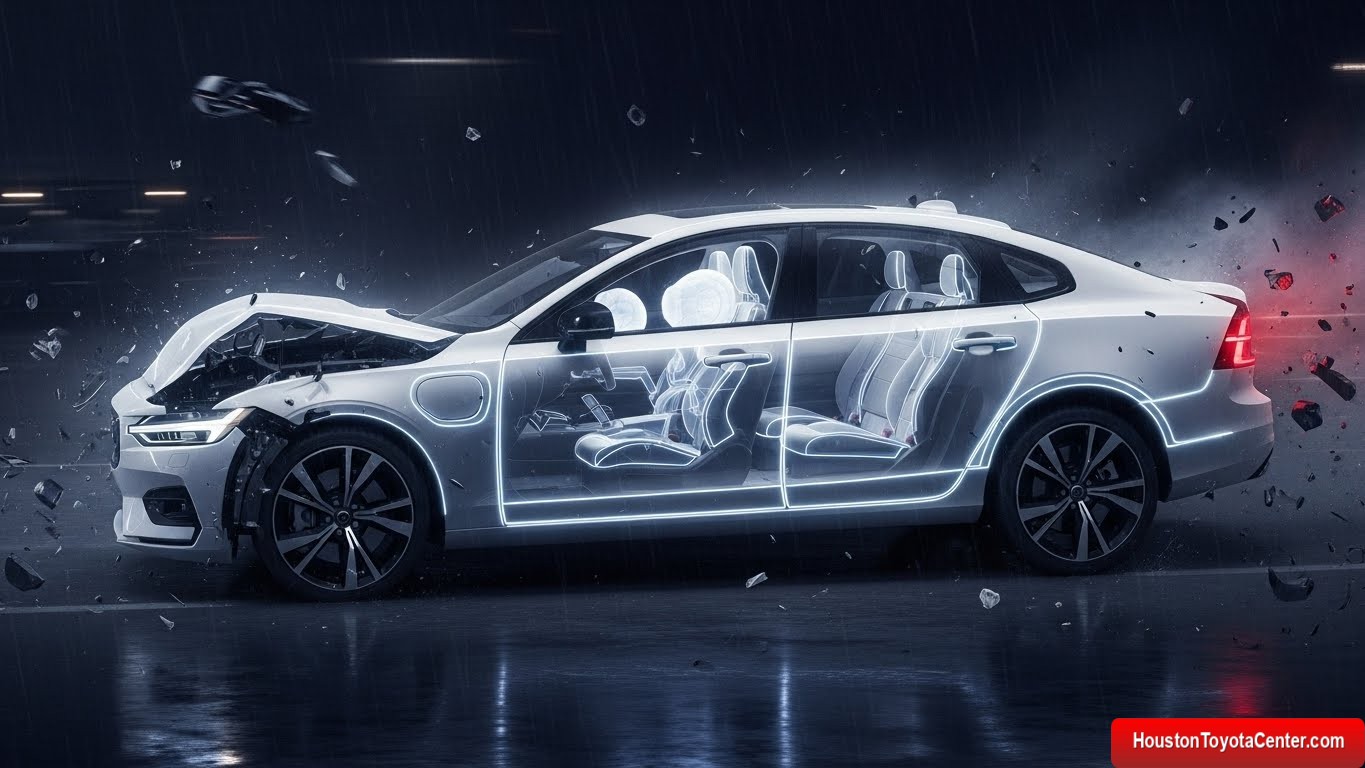
For many automotive brands, safety is a selling point—an item on a checklist alongside performance, comfort, and design. For Volvo, safety has always been something far deeper: a moral obligation, a technological mission, and a defining element of its corporate identity. From its earliest days, Volvo has positioned safety not merely as an engineering challenge, but as a social responsibility. This long-standing commitment has shaped how the company designs cars, conducts research, communicates with customers, and even how it defines success.
Volvo’s relationship with safety is not accidental, nor is it a late response to regulatory pressure or market trends. Instead, it is the result of decades of deliberate decisions rooted in the company’s Swedish heritage, its understanding of human vulnerability, and a belief that mobility should never come at the cost of human life. The story of Volvo and safety is therefore not just a story about cars—it is a story about values, ethics, and the role of technology in protecting people.
This article explores Volvo’s commitment to safety as a core brand value, examining its historical origins, engineering philosophy, landmark innovations, data-driven approach, and future vision. It also considers how safety has shaped Volvo’s brand perception globally and why this commitment remains central in an era of electrification, automation, and digital mobility.
The Origins of Volvo’s Safety Philosophy
A Brand Born in a Harsh Environment
Volvo was founded in 1927 in Gothenburg, Sweden—a country known for its long winters, challenging road conditions, and strong social values centered on collective well-being. These environmental and cultural factors played a crucial role in shaping Volvo’s early priorities. From the beginning, the company’s founders, Assar Gabrielsson and Gustaf Larson, believed that cars should be adapted to people, not the other way around.
FREE: Quickly identify and understand problems with your vehicle 🚘
CLICK HEREOne of the most frequently cited early statements attributed to Volvo encapsulates this philosophy: “Cars are driven by people. The guiding principle behind everything we make at Volvo, therefore, is and must remain safety.” This idea established a people-first approach that would remain remarkably consistent for nearly a century.
Early Engineering Decisions
In the early decades of automotive history, safety was far from a universal concern. Many manufacturers focused on speed, style, or mechanical novelty, often at the expense of occupant protection. Volvo, however, began reinforcing vehicle frames, improving braking systems, and emphasizing structural integrity well before such measures were mandated.
These early decisions did not always result in immediate commercial advantages. Safer cars were sometimes heavier, more expensive, or less visually striking than competitors. Yet Volvo persisted, laying the groundwork for a brand identity that would later become one of the most trusted in the world.
Safety as a Moral Responsibility
Beyond Compliance and Regulation
One of the most distinctive aspects of Volvo’s approach to safety is its refusal to treat safety as merely a regulatory requirement. While many manufacturers design vehicles to meet or slightly exceed legal standards, Volvo has consistently aimed to go further.
This mindset is evident in how Volvo conducts internal safety testing. The company often designs its own crash tests that exceed regulatory requirements, simulating real-world scenarios that are not always covered by standardized tests. These include unusual collision angles, multi-vehicle accidents, and impacts involving vulnerable road users such as pedestrians and cyclists.
Sharing Life-Saving Innovations
Perhaps the most powerful demonstration of Volvo’s ethical stance on safety came in 1959 with the invention of the three-point safety belt. Rather than patenting the design for exclusive commercial gain, Volvo made the decision to share it freely with the entire automotive industry. This choice is estimated to have saved over a million lives worldwide.
This act was not only technologically significant but philosophically revealing. Volvo recognized that safety innovations carry a moral weight that transcends competition. In doing so, the company set a precedent that continues to influence its decisions today.
Landmark Safety Innovations
Over the decades, Volvo has introduced numerous safety technologies that have reshaped the automotive landscape. Some of these innovations have become industry standards, while others continue to set Volvo apart.
Timeline of Key Safety Innovations
| Year | Innovation | Description | Industry Impact |
|---|---|---|---|
| 1959 | Three-point safety belt | Secure belt design distributing force across the torso | Adopted globally; millions of lives saved |
| 1972 | Rear-facing child seat | Inspired by astronaut seating positions | Influenced child safety standards |
| 1991 | Side Impact Protection System (SIPS) | Reinforced side structures and energy absorption | Set new benchmarks for side-impact safety |
| 1998 | Whiplash Protection System (WHIPS) | Seat design reducing neck injuries | Reduced long-term injury risk |
| 2002 | Roll Stability Control (RSC) | Electronic system preventing rollovers | Enhanced SUV safety |
| 2008 | City Safety | Automatic emergency braking at low speeds | Pioneered collision avoidance systems |
| 2014 | Run-off Road Protection | Energy-absorbing seats and restraints | Addressed real-world accident data |
This timeline highlights a consistent pattern: Volvo identifies real-world risks and responds with targeted, often pioneering solutions.
Data-Driven Safety: Learning from Real Accidents
The Volvo Accident Research Team
Since the 1970s, Volvo has maintained a dedicated Accident Research Team tasked with investigating real-world traffic accidents. This team is on call 24/7 and travels to accident sites to collect data, analyze vehicle damage, interview occupants, and reconstruct events.
The purpose of this work is not to assign blame, but to learn. By understanding how accidents actually happen—and how people are injured—Volvo gains insights that cannot be replicated in laboratories alone.
From Data to Design
The findings from accident research directly influence vehicle design. For example, analysis of run-off-road accidents led to the development of energy-absorbing seat structures and advanced seatbelt tensioners. Similarly, studies of urban collisions informed the creation of pedestrian detection systems and automatic braking technologies.
This feedback loop—real accidents informing engineering decisions—ensures that Volvo’s safety features address genuine risks rather than theoretical scenarios.
Human-Centric Design Philosophy
Designing for Real People
Volvo’s safety philosophy extends beyond crash survival to include injury prevention and long-term health. This requires a deep understanding of human anatomy, behavior, and diversity.
Historically, automotive safety testing relied heavily on crash test dummies modeled on the average male body. Volvo was among the first manufacturers to recognize the limitations of this approach. The company invested in developing and using a wider range of crash test dummies, including female and child representations, long before such diversity became an industry-wide conversation.
The Importance of Seating and Ergonomics
Seats are often overlooked in discussions of automotive safety, yet they play a crucial role in protecting occupants during collisions. Volvo has devoted extensive research to seat design, focusing on spinal alignment, energy absorption, and whiplash prevention.
By integrating safety into comfort and ergonomics, Volvo demonstrates that safety is not an isolated system but an integral part of the driving experience.
Safety in the Age of Advanced Driver Assistance Systems
From Passive to Active Safety
Traditional automotive safety focused primarily on passive systems—features designed to protect occupants once a crash occurs. While Volvo continues to excel in this area, the company has increasingly shifted its attention toward active safety: technologies that help prevent accidents altogether.
Advanced Driver Assistance Systems (ADAS) such as adaptive cruise control, lane-keeping aid, blind-spot monitoring, and collision avoidance have become central to Volvo’s safety strategy.
City Safety and Collision Avoidance
One of Volvo’s most influential active safety systems is City Safety. Originally introduced to prevent low-speed rear-end collisions, the system has evolved to detect vehicles, pedestrians, cyclists, and large animals, applying automatic braking when a collision is imminent.
This evolution reflects Volvo’s broader approach: start with a specific, well-defined problem and continuously refine the solution as technology advances.
Vision Zero: A Bold and Controversial Goal
The 2020 Vision
In 2008, Volvo announced an ambitious goal: by 2020, no one should be killed or seriously injured in a new Volvo car. Known as “Vision Zero,” this statement was not framed as a marketing slogan but as a guiding principle for the company’s future development.
While the goal has not been achieved in absolute terms, it has profoundly influenced Volvo’s priorities, investments, and public accountability. Rather than quietly abandoning the vision, Volvo continues to refine and extend it, acknowledging both progress and limitations.
A Direction, Not a Deadline
Volvo has emphasized that Vision Zero should be understood as a direction rather than a fixed endpoint. It serves as a constant reminder that any level of fatality is unacceptable and that continuous improvement is both possible and necessary.
Electrification and Safety
New Powertrains, New Challenges
As Volvo transitions toward an all-electric future, safety remains central to its strategy. Electric vehicles introduce new risks, including battery integrity, thermal management, and high-voltage systems.
Volvo addresses these challenges through reinforced battery enclosures, advanced monitoring systems, and rigorous testing designed to ensure that electrification enhances rather than compromises safety.
Structural Innovation
Electric vehicle architectures allow for new structural designs, such as reinforced skateboard platforms and optimized crumple zones. Volvo leverages these opportunities to improve crash performance while maintaining interior space and comfort.
Software, Connectivity, and Predictive Safety
Over-the-Air Updates
Modern Volvos increasingly rely on software to manage safety systems. Over-the-air updates allow the company to improve functionality, address vulnerabilities, and refine algorithms without requiring physical recalls.
This capability represents a shift in how safety is delivered—not as a static feature, but as an evolving service.
Data Ethics and Responsibility
With increased connectivity comes increased responsibility. Volvo has publicly committed to responsible data use, emphasizing privacy, transparency, and user consent. Safety data is used to protect lives, not to exploit users.
Brand Trust and Consumer Perception
Safety as Brand Equity
Volvo’s reputation for safety is one of its most valuable assets. For many consumers, the brand is synonymous with protection, reliability, and peace of mind. This perception influences purchasing decisions, brand loyalty, and even resale values.
Unlike trends that come and go, safety is a timeless concern. Volvo’s consistency in this area has allowed it to build trust across generations.
Emotional Dimensions of Safety
Safety is not purely rational. It is deeply emotional, especially for families. Volvo’s marketing and communication strategies often reflect this reality, focusing on real people, real stories, and real consequences.
Criticism and Challenges
Balancing Innovation and Complexity
As vehicles become more technologically complex, new challenges emerge. Advanced safety systems must be intuitive, reliable, and resistant to misuse or overreliance. Volvo actively studies driver behavior to ensure that technology supports, rather than replaces, human judgment.
Global Variability
Different markets present different safety challenges, from infrastructure quality to driving culture. Volvo must adapt its solutions while maintaining a consistent brand promise.
The Future of Volvo Safety
Autonomous Driving
Autonomous and semi-autonomous technologies represent the next frontier in automotive safety. Volvo has been cautious but committed in this area, emphasizing real-world testing, redundancy, and ethical considerations.
The ultimate goal is not technological novelty, but meaningful risk reduction.
Continuous Learning
Volvo envisions a future where vehicles continuously learn from one another, sharing anonymized data to anticipate risks and prevent accidents before they occur. This networked approach aligns with the company’s long-standing belief in collective responsibility.
Conclusion: Safety as a Living Value
Volvo’s commitment to safety is not a historical artifact or a marketing posture—it is a living value that continues to shape the company’s decisions, investments, and identity. From the invention of the three-point safety belt to the pursuit of Vision Zero, Volvo has consistently demonstrated that safety can be both a moral stance and a technological driver.
In an industry often driven by speed, style, and short-term gains, Volvo stands apart by asking a different question: How can mobility serve life rather than endanger it? The answer, while never final, continues to guide Volvo forward.
As transportation evolves through electrification, automation, and digitalization, Volvo’s unwavering focus on safety ensures that progress remains aligned with humanity. In this sense, safety is not just a feature of Volvo cars—it is the very reason they exist.
Leave a Reply