
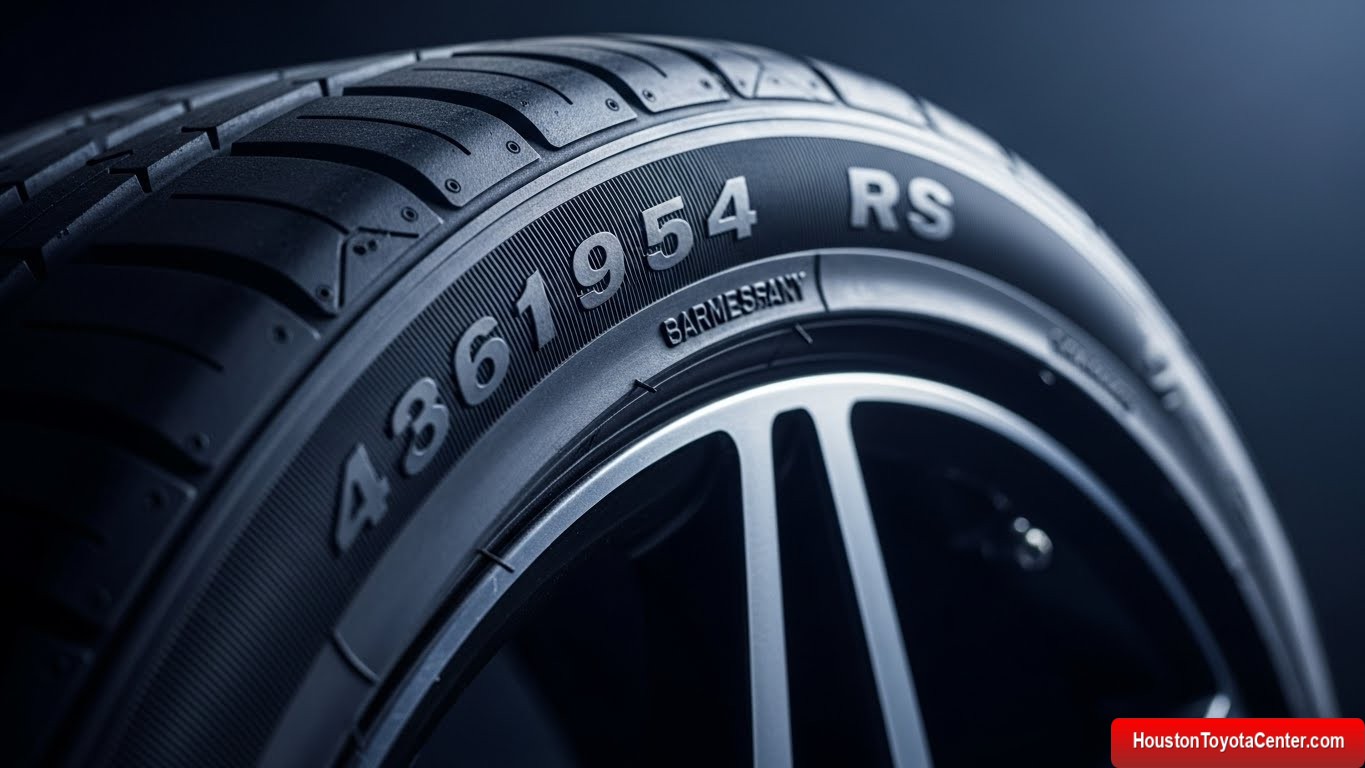
Tires are one of the most critical yet least understood components of a vehicle. They are the only point of contact between the vehicle and the road, responsible for supporting the vehicle’s weight, transmitting engine power, enabling steering, and providing braking force. Despite their importance, many drivers select tires based solely on brand, price, or tread appearance, overlooking the technical specifications that determine whether a tire is actually suitable for their vehicle and driving conditions.
This article provides a comprehensive and practical explanation of tire specifications, focusing on three core elements: tire size, load rating, and speed rating. These specifications are not arbitrary codes; they are standardized measurements developed to ensure safety, performance, durability, and legal compliance. Understanding them empowers drivers to make informed decisions, avoid costly mistakes, and maximize both safety and tire lifespan.
Whether you are replacing worn tires, upgrading for performance, preparing a vehicle for heavy loads, or simply trying to understand the markings on your sidewall, this guide will walk you through everything you need to know in clear, detailed terms.
1. Why Tire Specifications Matter
Tires are engineered systems, not simple rubber rings. Each tire is designed to perform optimally within specific parameters. Installing tires that do not meet a vehicle’s requirements can lead to:
FREE: Quickly identify and understand problems with your vehicle 🚘
CLICK HERE- Reduced braking efficiency
- Poor handling and stability
- Increased fuel consumption
- Accelerated tire wear
- Structural failure under load
- Legal or insurance issues
Vehicle manufacturers specify tire dimensions and ratings based on suspension geometry, braking systems, weight distribution, and intended use. Deviating from these specifications without understanding the consequences can compromise safety.
At the same time, there are situations where alternative specifications may be appropriate, such as for towing, off-road driving, winter conditions, or performance tuning. Understanding tire specifications allows drivers to adapt intelligently rather than guess blindly.
2. Understanding Tire Size
Tire size is the most visible and commonly referenced specification. It is typically displayed in a standardized format on the tire’s sidewall, such as:
205/55R16
While this may look cryptic at first glance, each part conveys precise information about the tire’s dimensions and construction.
2.1 Tire Width
The first number, 205, represents the tire’s nominal width in millimeters. This measurement refers to the distance from one sidewall to the other when the tire is mounted on a recommended rim and inflated properly.
Why width matters:
- Wider tires generally provide more grip due to a larger contact patch.
- Narrower tires often perform better in snow and heavy rain by cutting through water or slush.
- Wider tires can increase rolling resistance, potentially reducing fuel efficiency.
- Tire width must be compatible with wheel width to avoid deformation.
Width affects steering response, ride comfort, noise levels, and even braking distance.
2.2 Aspect Ratio
The second number, 55, is the aspect ratio. It represents the sidewall height as a percentage of the tire’s width.
In this example:
- Sidewall height = 55% of 205 mm ≈ 113 mm
Aspect ratio influences:
- Ride comfort (higher ratios absorb more road imperfections)
- Steering precision (lower ratios offer more direct handling)
- Rim protection (taller sidewalls provide more cushioning)
- Risk of wheel damage on potholes
Low-profile tires (e.g., 40 or 45) are common on sports cars, while higher-profile tires (e.g., 65 or 70) are typical on SUVs and off-road vehicles.
2.3 Construction Type
The letter R indicates radial construction, which is the industry standard today. Radial tires have cords arranged at 90 degrees to the direction of travel, providing improved durability, heat dissipation, and ride quality.
Other constructions exist, such as bias-ply, but they are now mostly limited to specialty or vintage applications.
2.4 Rim Diameter
The final number, 16, indicates the diameter of the wheel (rim) in inches that the tire is designed to fit.
This dimension must match the wheel exactly. A mismatch cannot be compensated for and makes mounting impossible.
Key considerations:
- Larger rims usually require lower-profile tires.
- Smaller rims allow for taller sidewalls and more ride comfort.
- Changes in rim diameter affect speedometer accuracy and suspension geometry.
2.5 Optional Tire Size Markings
Some tires include additional markings, such as:
- XL (Extra Load)
- LT (Light Truck)
- P (Passenger)
- C (Commercial)
These prefixes and suffixes indicate reinforced construction or specific usage categories.
3. Load Rating: How Much Weight a Tire Can Carry
The load rating (also called load index) defines the maximum weight a tire can safely support at its rated inflation pressure.
This is not a subjective estimate—it is a standardized numerical code that corresponds to a precise load capacity.
3.1 What Is the Load Index?
The load index is usually a two- or three-digit number following the tire size, such as:
205/55R16 91V
Here, 91 is the load index.
Each index number corresponds to a specific maximum load, measured in kilograms or pounds.
3.2 Load Index Table (Examples)
| Load Index | Max Load (kg) | Max Load (lbs) |
|---|---|---|
| 85 | 515 | 1,135 |
| 88 | 560 | 1,235 |
| 91 | 615 | 1,356 |
| 94 | 670 | 1,477 |
| 97 | 730 | 1,609 |
| 100 | 800 | 1,764 |
This value represents the maximum load per tire, not for the entire vehicle.
3.3 Why Load Rating Is Critical
A tire’s load rating must meet or exceed the manufacturer’s recommendation. Under-rating can lead to:
- Excessive heat buildup
- Sidewall flexing
- Reduced braking performance
- Increased risk of blowouts
Over-rating, while generally safer, can affect ride comfort and traction if combined with inappropriate inflation.
3.4 Load Rating and Inflation Pressure
Load capacity is directly linked to tire pressure. A tire only achieves its maximum rated load when inflated to the specified pressure.
Underinflation:
- Reduces load capacity
- Increases heat generation
- Accelerates shoulder wear
Overinflation:
- Reduces contact patch
- Increases center tread wear
- Decreases ride comfort
Always follow the vehicle manufacturer’s recommended inflation pressure, not the maximum pressure printed on the tire.
3.5 Extra Load (XL) Tires
Extra Load tires are designed to carry higher loads at higher pressures. They are common on:
- SUVs
- Crossovers
- Performance sedans
- Vehicles used for towing
XL tires offer improved stability under load but may ride slightly firmer.
4. Speed Rating: How Fast a Tire Can Safely Go
Speed rating indicates the maximum speed at which a tire can carry its rated load for extended periods under controlled conditions.
It is represented by a letter following the load index.
Example:
91V
Here, V is the speed rating.
4.1 Speed Rating Chart (Common Ratings)
| Speed Rating | Max Speed (km/h) | Max Speed (mph) |
|---|---|---|
| Q | 160 | 99 |
| T | 190 | 118 |
| H | 210 | 130 |
| V | 240 | 149 |
| W | 270 | 168 |
| Y | 300 | 186 |
4.2 What Speed Rating Really Means
Speed ratings are not just about top speed. They reflect a tire’s ability to:
- Dissipate heat
- Maintain structural integrity
- Deliver stable handling
- Provide predictable braking
Higher speed-rated tires generally offer:
- Better steering response
- Stronger internal construction
- Improved grip at high temperatures
However, they may also:
- Wear faster
- Cost more
- Provide a firmer ride
4.3 Legal and Insurance Considerations
In many regions:
- Tires must meet or exceed the vehicle’s original speed rating.
- Installing lower-rated tires can affect insurance coverage.
- Winter tires may be legally allowed lower speed ratings, with restrictions.
Always verify local regulations before changing speed ratings.
5. How Size, Load Rating, and Speed Rating Work Together
These three specifications are interconnected. Changing one often affects the others.
5.1 Example Scenario
A driver installs wider, lower-profile tires for a sportier look:
- Width increases
- Aspect ratio decreases
- Speed rating increases
- Load rating may change
Without careful calculation, this can lead to:
- Reduced ride comfort
- Incorrect speedometer readings
- Suspension stress
- Uneven wear
5.2 Vehicle Manufacturer Recommendations
Manufacturers test vehicles with specific tire combinations to balance:
- Safety
- Comfort
- Performance
- Efficiency
The recommended tire specifications are listed:
- On the driver’s door placard
- In the owner’s manual
Departing from these specs should be done only with a full understanding of the trade-offs.
6. Common Tire Specification Myths
Myth 1: Wider Tires Are Always Better
Wider tires improve dry grip but can worsen hydroplaning and reduce fuel efficiency.
Myth 2: Higher Speed Rating Means Longer Life
Higher speed ratings often mean softer compounds that wear faster.
Myth 3: Load Rating Doesn’t Matter for Daily Driving
Even light daily use can exceed load limits during braking, cornering, or carrying passengers.
7. Practical Tips for Choosing the Right Tire Specifications
- Always start with the manufacturer’s recommended size
- Match or exceed the load index
- Match the speed rating unless specific conditions justify otherwise
- Consider driving style and environment
- Do not mix different ratings on the same axle
- Replace tires as a complete set whenever possible
8. Tire Specifications and Specialized Use Cases
8.1 Towing and Heavy Loads
Higher load ratings and reinforced sidewalls are essential.
8.2 Winter Driving
Narrower widths and lower speed ratings are often preferred.
8.3 Performance Driving
Lower aspect ratios and higher speed ratings enhance responsiveness.
9. Reading the Tire Sidewall: Putting It All Together
A complete sidewall marking might look like this:
225/45R17 94W XL
This tells us:
- Width: 225 mm
- Aspect ratio: 45%
- Construction: Radial
- Rim diameter: 17 inches
- Load index: 94
- Speed rating: W
- Extra load capability
Each element plays a role in safety and performance.
10. Conclusion
Understanding tire specifications is not just for mechanics or automotive enthusiasts—it is essential knowledge for any responsible vehicle owner. Tire size, load rating, and speed rating work together to determine how a vehicle handles, brakes, carries weight, and responds to driving conditions.
Choosing the correct specifications improves safety, extends tire life, enhances performance, and ensures compliance with legal and insurance requirements. Armed with this knowledge, drivers can move beyond guesswork and marketing claims, making decisions based on engineering principles and real-world needs.
Tires may seem simple, but the information printed on their sidewalls tells a sophisticated story—one that every driver should know how to read.
Leave a Reply