
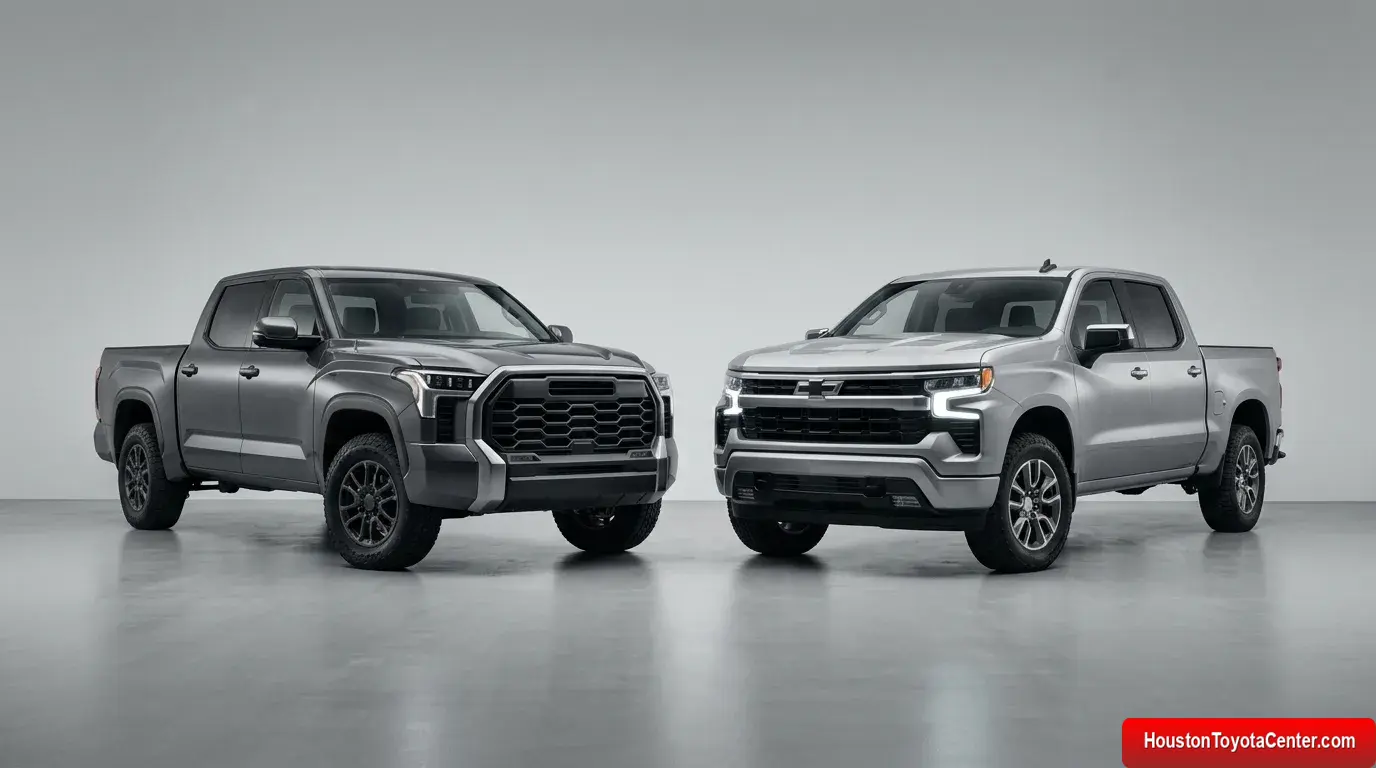
The Toyota Tundra and Chevrolet Silverado 1500 represent two distinct approaches to the American full-size pickup market. Toyota emphasizes modern powertrain technology, durability, and a straightforward ownership proposition, while Chevrolet offers a broad lineup designed to accommodate everyone from daily commuters to serious towing enthusiasts. Both trucks deliver substantial capability, but the better choice depends on how buyers plan to use their pickup, how much they intend to spend, and which features matter most over the long term.
Full-size pickup trucks have evolved far beyond their traditional role as work vehicles. Today, they serve as family transportation, mobile offices, recreational vehicles, and essential equipment for businesses. Buyers expect them to tow heavy trailers, carry construction materials, navigate highways comfortably, and provide the technology and safety features associated with modern passenger vehicles.
Within this competitive segment, the Toyota Tundra and Chevrolet Silverado 1500 stand out for different reasons. The Tundra appeals to shoppers interested in Toyota’s reputation for durability and its newer twin-turbocharged V6 powertrains, including an available hybrid system. The Silverado counters with multiple engine choices, a wide range of configurations, and strong maximum towing figures.
Neither truck is universally superior. Understanding the differences between them is the key to choosing the right pickup.
FREE: Quickly identify and understand problems with your vehicle 🚘
CLICK HERE1. Engine Performance: Two Different Philosophies
Powertrain selection is one of the most important distinctions between the Toyota Tundra and Chevrolet Silverado 1500.
The current-generation Tundra uses a 3.4-liter twin-turbocharged V6 engine, marketed as the i-FORCE. In selected configurations, it produces up to 389 horsepower and 479 lb-ft of torque. Toyota also offers the i-FORCE MAX hybrid powertrain, which combines the twin-turbo V6 with an electric motor integrated into the transmission system.
In its higher-output configuration, the hybrid system produces up to 437 horsepower and 583 lb-ft of torque. This additional output gives the Tundra strong acceleration and substantial pulling power, particularly useful when merging onto highways or moving a loaded trailer.
Chevrolet takes a more varied approach with the Silverado 1500. Depending on model year, trim, and market, its engine lineup can include a 2.7-liter turbocharged four-cylinder, a 5.3-liter V8, a 6.2-liter V8, and a 3.0-liter Duramax turbo-diesel inline-six.
The available 6.2-liter V8 is particularly attractive to buyers who value traditional V8 performance, while the Duramax diesel appeals to drivers who prioritize torque, highway efficiency, and long-distance towing.
The Silverado’s broader engine selection gives it an advantage in flexibility. Buyers can choose an engine according to their workload, driving habits, and budget rather than committing to a single fundamental powertrain architecture.
The verdict: The Tundra is compelling for buyers who want powerful twin-turbo performance and an available hybrid system. The Silverado is better suited to shoppers who want a wider selection of engine types, including V8 and diesel alternatives.
2. Towing Capacity: Chevrolet Has a Strong Maximum Rating
For many pickup buyers, towing capability is a decisive factor. Trailers, boats, campers, livestock equipment, and work machinery can place significant demands on a truck’s engine, transmission, chassis, brakes, and cooling systems.
The Chevrolet Silverado 1500 can achieve a maximum conventional towing capacity of approximately 13,300 pounds when properly equipped in qualifying configurations. That figure places it among the stronger performers in the light-duty full-size pickup class.
The Toyota Tundra can tow up to approximately 12,000 pounds in its highest-rated configurations. Although that is substantial capacity for many recreational and professional applications, Chevrolet holds the advantage in maximum published towing capacity.
However, maximum ratings do not tell the entire story. Actual towing capability varies according to cab style, bed length, drivetrain, engine, axle ratio, installed equipment, and payload configuration. A truck’s maximum advertised rating may not apply to the version available at a local dealership.
Payload also matters. The weight of passengers, tools, cargo, accessories, and trailer tongue load must remain within the truck’s specified limits. Buyers who regularly tow near the maximum rating should examine the vehicle’s certification labels and owner’s manual rather than relying on general marketing figures.
Both trucks offer towing-related technology, although availability varies by trim and model year. Features may include trailer brake controllers, integrated camera views, hitch guidance, and systems designed to assist with trailer monitoring.
The verdict: The Silverado is the stronger choice for buyers who need the highest available maximum towing rating. The Tundra remains highly capable for many recreational trailers, boats, and work applications, provided the selected configuration meets the load requirements.
3. Fuel Economy: Hybrid Versus Diesel
Fuel economy can have a considerable effect on the total cost of owning a full-size pickup. Because these trucks are heavy and often have relatively large engines, their consumption can be significantly higher than that of smaller vehicles.
Toyota’s i-FORCE MAX hybrid system combines turbocharged gasoline power with electric assistance. It is designed to improve performance and can offer fuel economy benefits in suitable driving conditions. However, the Tundra hybrid should not be confused with a small hybrid crossover. Its system prioritizes substantial output and truck capability, so fuel consumption remains sensitive to vehicle weight, speed, towing, and driving conditions.
Chevrolet’s 3.0-liter Duramax diesel provides an alternative for buyers who regularly cover long highway distances. Diesel engines can be efficient under sustained loads and may deliver a useful combination of torque and range. The trade-off is that diesel ownership can involve different maintenance requirements, fuel costs, and emissions-control considerations.
Gasoline V8 versions of the Silverado appeal to buyers who prefer conventional engine characteristics and readily available gasoline, although consumption can increase significantly when towing or driving in heavy traffic.
There is no universal fuel economy winner across every configuration. A light-duty truck driven mostly on highways may deliver a very different result from a four-wheel-drive model used for short trips, city driving, or heavy towing.
The verdict: The Tundra hybrid is worth considering for buyers who want a balance of strong performance and hybrid assistance. The Silverado diesel is particularly attractive to drivers who frequently travel long distances. Buyers should compare official fuel economy ratings for the exact model year, engine, cab, and drivetrain they intend to purchase.
4. Reliability and Long-Term Ownership
Reliability is often central to comparisons between Toyota and Chevrolet. Toyota has built a strong reputation for durable vehicles, while the Silverado benefits from decades of development and widespread use in commercial and personal applications.
The Tundra’s reputation, however, should not be confused with proof that every generation or powertrain will deliver identical results. The current generation introduced a twin-turbocharged V6 and an optional hybrid system, replacing the previous generation’s naturally aspirated V8 engines. That change makes it important to distinguish historical brand perceptions from evidence relating to specific model years.
The Silverado’s reliability picture is similarly dependent on its engine, transmission, model year, and maintenance history. Its range of powertrains provides buyers with more choice, but each option has its own servicing requirements and potential repair considerations.
For either truck, regular oil changes, appropriate fluid servicing, cooling-system maintenance, and prompt attention to warning lights can help preserve mechanical condition. Vehicles used for towing or heavy commercial work may require more frequent inspections than trucks used primarily for commuting.
Used-truck buyers should examine service records, accident history, corrosion, suspension wear, transmission behavior, and evidence of heavy towing. A pre-purchase inspection by a qualified mechanic can help identify problems that are not immediately obvious during a test drive.
Recall history also deserves attention. Buyers should check outstanding recalls using the vehicle identification number and confirm that any required repairs have been completed.
The verdict: Toyota’s reputation makes the Tundra an appealing candidate, but neither truck should be declared the reliability winner without considering model-specific evidence. The condition of the individual vehicle and the quality of its maintenance history can matter more than the badge on the grille.
5. Interior Comfort and Cabin Technology
Modern pickup trucks increasingly serve as everyday vehicles, which makes interior comfort an important consideration even for buyers who rarely use their truck’s full towing capacity.
The Toyota Tundra offers a contemporary cabin with a straightforward layout, supportive seating, and available large infotainment displays. Higher trim levels add premium materials, upgraded audio systems, and comfort features intended to make long journeys less tiring.
The i-FORCE MAX models can also combine their performance-oriented powertrain with a well-equipped interior, depending on the selected trim.
Chevrolet offers a similarly broad range of cabin configurations. Entry-level Silverado models prioritize practical materials and work-oriented functionality, while higher trims introduce larger screens, more sophisticated upholstery, additional convenience features, and a more luxurious atmosphere.
The Silverado’s extensive trim range is a significant advantage for buyers with specific preferences. A basic work truck and a premium Silverado may differ considerably in equipment and price, even though they share the same model name.
Cabin space also depends on the chosen cab style. Crew-cab models provide generous rear-seat room for adults and families, while smaller cab configurations may be more suitable for buyers who prioritize bed space or commercial use.
Infotainment systems, smartphone connectivity, navigation, and driver-assistance features vary by model year and trim. Buyers should test the interface in person, particularly if they plan to use the truck daily.
The verdict: Both trucks can deliver comfortable, technology-rich interiors. Chevrolet’s broad configuration range gives it an advantage in accommodating different budgets and preferences, while the Tundra provides a compelling alternative for buyers who prefer Toyota’s cabin design and equipment combinations.
6. Off-Road Capability: TRD Pro Versus Trail Boss and ZR2
Off-road capability has become a major selling point in the full-size pickup market. Many buyers want a truck that can handle dirt roads, remote campsites, muddy trails, and uneven terrain without sacrificing everyday usability.
Toyota offers off-road-oriented Tundra configurations, including the TRD Pro and other packages designed to improve performance away from paved roads. Depending on the version, equipment can include specialized suspension components, underbody protection, all-terrain tires, and terrain-oriented driving features.
Chevrolet counters with several off-road-focused Silverado configurations. The Trail Boss models provide a more rugged setup than standard versions, while the ZR2 is designed for more demanding terrain and includes specialized suspension and off-road hardware.
The best choice depends on the type of driving involved. A truck intended for forest roads and occasional camping trips may not need the same equipment as one used for technical trails or remote outdoor expeditions.
Tire selection, ground clearance, approach and departure angles, four-wheel-drive systems, and underbody protection can be just as important as engine output. Off-road packages can also increase purchase price and affect fuel economy, tire replacement costs, and ride comfort.
The verdict: Both manufacturers offer capable off-road variants. Buyers should compare the exact packages rather than assuming that every Tundra or Silverado has the same terrain capability.
7. Price, Trims, and Overall Value
The purchase price of a full-size pickup varies considerably depending on model year, engine, trim, cab configuration, drivetrain, and optional equipment.
Chevrolet’s extensive Silverado lineup can make it easier to find a configuration suited to a particular budget. Work-oriented versions prioritize essential functionality, while higher trims offer luxury features and additional technology.
Toyota’s Tundra lineup also spans multiple equipment levels, but the available combinations differ from Chevrolet’s. The hybrid powertrain and premium off-road variants can increase the purchase price, so buyers should evaluate the complete cost rather than comparing headline starting prices alone.
Ownership costs extend beyond the dealership. Insurance, fuel, maintenance, tires, registration, financing, and depreciation all influence long-term value. Larger wheels, specialized tires, and heavy-duty towing use can further affect operating expenses.
Used vehicles require additional scrutiny. A truck with a low advertised price may have hidden maintenance needs, prior commercial use, accident damage, or modifications that increase repair risk.
Buyers should compare several examples of the same model year and configuration, obtain insurance quotes, and estimate annual fuel expenses before committing to a purchase.
The verdict: Chevrolet’s broader lineup gives the Silverado an advantage in choice, especially for buyers seeking a specific work-oriented configuration. The Tundra may offer stronger appeal to those who prioritize its hybrid option, Toyota’s ownership reputation, and the equipment available in their preferred trim.
Tundra vs. Silverado: Which Truck Should You Buy?
The Toyota Tundra and Chevrolet Silverado 1500 are both capable full-size pickups, but they serve somewhat different priorities.
The Tundra is a strong candidate for buyers who value a modern twin-turbocharged V6, the availability of hybrid assistance, and Toyota’s reputation for durability. It provides substantial towing capability and can serve as a comfortable daily driver or recreational truck.
The Silverado stands out for its broad engine selection, higher maximum published towing capacity, and extensive range of work, comfort, and off-road configurations. The availability of V8 and diesel powertrains makes it especially attractive to buyers with specific performance or long-distance driving requirements.
For someone who regularly tows heavy trailers near the upper end of the light-duty segment, the Silverado deserves particularly close attention. For a buyer interested in hybrid performance and Toyota’s ownership proposition, the Tundra is a compelling alternative.
Ultimately, the right truck is the one that matches the owner’s actual workload, driving habits, budget, and long-term expectations. Comparing specific configurations, verifying towing and payload ratings, reviewing model-year reliability data, and arranging a thorough test drive will produce a more meaningful decision than choosing by brand loyalty alone.
Leave a Reply