
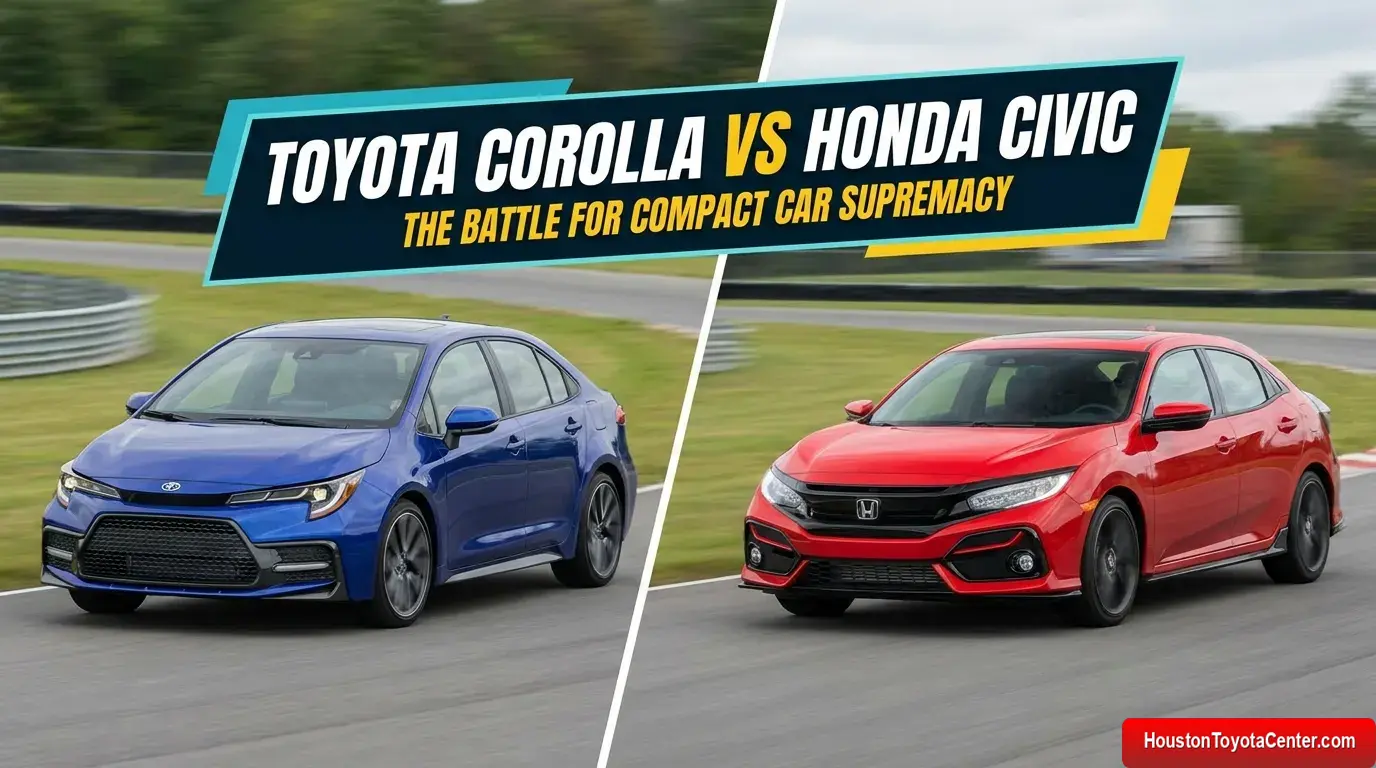
In the fiercely competitive world of compact sedans, two names have consistently dominated the conversation for decades. The Toyota Corolla and the Honda Civic represent more than just vehicles. They embody philosophies of engineering, reliability, and value that have shaped the automotive landscape. For generations of drivers, choosing between these two iconic models has been a rite of passage. But which one truly deserves the crown as the better compact car?
A Legacy Built on Trust
The Toyota Corolla first rolled off production lines in 1966, establishing itself as a practical, affordable option for families worldwide. Over fifty years later, it remains the best-selling car in history with over fifty million units sold globally. This remarkable achievement speaks to Toyota’s unwavering commitment to dependability and consistent quality. The Corolla has never sought to be the most exciting car on the road. Instead, it has perfected the art of being exactly what most drivers need.
Honda entered the compact sedan arena slightly later with the Civic in 1972, but made an immediate impact through innovative engineering and a sportier character. The Civic quickly developed a reputation for combining efficiency with driving enjoyment, appealing to younger buyers who wanted more than mere transportation. While Toyota focused on refinement and predictability, Honda embraced a more dynamic approach that resonated with enthusiasts.
These differing origins continue to influence both vehicles today. The Corolla maintains its identity as the sensible, no-nonsense choice. The Civic carries forward its heritage of engaging performance and technological innovation. Understanding this fundamental distinction helps explain why loyalists on both sides remain so passionate about their preferred brand.
FREE: Quickly identify and understand problems with your vehicle 🚘
CLICK HEREDesign Philosophy and Styling
Walking up to a modern Corolla reveals Toyota’s current design language characterized by bold grille treatments and sharp angular lines. Recent generations have moved away from the conservative styling that defined earlier models, embracing a more aggressive aesthetic that appeals to contemporary tastes. The interior follows a similar trajectory with improved materials and thoughtful ergonomics, though it still prioritizes function over form.
The Civic presents a sleeker, more athletic profile with flowing lines and a lower stance that suggests motion even when stationary. Honda designers have successfully balanced sophistication with sportiness, creating a vehicle that looks equally appropriate at a business meeting or a weekend adventure. Inside, the Civic offers a more driver-focused cockpit with premium touches that elevate the experience beyond basic transportation.
Both manufacturers have invested heavily in improving perceived quality, but the Civic generally edges ahead in terms of interior ambiance. Soft-touch materials, better sound insulation, and more intuitive controls create an environment that feels special rather than merely adequate. The Corolla counters with exceptional build quality and durability that promises to withstand years of daily use without showing significant wear.
Performance and Driving Dynamics
Under the hood, both vehicles offer efficient powertrains designed to maximize fuel economy while providing adequate performance for daily driving. The standard Corolla typically features a naturally aspirated four-cylinder engine paired with a continuously variable transmission that prioritizes smoothness and efficiency. This combination delivers respectable acceleration and excellent fuel economy numbers, making it ideal for commuters concerned about operating costs.
Honda has traditionally offered more engaging driving dynamics, and the current Civic continues this tradition. Available turbocharged engines provide stronger acceleration and more responsive throttle response. The suspension tuning strikes a better balance between comfort and handling precision, allowing drivers to enjoy winding roads without sacrificing ride quality. Those who view driving as something more than a chore will appreciate the Civic’s superior engagement.
Hybrid variants exist for both models, reflecting the industry’s shift toward electrification. The Corolla Hybrid excels in maximizing fuel efficiency with its proven hybrid system that seamlessly transitions between electric and gasoline power. The Civic Hybrid, while newer to the lineup, brings Honda’s latest technology to bear with impressive results. Both achieve remarkable mileage figures that make them compelling choices for environmentally conscious buyers.
Technology and Safety Features
Modern compact cars must compete on technology as much as mechanical excellence, and both the Corolla and Civic deliver comprehensive suites of advanced features. Toyota Safety Sense comes standard across most Corolla trims, offering automatic emergency braking, lane departure warning, adaptive cruise control, and automatic high beams. This democratization of safety technology ensures that even base model buyers receive substantial protection.
Honda Sensing provides similar capabilities in the Civic with comparable effectiveness. Both systems perform admirably in real-world conditions, though some reviewers note slight differences in calibration and user interface design. The choice between them often comes down to personal preference rather than objective superiority.
Infotainment systems represent another area of intense competition. Toyota has gradually improved its multimedia offerings, introducing larger touchscreens and smartphone integration across the lineup. Honda similarly updated its interface with enhanced connectivity options and clearer graphics. Neither system ranks among the absolute best in class, but both fulfill essential functions adequately. Higher trim levels unlock premium audio systems and additional convenience features that enhance the ownership experience.
Practicality and Everyday Usability
Compact sedans must excel at practical tasks, and both vehicles handle daily responsibilities competently. Passenger space is generous in both models, with rear seats accommodating adults comfortably on shorter journeys. The Corolla offers slightly more legroom in certain configurations, while the Civic provides better headroom thanks to its roofline design. Individual preferences regarding seating position and visibility will likely determine which feels more spacious.
Cargo capacity favors neither vehicle dramatically, with both offering trunk space sufficient for grocery runs, luggage, and typical family needs. Fold-down rear seats expand utility when necessary, though neither matches the versatility of hatchback or crossover alternatives. Buyers requiring maximum cargo flexibility might consider other options within each brand’s lineup.
Reliability records strongly favor Toyota, with the Corolla consistently ranking among the most dependable vehicles available. Honda maintains solid reliability scores as well, though recent generations have experienced occasional issues that slightly tarnish their reputation. Long-term ownership costs typically run lower for the Corolla due to cheaper maintenance and stronger resale values, though the gap has narrowed considerably in recent years.
Value Proposition and Ownership Costs
Pricing structures for both vehicles start at accessible levels, with base models offering essential features at competitive prices. As buyers move up through trim levels, costs increase accordingly, with fully loaded versions approaching thirty thousand dollars depending on options and regional factors. The Corolla generally undercuts the Civic by a modest margin, though specific comparisons depend on equivalent feature sets.
Insurance costs tend to be similar, influenced more by driver history and location than vehicle choice. Fuel expenses favor whichever model achieves better real-world mileage, which varies based on driving habits and conditions. Maintenance schedules are comparable, with both manufacturers recommending similar service intervals using conventional or synthetic oils.
Resale value represents a significant advantage for Toyota, with the Corolla retaining its worth better than most competitors including the Civic. This difference becomes particularly important for buyers planning to sell or trade within three to five years. Those intending to keep their vehicle longer may find this factor less influential in their decision-making process.
Making the Final Decision
Choosing between the Corolla and Civic ultimately depends on individual priorities and preferences. Buyers seeking maximum reliability, lowest operating costs, and proven long-term durability will find the Corolla difficult to beat. Its straightforward approach to automotive engineering delivers exactly what it promises without surprises or complications.
Those valuing driving enjoyment, contemporary styling, and slightly more premium interior experiences may prefer the Civic. Its engaging character and refined presentation justify the modest price premium for many buyers. The Civic appeals to individuals who want their daily driver to provide moments of genuine pleasure behind the wheel.
Both vehicles represent excellent choices in the compact sedan segment. Neither makes a wrong decision, as each excels in different areas while maintaining competence across all categories. Test driving both models remains essential, as personal impressions of comfort, visibility, and interface usability vary significantly between individuals.
The automotive market continues evolving rapidly with electrification and autonomous technologies reshaping expectations. Both Toyota and Honda demonstrate commitment to adapting while preserving the core values that made these models successful. Future iterations will undoubtedly bring new innovations, but the fundamental appeal of reliable, efficient, affordable transportation remains constant.
For now, the Corolla versus Civic debate continues without a definitive winner. Each serves its audience exceptionally well, proving that competition drives improvement and benefits consumers. Whether you prioritize pragmatism or personality, both icons deserve consideration as you search for the perfect compact companion for life’s journey.
Leave a Reply