
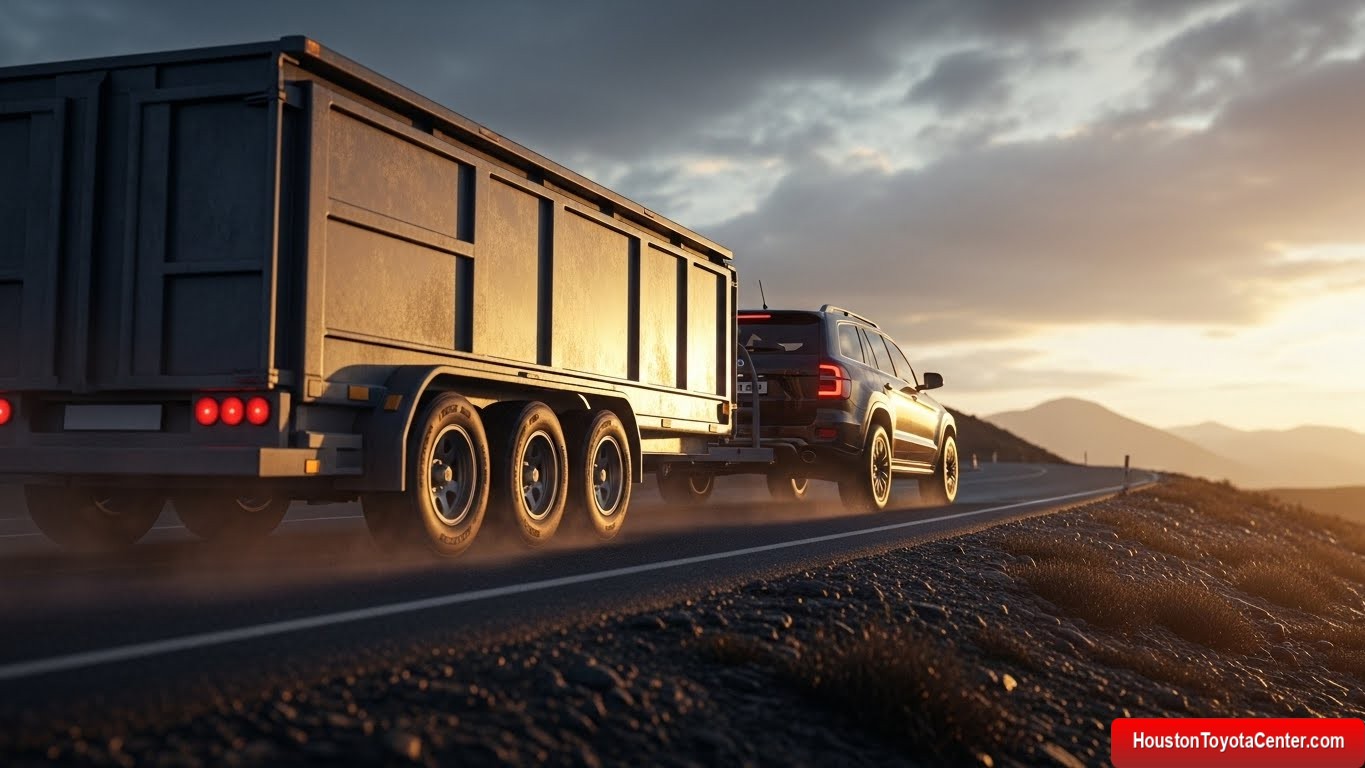
Towing capacity is one of the most misunderstood specifications in the automotive world. Many drivers glance at a number in a brochure or online listing and assume that it represents a simple, absolute truth: this vehicle can tow X pounds, no more, no less. In reality, towing capacity is the result of a complex interaction between engineering limits, safety margins, legal requirements, and real-world variables. Misunderstanding it can lead to poor performance, excessive wear, dangerous driving situations, or even catastrophic mechanical failure.
This article is designed to go far beyond surface-level explanations. By the end, you will not only understand what towing capacity means, but also how it is calculated, what affects it, why your real towing limit may be lower than advertised, and how to tow safely and confidently. Whether you tow occasionally or regularly, this knowledge can save you money, prevent accidents, and extend the life of your vehicle.
What Is Towing Capacity?
Towing capacity is the maximum weight a vehicle is rated to pull safely under specific conditions defined by the manufacturer. This number is typically expressed in pounds or kilograms and is determined through engineering analysis and controlled testing.
However, an important distinction must be made:
FREE: Quickly identify and understand problems with your vehicle 🚘
CLICK HERETowing capacity is not what your vehicle can pull — it is what it can pull safely, repeatedly, and legally.
Manufacturers build in safety margins to account for heat, braking distance, drivetrain stress, structural limits, and stability. Exceeding towing capacity may not cause immediate failure, but it significantly increases the risk of long-term damage or sudden loss of control.
Why Towing Capacity Is Often Misunderstood
Many drivers misunderstand towing capacity because:
- Marketing materials often highlight the maximum number without context
- Real-world conditions differ from test environments
- Other weight limits are ignored or unknown
- People assume engine power alone determines towing ability
In reality, towing capacity is influenced by dozens of interconnected factors, many of which have nothing to do with horsepower.
Key Weight Ratings You Must Understand
Before diving deeper, it is essential to understand the terminology used in towing specifications. These numbers work together, and misunderstanding even one can lead to dangerous assumptions.
1. Gross Vehicle Weight Rating (GVWR)
GVWR is the maximum safe weight of the vehicle itself, including:
- The vehicle
- Passengers
- Cargo
- Fuel
- Tongue weight from the trailer
If your vehicle exceeds its GVWR, it is overloaded—even if you are towing less than the advertised towing capacity.
2. Gross Combined Weight Rating (GCWR)
GCWR is the maximum allowable weight of the vehicle and trailer combined.
This is one of the most critical but often ignored ratings. Your vehicle might technically be able to tow a heavy trailer, but once passengers, cargo, and fuel are added, the combined weight may exceed GCWR.
3. Curb Weight
Curb weight is the weight of the vehicle with all standard equipment and fluids, but without passengers or cargo.
This number is important because towing capacity is often calculated as:
Towing Capacity = GCWR − Curb Weight
Add people or gear, and your real towing capacity decreases.
4. Payload Capacity
Payload capacity is how much weight your vehicle can carry internally and externally.
Payload includes:
- Passengers
- Cargo
- Hitch equipment
- Tongue weight
Exceeding payload capacity is one of the most common towing mistakes.
5. Tongue Weight
Tongue weight is the downward force exerted by the trailer on the hitch.
Typically:
- Conventional trailers: 10–15% of trailer weight
- Fifth-wheel/gooseneck trailers: 15–25%
This weight counts toward payload and GVWR.
How Manufacturers Determine Towing Capacity
Towing capacity is not a guess. Manufacturers use a combination of engineering analysis, simulations, real-world testing, and regulatory standards.
Key Testing Factors
- Acceleration: Can the vehicle safely merge and climb grades?
- Braking: Can it stop within legal distances?
- Cooling: Can the engine and transmission handle heat?
- Stability: Does the vehicle remain controllable at highway speeds?
- Durability: Will components survive repeated towing cycles?
Manufacturers also consider worst-case scenarios, such as high temperatures, steep inclines, and emergency maneuvers.
Why Two Identical Vehicles Can Have Different Towing Capacities
You may see two vehicles that look identical but have very different towing ratings. This is not marketing trickery—it is engineering reality.
Factors That Change Towing Capacity
- Engine option
- Transmission type
- Drivetrain (2WD vs 4WD or AWD)
- Axle ratio
- Suspension design
- Cooling systems
- Brake size
Even wheel size and tire rating can affect the final number.
The Role of the Engine: Power vs Torque
Many people assume towing capacity is all about horsepower. In truth, torque is far more important.
- Horsepower determines how fast you can go
- Torque determines how much weight you can move
Diesel engines often tow more than gasoline engines with similar horsepower because they produce more torque at lower RPMs, reducing strain on the drivetrain.
Transmission Matters More Than You Think
The transmission plays a massive role in towing performance.
Automatic vs Manual
- Automatics often tow more due to torque converters
- Manuals require more driver skill and clutch durability
Gear Ratios
Lower (numerically higher) gear ratios allow better leverage for towing, especially when starting from a stop or climbing hills.
Drivetrain and Towing: 2WD vs AWD vs 4WD
While drivetrain does not directly increase towing capacity, it affects:
- Traction on inclines
- Stability on wet or uneven surfaces
- Confidence when launching heavy loads
In some cases, drivetrain choice changes cooling requirements and vehicle weight, indirectly affecting towing ratings.
Suspension, Frame, and Chassis Strength
A powerful engine is useless without a strong foundation.
Key Structural Components
- Frame rigidity
- Rear suspension design
- Shock absorbers
- Load-leveling systems
Vehicles designed for towing often use reinforced frames and heavier-duty suspension components.
Braking Systems: The Unsung Hero of Towing
Brakes are often the limiting factor in towing capacity.
A vehicle must be able to:
- Stop the combined mass safely
- Maintain brake performance on long descents
- Avoid overheating
This is why trailer brakes are mandatory above certain weights.
The Importance of Trailer Brakes
Trailer brakes dramatically reduce stopping distances and stress on the tow vehicle.
Types include:
- Surge brakes
- Electric brakes
- Electric-over-hydraulic brakes
Many vehicles require a brake controller to safely tow heavier trailers.
Hitches: Not All Are Created Equal
Your hitch must be rated for both:
- Trailer weight
- Tongue weight
Common Hitch Classes
| Hitch Class | Typical Capacity |
|---|---|
| Class I | Up to 2,000 lbs |
| Class II | Up to 3,500 lbs |
| Class III | Up to 8,000 lbs |
| Class IV | Up to 10,000 lbs |
| Class V | 12,000+ lbs |
Using the wrong hitch can be catastrophic.
Weight Distribution Hitches Explained
Weight distribution hitches help:
- Reduce rear sag
- Improve steering control
- Balance axle loads
They do not increase towing capacity but can make towing safer and more stable.
How Real-World Conditions Reduce Towing Capacity
Manufacturer ratings assume ideal conditions. Real life rarely cooperates.
Factors That Reduce Safe Towing Capacity
- High altitude (less engine power)
- Extreme heat
- Steep grades
- Poor road conditions
- Crosswinds
- Frequent stop-and-go traffic
Experienced towers often stay 10–20% below maximum ratings.
Passenger and Cargo Weight: The Silent Capacity Killer
Every additional pound inside your vehicle reduces what you can tow.
Example:
- Vehicle payload capacity: 1,500 lbs
- Passengers and cargo: 800 lbs
- Remaining capacity for tongue weight: 700 lbs
That may limit trailer size far more than expected.
Legal and Insurance Implications
Exceeding towing capacity can have serious legal consequences.
Potential Risks
- Insurance claims denied after accidents
- Liability issues if injuries occur
- Fines for overloaded vehicles
- Warranty voidance
Manufacturers’ ratings are often referenced in court cases involving towing accidents.
Common Towing Myths Debunked
Myth 1: “If it moves, it’s fine.”
False. Damage may not be immediate, but risk increases exponentially.
Myth 2: “I only tow short distances.”
Distance does not eliminate stress, braking demands, or heat buildup.
Myth 3: “Upgrading the hitch increases towing capacity.”
The weakest link determines capacity — not the hitch alone.
How to Calculate Your Real Towing Limit
Follow this step-by-step method:
- Find your vehicle’s GCWR
- Subtract:
- Curb weight
- Passengers
- Cargo
- Accessories
- Confirm:
- Hitch rating
- Tongue weight limits
- Axle ratings
The final number is your realistic maximum trailer weight.
Best Practices for Safe Towing
- Stay under 80–90% of maximum ratings
- Use trailer brakes when recommended
- Balance trailer load properly
- Check tire pressure before every trip
- Allow longer stopping distances
- Drive slower and smoother
Signs You Are Over Towing
- Excessive rear sag
- Poor steering response
- Overheating transmission
- Frequent downshifting
- Brake fade
If you notice these, stop towing immediately.
The Long-Term Cost of Over Towing
Over towing may save money short term, but it leads to:
- Transmission failure
- Premature brake wear
- Frame fatigue
- Suspension damage
- Reduced resale value
Safe towing is always cheaper in the long run.
Choosing the Right Vehicle for Towing
If towing is a priority, evaluate vehicles based on:
- GCWR
- Payload
- Cooling systems
- Axle ratios
- Brake size
Do not choose based on towing capacity alone.
Final Thoughts: Towing Is a System, Not a Number
Towing capacity is not a single figure—it is the result of a carefully balanced system. Engine power, brakes, frame strength, suspension, cooling, and weight management all play critical roles.
Understanding how these elements work together allows you to tow safely, legally, and confidently, avoiding costly mistakes and dangerous situations. When in doubt, always err on the side of caution. A slightly smaller trailer or lighter load can make a massive difference in safety and peace of mind.
Leave a Reply