
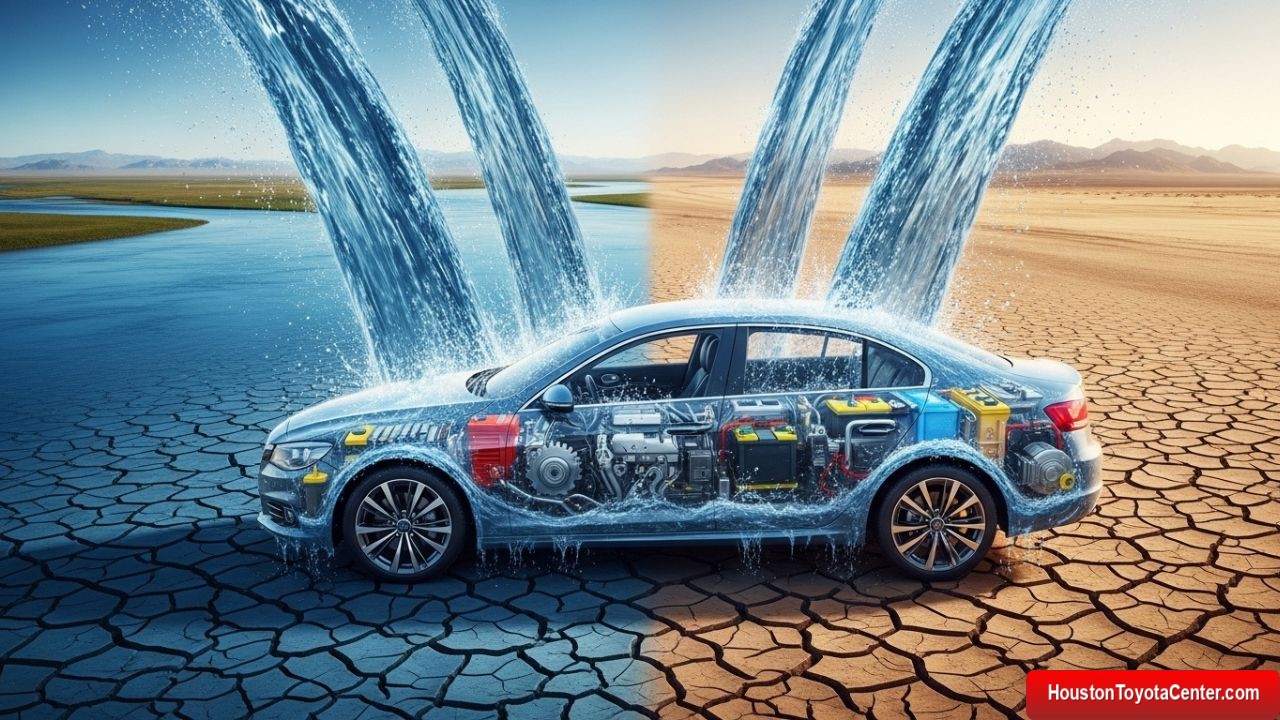
When people think about the environmental impact of cars, their minds usually jump straight to exhaust fumes, carbon dioxide emissions, and fossil fuel consumption. Climate change dominates the conversation, and rightly so. However, there is another critical environmental cost that remains largely invisible to consumers and even to many policymakers: water.
Water is deeply embedded in every stage of a car’s life cycle. From mining the raw materials to shaping metal, producing plastics, manufacturing batteries, painting vehicle bodies, assembling components, and even generating the electricity used in factories, water is consumed in staggering quantities. Yet unlike fuel efficiency or tailpipe emissions, the water footprint of car manufacturing is rarely discussed in public discourse.
This lack of awareness is problematic. Freshwater is a finite resource under growing pressure from population growth, industrial expansion, pollution, and climate-driven droughts. According to the United Nations, billions of people already experience water scarcity at least one month per year. In this context, understanding how water-intensive industries operate—and how they might reduce their impact—is not optional. It is essential.
This article explores the water footprint of car manufacturing in depth. We will examine how water is used across the automotive supply chain, compare different vehicle types, analyze regional differences, discuss environmental and social consequences, and explore technological and policy-driven solutions. By the end, you will see the modern automobile not just as a machine of steel and silicon, but as a product deeply intertwined with the world’s most precious resource.
FREE: Quickly identify and understand problems with your vehicle 🚘
CLICK HEREWhat Is a Water Footprint?
The term water footprint refers to the total volume of freshwater used—directly and indirectly—to produce a good or service. It goes far beyond the water a factory draws from a nearby river or municipal supply. Instead, it captures the full life-cycle water use embedded in raw materials, energy production, and supply chains.
The Three Types of Water Footprints
Water footprint accounting generally divides water use into three categories:
- Blue water: Fresh surface and groundwater consumed (rivers, lakes, aquifers).
- Green water: Rainwater stored in soil and used by plants (especially relevant for crops).
- Grey water: The volume of freshwater required to dilute pollutants to meet water quality standards.
Car manufacturing relies heavily on blue and grey water, though green water also plays a role indirectly through materials like natural rubber, cotton (for interiors), and bio-based plastics.
Understanding these distinctions matters because not all water use has the same environmental impact. Using rainwater in a water-rich region is very different from extracting groundwater in an arid area already facing scarcity.
Why Car Manufacturing Is So Water-Intensive
At first glance, cars do not appear particularly “thirsty.” They are not agricultural products, nor do they obviously require water to function. Yet the manufacturing process tells a very different story.
Several factors explain why car production consumes so much water:
- Material complexity: Cars are made from thousands of parts using steel, aluminum, copper, plastics, glass, rubber, rare earth metals, and increasingly lithium-based batteries.
- High precision processes: Many steps require cooling, washing, rinsing, or chemical treatments.
- Energy dependency: Powering factories and producing materials like steel and aluminum consumes vast amounts of water at power plants.
- Globalized supply chains: Water use occurs not just where cars are assembled, but across multiple countries and regions.
Each of these factors multiplies the total water footprint, often far beyond what most consumers would expect.
Water Use Across the Automotive Life Cycle
1. Raw Material Extraction and Processing
The largest share of a car’s water footprint often occurs before manufacturing even begins.
Steel and Aluminum
Steel remains the backbone of vehicle manufacturing. Producing one ton of steel can require tens of thousands of liters of water, primarily for cooling, descaling, and pollution control. Aluminum is even more water-intensive, especially when derived from bauxite ore, due to energy-intensive smelting processes that rely heavily on water-cooled power generation.
Copper and Electronics
Modern cars are packed with electronics: wiring harnesses, sensors, control units, and infotainment systems. Copper mining and refining are extremely water-intensive and often generate significant water pollution, contributing to grey water footprints.
Plastics and Polymers
Plastics originate from petrochemicals, and while oil extraction itself varies in water intensity, the refining and polymerization processes require water for cooling and chemical separation.
Battery Materials
For electric and hybrid vehicles, lithium, cobalt, nickel, and manganese extraction plays a major role. Lithium brine extraction, in particular, has drawn criticism for depleting groundwater in arid regions such as the Atacama Desert.
2. Component Manufacturing
Before final assembly, thousands of components are manufactured, often by specialized suppliers.
- Engine parts require precision machining and coolant fluids.
- Glass production uses water in cooling and polishing.
- Tires incorporate natural rubber, which depends on rain-fed plantations.
- Textiles and leather for interiors require water-intensive tanning and dyeing processes.
Each supplier adds another layer to the vehicle’s cumulative water footprint.
3. Vehicle Assembly Plants
Automotive assembly plants are the most visible part of the process—and the easiest to measure.
Major Water Uses in Assembly Plants
- Painting and coating: One of the most water-intensive stages. Multiple washing and rinsing cycles are needed to ensure corrosion resistance and visual quality.
- Cooling systems: Machinery and welding equipment require cooling.
- Sanitation and domestic use: Water for workers, cafeterias, and facilities.
- Testing and quality control: Leak testing and cleaning.
While assembly plants are often the focus of sustainability reporting, they typically account for a smaller share of the total water footprint compared to upstream processes.
4. Energy Production
Energy use is an often-overlooked contributor. Electricity generation—especially from coal, nuclear, and certain natural gas plants—requires vast amounts of water for cooling.
Even renewable energy is not water-free. Hydropower directly consumes water through evaporation, while solar thermal plants use water for cooling and cleaning.
Thus, the energy mix powering a car factory can dramatically alter its water footprint.
How Much Water Does It Take to Make a Car?
Estimates vary depending on methodology, vehicle type, and region. However, most studies converge on a striking conclusion: manufacturing a single car requires between 100,000 and 400,000 liters of water when indirect supply-chain impacts are included.
Approximate Water Footprint by Vehicle Type
| Vehicle Type | Estimated Water Footprint (Liters) |
|---|---|
| Compact gasoline car | 120,000 – 180,000 |
| Mid-size sedan | 150,000 – 250,000 |
| SUV or pickup truck | 250,000 – 400,000 |
| Hybrid vehicle | 180,000 – 300,000 |
| Battery electric vehicle (EV) | 200,000 – 500,000 |
These figures can be surprising, especially for electric vehicles. While EVs reduce emissions during use, their batteries significantly increase water use during production.
Electric Vehicles: Cleaner Air, Thirstier Supply Chains?
Electric vehicles are often presented as the ultimate environmental solution. While they offer clear benefits in terms of tailpipe emissions and urban air quality, their water footprint deserves closer scrutiny.
Battery Production and Water Stress
Lithium-ion battery production involves several water-intensive stages:
- Mining and refining lithium
- Processing nickel and cobalt
- Manufacturing cathodes and electrolytes
- Clean-room assembly
In regions like Chile, Bolivia, and Argentina, lithium extraction competes directly with local agriculture and indigenous communities for scarce water resources. This has led to social conflicts and growing international concern.
Trade-Offs and Long-Term Perspectives
Despite these challenges, EVs may still offer net environmental benefits over their full life cycle—especially when powered by renewable energy. However, reducing their water footprint requires targeted interventions, not blind optimism.
Geography Matters: Regional Differences in Water Impact
A liter of water does not have the same value everywhere.
Water-Rich vs. Water-Stressed Regions
- Manufacturing a car in Canada or Scandinavia, where freshwater is abundant, has a very different impact than producing the same vehicle in parts of India, China, Mexico, or the southwestern United States.
- Water scarcity amplifies environmental and social consequences, even if absolute water use is lower.
Global Supply Chains, Local Consequences
Automotive supply chains often span continents. A car assembled in Europe may rely on aluminum from Australia, lithium from South America, and electronics from East Asia—each with its own water context.
This geographic disconnect makes accountability and regulation far more complex.
Environmental and Social Consequences
Ecosystem Degradation
Excessive water extraction can:
- Lower groundwater tables
- Dry up rivers and wetlands
- Harm fish and wildlife
- Increase salinity and pollution concentrations
Community Impacts
In water-scarce regions, industrial water use can crowd out:
- Drinking water access
- Small-scale farming
- Livestock production
Communities near mining and manufacturing sites often bear the costs while receiving few of the benefits.
How Automakers Are Reducing Water Use
The good news is that water efficiency is increasingly on the automotive industry’s radar.
Key Strategies
- Closed-loop water systems that recycle process water
- Dry machining techniques that reduce or eliminate coolants
- Advanced paint technologies that require fewer rinsing cycles
- Rainwater harvesting at factory sites
- Supplier water standards and audits
Some manufacturers have already achieved near-zero water discharge at specific plants, proving that significant reductions are possible.
Policy, Regulation, and Transparency
Governments and international organizations play a crucial role.
- Water pricing and withdrawal permits influence corporate behavior
- Environmental impact assessments can include water stress indicators
- Mandatory disclosure of water footprints improves transparency
However, regulations often lag behind reality, especially in developing regions where enforcement is weak.
What Consumers Can Do
While individual buyers cannot calculate a car’s exact water footprint, they can still make informed choices:
- Favor manufacturers with transparent sustainability reporting
- Support companies investing in water stewardship
- Keep vehicles longer to reduce per-year manufacturing impacts
- Advocate for stronger environmental standards
Consumer pressure has already pushed automakers to act on emissions; water could be next.
The Future of Water-Smart Mobility
Looking ahead, the automotive industry faces a defining challenge: decoupling mobility from resource depletion.
Promising developments include:
- Low-water battery chemistries
- Circular material systems and recycling
- Regionalized supply chains
- Digital water monitoring across suppliers
The car of the future must not only be low-carbon, but also water-conscious.
Conclusion: Seeing the Full Picture
The water footprint of car manufacturing reveals a hidden dimension of modern mobility. Every vehicle represents not just metal and motion, but rivers diverted, aquifers tapped, and ecosystems altered.
Recognizing this reality does not mean abandoning cars altogether. It means demanding smarter design, better technology, stronger governance, and more responsible consumption. As water scarcity intensifies worldwide, industries that fail to adapt will face rising costs, social resistance, and environmental limits.
The road ahead is clear: sustainable transportation must be built not only on cleaner energy, but on a deep respect for the planet’s most essential resource—water.
Leave a Reply