
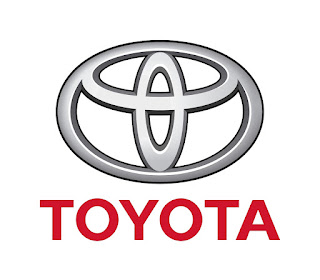
When you see a car glide silently through a busy city street, chances are high that the emblem on its grille is instantly recognizable: three overlapping ovals forming a balanced, symmetrical mark. That symbol belongs to Toyota Motor Corporation, one of the most influential automotive manufacturers in the world. But the story behind the Toyota logo is far more complex and layered than its minimalist design suggests.
The Toyota emblem is not just a brand identifier; it is a visual philosophy. It encapsulates heritage, industrial innovation, family legacy, post-war resilience, global expansion, and the deep cultural roots of Japan. To understand the logo fully, we must explore the origins of the company, the transformation of its name, and the symbolic meaning embedded in those three simple ovals.
This is the story of how a modest loom manufacturer became an automotive titan—and how its logo evolved into one of the most recognizable corporate symbols on the planet.
Origins: From Looms to Engines
The Toyota story begins not with automobiles, but with textile machinery. In the late 19th and early 20th centuries, Japan was industrializing rapidly. One of the key figures in this transformation was Sakichi Toyoda, an inventor often referred to as the “King of Inventors” in Japan.
FREE: Quickly identify and understand problems with your vehicle 🚘
CLICK HERESakichi Toyoda revolutionized the textile industry by inventing automatic looms that dramatically improved efficiency and reduced defects. His most famous invention, the Type G Automatic Loom, included a mechanism that stopped the machine when a thread broke—an early example of “jidoka,” or automation with a human touch. This concept would later become foundational to Toyota’s production philosophy.
In 1929, the patent for the Type G loom was sold to a British company. The proceeds from that sale provided the financial foundation for a bold new venture: automobiles.
Sakichi’s son, Kiichiro Toyoda, was fascinated by cars. After visiting Europe and the United States to study automotive manufacturing, he became convinced that Japan needed its own car industry. At the time, American giants like Ford Motor Company and General Motors dominated global markets.
In 1937, Kiichiro established Toyota Motor Co., Ltd., spinning it off from the Toyoda Automatic Loom Works. Thus, the automotive branch of the Toyoda family was born.
But even at this early stage, a crucial transformation was about to occur—one that would shape the identity of the brand forever.
From “Toyoda” to “Toyota”: The Power of Eight
Originally, the family name was spelled “Toyoda.” So why did the company adopt the name “Toyota”?
The answer lies in linguistics, aesthetics, and cultural symbolism.
In Japanese writing, “Toyoda” requires ten brush strokes, while “Toyota” requires only eight. The number eight holds deep significance in Japanese culture, symbolizing prosperity and good fortune. Its shape also widens at the bottom, suggesting growth and expansion.
When the company decided to establish a new identity separate from the family name, a public competition was held to design a new logo and name. “Toyota” emerged as the winner.
This change represented more than superstition. It marked a shift from a family enterprise to a broader corporate identity—one intended to resonate with customers and stakeholders far beyond Japan.
The simplified name was cleaner, visually balanced, and easier to pronounce internationally. It laid the groundwork for a global brand.
Early Logos: Simplicity and National Identity
In its early years, Toyota did not use the now-famous oval emblem. The earliest logos were typographic, often written in Japanese katakana script. These designs were straightforward and functional, reflecting a company focused more on engineering and survival than branding aesthetics.
During the pre- and post-World War II years, Toyota struggled with resource shortages, economic turmoil, and limited domestic demand. Branding was secondary to survival.
Yet as Japan rebuilt in the 1950s and 1960s, Toyota began expanding its reach. The company introduced vehicles like the Land Cruiser and the Corolla, models that would eventually become icons in their own right.
As Toyota entered markets in North America and Europe, it became clear that a universally recognizable emblem would be essential.
The 1989 Emblem: Birth of the Three Ovals
The Toyota logo we recognize today was introduced in 1989, coinciding with the company’s 50th anniversary.
This was not a minor redesign. It was a strategic declaration of global ambition.
The emblem consists of three overlapping ovals:
- Two perpendicular ovals in the center.
- One larger oval encircling them.
At first glance, it appears abstract. But the symbolism is deliberate and multi-layered.
The Inner Ovals
The two smaller ovals intersect at right angles. According to Toyota, these represent:
- The heart of the customer.
- The heart of the company.
Their overlap symbolizes mutual trust and a beneficial relationship. The interlocking design suggests partnership, shared values, and long-term loyalty.
Interestingly, if you look carefully, the shapes also form every letter of the word “TOYOTA.” Designers cleverly embedded the entire brand name into the geometry of the logo.
The Outer Oval
The larger oval surrounding the two inner ovals represents the world embracing Toyota. It signifies global expansion, inclusivity, and boundless opportunity.
By 1989, Toyota was no longer just a Japanese manufacturer; it was becoming a global force. The new emblem communicated that ambition visually.
Design Philosophy: Minimalism with Meaning
Japanese design traditions emphasize simplicity, balance, and negative space. The Toyota logo embodies these principles perfectly.
The emblem is:
- Symmetrical but dynamic.
- Simple yet layered with meaning.
- Modern while rooted in tradition.
Unlike more literal automotive logos featuring animals, shields, or crowns—such as BMW or Mercedes-Benz—Toyota chose abstraction. This allowed flexibility across cultures and markets.
The design also reflects Toyota’s manufacturing philosophy:
- Precision.
- Efficiency.
- Harmony between machine and human.
The oval shape itself suggests motion and fluidity. There are no sharp edges. Everything flows.
The Color Red: Passion and Energy
While the emblem often appears in chrome on vehicle grilles, Toyota’s corporate branding prominently uses red.
Red in Japanese culture symbolizes:
- Energy.
- Passion.
- Strength.
- Protection from evil.
Globally, red is associated with excitement and action—fitting qualities for an automotive brand.
The combination of red and white in Toyota’s corporate identity subtly mirrors the Japanese flag, reinforcing national heritage without overt nationalism.
Expansion and Global Identity
As Toyota expanded into international markets, including the United States and Europe, the logo became a unifying symbol.
By the 1990s, Toyota was competing head-to-head with automotive giants such as Volkswagen and other established brands.
The emblem’s universality was key. It did not rely on language. It did not require translation. Whether in New York, Paris, Sydney, or Dubai, the symbol meant the same thing: reliability.
The logo became associated with:
- Fuel efficiency.
- Durability.
- Resale value.
- Practical engineering.
Over time, consumer trust fused with the symbol itself.
Lexus and Brand Architecture
In 1989—the same year the new emblem debuted—Toyota launched its luxury division, Lexus.
Interestingly, Lexus has its own distinct logo: a stylized “L” inside an oval. While visually similar in its use of curvature, it maintains separate brand positioning.
Toyota’s decision to create a new emblem for Lexus highlights how carefully the company manages visual identity. The main Toyota logo represents accessibility and reliability. Lexus represents refinement and performance.
The shared design language—clean lines and ovals—ensures subtle cohesion across brands.
Toyota also oversees brands such as Daihatsu and Hino Motors, each with its own identity. Yet the Toyota emblem remains the flagship symbol.
Manufacturing Philosophy Embedded in Design
To understand the Toyota logo fully, one must understand the Toyota Production System (TPS).
This system emphasizes:
- Continuous improvement (kaizen).
- Respect for people.
- Elimination of waste.
- Built-in quality.
Though the logo predates widespread global discussion of TPS, its symbolism aligns perfectly with these principles.
The overlapping ovals reflect partnership.
The symmetry reflects precision.
The enclosing shape reflects integration.
The emblem visually communicates what the company practices operationally.
The Logo in Motorsport and the Olympics
As Toyota entered motorsport and global sponsorships, the logo gained even more visibility.
Toyota has participated in endurance racing, rally competitions, and Formula 1 (historically). In these high-speed contexts, the emblem came to symbolize performance—not just practicality.
In recent decades, Toyota has also been a major sponsor of the Olympic Games, aligning the brand with excellence, perseverance, and global unity.
The logo, displayed on stadium banners and athlete uniforms, transcended its automotive origins.
The Role of Geography: From Nagoya to Toyota City
Toyota’s roots remain deeply tied to its home region. The company was founded near Nagoya. As the company grew, the town of Koromo eventually renamed itself Toyota City in 1959 in honor of the automaker.
Few corporations have influenced local identity so profoundly that a city adopts their name.
Toyota also maintains a strong presence in Tokyo and across global manufacturing hubs.
The logo, therefore, represents not just a company—but an ecosystem of workers, engineers, suppliers, and communities.
Psychological Impact of the Logo
Brand logos operate on both conscious and subconscious levels.
The Toyota emblem’s rounded shapes evoke:
- Safety.
- Trustworthiness.
- Stability.
Sharp angles often suggest aggression or speed. Toyota opted instead for approachability.
The interlocking forms subtly communicate partnership and reliability. Consumers may not consciously analyze the geometry, but repeated exposure builds emotional association.
Over decades, the emblem has become shorthand for “dependable transportation.”
Adaptation in the Digital Era
In recent years, Toyota has modernized its branding for digital platforms. Flat design principles have replaced metallic gradients in many applications.
However, the core geometry remains unchanged.
This consistency demonstrates the strength of the original 1989 redesign. A truly effective logo does not require constant reinvention.
While some brands undergo radical overhauls, Toyota has refined rather than reinvented.
Comparing Toyota’s Logo to Competitors
To better understand Toyota’s design philosophy, consider a comparison with other automotive logos:
| Brand | Core Shape | Symbolism | Visual Style |
|---|---|---|---|
| Toyota | Interlocking ovals | Unity, trust, global reach | Minimal, abstract |
| BMW | Circle with quadrants | Aviation heritage | Literal, heritage-based |
| Mercedes-Benz | Three-pointed star | Dominance on land, sea, air | Emblematic |
| Volkswagen | Interlocking letters | Initial-based | Bold typography |
Toyota stands out for embedding its entire name within abstract geometry rather than using initials or symbols tied to specific industries.
This abstraction grants timeless flexibility.
Cultural Subtlety and Global Strategy
Japanese corporations often balance tradition and innovation. Toyota’s logo achieves this balance elegantly.
It honors:
- The family legacy of the Toyodas.
- Japanese design aesthetics.
- Industrial discipline.
At the same time, it projects:
- International ambition.
- Customer-centric values.
- Technological progress.
The emblem does not scream for attention. It does not rely on ornate decoration. It earns recognition through repetition and reliability.
Resilience Through Crisis
Throughout its history, Toyota has faced challenges:
- Post-war economic hardship.
- Oil crises.
- Global recessions.
- Quality recall controversies.
Yet the logo endured unchanged.
That stability communicates resilience. Consumers saw the same emblem before and after crises, reinforcing continuity.
Brand symbols often become anchors during uncertainty.
Hybrid Innovation and the Logo’s New Meaning
With the launch of the Prius in the late 1990s, Toyota became synonymous with hybrid technology.
The emblem began to symbolize environmental consciousness and innovation.
As electric and hydrogen vehicles enter the market, the logo now appears on cars that are nearly silent, futuristic machines—far removed from the mechanical looms that began the journey.
Yet the core philosophy remains:
Innovation serving people.
Why the Logo Hasn’t Changed
Many companies periodically redesign logos to appear modern. Toyota has made minor refinements but no fundamental change since 1989.
Why?
Because the design works.
A strong logo must be:
- Scalable.
- Recognizable at any size.
- Adaptable across media.
- Culturally neutral.
Toyota’s emblem satisfies all these conditions.
Frequent redesign risks weakening brand equity. Toyota chose continuity.
Hidden Meanings and Popular Interpretations
Over time, fans and designers have offered their own interpretations:
- A needle with thread, honoring the company’s textile roots.
- A steering wheel.
- An infinity symbol.
While not officially confirmed, these interpretations demonstrate the logo’s versatility. A strong symbol invites engagement.
The Logo as a Reflection of Corporate Values
Ultimately, the Toyota logo represents more than a company.
It reflects:
- A journey from local invention to global leadership.
- A commitment to mutual respect between company and customer.
- A belief in steady growth rather than flashy reinvention.
From Sakichi Toyoda’s loom innovations to Kiichiro Toyoda’s automotive vision, the emblem captures generational ambition.
Conclusion: Three Ovals, One Global Legacy
At first glance, the Toyota logo is simple—just three overlapping ovals.
But within that simplicity lies:
- Cultural symbolism.
- Mathematical precision.
- Historical transformation.
- Global aspiration.
It tells the story of a family enterprise evolving into a multinational powerhouse. It embodies Japanese design principles while transcending cultural boundaries. It signals trust, partnership, and innovation.
In a world saturated with branding noise, Toyota’s emblem stands as proof that restraint can be powerful.
Three ovals.
One world.
A legacy built on motion.
And behind it all, a story that began not with engines—but with threads.
Leave a Reply